
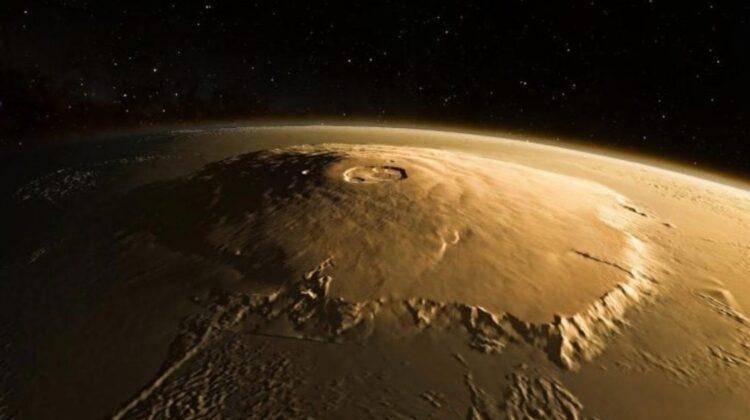
When we imagine space exploration, our minds often leap to distant galaxies or alien worlds light-years away. Yet one of the most breathtaking natural wonders in the solar system sits on our cosmic doorstep: Olympus Mons, the towering Martian volcano that dwarfs every mountain on Earth.
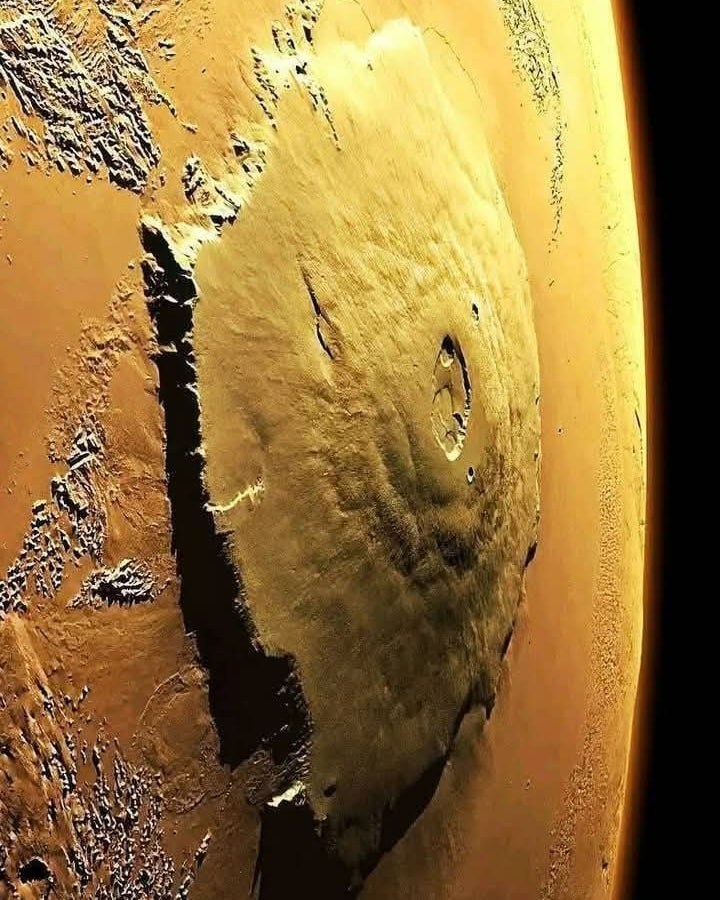
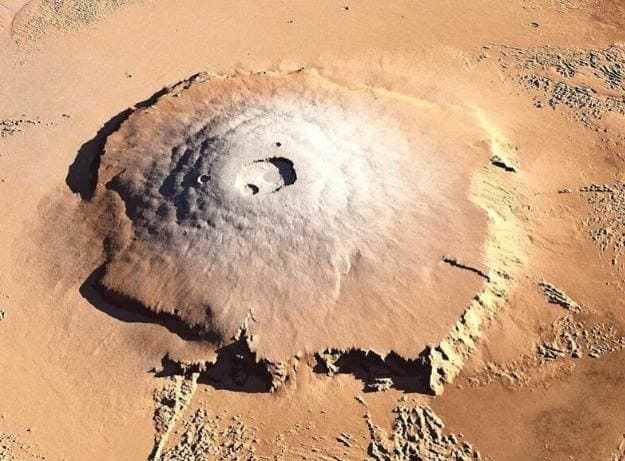
At roughly 25 kilometers (15.5 miles) high—almost three times taller than Mount Everest—and a base spanning 600 kilometers (373 miles), this massive shield volcano is a geological marvel. Its size rivals that of entire countries, making Olympus Mons not just a mountain but a planetary monument to Mars’ unique environment.
How Olympus Mons Formed
Olympus Mons’ sheer scale is the result of several key Martian conditions:
- No tectonic plates: Unlike Earth, Mars has a static crust. Lava continuously erupted in the same spot for millions of years, allowing Olympus Mons to grow without disruption.
- Low gravity: With just one-third of Earth’s gravity, Mars can support enormous mountains without their own weight causing collapse.
- Thin atmosphere: With minimal weathering and erosion, Olympus Mons has remained strikingly preserved over time.
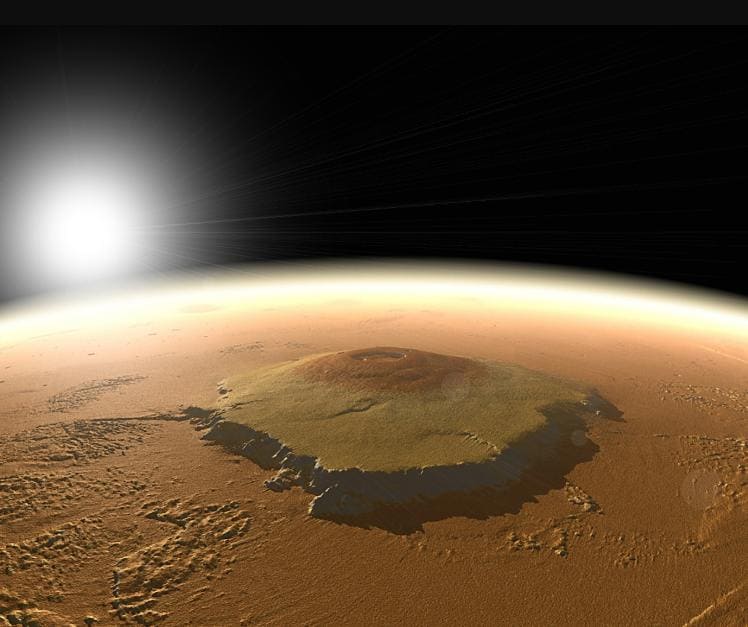
Scientists believe Olympus Mons began forming over 200 million years ago. Evidence suggests it may have erupted as recently as a few million years ago—geologically speaking, almost yesterday—raising the possibility it is dormant, not extinct.
Mysteries of the Martian Giant
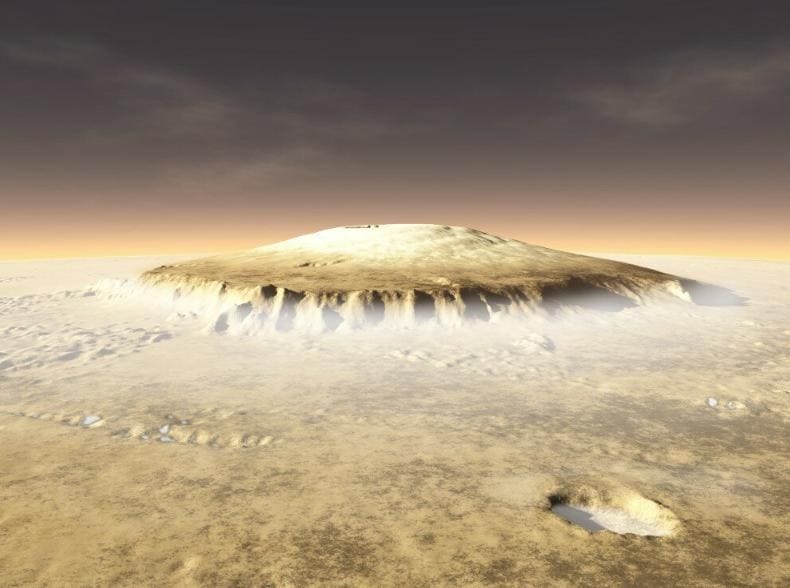
Olympus Mons has fascinated scientists for decades, and many of its features remain shrouded in mystery:
- Towering cliffs: Its edges feature scarps up to 6 kilometers (3.7 miles) high, likely formed by colossal landslides or interactions between lava and subsurface ice.
- Enormous summit caldera: The summit’s volcanic crater spans 80 kilometers (50 miles), a complex structure of overlapping collapse craters from massive eruptions.
- Signs of water: Orbital imagery reveals formations hinting at lava encountering underground ice, possibly creating steam vents or temporary lakes.
A Gateway for Future Exploration
For future missions to Mars, Olympus Mons offers far more than scientific intrigue. Its lava tubes and underground tunnels could serve as natural shelters for astronauts, providing protection from cosmic radiation and harsh dust storms.
Studying Olympus Mons also provides insight into planetary volcanism, shedding light on how other worlds, like Venus or Jupiter’s moon Io, may have evolved geologically.
How It Compares to Everest
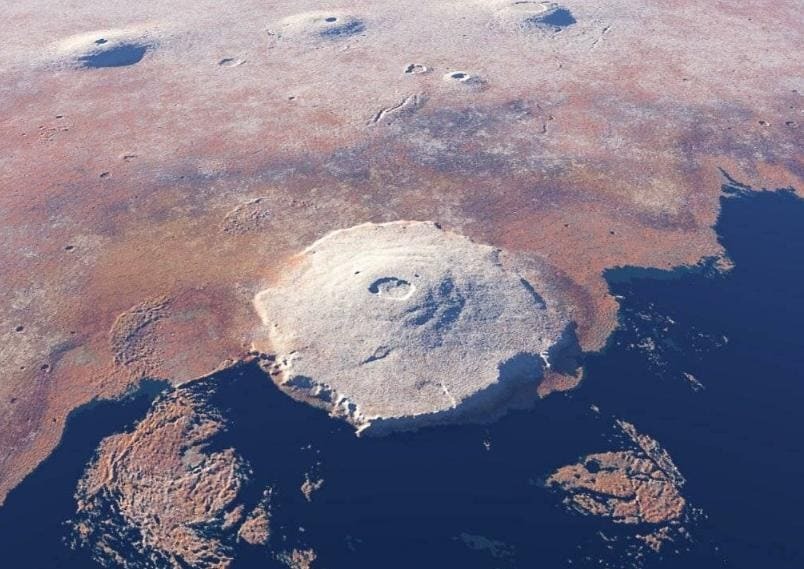
To appreciate Olympus Mons’ scale, imagine placing it on Earth: its summit would soar far into the stratosphere, dwarfing Mount Everest’s modest 8.8 kilometers (5.5 miles). The sheer immensity of this Martian volcano reminds us of the stark differences between planets in our solar system.
A Silent Symbol of Mars’ Grandeur

Olympus Mons is more than just the largest volcano in the solar system—it’s a silent witness to cosmic history, a reminder of Mars’ dramatic geological past and humanity’s growing ambition to explore other worlds.
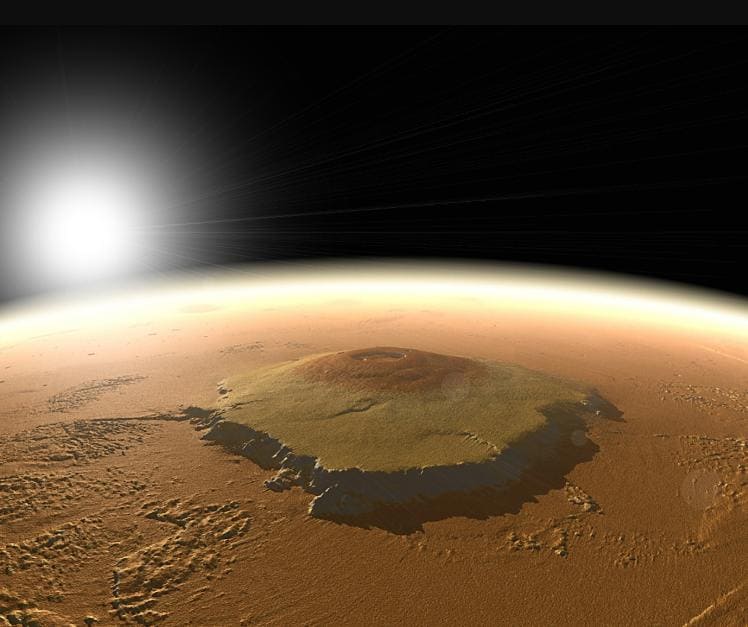
With every new image captured by orbiters and rovers, our fascination with Olympus Mons deepens. One day, explorers may stand at its base, turning science fiction into reality.
Leave a Reply