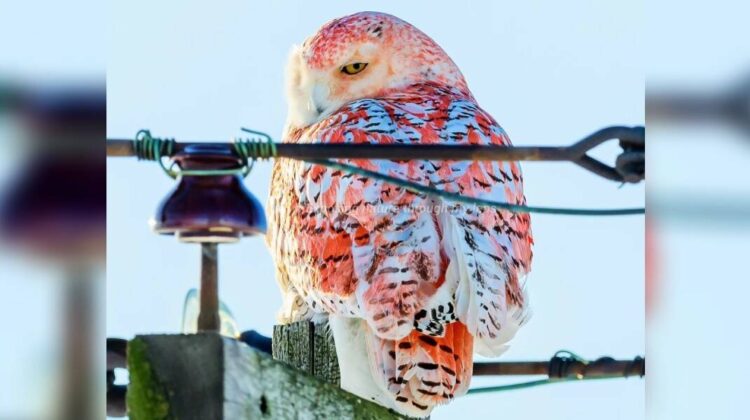
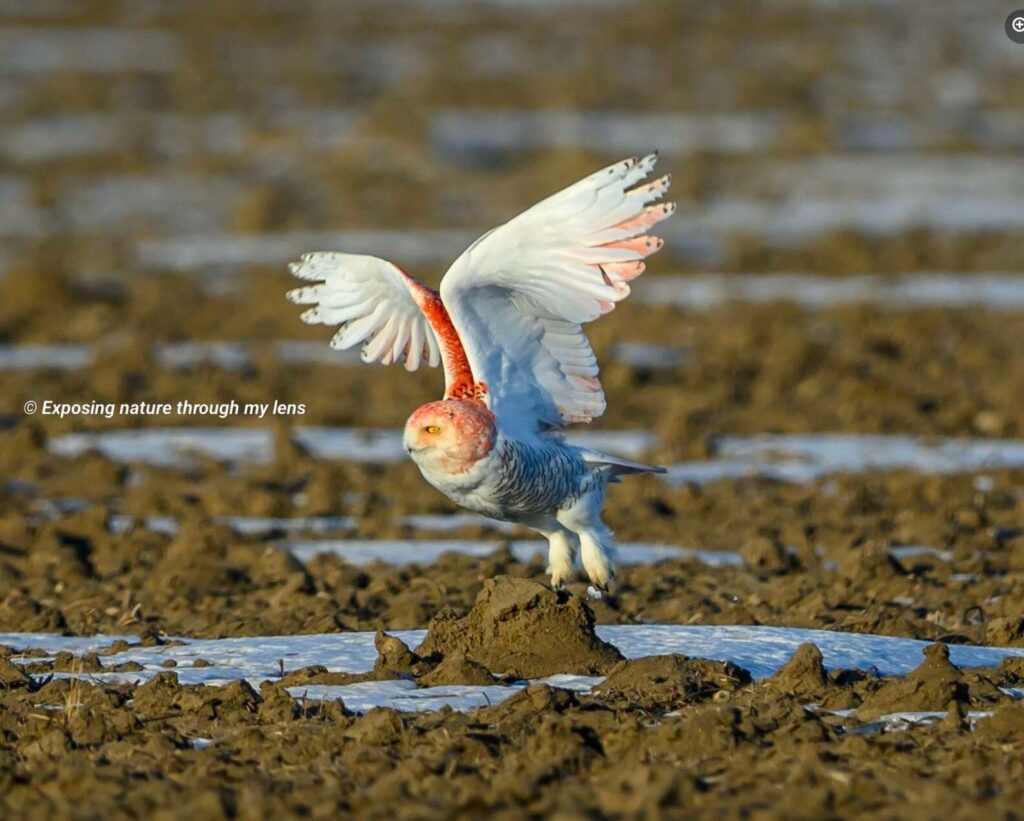
When freelance photographer Bill Diller first photographed a snowy owl with vivid orange markings near Michigan’s Lake Huron in early 2025, most people who saw the images assumed one thing: it had to be fake.
A Bird Worth 900 Miles and 29 Hours
Amateur wildlife photographer Julie Maggert, of Mount Pleasant, Michigan, heard about the sighting and knew she had to see the bird — nicknamed “Creamsicle” by Maggert and “Rusty” by locals — for herself. Over four days in early February 2025, she drove roughly 900 miles and spent nearly 29 hours sitting and waiting, coming home empty-handed on her first two attempts.
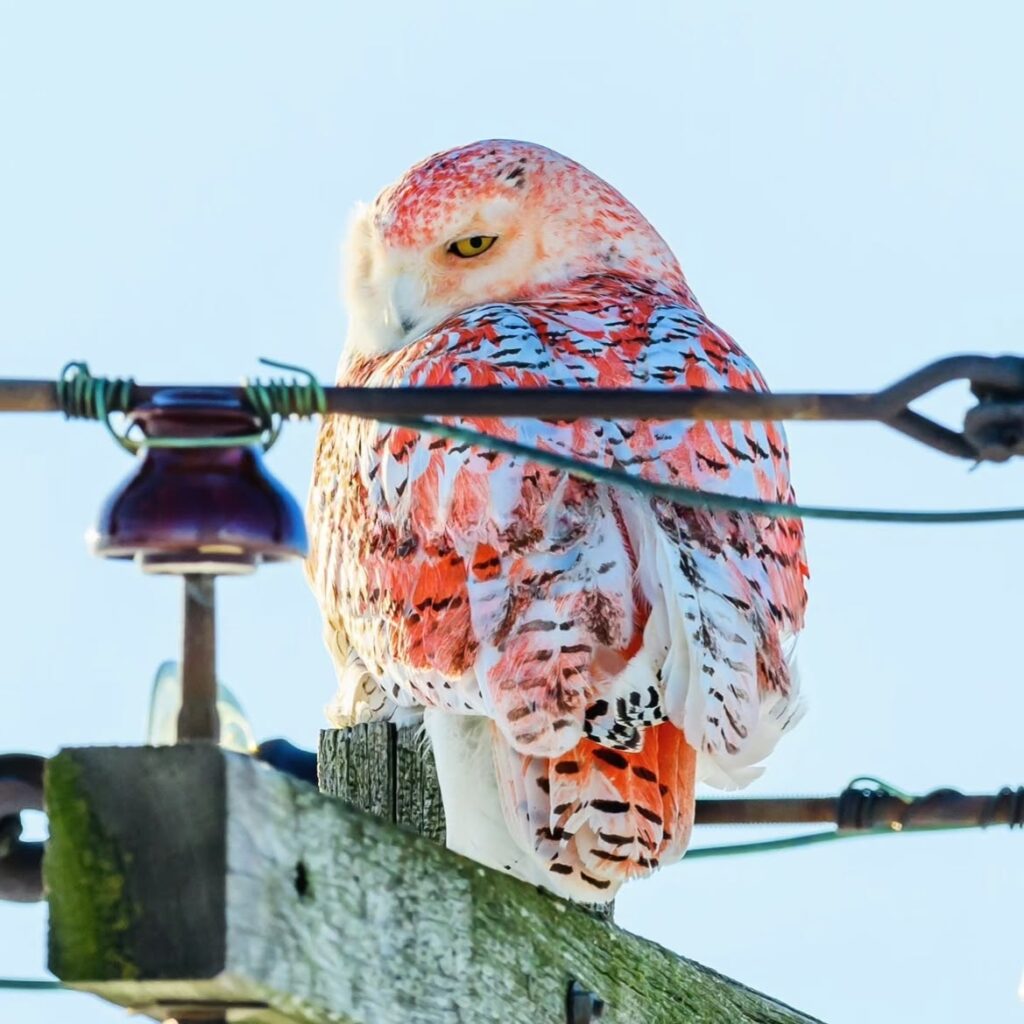
On what she expected might be her last chance before other obligations pulled her away for weeks, she and her husband tried once more. She found the owl on a utility pole — not the clean backdrop she’d hoped for, tangled in wires — before it eventually flew to a more photogenic perch. “When I first seen her up there, I was like, no way,” Maggert told CBC’s As It Happens. “My adrenaline was pumping and I was shaking because I was so excited.”
Scientists Were Stumped
The photos quickly reached experts who study snowy owls professionally, and their reaction was consistent: nobody had seen anything like it. Denver Holt, director of the Owl Research Institute, who has spent more than 35 years studying the species and personally banded over 800 snowy owl chicks, put it plainly in an email to The New York Times: “We have never seen any plumage aberration, or anything like what is in the photos of the owl.”
Early theories split into two camps: some researchers suspected a genetic mutation, possibly stress-related; others pointed to accidental contact with dye or chemical staining, similar in appearance to airport de-icing fluid. Michigan State University bird-coloration expert Kevin McGraw said feather samples would be needed to properly test either hypothesis — samples nobody had yet collected.
What Investigators Figured Out Afterward
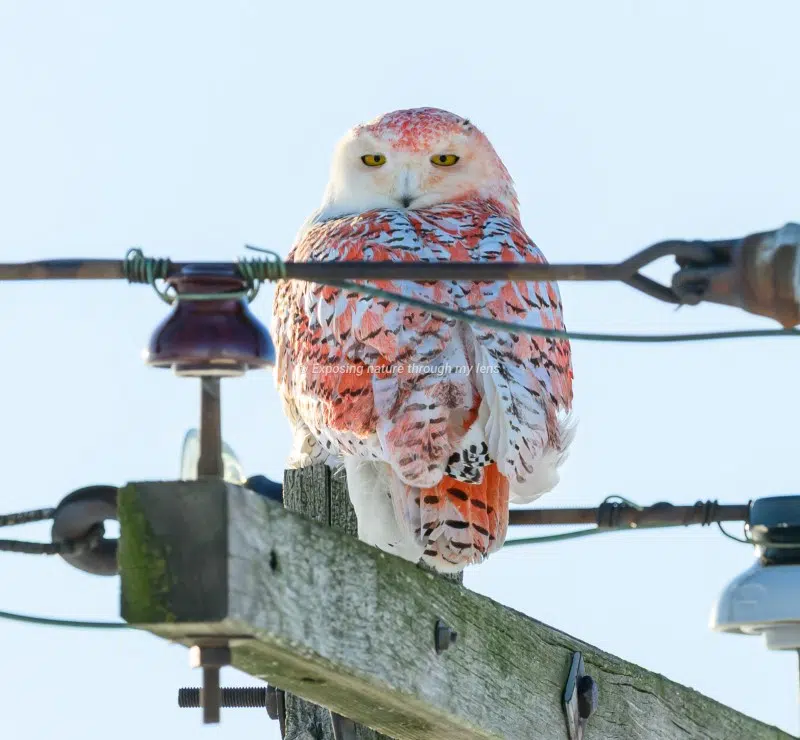
This is the part of the story that hadn’t happened yet when most coverage of Creamsicle was published. Ornithologist Scott Weidensaul, co-founder of the snowy owl research project Project SNOWStorm, examined the widely circulated images more closely and offered a detailed technical read on what likely happened, shared with CBC: “The photos make very obvious that the dye hit some feathers but that those beneath were shielded, leaving clear, sharp white ‘shadows’ that neatly match the shape of the coloured feathers above.” In his assessment, the pattern effectively ruled out a genetic origin — a mutation would color feathers as they grow in, not leave sharp, shadow-like boundaries between colored and clean plumage.
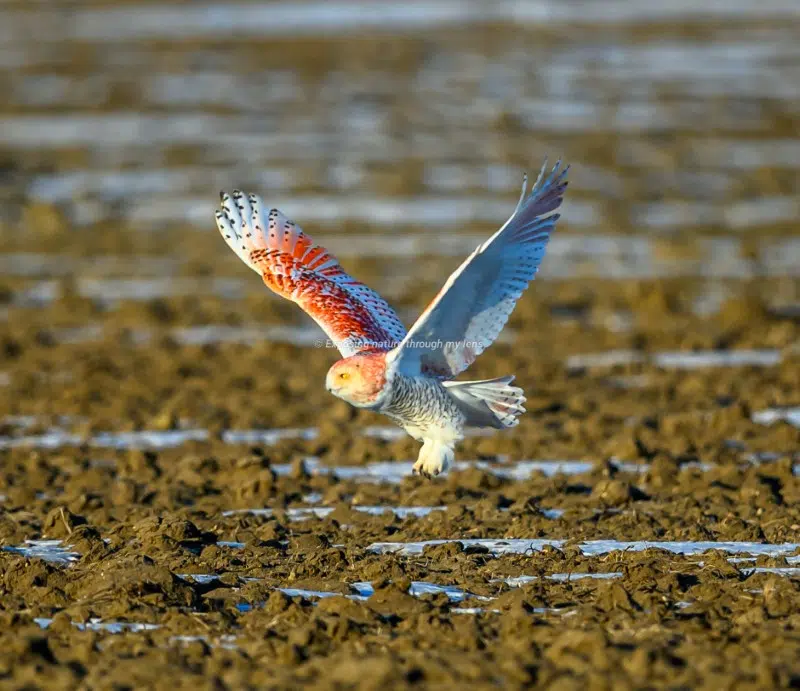
Weidensaul noted his own organization hadn’t dyed the bird for tracking (a technique researchers did use before modern GPS tracking became standard), and neither had other research groups he contacted. His conclusion: “It seems pretty clear that the bird got sprayed, almost certainly by accident, with something that contained dye or paint.” Separate analysis of a flight photo noted the underside of the owl retained normal coloring while orange covered its back, wings, tail, and parts of its face — consistent with the bird being sprayed from behind and turning its head partway through, rather than an even, all-over discoloration you’d expect from a mutation affecting the whole animal.
No party has been identified, and the exact source of the dye remains formally unconfirmed. But among the researchers who’ve weighed in publicly, accidental spray contact — not genetics, and likely not deliberate harm — has become the leading explanation.
Confirmed Real, Repeatedly
Given how visually implausible the images looked, skepticism was inevitable — enough that fact-checking outlets including Snopes investigated the photos independently, more than once, as the images continued recirculating. Michigan Department of Natural Resources spokesperson John Pepin confirmed via email that “the snowy owl sighted and photographed in Huron County is indeed real,” and Weidensaul stated he did not believe AI could have generated the widely shared images.
Frequently Asked Questions
Was Creamsicle ever officially confirmed to have been dyed rather than born with the coloring? Not through formal lab testing of feather samples, which was never conducted — but the leading expert analysis, based on the pattern of coloring visible in photographs, points strongly toward accidental dye or paint contact rather than a genetic cause.
Did anyone figure out how the owl came into contact with dye? No specific source has been publicly identified or confirmed; researchers have ruled out known tracking-related dyeing by contacted research organizations, but the original contamination event remains unexplained.
Is Julie Maggert a professional wildlife photographer? She’s described in coverage as an amateur/hobbyist photographer from central Michigan, and has said the Creamsicle photographs are her proudest photographic achievement to date.
Sources: My Modern Met, The New York Times, CBC Radio (As It Happens), PetaPixel, and Snopes, cited above.
Leave a Reply