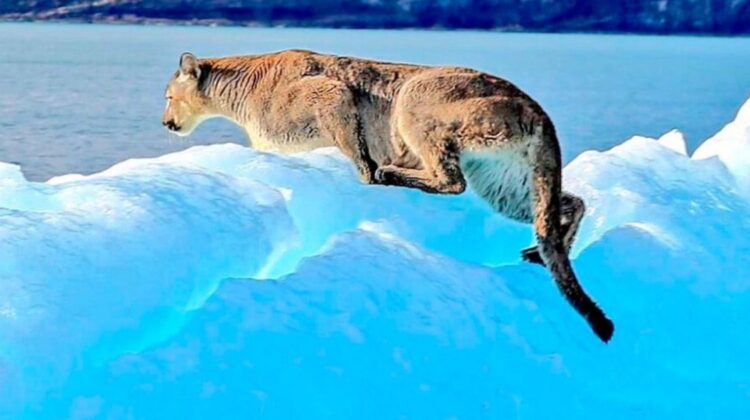
Tourists visiting Los Glaciares National Park were left stunned after spotting an adult puma standing atop a drifting iceberg in the icy waters of Lake Argentino — a surreal moment that quickly went viral across social media.
The extraordinary sighting occurred near the famous Upsala Glacier, where passengers aboard a tourist boat watched the wild cat balancing calmly on a floating block of glacier ice.
Images and videos of the animal rapidly spread online, with many viewers questioning how the predator ended up stranded so far from land.

According to officials from Administración de Parques Nacionales, the situation was far less mysterious than it appeared.
Wildlife experts explained that pumas are strong swimmers perfectly adapted to Patagonia’s harsh environment. Authorities believe the animal likely reached the iceberg by swimming through the freezing waters on its own and did not require human intervention.
The day after the sighting, a specialized search team from the national park launched an operation across the region, navigating through floating ice fields and nearby shorelines in search of the elusive feline.
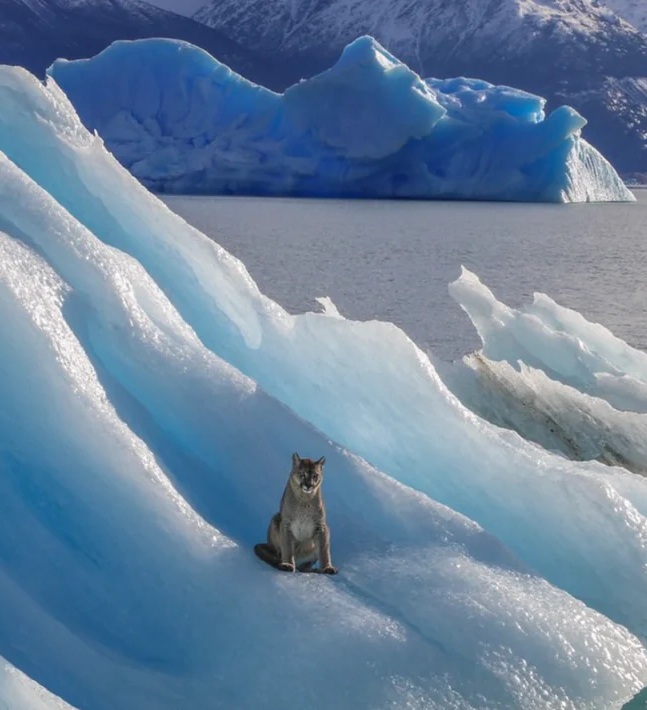
Despite hours of searching, the puma had already disappeared.
Park officials later confirmed that no trace of the animal was found, suggesting it safely returned to land without assistance.
“The puma is a wild animal adapted to the climatic conditions of the region and an excellent swimmer,” authorities stated. “It does not require human help to survive.”
The rare encounter has reignited fascination with Patagonia’s wildlife and the remarkable adaptability of pumas, one of the Americas’ most resilient predators. Found from Canada to southern Argentina, pumas are known for crossing mountains, deserts, forests — and, occasionally, icy glacial lakes.
Why The Puma On Ice Captivated Millions
Wildlife experts say the image resonated globally because it looked almost unreal: a lone apex predator standing silently on floating glacier ice against one of the coldest landscapes on Earth.
But scenes like this also highlight how adaptable large predators can be in remote ecosystems shaped by glaciers, freezing temperatures, and rugged terrain.
Pumas in Patagonia are known to travel enormous distances in search of food, territory, and safe passage through difficult environments.
Leave a Reply