• Skip to main content
  • Skip to primary sidebar
  • Skip to footer
  • Home
  • About Us
  • Copyright Report
  • Submit Content
  • Terms
  • Privacy Policy
  • Legal Disclaimer

Hasan Jasim

Hasan Jasim is a place where you may get entertainment, viral videos, trending material, and breaking news. For a social generation, we are the largest community on the planet.

Researcher believes Noah’s Ark found in Turkey after new underground scans

by Hasan Jasim Editorial Team Leave a Comment

ShareTweet

New underground scans from a controversial site in eastern Turkey have reignited debate over one of history’s most enduring mysteries: the possible location of Noah’s Ark.

Researchers working near Mount Ararat say newly analyzed data reveals structures beneath the surface that could point to a manmade origin—though many scientists remain unconvinced.

Tunnels beneath the surface

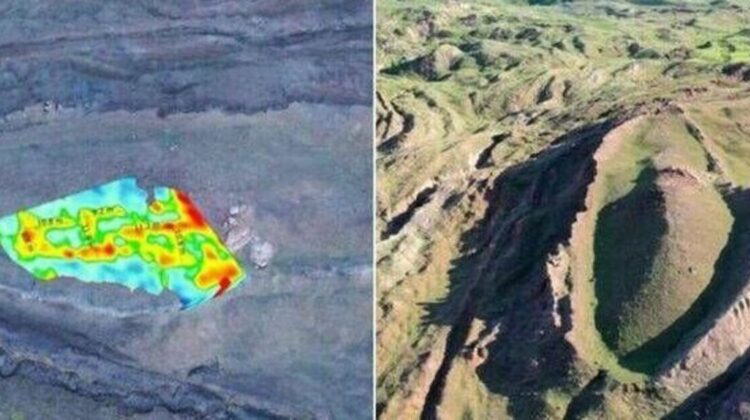
According to researcher Andrew Jones, the latest scans have identified what appear to be tunnel-like formations within the landform.

He claims these passages lie roughly four meters below ground and run through the center of the structure, with dimensions suggesting internal corridors rather than random geological features.

“Our findings show possible tunnels, walls, and support-like elements,” Jones said, arguing that the layout resembles something constructed rather than naturally formed.
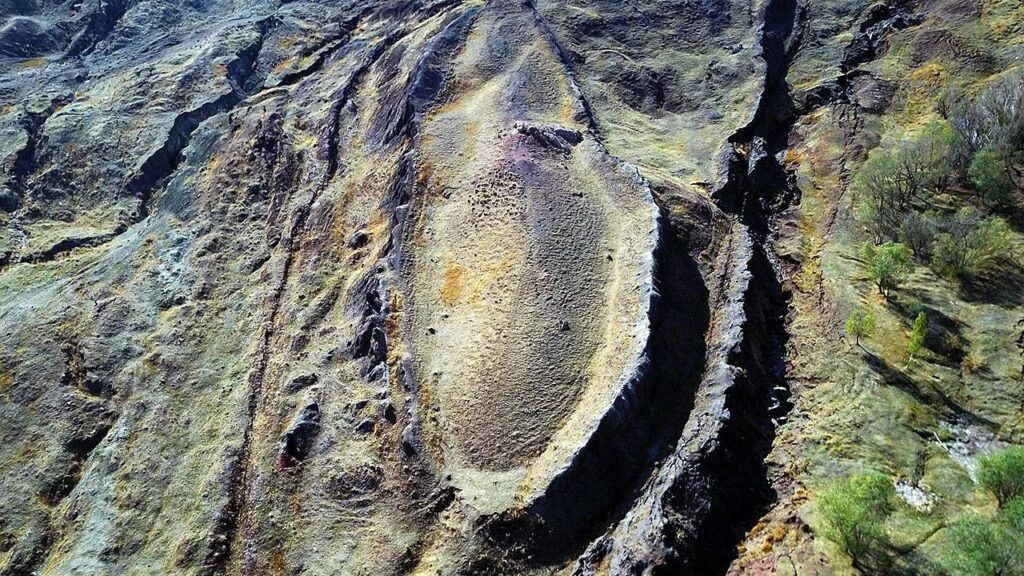
A general view of Mount Ararat, also known as Agri Mountain, in Agri, Turkey, which is alleged to have traces of Noah’s Ark, on Oct. 25, 2017.

A long-debated formation

The site—often referred to as the Durupinar formation—has been the subject of speculation for decades. Its elongated, boat-like shape has drawn comparisons to biblical descriptions of the Ark.

Supporters of the theory point to three main factors:

  • The shape, which resembles a large vessel
  • Its location near Mount Ararat, traditionally associated with the Ark narrative
  • Soil analysis suggesting higher levels of organic material inside the formation compared to surrounding areas

Jones and his team argue that these clues, taken together, strengthen the case for a buried, ancient structure.

Skepticism from the scientific community

Many geologists strongly dispute these claims, maintaining that the formation is simply a natural geological feature—likely the result of erosion and sediment patterns over time.
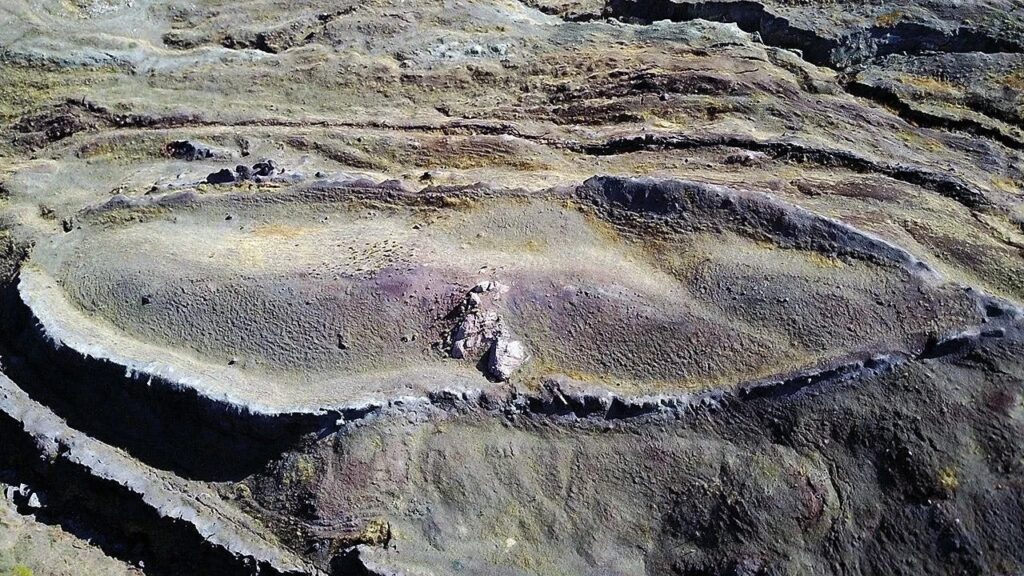
A general view of Mount Ararat in Agri, Turkey, which is alleged to have traces of Noah’s Ark, on Oct. 25, 2017. Agri hosted the International Symposium on Mount Ararat and Noah’s Ark.

They caution that shapes resembling human-made objects can emerge naturally, and that differences in soil composition do not necessarily indicate artificial construction.

Critics also emphasize the lack of definitive physical evidence, such as artifacts or structural materials that could confirm human involvement.

A cautious path forward

Despite the controversy, researchers say they are proceeding carefully. Rather than beginning full excavation, the next phase involves sending robotic equipment into the suspected tunnels to gather visual data and samples.

This approach reflects a key principle in archaeology: once a site is disturbed, it cannot be restored to its original state.

Further analysis will be needed before any firm conclusions can be drawn.

The search for Noah’s Ark sits at the intersection of faith, science, and human curiosity—a space where evidence is scrutinized and belief is tested. While these new findings add another layer to the mystery, they stop short of definitive proof. For now, the formation remains what it has always been: a symbol of how deeply the past continues to challenge our understanding, and how the line between discovery and interpretation is often far thinner than we think.

Filed Under: Trends Worldwide Tagged With: ancient history, archaeology, biblical history, geology, Mount Ararat, Noah’s Ark, research discovery, scientific debate, turkey

Reader Interactions

Leave a Reply Cancel reply

Your email address will not be published. Required fields are marked *

Primary Sidebar

More to See

A Winter Wonderland: Haunting Beauty of Snowzilla

By Hasan Jasim Editorial Team

Dolphin Discovered on New Jersey Beach Shows Signs of Possible Human Butchering

By Hasan Jasim Editorial Team

Random Cat Claws Her Way Into Family’s Heart In The Most Dramatic Way

By Hasan Jasim Editorial Team

A Rare Perspective of Egypt’s Pyramid of Khafre

By Hasan Jasim Editorial Team

Masters of Camouflage: The Arctic Hare’s Stunning Transformation

By Hasan Jasim Editorial Team

Malé: A City That Fills Its Island

By Hasan Jasim Editorial Team

This shrimp has the fastest punch in the world, so fast that it causes the water to boil around it

By Hasan Jasim Editorial Team

Footer

ABOUT HASANJASIM.ONLINE

Hasanjasim.online is a digital platform dedicated to publishing well-researched articles about the animal kingdom, nature, and the environment. Our editorial team works to source stories from credible outlets, scientific research, and verified reports, aiming to inform as much as we entertain. From wildlife conservation and animal behavior to natural wonders and environmental science, we cover the topics that help readers better understand and appreciate the natural world. Whether you're a lifelong nature lover or simply curious about the planet we share, Hasanjasim.online aims to be a trustworthy destination for stories worth reading — and worth citing.

Recent

  • The Puppy a Firefighter Couldn’t Leave Behind — and the Story Didn’t End There
  • A Mother Dog Dove Into Floodwater Again and Again — Until All 7 of Her Puppies Were Safe
  • Man shares wife’s last heartbreaking words before she vanished in Nepal floods
  • Police Officer Shoots And Kills Donkey During Missing Child Search
  • Woman Is Delighted To Find A Wild Fox Sleeping Peacefully On Her Outdoor Sofa
  • A Cancer Survivor’s Dog Was Stolen by Her Roommate — She Spent 3 Years Getting Him Back
  • The “Stone Breaker” Plant: What the Science Actually Says About This Traditional Kidney Stone Remedy

Search