• Skip to main content
  • Skip to primary sidebar
  • Skip to footer
  • Home
  • About Us
  • Copyright Report
  • Submit Content
  • Terms
  • Privacy Policy
  • Legal Disclaimer

Hasan Jasim

Hasan Jasim is a place where you may get entertainment, viral videos, trending material, and breaking news. For a social generation, we are the largest community on the planet.

The ‘High-Heeled’ Dinosaur: New Research Sheds Light on How Rhoetosaurus Brownei Supported Its Weight

by Stephen King Leave a Comment

ShareTweet

A new study conducted by researchers at the University of Queensland has revealed that the Rhoetosaurus brownei, a 24-tonne dinosaur, may have walked on its tiptoes, similar to how humans wear high heels. The research, which analyzed fossils of Australia’s only named Jurassic sauropod, aimed to better understand how such an enormous creature could support its own body weight.

Andréas Jannel, a Ph.D. candidate at the University of Queensland and part of the research team, explained that by looking at the bones of the foot, it was clear that the Rhoetosaurus walked with an elevated heel, which raised the question of how its foot was able to support its immense mass, which could reach up to 40 tonnes.
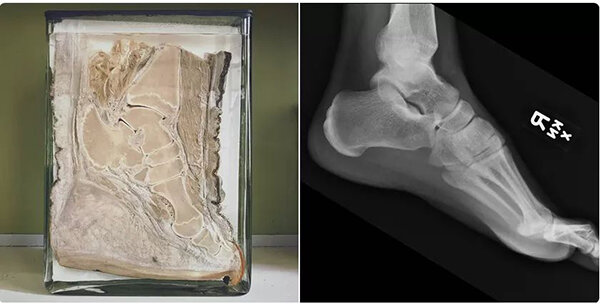
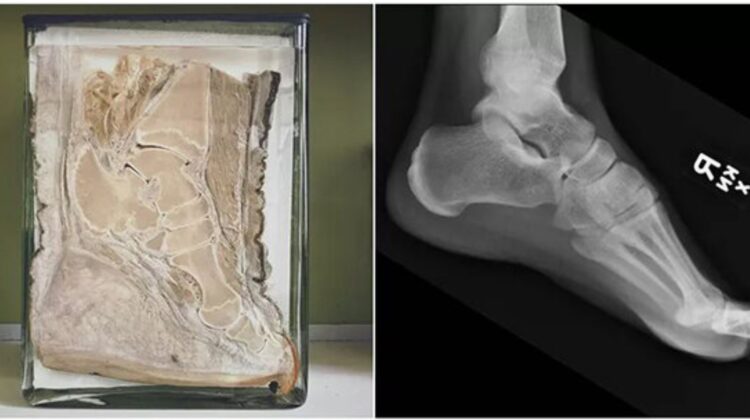
A cross-section of an elephant’s foot alongside a human foot x-ray, revealing a striking skeletal likeness. Credit: University of Queensland

The research revealed that the dinosaur’s heel was cushioned by a fleshy pad, which is similar to what is found in an elephant’s foot. However, the Rhoetosaurus was at least five times heavier than an elephant, so the forces involved were much greater. The presence of the cushioning pad that supports the raised heel appears to be a key innovation during the evolution of sauropods, and probably appeared in early members of the group some time during the Early to Middle Jurassic Periods.
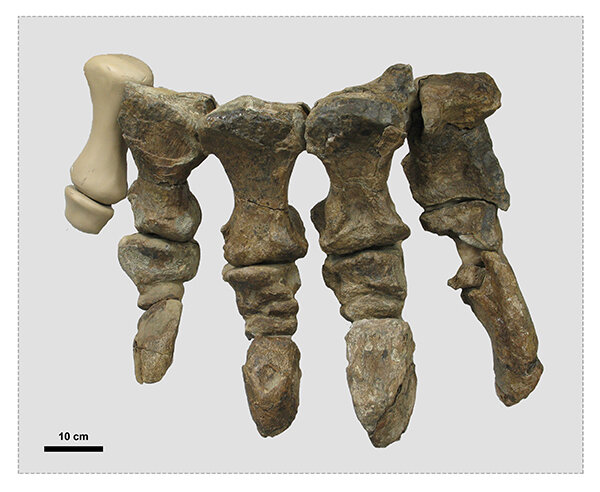
Right hind foot of the fossil specimen of Rhoetosaurus brownei (QM F1659), in dorsal view. The hind foot preserves the first four digits in completion, but is missing the fifth one. Credit: Jay P. Nair & Andréas Jannel.

The team arrived at this conclusion by creating a replica of the fossil and then physically manipulating it in an attempt to understand the movement between bones. They also used 3-D modeling techniques to assess the different foot postures that would have allowed the Rhoetosaurus to support its weight. Additionally, they looked at a range of sauropod footprints from around the world, many of which indicated the presence of a fleshy heel pad behind the toes, supporting what the bones were telling them.

The fossils of the R. brownei specimen were found near Roma in southwest Queensland and are dated to 160-170 million years ago when Australia was part of the supercontinent of Gondwana. Jannel is now using computer techniques to simulate how different foot postures and the presence of a soft tissue pad affect stress distributions within the bones.
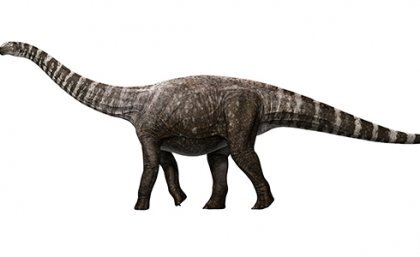
An artist’s impression of Rhoetosaurus brownei, (c) Queensland Museum 2014. Credit: Konstantinov, Atuchin & Hocknull. Credit: University of Queensland

Overall, this study provides new insights into the evolution of sauropod dinosaurs and how their feet were able to support their enormous body sizes. As Jannel noted, there’s much more to know, but this research shows that becoming ‘high-heeled’ may have been an important step in the evolution of these giant creatures.

Filed Under: Trends Worldwide Tagged With: ‘high-heeled’, brownei, dinosaur, light, research, rhoetosaurus, sheds, supported, trends, weight, worldwide

Reader Interactions

Leave a Reply Cancel reply

Your email address will not be published. Required fields are marked *

Primary Sidebar

More to See

Officer bravely plunge into frigid, icy waters to save a stranded puppy.

By Stephen King

Uroplatus phantasticus: Unveiling the Enigmatic Satanic Leaf-Tailed Gecko

By Stephen King

Are 300 and 400 levels harder?

By Stephen King

The Beauty of California’s Colorful Pebbles: A Creative Composition by Emily Blincoe

By Stephen King

Photographer Uses 2 Million Photos to Create GIF of Moon Movement

By Stephen King

Are 1943 steel cents worth anything?

By Stephen King

Bobi, record holder as the oldest dog ever, dead at 31 — rest in peace

By Stephen King

Footer

About hasanjasim.online

Hasanjasim.online is a digital platform dedicated to publishing diverse articles and content, with a strong focus on topics related to the animal kingdom, nature, and the environment. The website offers engaging stories and visual content aimed at raising awareness about animal welfare and showcasing the wonders of the natural world, making it a great destination for nature lovers and curious readers alike.

Recent

  • Scientists Discover Orcas Deliberately Smashing Giant Sunfish Until They Explode
  • This Rare Turtle Can Breathe Through Its Rear — And Scientists Say It’s One of Earth’s Most Extraordinary Reptiles
  • Do Whales Have Hair? The Surprising Truth About These Giant Ocean Mammals
  • Scientists Think They’ve Finally Worked Out Why This Image Freaks You Out
  • Tragic update on story of bear stuck on top of telephone pole
  • Royal Mail Worker Accused of Kicking Blind Dog Sparks Outrage as Fellow Postal Staff Defend His Actions
  • Photographer Travels 900 Miles to Capture One of the World’s Rarest Snowy Owls

Search