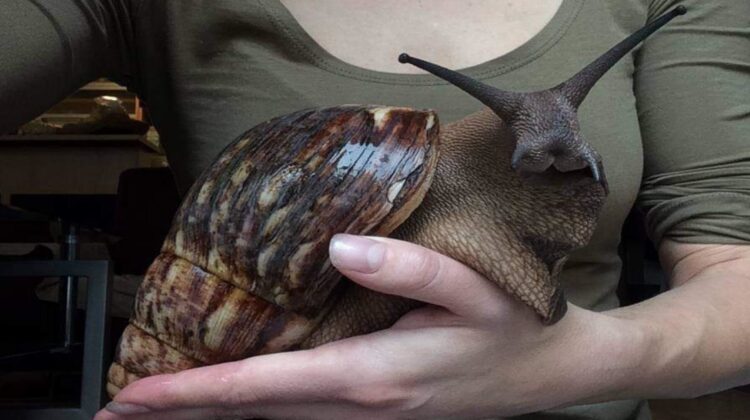
This colossal snail is six times the size of a garden snail, and it can grow as long as a human arm from hand to elbow!
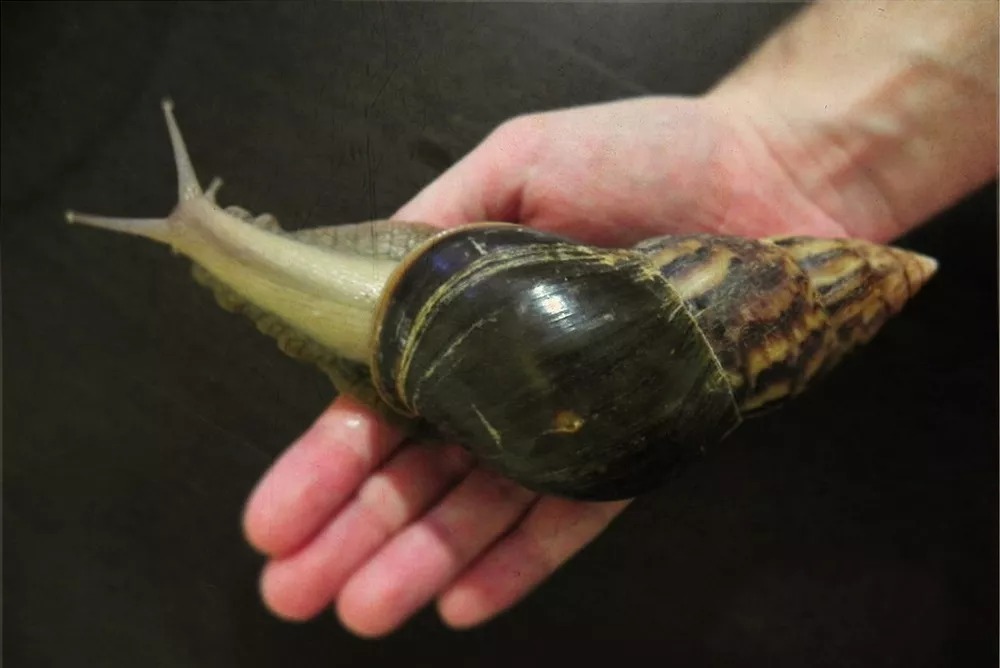
The Giant African Land Snail is the world’s biggest land snail (the common name actually refers to three giant species in the family Achatinidae: Achatina achatina, Archachatina marginata and Lissachatina fulica).
These snails will continue to develop even after they reach adulthood. Although their development may slow down at a certain age, they will continue to grow until they die. Adults typically measure 2.8 inches (7 cm) in diameter and 7.9 inches (20 cm) in length. Some get even larger.
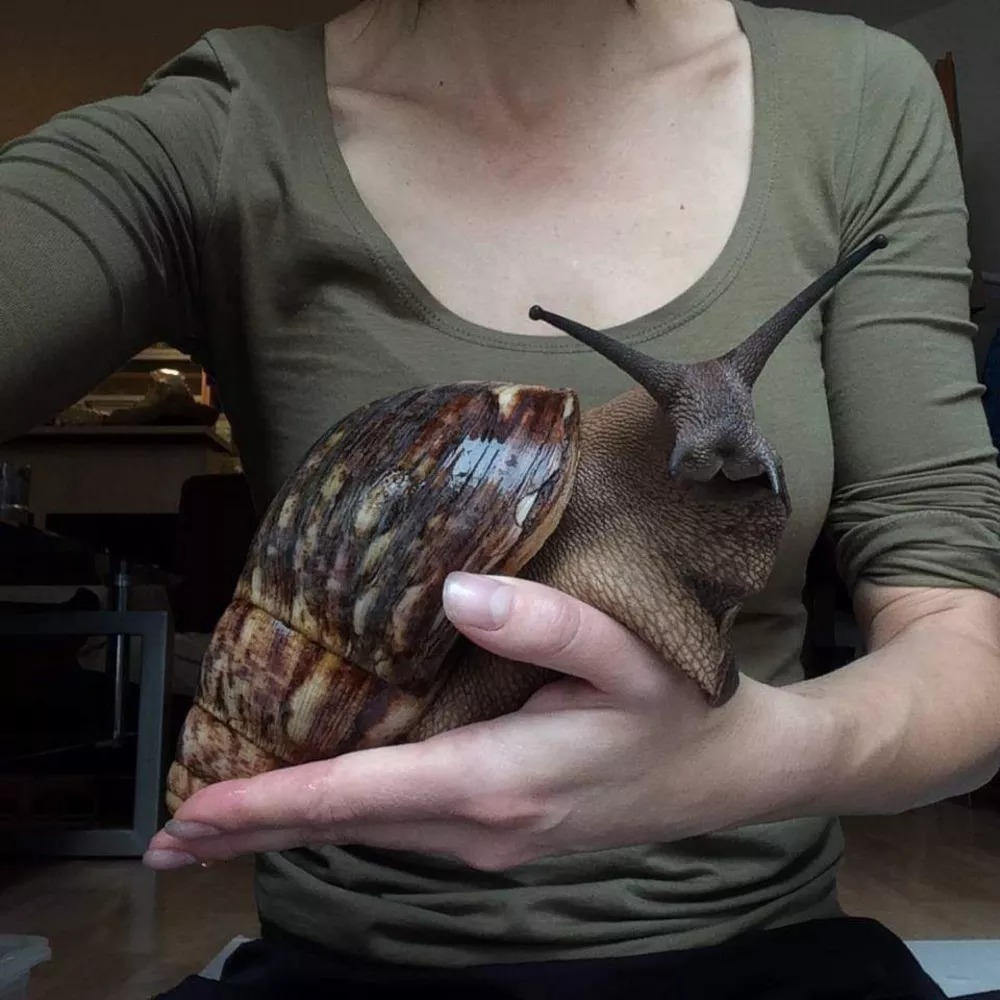
The biggest specimen ever documented was found on a snail safari in Sierra Leone in 1976. It measured 1 foot and 3.5 inches (39.3 cm) when fully expanded, with a shell length of 10.75 inches (27.3 cm). It was known as Gee Geronimo, and it was included in the Guinness Book of World Records as the world’s largest snail. However, its owner separated when their house became so overrun with snails that they put some in a container beneath their bed.
Each snail may live for up to ten years and reproduces swiftly. Giant African Land Snails, like other land snails, are hermaphrodites, with adults laying up to 1200 eggs each year.
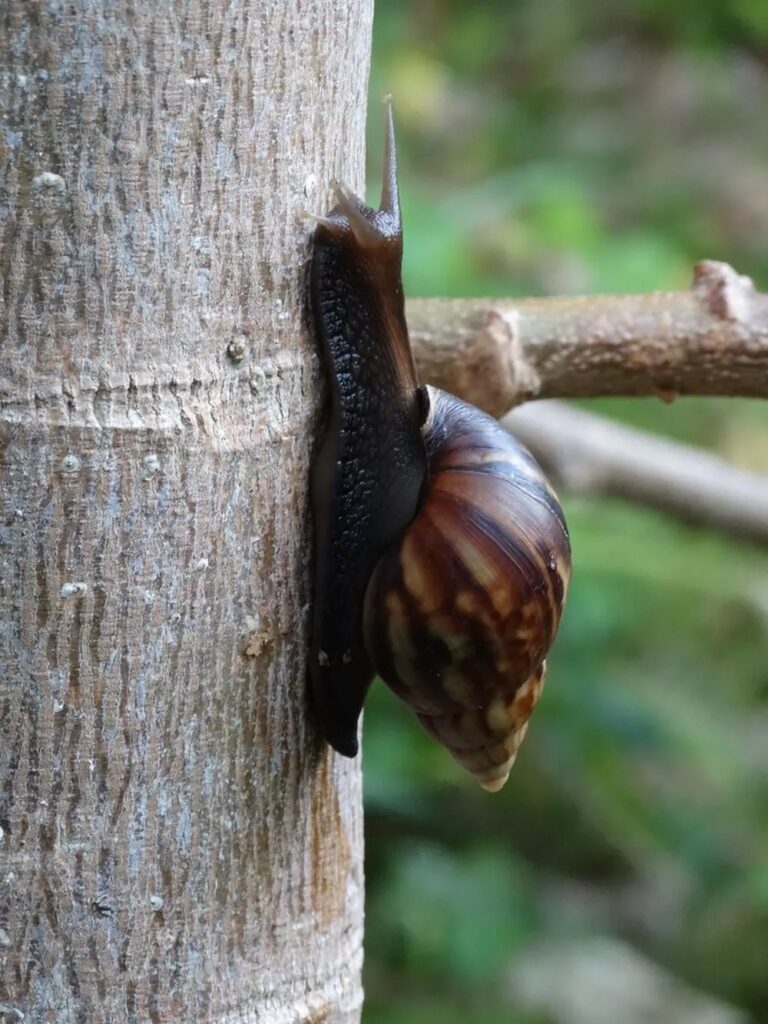
Giant African Snails are native to East Africa, but may now be found all over the world. These massive snails do not travel on purpose, but they have escaped or been transported to other nations on cargo ships after being gathered as pets. Because an adult may produce hundreds of eggs at a time, the species spread quickly in regions where it is not endemic.
The huge snail likes humid woodland environments, although it is equally at home in coasts, rivers, scrublands, marshes, and even in cities. It also has no trouble with colder locations because it can tolerate frigid temperatures in a semi-hibernation stage.
Its food consists of a wide array of plants because it is a herbivore. Biologists estimate that the Giant African Land Snail may devour over 500 distinct plant species. However, in order to reinforce its shell, it will occasionally consume cement and bones due to their high calcium content.
While keeping gigantic snails as exotic pets is popular in certain nations, they are considered invasive pests in the majority of regions where they are found. Their presence may be a big problem for farms due to their vast hunger for various plants, but they can also cause damage by nibbling off plaster and stucco from structures. They may also represent a health danger to people by transmitting the parasite rat lungworm, which has been linked to meningitis.
Imports helped establish the species in the United States in 1936. Originally meant for educational reasons and as pets, their number quickly grew out of control. In Florida, it was exterminated twice. The first eradication campaign began in the 1960s and lasted ten years and cost one million dollars. They resurfaced in 2011 and underwent another eradication campaign, which was concluded in 2021, with no further sightings confirmed after 2017. Giant African Snails are prohibited from being imported or owned in the United States because of their threat to agricultural and human health. It is still a danger in Hawaii and the Caribbean.
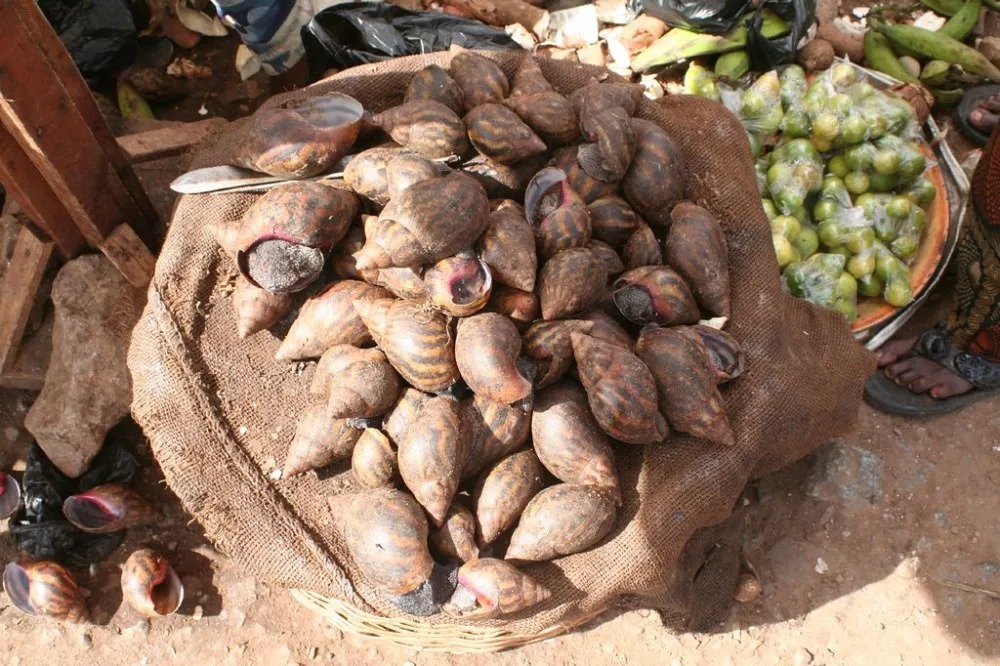
Giant African Land Snails, on the other hand, are highly valued as a delicacy in other areas of the world. The protein- and iron-rich snails are palatable if properly cooked. Some are caught in the wild, while others are raised in “snaileries.” They are typically served on toothpicks as a bar snack or cooked with peppers and rice.
In any case, they’re a sight to behold.