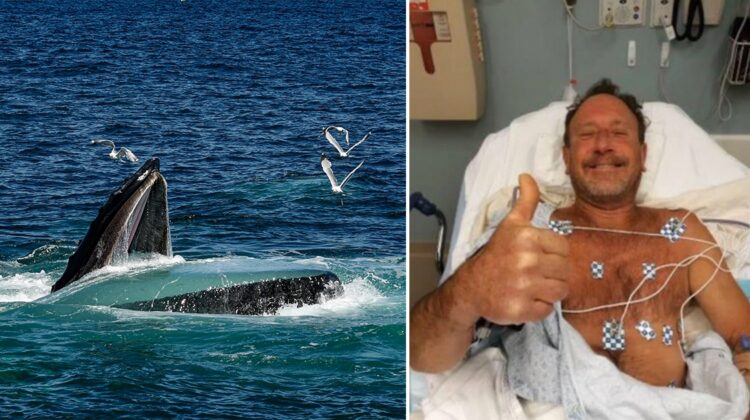
Michael Packard thought he was heading into the water for another ordinary day of lobster diving. Instead, the 56-year-old suddenly found himself inside a humpback whale’s mouth — and then trapped inside the enormous animal itself.
An Ordinary Dive That Turned Extraordinary
The encounter happened on June 11, 2021, off the coast of Provincetown, Massachusetts, while Packard was diving near Herring Cove Beach. The commercial lobster diver had left his boat, the Ja’n J, expecting another routine morning on the ocean floor, searching for lobster.
But within moments, everything changed. Packard was suddenly hit by an enormous force.
“All of a sudden, I felt this huge shove and the next thing I knew it was completely black,” he told the Cape Cod Times shortly after the encounter. “I could sense I was moving, and I could feel the whale squeezing with the muscles in his mouth.”
“I’m Done, I’m Dead”
At first, Packard thought the creature might have been a great white shark — a terrifying possibility in those waters. But something didn’t add up: there were no teeth, and he wasn’t covered in blood.
Then came a realization that seemed almost impossible: he was inside a whale.
“I was completely inside; it was completely black,” he recalled. “I thought to myself, ‘There’s no way I’m getting out of here. I’m done, I’m dead.’ All I could think of was my boys — they’re 12 and 15 years old.”
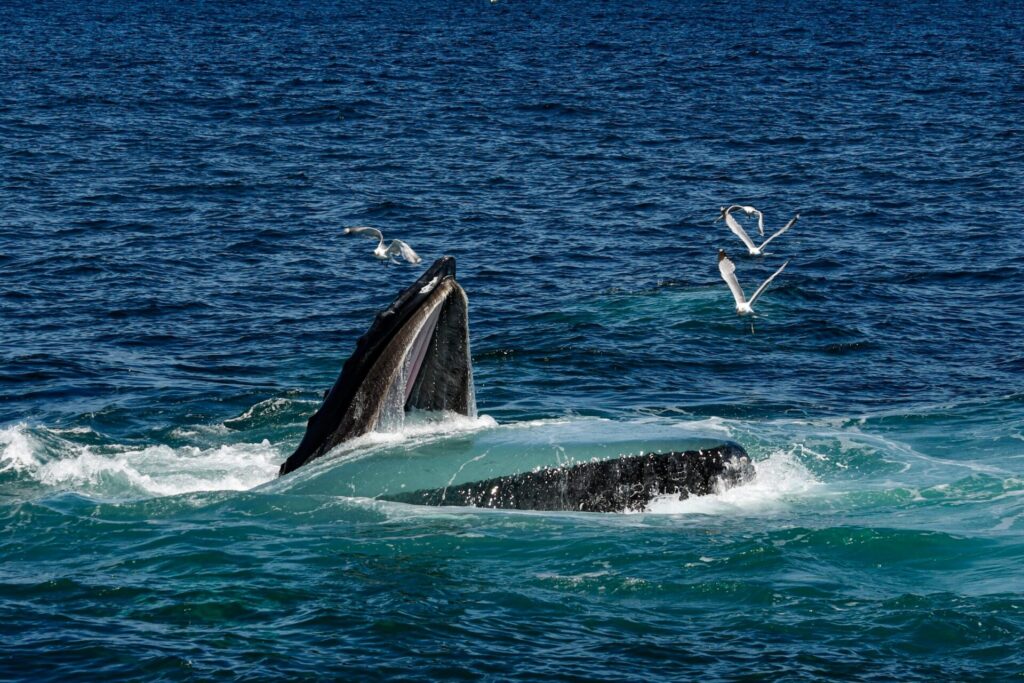
Packard was wearing his scuba gear, and with little else he could do, he began thrashing around inside the whale. The struggle lasted roughly 30 to 40 seconds — but for Packard, it must have felt like an eternity.
Spat Back Into The Water
Then something extraordinary happened. The whale surfaced, and Packard suddenly saw light.
“I saw light, and he started throwing his head side to side, and the next thing I knew I was outside — in the water,” he said.
The whale had spit him back out. His crewmates initially feared he’d been attacked by a shark, but soon realized what had actually happened. Packard was pulled from the water, rushed back to shore, and taken to Cape Cod Hospital.
His sister, Cynthia, later spoke with crewmate Josiah Mayo, who had witnessed the aftermath, recalling how relieved everyone was that it hadn’t been a shark attack — an animal Mayo said he saw regularly out on the water.
Could This Really Happen?
Humpback whales aren’t known for targeting humans. They feed primarily on small fish and krill, making Packard’s encounter an extraordinarily rare accident rather than any kind of predatory attack.
Jooke Robbins, director of Humpback Whale Studies at the Center for Coastal Studies in Provincetown, said the incident was virtually unheard of. She noted that a long, unlikely chain of circumstances would have had to line up for someone to end up in the path of a feeding whale — essentially describing Packard as being in the wrong place at exactly the wrong moment, rather than the target of any aggression.
A Remarkably Lucky Escape
Despite the terrifying ordeal, Packard escaped without any broken bones. He was released from the hospital days later with what was described as significant soft-tissue damage.
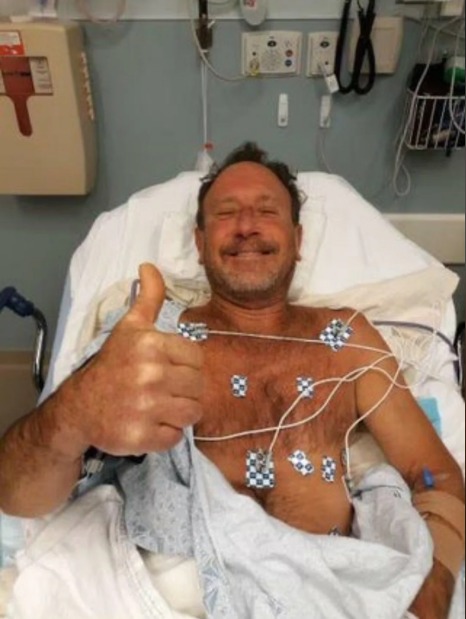
“I am very bruised up but have no broken bones,” Packard wrote on the Provincetown Community Space Facebook page. “I want to thank the Provincetown rescue squad for their caring and help.”
Perhaps most remarkable of all: he said he intended to return to diving once he’d recovered.
From Lobster Boat To “Jimmy Kimmel Live!”
The story went from a local fishing incident to a global headline almost overnight. Before long, Packard was sitting inside a giant whale prop on Jimmy Kimmel Live!, retelling the story to a stunned and laughing audience alongside his crewmate, Josiah Mayo.
“And then last week, you were swallowed by a whale,” Kimmel opened.
“I wasn’t swallowed, Jimmy,” Packard replied with a smile. “I was in his mouth. Get that straight.”
“I got a show to do, and I’m going with swallowed,” Kimmel joked back.
Packard described the 30 to 40 seconds inside the whale as feeling similar to riding in a submarine, a car, or a motorcycle, with water rushing all around him. Kimmel sent him off with a handful of memorable gifts, including a Free Willy DVD, a bottle of “whale repellent,” a commemorative T-shirt, and a whale-shaped cake with a tiny figure tucked inside it.
Packard, for his part, took it all in stride.
“I want to apologize to the whale for getting in his way,” he said. “And I won’t ever do it again.”
Life After The Whale
In a later interview, Packard was asked whether the experience had changed how he saw life. Interestingly, it wasn’t his first brush with death — more than 20 years earlier, he had also survived a plane crash in Costa Rica.
Despite both experiences, Packard said he never felt as though they’d given him some profound new outlook.
“I’ve heard people that have had life-or-death experiences and how it’s changed their lives, given them a new outlook, and I didn’t really get any of that,” he said. “I’m still the same old guy doing the same old things.”
At the time, Packard also revealed he was working on a documentary film about the encounter alongside Boston Globe journalist and filmmaker David Abel.
So while the experience made Packard briefly famous around the world, it doesn’t seem to have fundamentally changed who he is — still the same lobster diver, now with one of the most unbelievable survival stories imaginable.
Frequently Asked Questions (FAQ)
1. Did the humpback whale actually try to eat Michael Packard? Not intentionally. Experts say humpback whales feed by “gulp feeding” — opening their mouths widely to scoop up huge volumes of water, fish, and krill at once. Packard was almost certainly caught up by accident during a feeding lunge, not targeted as prey.
2. Could a humpback whale actually swallow a human? No — even if a person were fully swallowed, a humpback whale’s throat is far too narrow to pass a human body through to the stomach. This is part of why experts consider what happened to Packard so unusual: he ended up in the whale’s mouth, not further inside its digestive system.
3. How did Michael Packard survive without drowning? Packard was wearing full scuba gear, including a breathing regulator, during the incident. That allowed him to keep breathing throughout the 30 to 40 seconds he was inside the whale’s mouth.
4. How common are encounters like this? Extremely rare. Marine biologists, including experts at the Center for Coastal Studies in Provincetown, say they know of no comparable documented case, describing it as an extraordinary coincidence rather than a recognized risk of diving near whales.
5. What happened to Michael Packard after the incident? He recovered from soft-tissue injuries with no broken bones, returned to lobster diving, and later discussed working on a documentary about the experience.
Leave a Reply