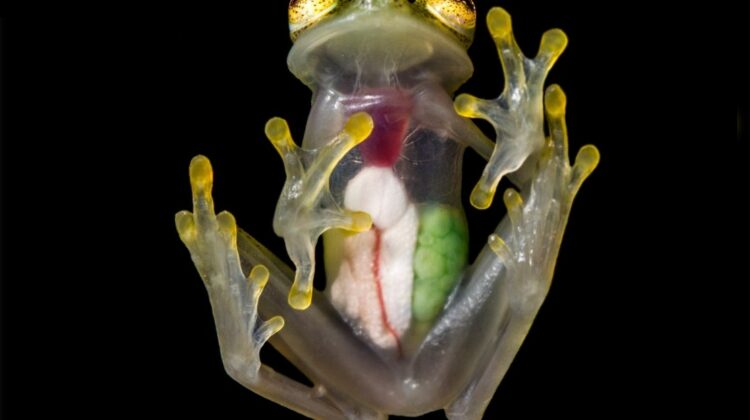
In the enchanting rainforests of Central and South America, a captivating spectacle unfolds as one encounters the glass frog – a unique amphibian that boasts partial transparency, offering a mesmerizing view into its internal world. Contrary to what one might expect, the translucent skin of the glass frog serves not as a vulnerability but as a sophisticated defense mechanism that has long baffled scientists.
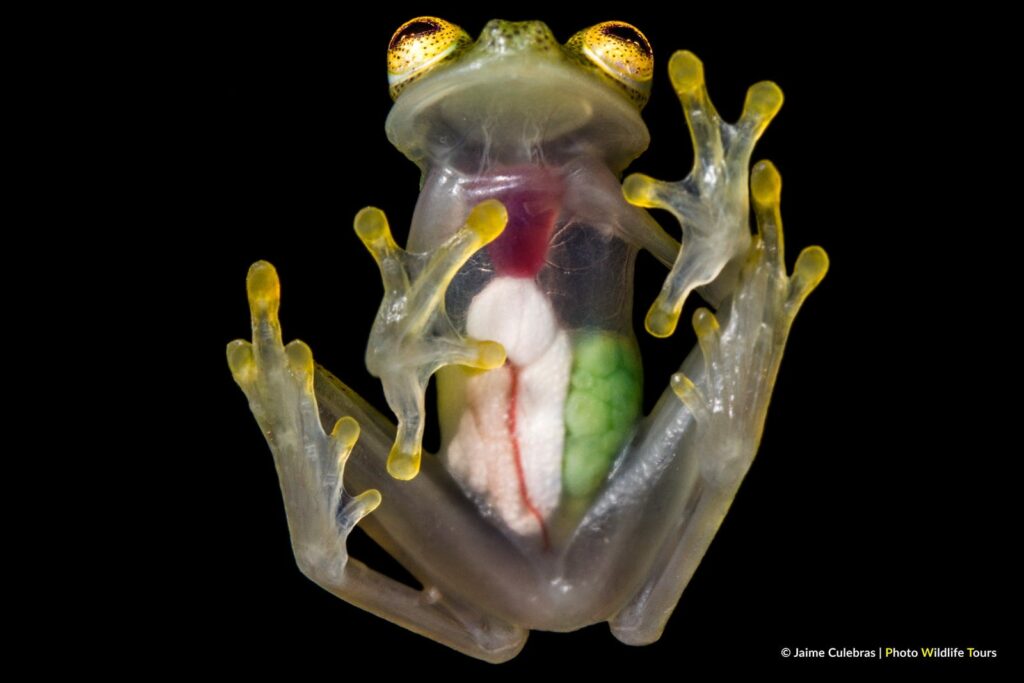
Native to the lush landscapes of Panama, Colombia, Ecuador, and Costa Rica, glass frogs stand out as some of the only partially see-through land animals on Earth. Their distinctive feature lies in their translucent skin, granting observers a rare glimpse of their inner workings, including intestines, lungs, and, in some remarkable instances, even their beating heart. This peculiar characteristic sets them apart as an extraordinary species that challenges conventional notions of camouflage and survival in the wild.
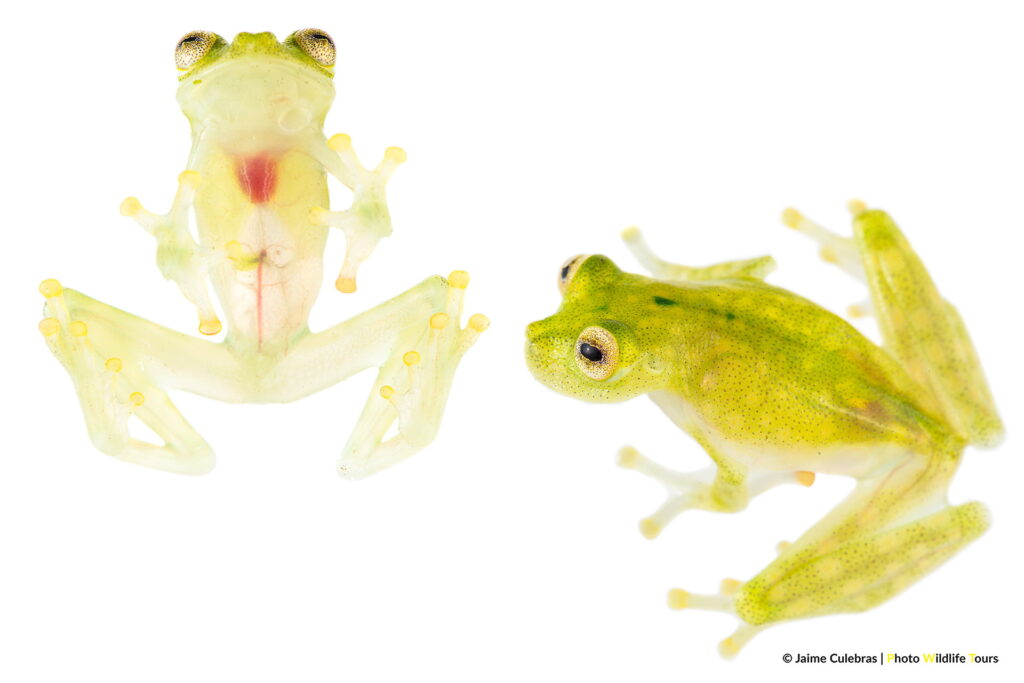
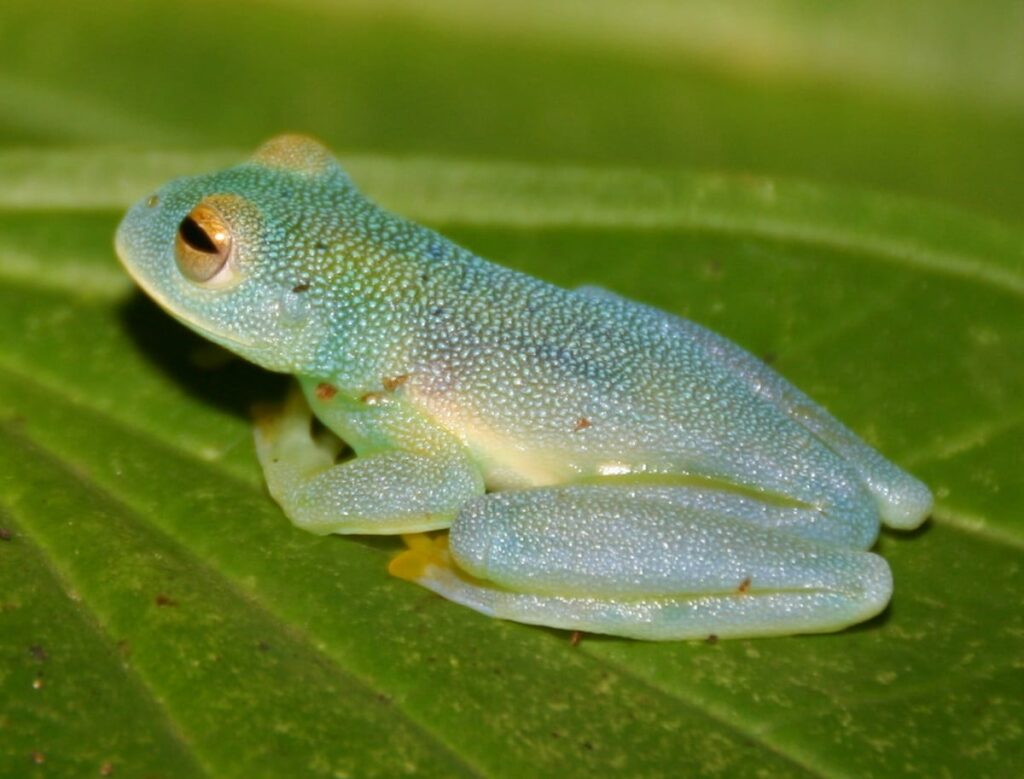
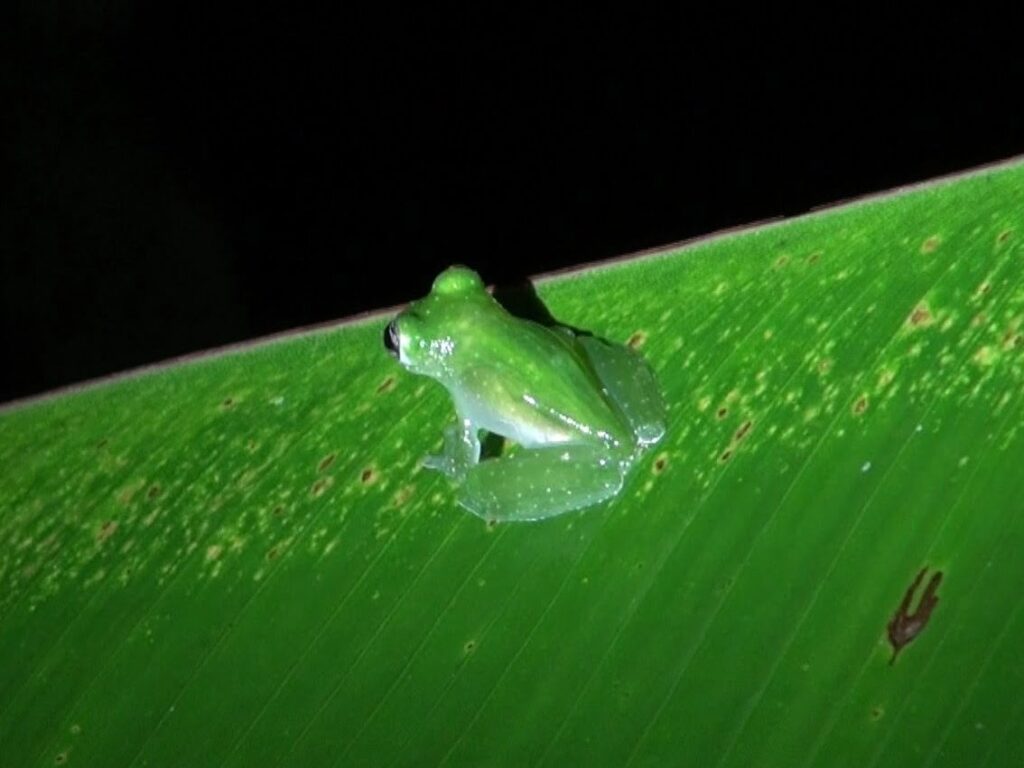
At first glance, the evolutionary advantage of translucent skin appeared to be a mystery. The glass frog’s coloration did not seem to offer effective camouflage against its surroundings. Recent scientific discoveries, however, have shed light on the ingenious defense strategy employed by these amphibians. Studies revealed that the frog’s body color changed minimally against varying foliage shades, but the legs, being more translucent, exhibited changes in brightness. When the frog rests with its translucent legs encircling the body, the softer outline becomes less noticeable against the leaf, making it less susceptible to detection by predators. Experiments using computer-generated images and gelatine models confirmed that translucent frogs were indeed less visible and faced fewer attacks from birds.
Behavioral ecologist Innes Cuthill from the University of Bristol in the UK expressed the significance of these findings, stating, “Glass frogs illustrate a new mechanism that we haven’t really considered before. In fact, we are just beginning to shed light on how the different forms of camouflage really work.”
While many glass frog species exhibit partial translucency, allowing observers to witness bones, intestines, and other internal organs, seeing the heart remains a rarity. Among the select glass frog species that achieve such a high level of translucency is the Hyalinobatrachium yaku, residing in the Amazonian lowlands of Ecuador.
Photographer Jamie Culebras recently unveiled a breathtaking series of photos capturing a female glass frog in the Mashpi Reserve in Ecuador. These images offer a unique perspective, showcasing not only the internal organs but also the eggs growing inside the frog. Culebras remarked on the significance of the discovery, explaining, “It is a female, and you can also see the eggs that are growing inside, the green balls, which will later lay on the underside of a leaf of a plant over a stream and whose mass eggs will be taken care of by the male. After seeing this, you can understand why these kinds of frogs are called glass frogs.”
In essence, the glass frog stands as a testament to nature’s astonishing adaptability and serves as a living masterpiece, challenging our understanding of camouflage and survival strategies in the intricate tapestry of the rainforest.
Leave a Reply