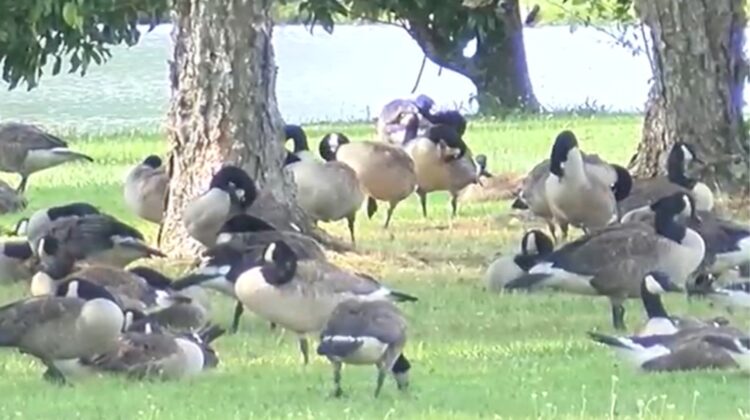
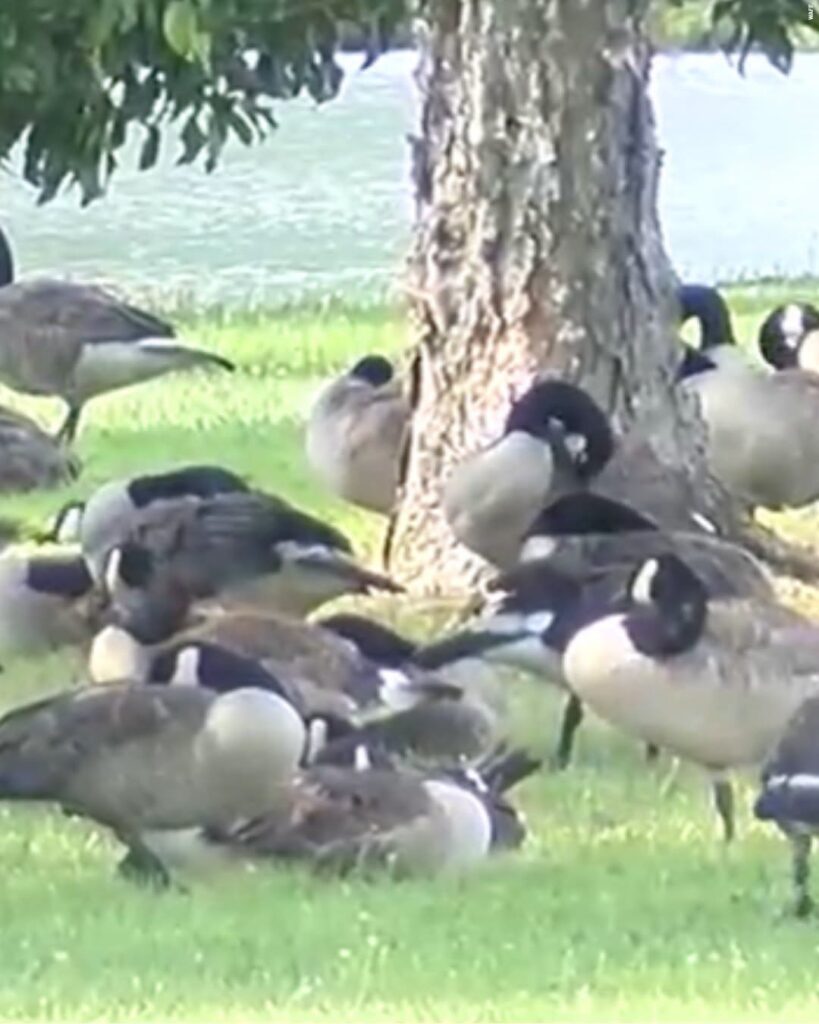
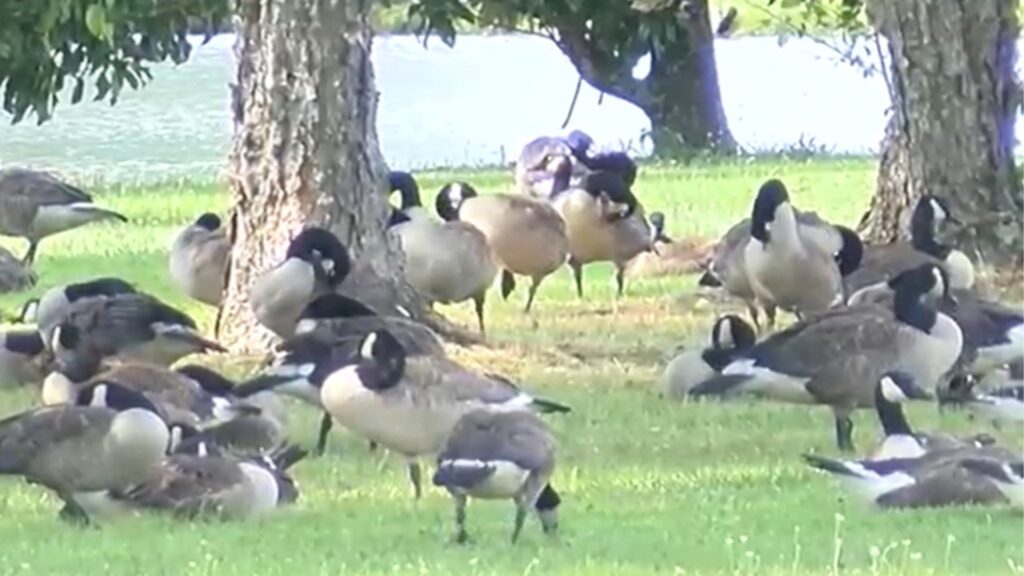
More than 550 Canada geese were euthanized this week in an Alabama neighborhood after wildlife officials determined the growing population had reached levels considered unsafe for both people and animals.
The large-scale operation took place at Heritage Plantation, where the neighborhood’s homeowners association (HOA) worked with the U.S. Department of Agriculture (USDA) to address what officials described as years of uncontrolled population growth.
According to the HOA, nine USDA wildlife specialists carried out the overnight operation, capturing and euthanizing approximately 550 geese. Only a handful of birds reportedly escaped, while ducks and swans living in the area were left unharmed.
Community leaders said the decision followed extensive consultations with USDA wildlife biologists, who concluded that the number of geese had grown to roughly five times the level considered manageable for the property. Officials reportedly described it as one of the largest goose management operations they had ever conducted.
The neighborhood says the cull was not its first attempt to solve the problem.
Before authorizing lethal control, the HOA said it had explored several non-lethal strategies aimed at reducing the flock. However, those efforts failed to slow population growth, while residents continued reporting problems ranging from excessive droppings and property damage to concerns about public health.
Officials also cited disease risks as a major factor. According to the HOA, outbreaks of avian influenza were linked to the deaths of numerous geese, as well as swans, dogs, and illnesses affecting some residents over the past year. While wildlife experts note that avian influenza primarily affects birds, authorities said reducing overcrowding was considered an important disease-management measure.
The controversial decision quickly sparked intense public reaction.
Neighborhood board members said they received hundreds of threatening messages after news of the planned operation became public. Some threats reportedly included personal information being shared online, while others targeted individual board members through social media and email.
According to the HOA, the severity of the threats prompted investigations involving both local police and federal authorities. Officials said the USDA intentionally withheld the exact timing of the operation to protect personnel carrying out the wildlife management work.
The cull has also triggered demonstrations from opponents, many of whom argue that non-lethal alternatives should have remained the preferred solution. Wildlife management experts, however, often note that large resident goose populations can become difficult to control once they exceed the carrying capacity of an area, particularly in communities with artificial lakes, manicured lawns, and abundant food sources.
Following the operation, the HOA announced several long-term measures designed to prevent another population explosion.
One of the primary changes will be stricter enforcement of rules prohibiting residents from feeding wildlife. Officials said feeding geese encourages large flocks to remain year-round instead of migrating naturally, contributing to rapid population growth.
The neighborhood also plans to continue egg-oiling, a wildlife management technique in which eggs are coated with vegetable oil to prevent embryo development while allowing adult birds to continue nesting without laying replacement eggs.
Additional recommendations include regularly discouraging geese from gathering in common areas through non-lethal hazing methods. Suggested techniques include trained dogs, remote-controlled boats, green laser deterrents during appropriate conditions, and modifying pond shorelines to make them less attractive nesting habitats.
Community leaders acknowledged that maintaining a balanced wildlife population will require ongoing cooperation from residents if similar measures are to be avoided in the future.
While the operation has generated strong opinions on both sides of the debate, wildlife professionals emphasize that managing urban goose populations has become an increasingly complex challenge across North America as expanding suburban developments create ideal habitats for large, non-migratory flocks.
The growing conflict between expanding wildlife populations and human communities is becoming an increasingly important conservation challenge. Wildlife biologists emphasize that effective management relies on a combination of habitat restoration, disease monitoring, responsible public behavior, and science-based conservation strategies. Preventing overpopulation before it reaches crisis levels not only protects ecosystems but also reduces risks to public health, domestic animals, and native wildlife, highlighting the importance of sustainable wildlife management programs guided by ecological research.
Leave a Reply