
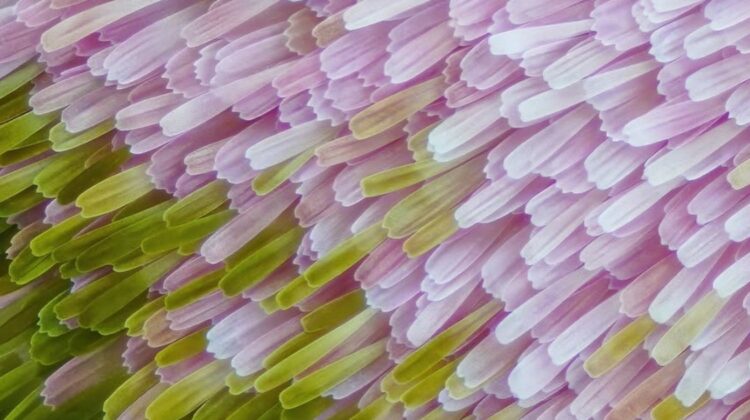
This is what butterfly wings look like up close — and it completely changes the way you see them.
When science meets art, something extraordinary happens. That’s exactly what occurred when photographer and biochemist Linden Gledhill turned his lens toward one of nature’s most delicate creations: butterfly wings.
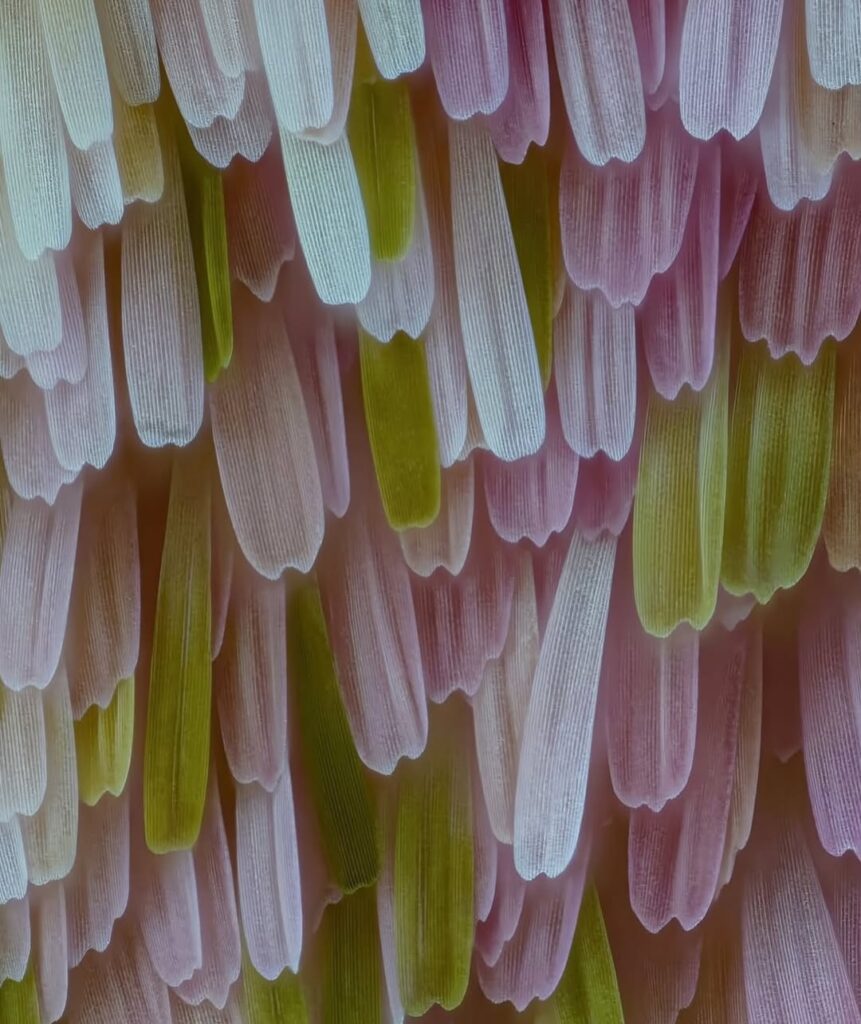
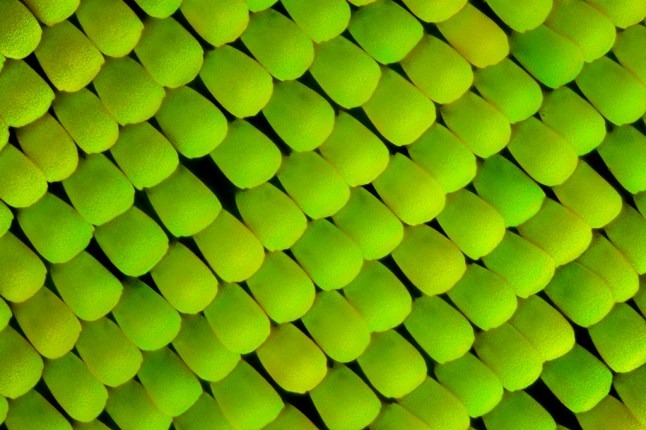
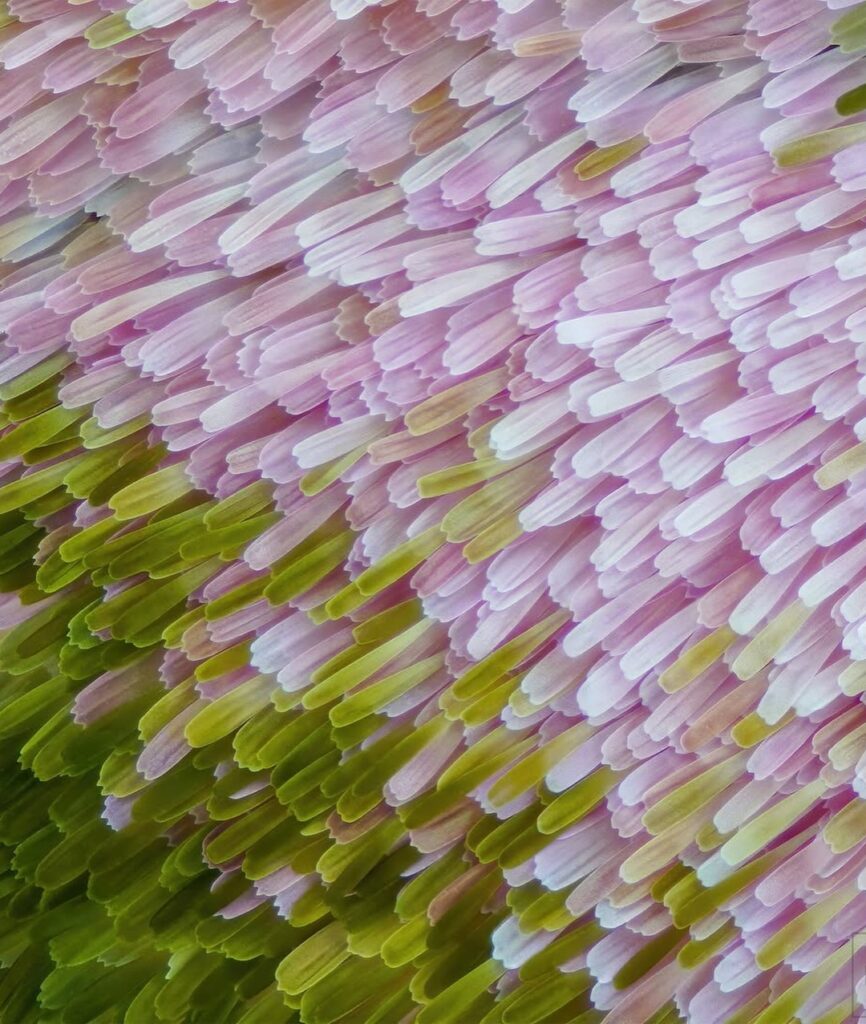
Using advanced macro photography techniques, Gledhill captured a hidden world invisible to the naked eye. What appears from a distance as a smooth, colorful surface is, in reality, a breathtaking landscape of thousands of microscopic scales layered like roof tiles. Each scale resembles a tiny petal or feather, overlapping with mathematical precision. The result is what many describe as a “wing-ception” effect — miniature wing-like structures forming the larger wing itself.
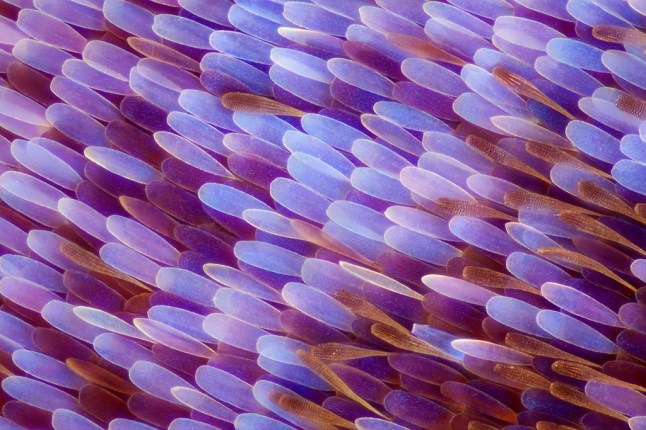
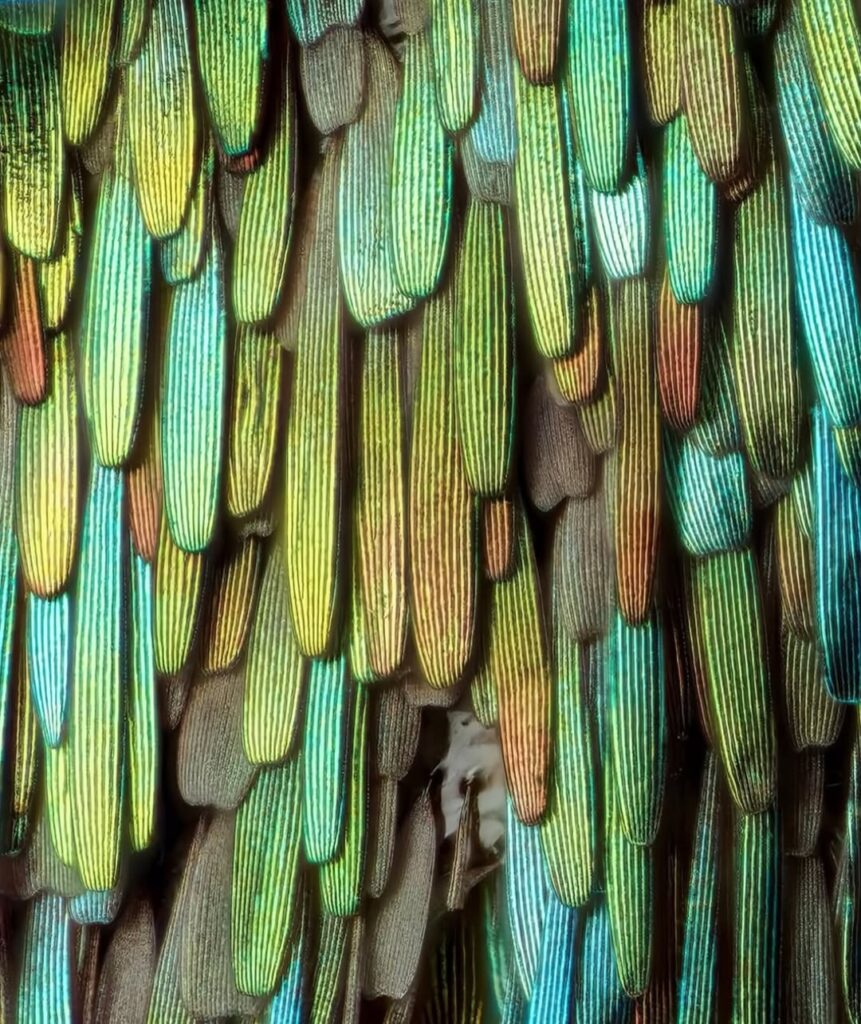
Butterfly wings are not covered in scales like reptiles. Instead, they are made of ultra-light, intricately structured scales composed primarily of chitin. These scales are responsible for the butterfly’s color, including the shimmering iridescence seen in certain species. Some hues come from pigments, while others are created by microscopic structural patterns that refract and scatter light — a phenomenon known as structural coloration.
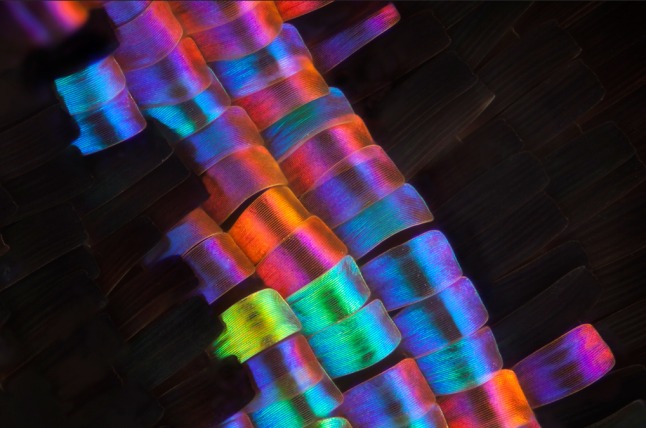
To capture these images, Gledhill uses a modified microscope paired with a high-speed camera system. Because depth of field at such magnification is almost nonexistent, he photographs each wing in up to 200 separate exposures, adjusting focus by intervals as small as one micron. These images are then combined using precision stacking software to create a single ultra-sharp composition with astonishing detail.
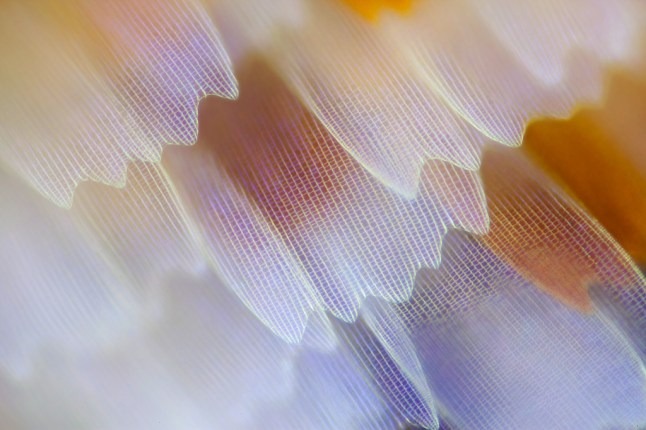
The results are mesmerizing. Some wings appear woven with delicate thread-like ridges that shimmer under light. Others look almost reptilian, with textured patterns resembling armor. Under magnification, the wings transform into abstract landscapes — ridges, valleys, repeating geometries — each species revealing its own architectural fingerprint.
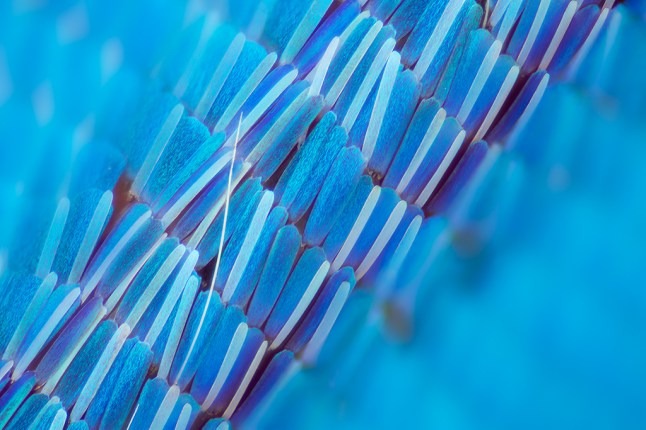
Gledhill has written that he is fascinated by the unexpected physical beauty that surrounds us — beauty we often overlook simply because we do not see it closely enough. His work bridges biology and visual art, reminding us that complexity exists at every scale of life.
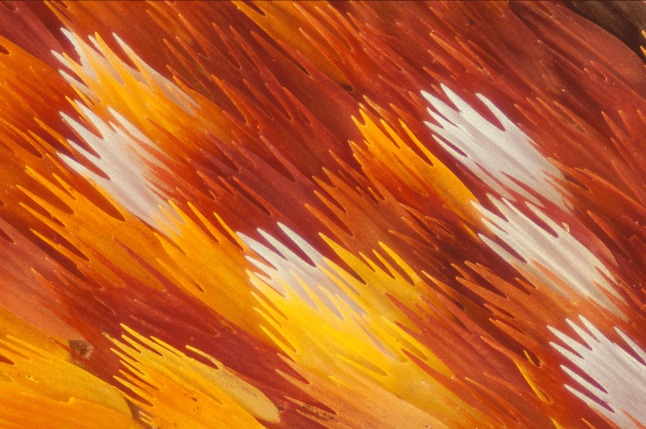
Butterflies themselves are biological marvels. Beyond their symbolic beauty, they play essential ecological roles as pollinators and indicators of environmental health. The intricate scales on their wings are not merely decorative; they assist with temperature regulation, aerodynamics, camouflage, and mate attraction. What seems ornamental is, in fact, evolutionary engineering refined over millions of years.
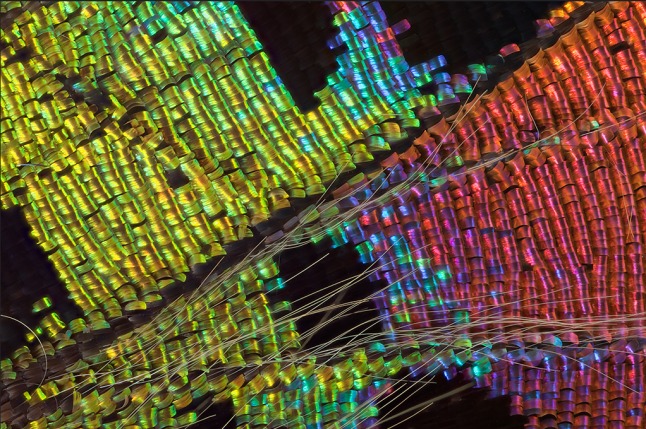
When we pause to examine something as familiar as a butterfly wing, we realize how much of the natural world operates beyond casual perception. Magnification does more than enlarge — it reveals structure, intention, and astonishing design.
Sometimes, the most powerful discoveries are not found in distant galaxies or deep oceans, but in the fragile wing of a creature that fits in the palm of your hand.
Macro photography equipment, high-resolution imaging systems, microscope modifications, and professional focus-stacking software are increasingly popular among scientific photographers and
advanced hobbyists. Precision optics, high-speed cameras, and image-processing tools allow creators to reveal microscopic biological structures with museum-level clarity. Investment in quality macro lenses and computational photography software can significantly elevate both artistic and scientific imaging results.
Leave a Reply