• Skip to main content
  • Skip to primary sidebar
  • Skip to footer
  • Home
  • About Us
  • Copyright Report
  • Submit Content
  • Terms
  • Privacy Policy
  • Legal Disclaimer

Hasan Jasim

Hasan Jasim is a place where you may get entertainment, viral videos, trending material, and breaking news. For a social generation, we are the largest community on the planet.

Why Does Evolution Keep Creating Crabs Out of Everything?

by Hasan Jasim Editorial Team Leave a Comment

ShareTweet

If you’ve spent enough time online, you’ve probably heard the meme that claims everything eventually turns into crabs.

The meme claims that whether you are a fish or Sean Penn, you will eventually turn into a crab. This is obviously just a joke, but it’s based on some amusing evolution. Because, as you can see, everything in nature (luckily just crustaceans) appears to be striving to turn into a crab.

Crustaceans have evolved into the shape of a crab at least 5 independent times. I do not like this. pic.twitter.com/9ElLOFdOED

— Amy A (@lolennui) October 13, 2020

Yes, evolution appears to continually producing creatures that resemble crabs, much like tech bros who repeatedly try to build a new mode of transportation and unintentionally redesign the bus. Carcinization was first used as a term in 1916, when it was initially explained as “one of several attempts by nature to create a crab.”

Convergent evolution occurs when traits that share a form or function arise in species from various eras or places, even when they did not exist in the animals or plants’ last common ancestor. Consider the evolution of echolocation in both whales and bats, as well as the development of flying in pterosaurs, birds, insects, and bats. Stop stealing everyone else’s evolutions, bats; get your own.

Consider how several creatures, such as hedgehogs, echidnas (of the monotremes), and porcupines (rodents), have developed thorny protusions (erinaceinae). Despite appearances, the three likely shared a last common ancestor during the period of the dinosaurs; they simply ended up with comparable traits.

Convergent evolution essentially occurs when plants and animals must adapt to comparable ecological niches or habitats and come up with comparable solutions. In decapod crustaceans, such as porcelain crabs, hairy stone crabs, and coconut crabs, crab-like morphologies are considered to have arisen independently at least five times.

Many things that you may reasonably refer to as crabs (since they appear to be and behave like, well, crabs) aren’t truly crabs, as the following video illustrates “transformed into something that resembled crabs. Independently. Time and time again.”

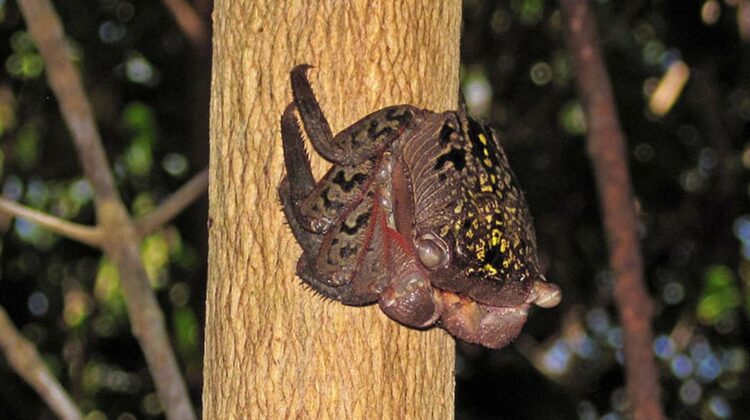
Cretaceous-era animals’ more lobster-like shapes grew more compressed, and their shorter back legs took on a longer, crab-like appearance. The advantage appears to be that the crab shape makes it easier for them to walk and burrow, and some crabs can even climb trees as a result of the design (see the horrifying main image).

Additionally, it’s probable that animals with shorter tail segments survived longer due to both their mobility (described above) and the fact that they provided fewer hooks for predators.

That is why everything wants to be a crab until we learn more.

Filed Under: Trends Worldwide Tagged With: crabs, creating, does, everything, evolution, keep, trends, worldwide

Reader Interactions

Leave a Reply Cancel reply

Your email address will not be published. Required fields are marked *

Primary Sidebar

More to See

The Victoria Crowned Pigeon is nature’s most opulent bird (20 Pics)

By Hasan Jasim Editorial Team

The Profound Legacy of Koko the Gorilla: A Remarkable Journey of Empathy and Communication

By Hasan Jasim Editorial Team

Puppy was found in woods, tied up in drawstring bag and left for dead — now he has a happy ending

By Hasan Jasim Editorial Team

Every autumn, a massive smiley face of trees appears in Oregon — here’s how it got there.

By Hasan Jasim Editorial Team

Red-Eyed Crocodile Skink

By Hasan Jasim Editorial Team

‘Ugly’ Shelter Dog Doesn’t Understand Why She’s Constantly Being Passed Over

By Hasan Jasim Editorial Team

The Pharaoh of Pop”: 3,000-Year-Old Bust Eerily Resembles Michael Jackson, Says Museum

By Hasan Jasim Editorial Team

Footer

ABOUT HASANJASIM.ONLINE

Hasanjasim.online is a digital platform dedicated to publishing well-researched articles about the animal kingdom, nature, and the environment. Our editorial team works to source stories from credible outlets, scientific research, and verified reports, aiming to inform as much as we entertain. From wildlife conservation and animal behavior to natural wonders and environmental science, we cover the topics that help readers better understand and appreciate the natural world. Whether you're a lifelong nature lover or simply curious about the planet we share, Hasanjasim.online aims to be a trustworthy destination for stories worth reading — and worth citing.

Recent

  • Euphorbia Hirta (“Asthma-Plant”): What Traditional Use and Real Research Actually Show
  • A Mystery Animal Has Been Randomly Attacking People in New Hampshire — Here’s What We Know
  • A Woman Was Filmed Sharing Her Ice Cream With Her Dog — Here’s What Vets Actually Say About It
  • Dolphin Calf Incident in Ceuta Sparks Outrage After Disturbing Beach Footage Emerges
  • Lactuca Serriola Root: Traditional Uses of Prickly Lettuce (Wild Lettuce) Root
  • The Puppy a Firefighter Couldn’t Leave Behind — and the Story Didn’t End There
  • A Mother Dog Dove Into Floodwater Again and Again — Until All 7 of Her Puppies Were Safe

Search