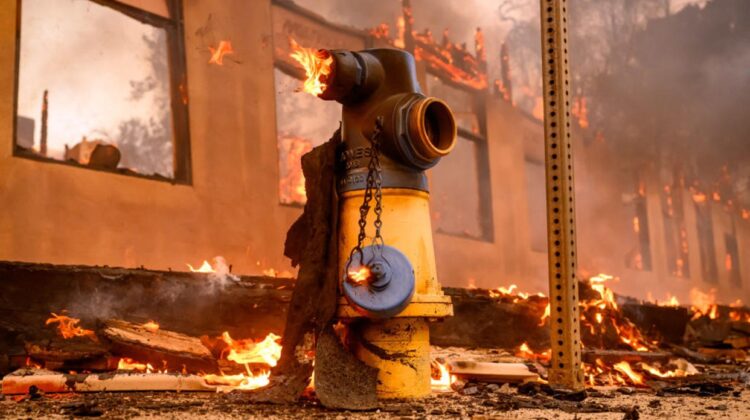
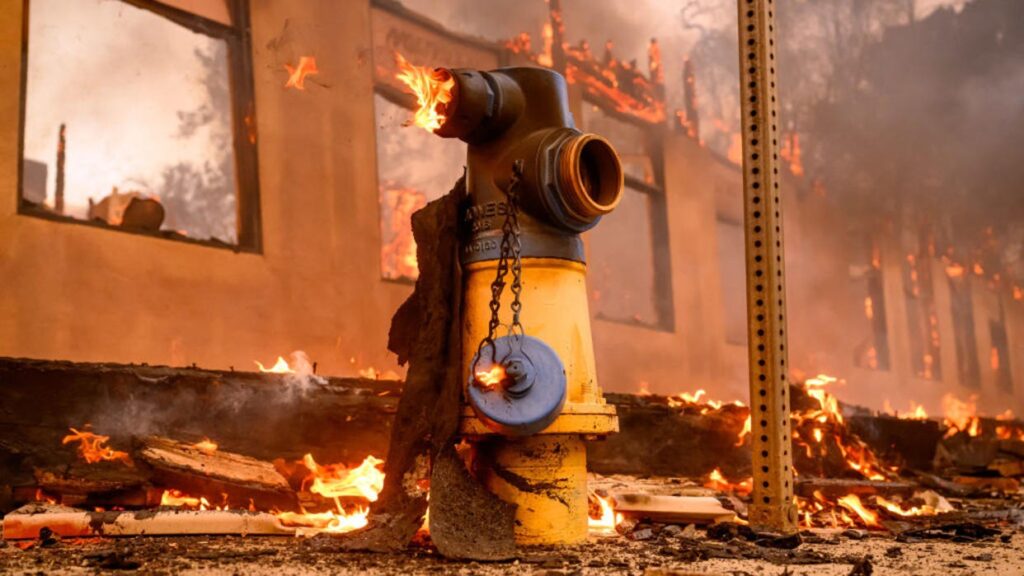
As California’s wildfires grow increasingly devastating, a troubling issue has emerged: dry fire hydrants and inadequate water pressure in critical moments. This article explores the reasons behind these challenges, their impact on firefighting efforts, and the urgent need for urban water infrastructure upgrades.
The Alarming Reality of Dry Hydrants
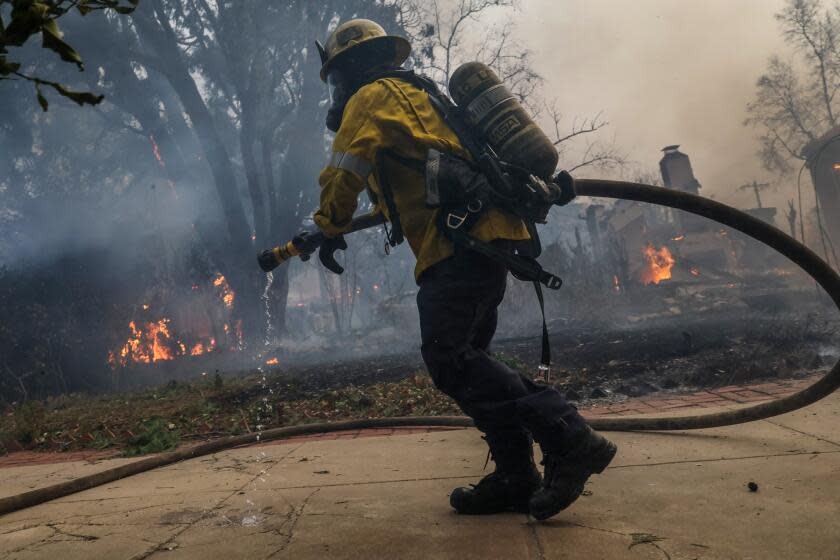
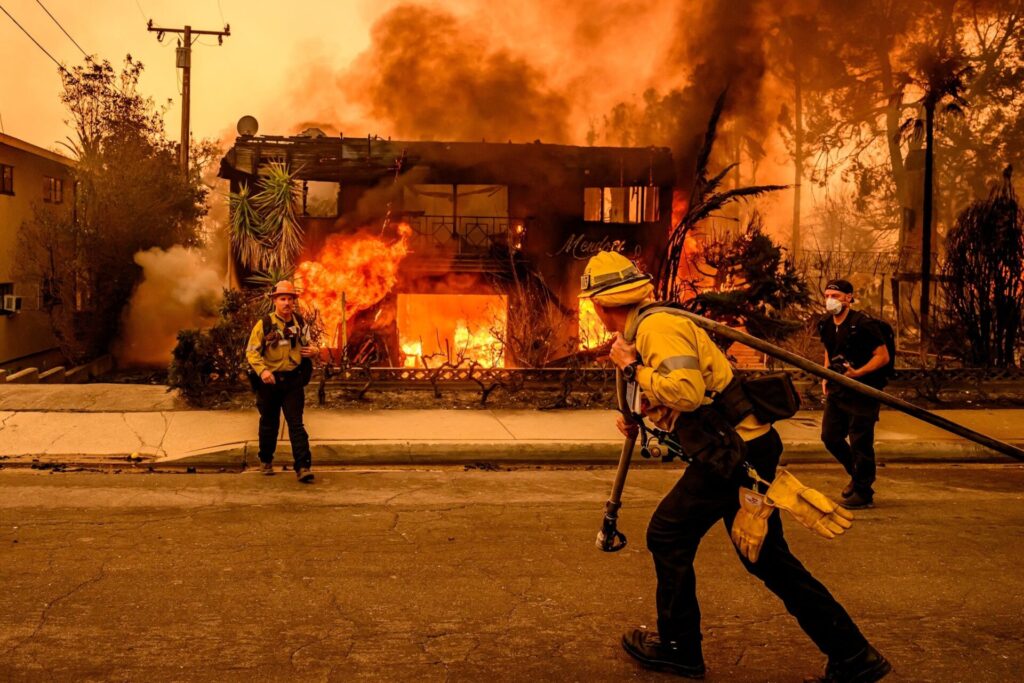
Firefighters combating blazes in Los Angeles, including the Palisades and Eaton fires, reported hydrants running dry. These fires have destroyed thousands of homes and pushed local water systems to their limits. The cause? A combination of aging infrastructure, insufficient storage, and urban water systems not designed for large-scale wildfires.
Martin Adams, former general manager of the Los Angeles Department of Water and Power (DWP), explained:
“The system has never been designed to fight a wildfire that envelops an entire community.”
Key Challenges in Urban Water Systems
- Water System Design Limitations
Urban water systems are typically built to handle localized fires in homes or commercial buildings. Massive wildfires, however, demand water volumes far beyond the system’s capacity. - Topographical Constraints
Areas like Pacific Palisades rely on gravity-fed water storage tanks. During the recent fires, these tanks ran dry as firefighters drew water faster than it could be replenished. - Power Outages and Equipment Damage
Fire-induced power outages further exacerbated water shortages, cutting off pumps and reducing pressure in hydrants. - Rising Wildfire Intensity
Climate change-driven “climate whiplash” — abrupt shifts from wet to dry weather — has made wildfires more frequent and intense. Current water infrastructure struggles to keep up.
Emergency Measures Taken
To combat water shortages, city officials deployed tanker trucks to supply water to fire crews. Backup generators and borrowed water from neighboring utilities helped mitigate the crisis in some areas. Yet, these measures highlighted the lack of preparedness for such large-scale disasters.
The Cost of Inaction
Experts like Kathryn Sorensen from Arizona State University argue that investments in expanded water storage are essential.
“Given the known risk of wildfires, it’s fair to question whether more water storage should have been added in previous years.”
Similarly, Gregory Pierce of UCLA noted that while upgrades would be costly, they are increasingly necessary as wildfires become the norm.
The Path Forward: Building Resilient Water Systems
- Expand Water Storage Capacity
Cities must build additional storage tanks, especially in high-risk, hillside areas. - Modernize Infrastructure
Upgrading pipelines, pumps, and pressure systems can ensure better water flow during emergencies. - Adopt Advanced Firefighting Solutions
Innovative solutions like using swimming pools, ocean water, and mobile reservoirs should become standard practice. - Community Investment
Residents in fire-prone areas may need to fund these improvements through higher utility fees or taxes.
California’s wildfires expose the vulnerabilities in urban water systems. Addressing these issues will require significant investment, innovative solutions, and a commitment to future-proofing infrastructure. As the climate crisis intensifies, cities across the West must act now to ensure their water systems can meet the demands of a rapidly changing environment.
Controlled burns. Aboriginal culture in Australia – been doing it for the last 50,000 years. White man not smart. https://www.nature.org/en-us/about-us/where-we-work/asia-pacific/australia/stories-in-australia/bringing-indigenous-fire-back-to-northern-australia/#:~:text=Aboriginal%20people%20have%20lived%20in,the%20land%20and%20regenerate%20vegetation.