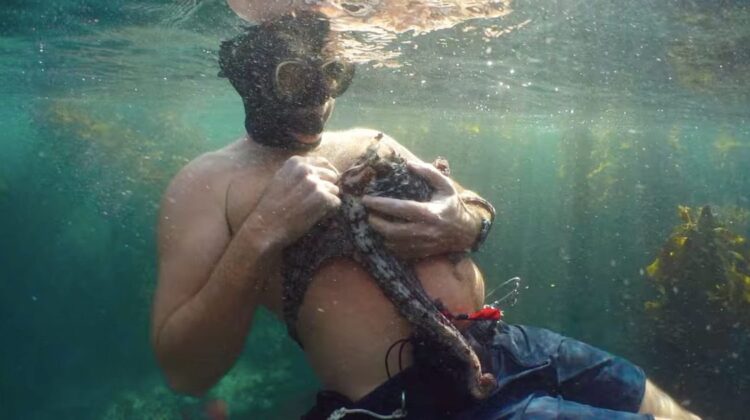
Craig Foster, a renowned nature videographer who was suffering from chronic burnout and adrenal exhaustion at the time, made friends with a speckled, eggplant-hued octopus while freediving to shake off his stupor in 2010. The octopus was first hesitant to move around freely in Foster’s presence, but the octopus eventually learned that Foster was not a threat. The gradual acclimatization process resulted in a heartwarming encounter in which the octopus gently stretches one of her arms onto his fingers, playfully latching on with her suckers and surprising Foster. Netflix chronicled the entire process, and you can see how it progressed here.
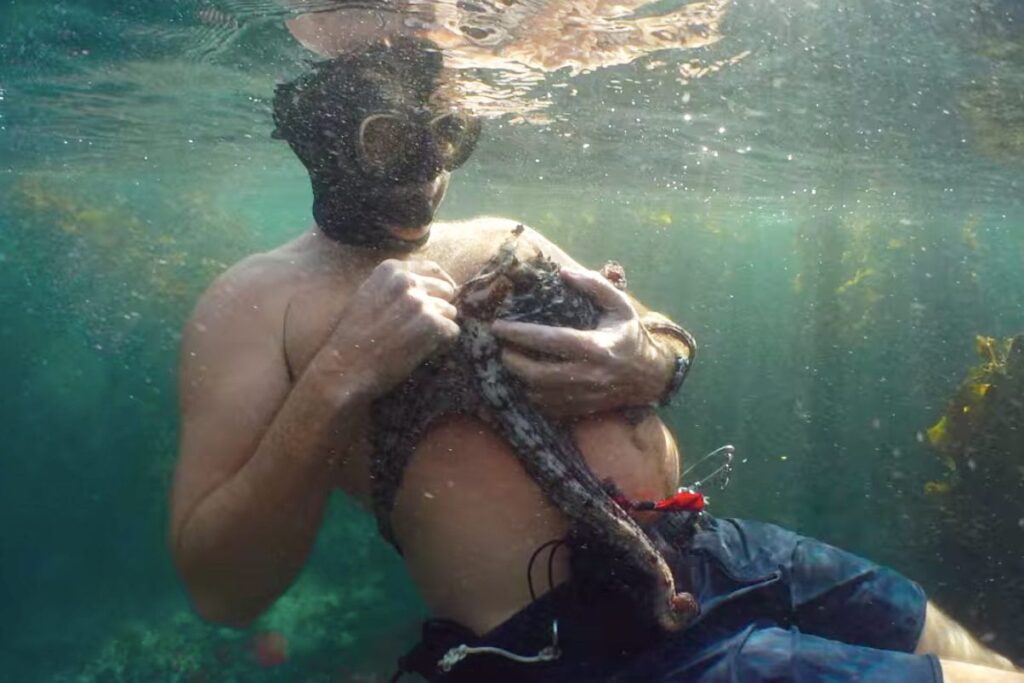
Although octopi are well-known for their intelligence, little is known about the mollusks. Lobsters and squid are no different. However, we have now realized that they, like us, have sentiments.
At least in the United Kingdom. According to IFL Science, the government has now included decapod crustaceans – such as lobsters, crabs, and crayfish – and cephalopod mollusks – such as squid, octopuses, and cuttlefish – in its Animal Welfare (Sentience) Bill. This implies that in the United Kingdom, they are now considered “sentient entities.”

The measure is the result of an independent evaluation headed by Dr Jonathan Birch, an associate professor in the Department of Philosophy, Logic, and Scientific Method at the London School of Economics. After reviewing over 300 papers, the researchers concluded that “strong scientific evidence decapod crabs and cephalopod mollusks are sentient” – meaning they can actively comprehend sentiments and sensations such as pain.
The bill already covers vertebrates (species with a backbone), but octopuses and other invertebrate animals were previously excluded owing to their lack of a backbone. And, while invertebrates’ central nervous systems are substantially different from those of vertebrates, it doesn’t imply their central nervous systems are any less complex than those of certain animals deemed sentient by humans. Octopuses, for example, have a donut-shaped brain in the center of their heads and eight additional “mini-brains” in each tentacle. And, as the documentary My Octopus Teacher, recounted at the introduction of this piece, shows, they may be quite clever. They are capable of a wide range of complicated behavior, including the interpretation of physical and emotional suffering.
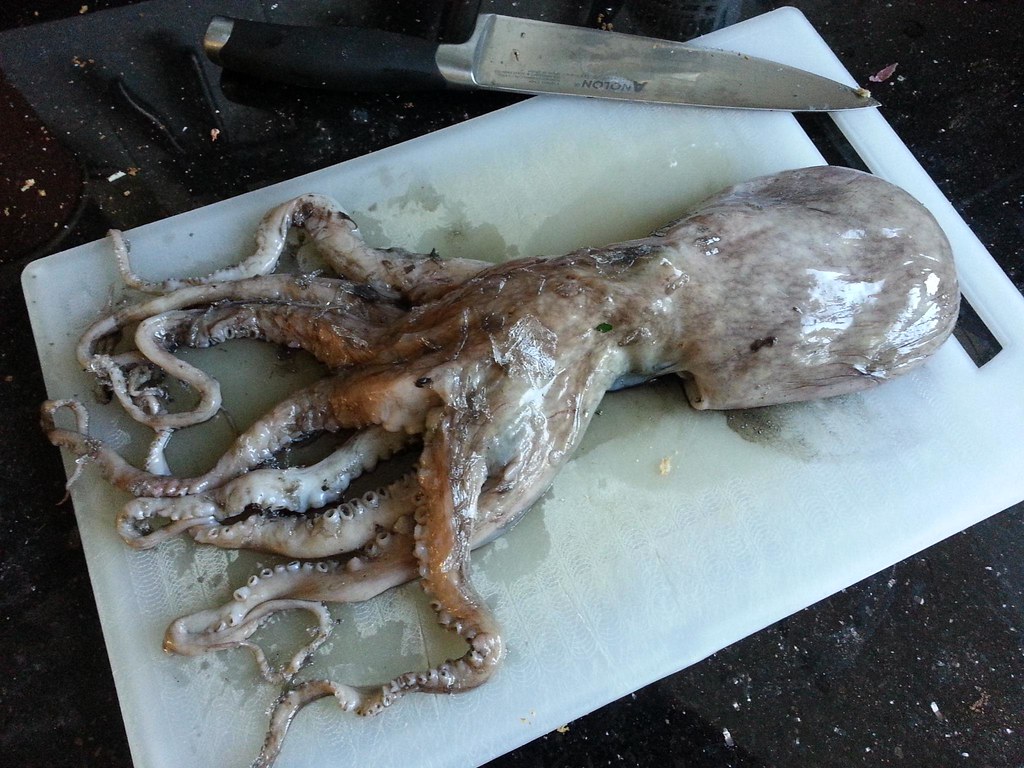
“The amendment will… assist to resolve a key inconsistency: octopuses and other cephalopods have long been protected in science, but have never been protected outside of science.” “Protecting tiny invertebrate species that people have often utterly ignored is one way the UK can lead on animal care,” Dr Birch said in a statement.
The evaluation advises against a range of existing commercial activities that are considered harsh when it comes to these creatures. Extreme killing procedures, transporting animals in frigid water, selling live decapod crustaceans to unskilled operators, and live boiling without stunning are just a few examples.
The reform will not modify existing regulations or industry standards regulating how these animals are handled in kitchens and pet stores, despite the UK government’s promotion of the move as “leading the way on animal care.” Chefs may still put a live lobster into a boiling pot for the time being. Nonetheless, the measure will very certainly be considered in the future when drafting animal protection legislation.
In recent years, several countries have taken similar actions. For example, in Austria, Norway, Switzerland, and New Zealand, boiling lobsters alive without first stunning them is currently prohibited.
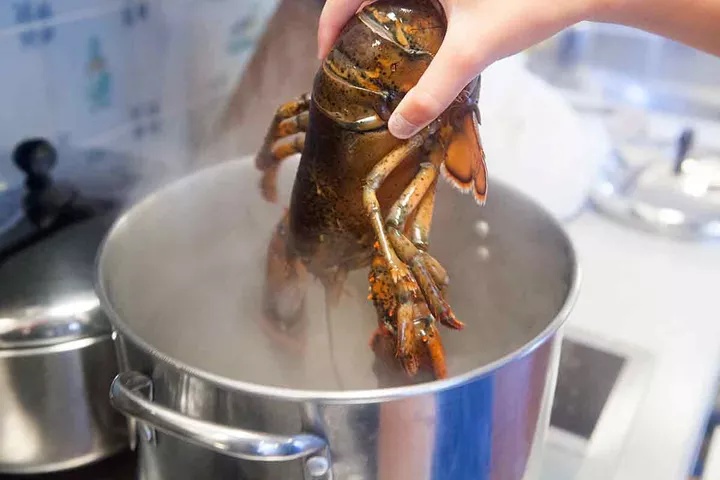
Boiling lobsters alive has been illegal in the United States since at least 1999. Other rights for cephalopods and decapod crustaceans, on the other hand, have lagged behind. Octopuses, for example, aren’t considered “animals” in federally supported research in the United States, thus they don’t have to be treated as humanely as other lab animals. As a result, the Animal Welfare Act and the National Institutes of Health do not consider these creatures to be natural or scientifically protected.
That has to change as quickly as possible.