More mutant fish are being discovered, probably as a result of genetic defects caused by overfishing.
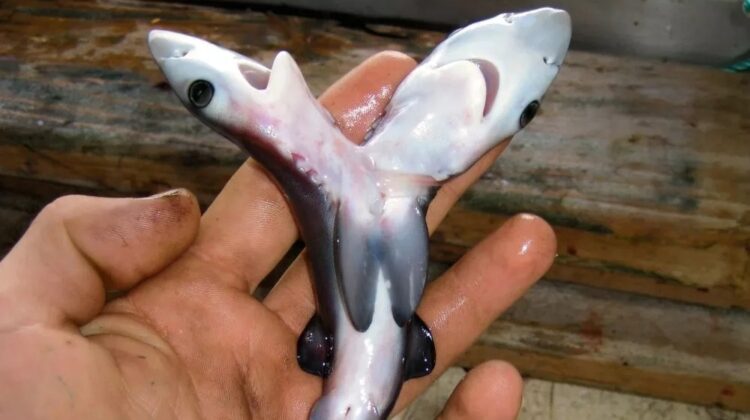
Two-headed sharks may seem like a movie prop, but they exist—and more are being discovered throughout the world, according to experts.
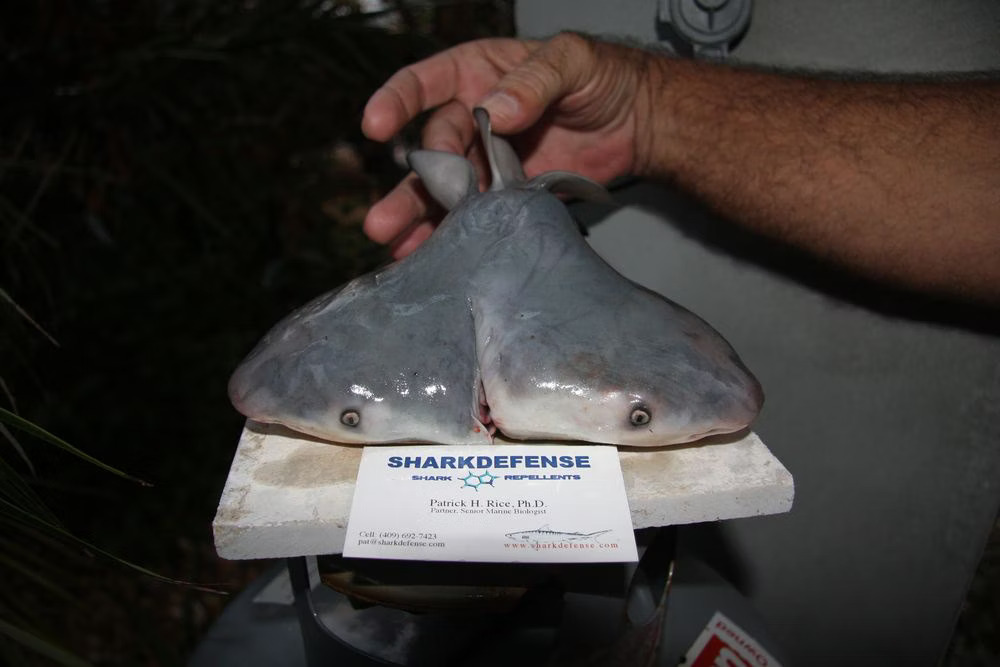
A few years ago, fisherman off the coast of Florida caught a bull shark whose uterus housed a two-headed baby. Another fisherman found a two-headed blue shark embryo in the Indian Ocean in 2008.
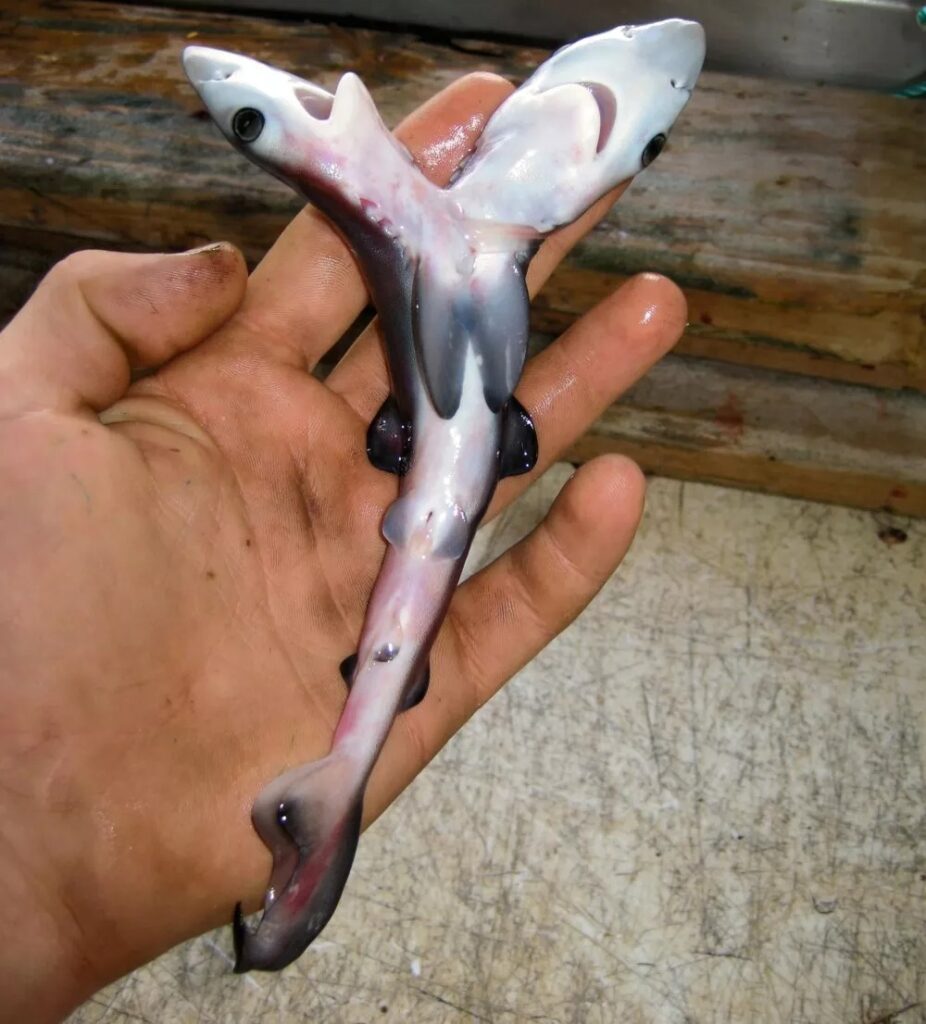
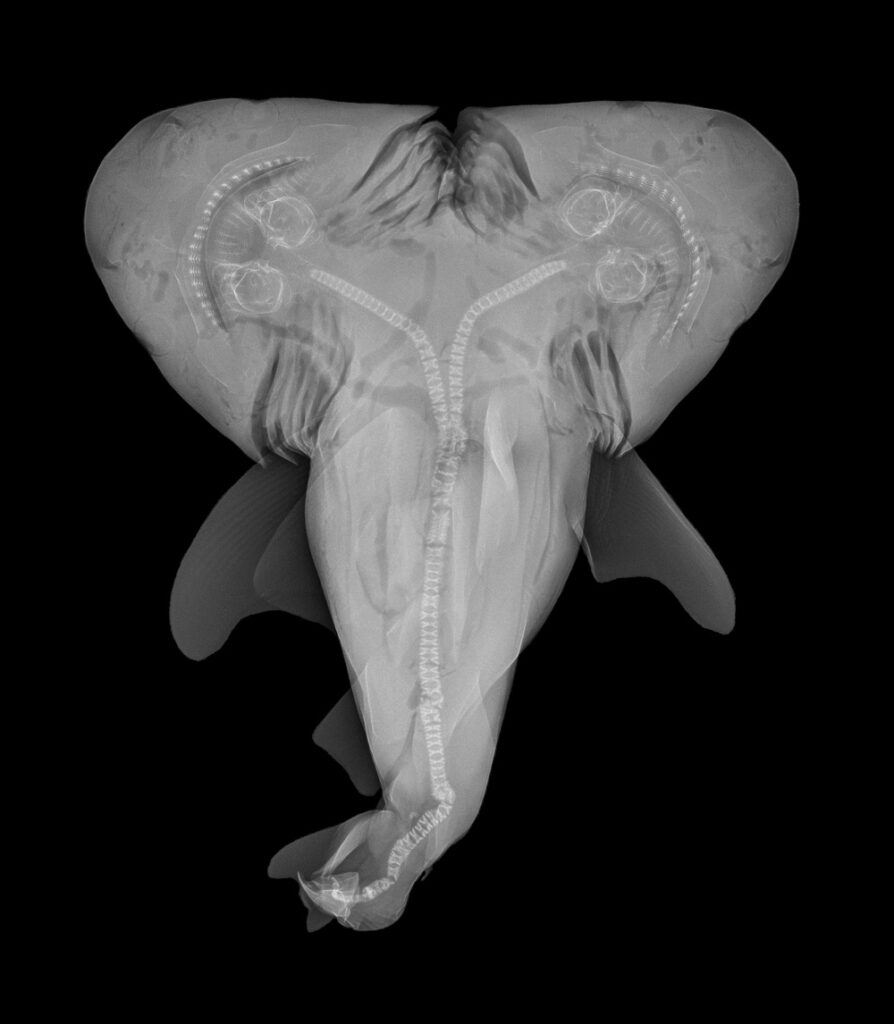
In addition, conjoined twins were detected in blue sharks collected in the Gulf of California and northern Mexico in 2011. Blue sharks have created the most two-headed embryos because they carry so many babies—up to 50 at a time, according to research leader Felipe Galván-Magaa of Mexico’s National Polytechnic Institute.
According to a new study published in the Journal of Fish Biology, Spanish researchers have uncovered an embryo of an Atlantic sawtail catshark with two heads. A team spotted the odd embryo in a see-through shark egg while breeding sharks for human-health studies in the laboratory.
The catshark embyro was not your typical two-headed shark; it was the first of its kind from an oviparous shark species, or a shark that produces eggs.
Researchers opened the egg to analyze the specimen, and according to research leader Valentn Sans-Coma, it’s uncertain if the malformed animal would have survived. Because this is the first time a conjoined twin has been discovered in an egg-laying shark, it is likely that such children do not survive long enough for people to discover them.
Mutation Causes
Because two-headed sharks are uncommon, it’s difficult to determine what’s causing the changes. (View more shark images.)
Because the embryos were produced in a lab among roughly 800 specimens, Sans-Coma and colleagues believe a genetic abnormality is the most likely source of the two-headed catshark. The eggs were not exposed to any viruses, chemicals, or radiation, to the best of their knowledge.
Malformations in wild sharks, on the other hand, might be caused by a variety of circumstances, including viral infections, metabolic illnesses, pollution, or a diminishing gene pool as a result of overfishing, which leads to inbreeding and consequently genetic abnormalities. (See “New Diseases and Toxins Threaten Marine Life.”)
In another recent research, marine biologist Nicolas Ehemann investigated two such specimens: a smalleye smooth-hound shark and a blue shark discovered by fisherman off Venezuela’s Margarita Island. According to Ehemann’s research announcement, the creatures are the first two-headed sharks discovered in the Caribbean Sea.
Overfishing to Blame?
Ehemann, a master’s student at Mexico’s National Polytechnic Institute, argues that if two-headed babies are more common in nature, overfishing is a major factor, since it may cause the gene pool to diminish.
Galván-Magaa, the study’s author, believes that two-headed sharks are not more prevalent, but rather that there are more scientific publications available to publish tales.
Galván-Magaa has also observed other strange sharks, including a “cyclops” shark captured off the coast of Mexico in 2011 with a single, functional eye at the front of its head. The single eye of the dusky shark embryo is a defining feature of cyclopia, a congenital disease that affects many animal species, including humans.
Meanwhile, Ehemann claims that shark malformations are a challenging issue to study due to the scarcity of specimens.
“I’d want to investigate these things,” he adds, “but it’s not like you throw out a net and capture two-headed sharks every now and again.” “It’s haphazard.”