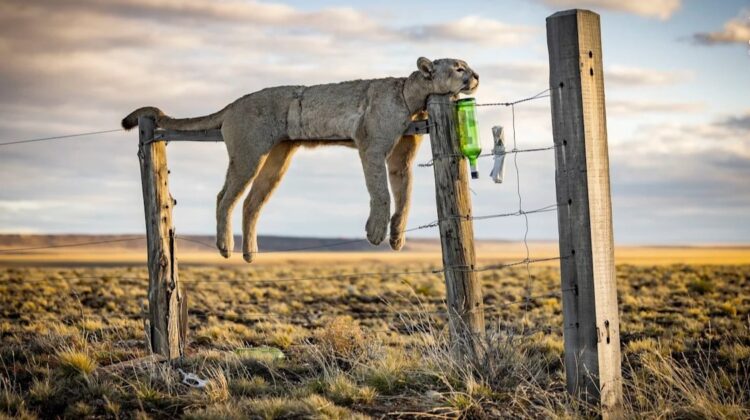
At first glance, it’s a peaceful scene: a big cat stretched out in the afternoon sun above a golden Patagonian plain. But the puma isn’t sleeping.
What the Picture Really Shows
The photograph, titled Warning Sign, shows a dead puma tied to a fence beside a road in Argentina’s Santa Cruz province, apparently displayed as a hunting trophy. Chilean photographer Francisco Negroni took it on Route 40, and it won the Photojournalism category of Wildlife Photographer of the Year 2026, the competition produced by the Natural History Museum in London. This year’s contest drew more than 65,000 entries from 121 countries and territories.
Negroni told the organizers it was a display he had “never witnessed or photographed before.” The image works because of its contrast: beauty and calm on the surface, and a human-made act of violence underneath.
A Volcano Chaser Turns to Wildlife
Negroni isn’t a typical wildlife photographer. Known as El Cazador de Volcanes, or “The Volcano Hunter,” he has built his career photographing eruptions, volcanic lightning and lava, and he describes himself as a witness to Earth’s most violent and beautiful transformations. This is his second win at the competition. The transformation he recorded this time was one made by people.
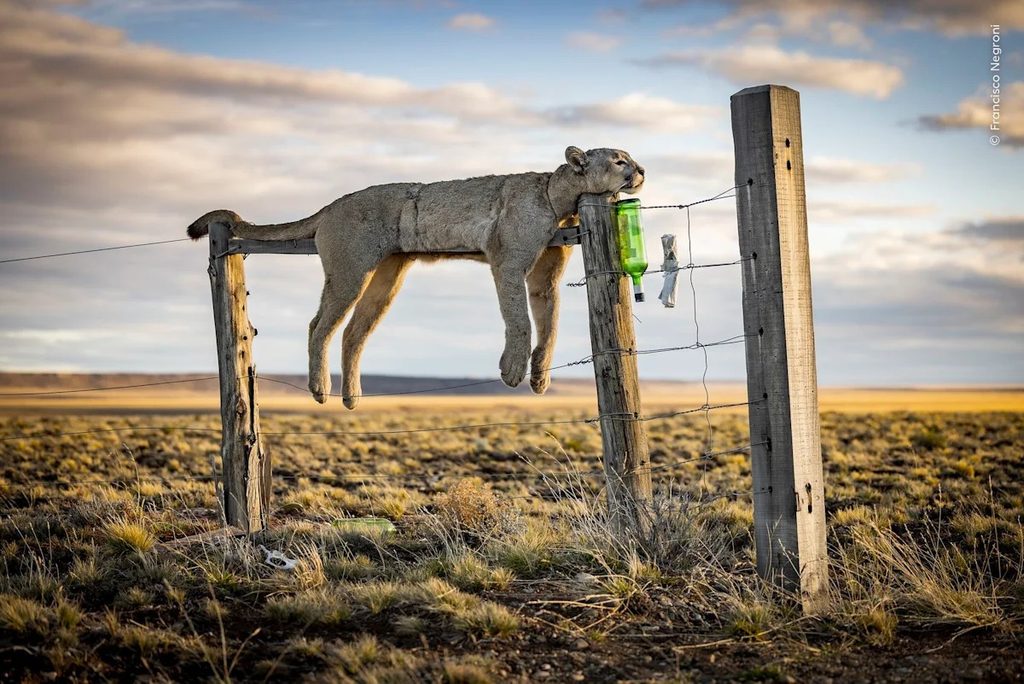
According to the photo data supplied with the image, he shot the picture with a Canon EOS R5 and a 70–200mm f/2.8 lens at 70mm, using manual settings of 1/640 sec, f/3.2 and ISO 100.
Why Pumas Are Being Killed
Santa Cruz removed pumas from the list of animals that can be hunted for sport, but the killing, according to the photo’s account, continues. Many sheep farmers in this part of Patagonia say pumas and foxes kill their animals, and a survey by Argentina’s national agricultural research institute, INTA, found that most producers reported livestock losses to predators. Some respond by killing the animals and, in some cases, displaying the carcasses.
Are There Other Solutions?

Campaigners and researchers say there are alternatives to shooting. Guard dogs are the main method used to protect flocks in Argentina and other countries. Keeping sheep in enclosures at night can also reduce losses. A six-year study that tracked pumas with satellite collars in two national parks in Santa Cruz found that sheep made up only a very small share of their prey. In southern Chile and at Parque Patagonia in Argentina, some landowners have gone further, replacing sheep farming with puma-watching tourism so that the animals bring income instead of being treated as pests.
Visiting Patagonia or Photographing Wildlife?
If you’re planning a trip to see Patagonia’s wildlife, or want to photograph it yourself, a few options to compare:
- Trips. Look at Patagonia travel packages, puma watching tours and eco-lodges in Argentina.
- Travel protection. Review international travel insurance and medical evacuation coverage.
- Camera gear. Compare mirrorless cameras for wildlife photography, telephoto lenses and camera backpacks.
- Learning. Explore online photography courses and photojournalism workshops.
- Support conservation. Consider wildlife conservation donations and rewilding programs.
Frequently Asked Questions
What is the photo “Warning Sign”? It’s a photograph of a dead puma tied to a fence in Argentine Patagonia, apparently displayed as a hunting trophy, by Chilean photographer Francisco Negroni.
What did it win? It won the Photojournalism category of Wildlife Photographer of the Year 2026, produced by the Natural History Museum in London.
Is hunting pumas legal in Santa Cruz? The province removed pumas from its sport-hunting list, yet the photo shows that killings and displays continue.
Why do ranchers kill pumas? Many say pumas and foxes prey on their sheep, though research shows sheep make up a very small portion of pumas’ diet in national parks.
What alternatives exist? Livestock guardian dogs, night enclosures for sheep and puma-watching tourism are among the options campaigners promote.
Sources: The Citizen, Discover Wildlife, El Mostrador, Gulf News, Daily Maverick, and Noticias Ambientales, all covering Francisco Negroni’s Photojournalism win with “Warning Sign” at Wildlife Photographer of the Year 2026 and the conflict between sheep ranchers and pumas in Santa Cruz, Argentina.
Leave a Reply