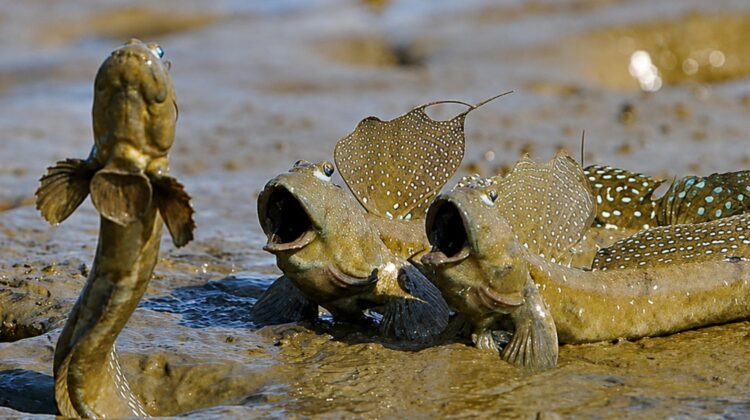
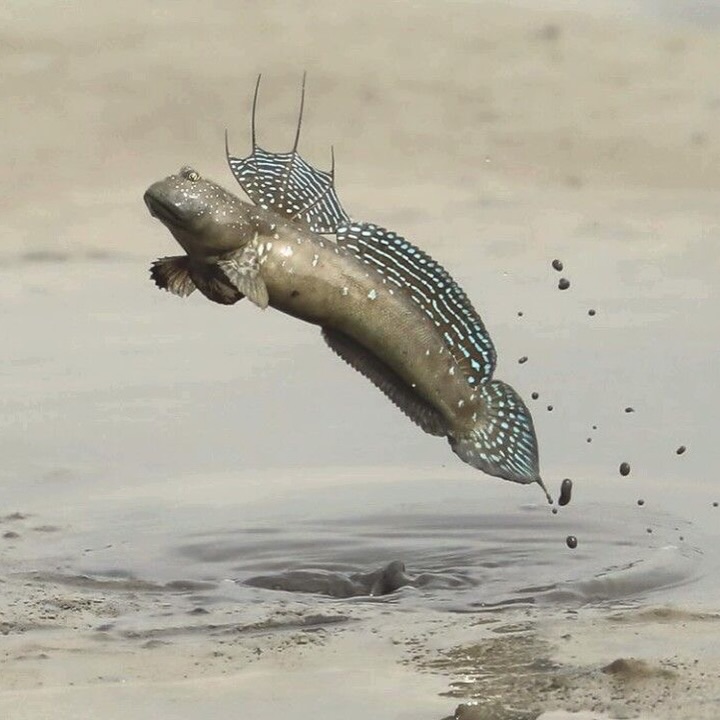
Few fish look less like fish than the mudskipper. With bulging, periscope-like eyes and a habit of skipping across exposed mudflats on its front fins, it’s easy to see why they’re often described as a living glimpse of how the earliest vertebrates might have moved from water onto land.
An Amphibious Life
Mudskippers are members of the goby family adapted to spend much of their time out of water, in the muddy intertidal zones of mangrove forests and estuaries. They breathe partly through their skin and the moist lining of their mouth and throat — a method that only works as long as they stay wet, which is why mudskippers are constantly rolling in mud or dipping into puddles between bursts of activity on land.
Their range is broader than most people assume: mudskippers are found throughout the Indo-Pacific — including Southeast Asia, India, and northern Australia — as well as along the West and Central African coast, home to the distinct Atlantic mudskipper species.
The Courtship “Dance”
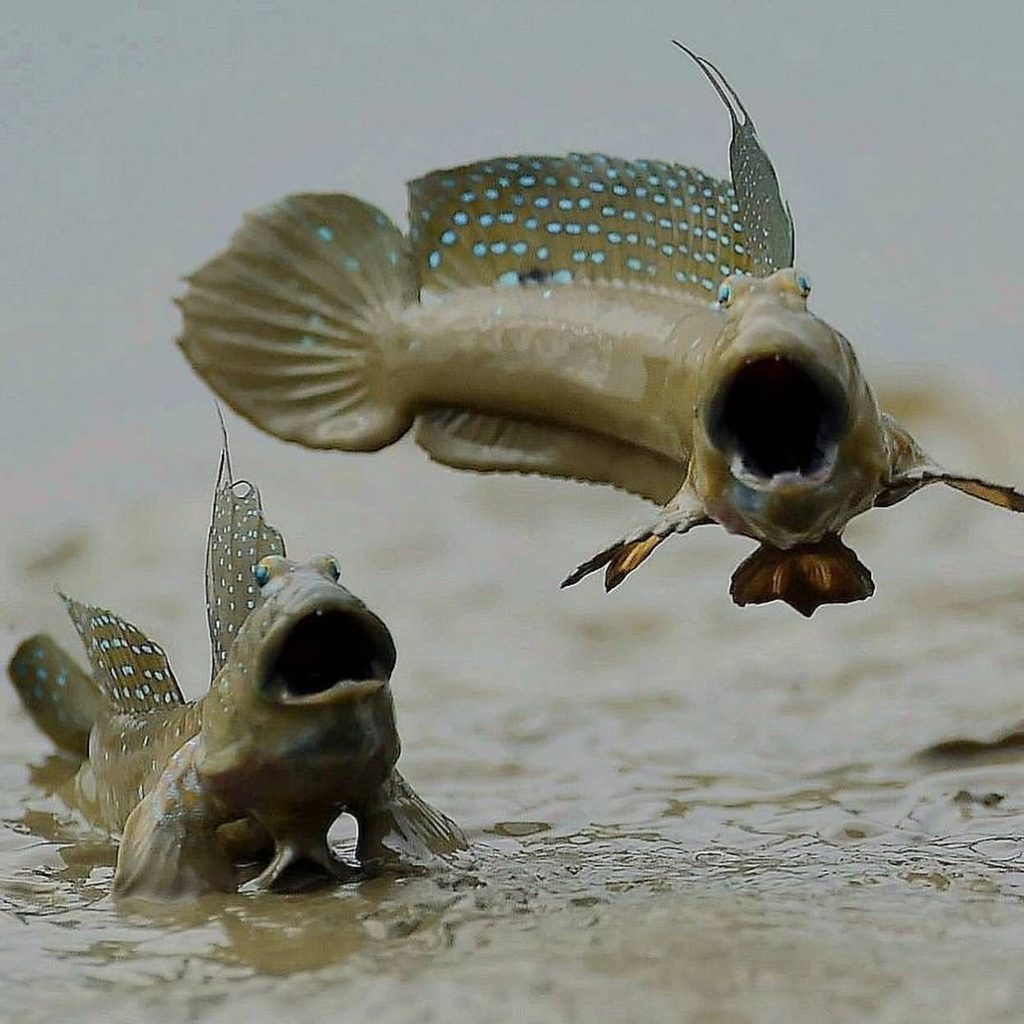
During breeding season, male mudskippers put on some of the more theatrical displays in the animal kingdom. According to National Geographic, males stage flamboyant courtship displays — flaring their fins, developing brighter body coloring, and leaping dramatically into the air to catch a female’s attention from a distance.
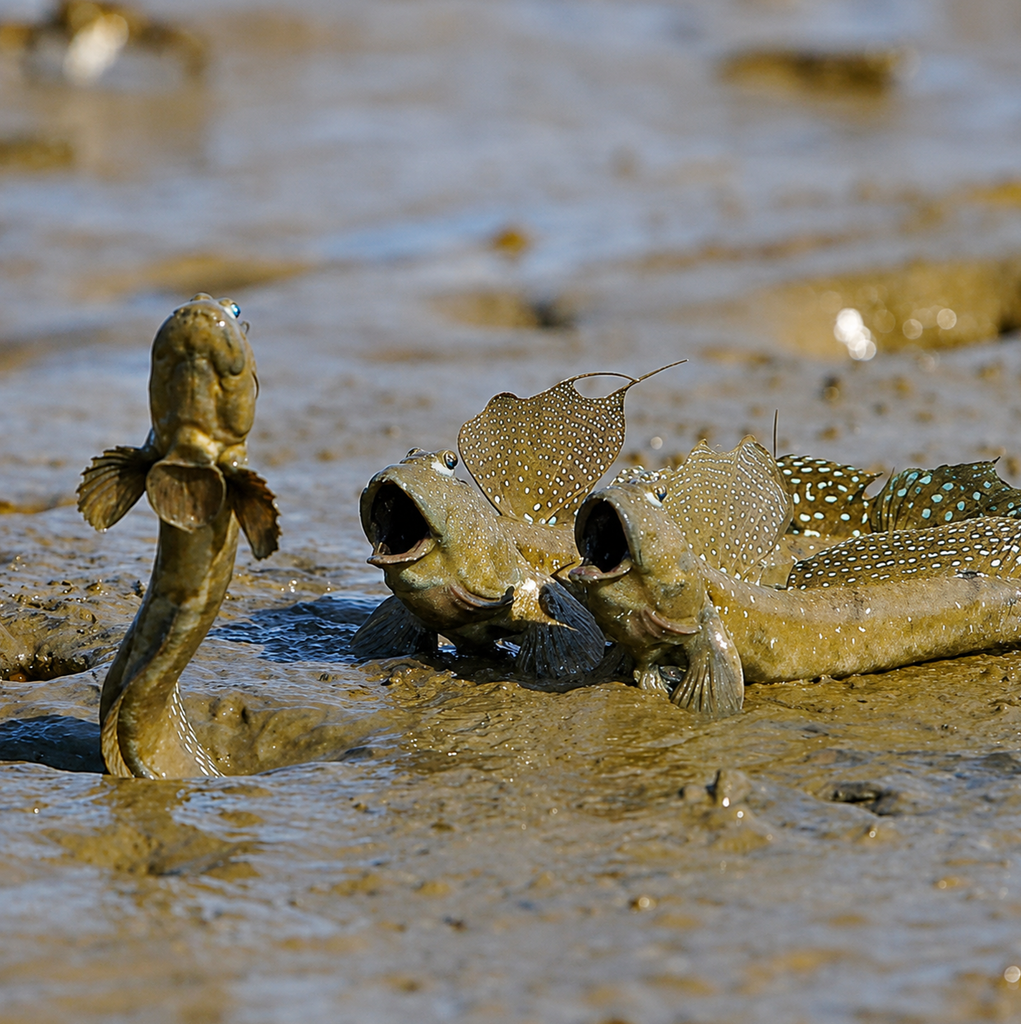
Some species add sound to the performance, producing clicks or chirps, while others are known for “bubble-blowing” — releasing visible air bubbles as an additional visual signal aimed at nearby females.
What the Female Is Actually Doing
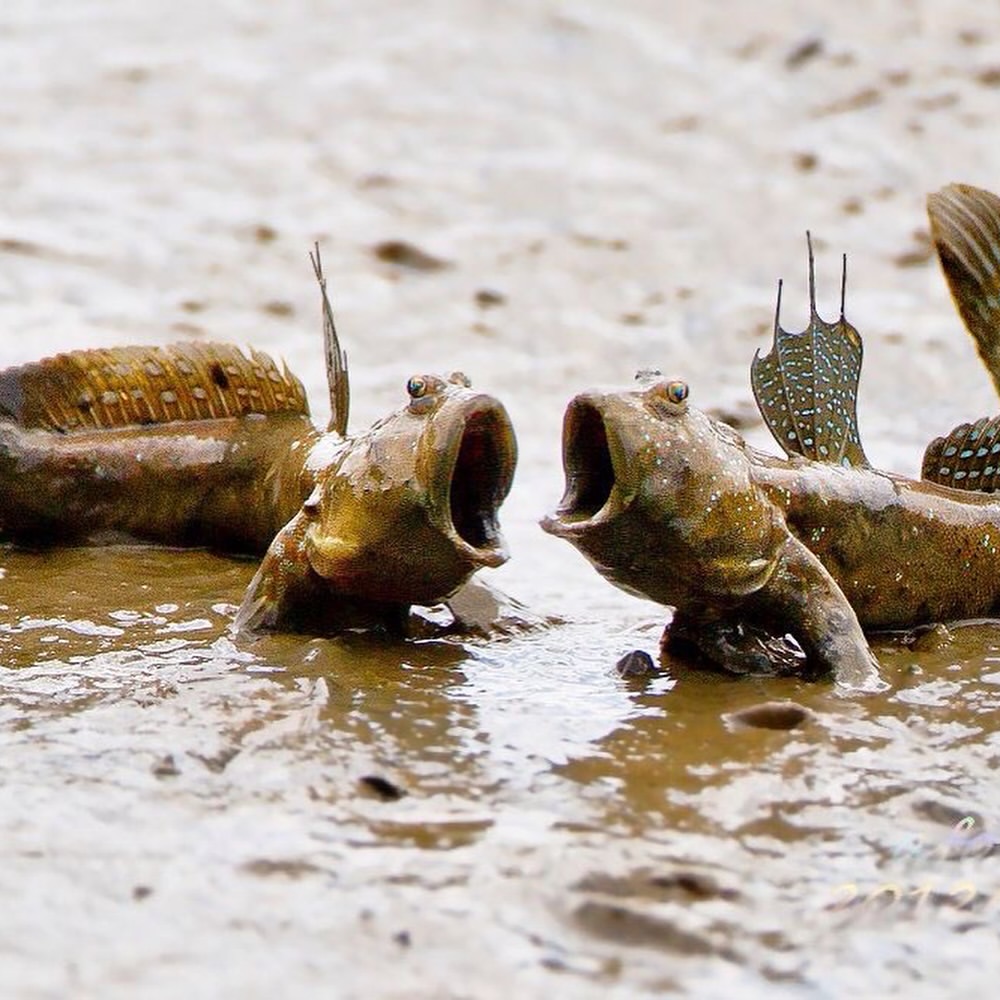
It’s tempting to read a second mudskipper’s stillness during a display as astonishment, but research suggests something more calculated is happening. According to marine biology researchers, females evaluate a male’s display quality alongside the condition of his territory and burrow before deciding whether to follow him to mate — meaning that “assessment,” not shock, best describes what’s going on. A male’s fin display and jumping ability appear to function as honest signals of fitness, similar to how a peacock’s tail communicates health and vigor to a peahen.
Life After Courtship
If a female is impressed, she’ll follow the male into a burrow he’s dug and maintained in the mud — sometimes extending several feet underground with multiple internal chambers. After eggs are laid, the male fertilizes and guards them, periodically gulping air at the surface and carrying it down to maintain an oxygen-rich pocket for the developing eggs, since falling tides can leave burrows filled with oxygen-poor water. When the eggs are ready, he floods the chamber, releasing the hatchlings to drift out with the tide.
An Underrated Ecological Role
Beyond their odd charm, mudskippers function as ecosystem engineers in the mangrove and mudflat habitats they occupy — their burrowing aerates sediment and promotes nutrient cycling, while they serve as a food source connecting the mudflat’s smaller invertebrate life to birds and larger predators further up the food chain.
Frequently Asked Questions
Can mudskippers actually breathe underwater like normal fish? Yes — they retain functional gills and can breathe underwater, but they’ve also evolved the ability to absorb oxygen through their skin and mouth lining while on land, as long as those surfaces stay moist.
Why do mudskippers have eyes on top of their head? Their raised, protruding eyes let them see above the muddy waterline while the rest of their body stays low or submerged, an adaptation useful for spotting both predators and potential mates across open mudflats.
Are mudskippers found outside of Asia? Yes — while many well-known species live throughout Southeast Asia and the wider Indo-Pacific, the Atlantic mudskipper inhabits coastal West and Central Africa, from Senegal to the Democratic Republic of Congo.
Sources: National Geographic, Mongabay India, Aquarium of the Pacific, and A-Z Animals, cited above.
Leave a Reply