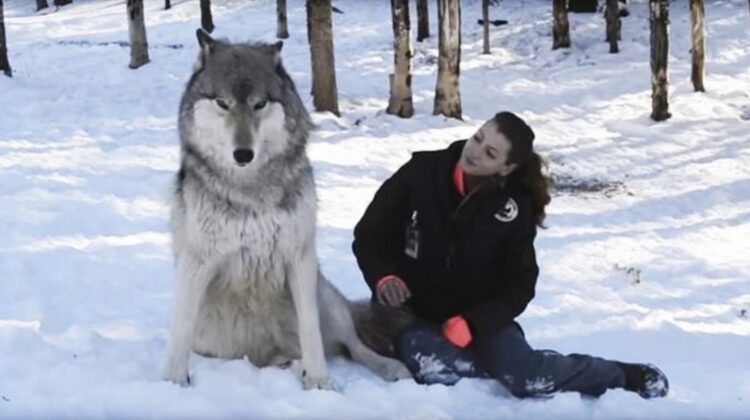
Wolves have a reputation for being aggressive, unapproachable animals — which makes it all the more startling to watch a 115-pound wolf flop onto his back for a belly rub the second his favorite person walks up.
Meet Kekoa
The wolf in the video is Kekoa, whose name means “the brave one” in Hawaiian. He’s a grey wolf who, along with his sister Sakara, lives at the Colorado Wolf and Wildlife Center, a sanctuary near Colorado Springs. Both wolves came to the center from Seacrest Wolf Preserve in Florida after their early careers as public “ambassador” animals — used to teach visitors about wolves in person — came to a natural end; like most wolves and high-content wolf-dogs, they grew shy of crowds once they reached maturity and were retired from that role around age two.
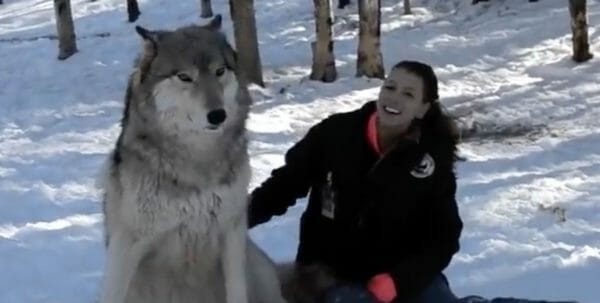
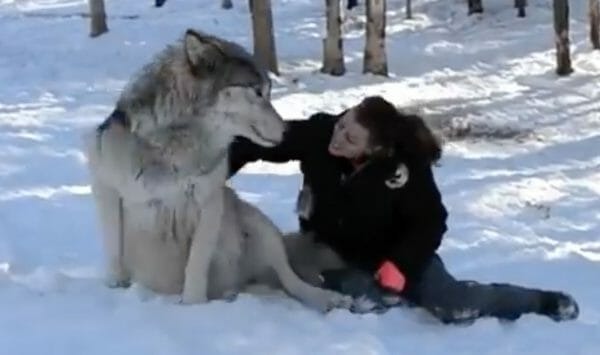
Kekoa is a big animal even by wolf standards: he weighs around 115 pounds, and when he rears up to rest his front paws on a person’s shoulders, he stands roughly seven feet tall. Sakara, his sister, is somewhat smaller at about 85 pounds.
The Bond With Danielle
Danielle, a staff member at the center, is the person the video centers on. Kekoa and Sakara greet her by leaning in for what the center describes as wolf kisses, rolling onto their backs for belly rubs, and generally acting less like the wolves of popular imagination and more like an oversized, affectionate dog.
Center staffer Michelle Smith explained the behavior to The Dodo in 2016: “Since he was raised by people and bottle fed from the time he was born, he is very well socialized, meaning he enjoys the company of people. This is not the same as domesticated or tame. He is still a ‘wild’ animal, and he does tend to show it when he is around his sister. A wolf in the wild would not act this way.”
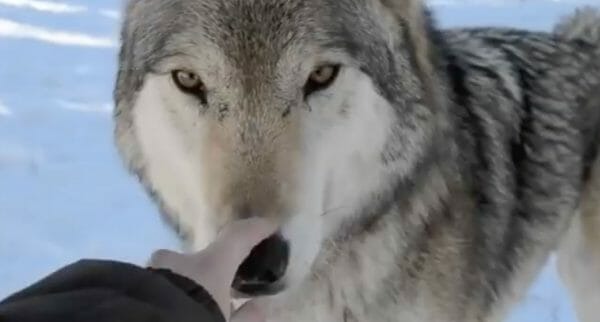
That distinction matters. Kekoa’s comfort around Danielle is the product of a specific upbringing — hand-raised from birth by people — not evidence that wild wolves are generally approachable. Wolves in the wild remain cautious of humans, and sanctuary staff are careful to describe animals like Kekoa as socialized rather than tame.
Why the Center Exists
The Colorado Wolf and Wildlife Center takes in wolves and wolf-dogs, like Kekoa and Sakara, that can’t survive in the wild — often because of how they were raised — and uses them to run educational tours reaching tens of thousands of visitors a year, focused on wolf behavior and the animals’ role in their ecosystems.
That educational mission has taken on new relevance in Colorado. Gray wolves had been absent from the state’s wild landscape since the 1940s until Colorado Parks and Wildlife began releasing translocated wolves in December 2023, following a narrow 2020 ballot measure. As of early 2026, the state’s wild population stood at roughly 32 wolves across four established packs — though the reintroduction effort has drawn sustained opposition from ranchers over livestock losses, and the agency paused new releases for the 2026 season after struggling to secure additional wolves from other states.
Frequently Asked Questions
Is Kekoa a domesticated wolf? No. Sanctuary staff are explicit that being “well socialized” from being hand-raised is different from being domesticated or tame — Kekoa is still considered a wild animal, and his comfort around familiar people doesn’t extend to wolves generally.
Why can’t Kekoa live in the wild? Wolves raised by people from birth typically can’t develop the skills and wariness needed to survive without human care, which is why sanctuaries like this one exist for wolves in his situation.
Have wild wolves actually returned to Colorado? Yes. Colorado Parks and Wildlife began reintroducing gray wolves in December 2023 after voters approved the effort in 2020. As of early 2026 the state had roughly 32 wild wolves across four packs, though the reintroduction program remains politically contested and new releases have been paused.
Sources: Colorado Wolf and Wildlife Center; The Dodo; Colorado Parks and Wildlife; Colorado Public Radio.
Leave a Reply