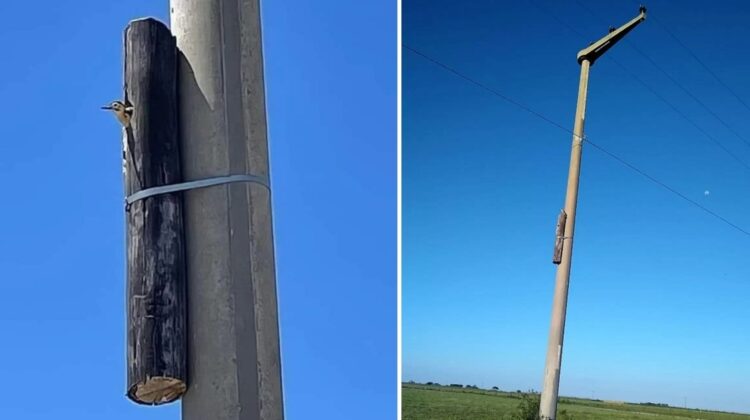
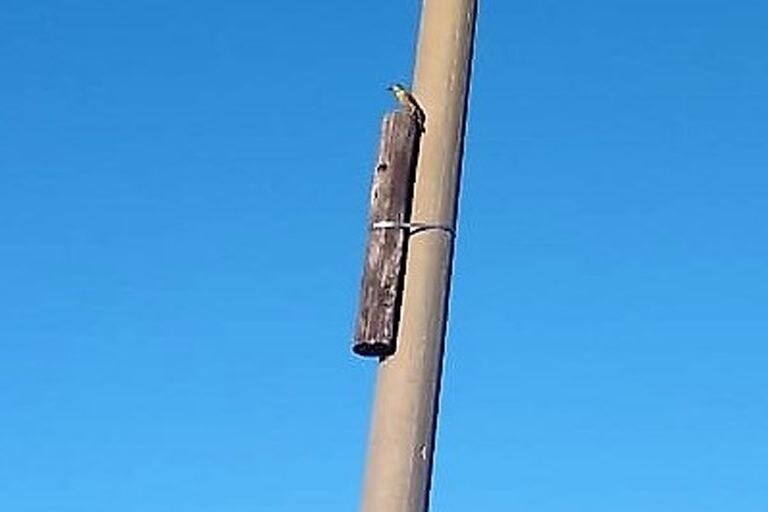
Two objects affixed to light poles in an inland region of Argentina stand as a quiet testament to human consideration for wildlife.
The small town of Ucacha, in the Córdoba province of Argentina, recently faced a difficult decision while planning an upgrade to its street lighting. During the planning stages, crews discovered that the project would disrupt the homes of two local woodpecker families nesting inside the old wooden poles.
Rather than abandon the upgrade, town officials found a middle path that let the project move forward while protecting the birds.
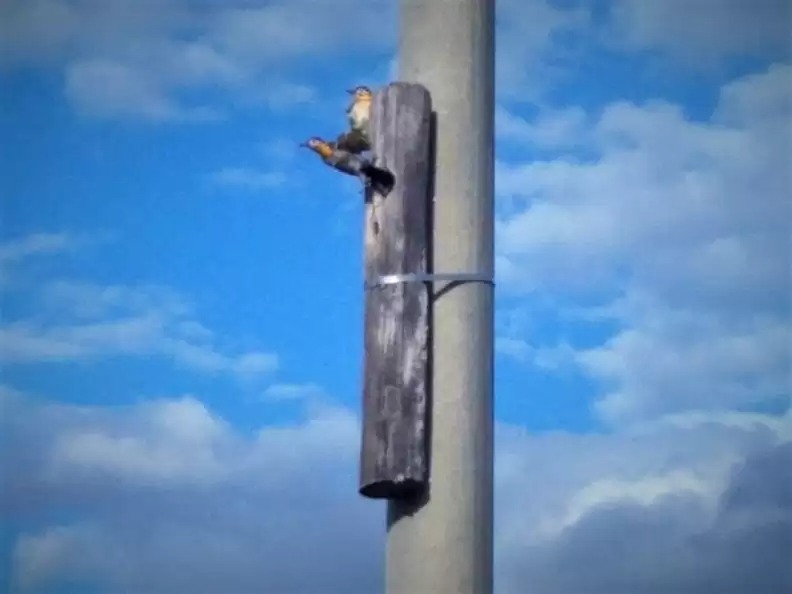
The bird species: the Campo Flicker
The two birds in question belong to a species known as the Campo Flicker (Colaptes campestris), a member of the woodpecker family. Unlike most of its relatives, which spend most of their time on tree trunks, the Campo Flicker is one of the few woodpecker species that spends a significant portion of its life on the ground, moving by hopping or walking rather than flying short distances.
The species is found across a wide range of open and semi-open habitats in eastern Brazil, Bolivia, Paraguay, Uruguay, and north-eastern Argentina, with isolated populations elsewhere in South America. It typically nests in tree cavities, termite mounds, or earth banks, and is currently classified as “Least Concern” on the global conservation status scale — though habitat loss from land clearing remains an ongoing pressure on local populations in some regions.
How the crew solved the problem
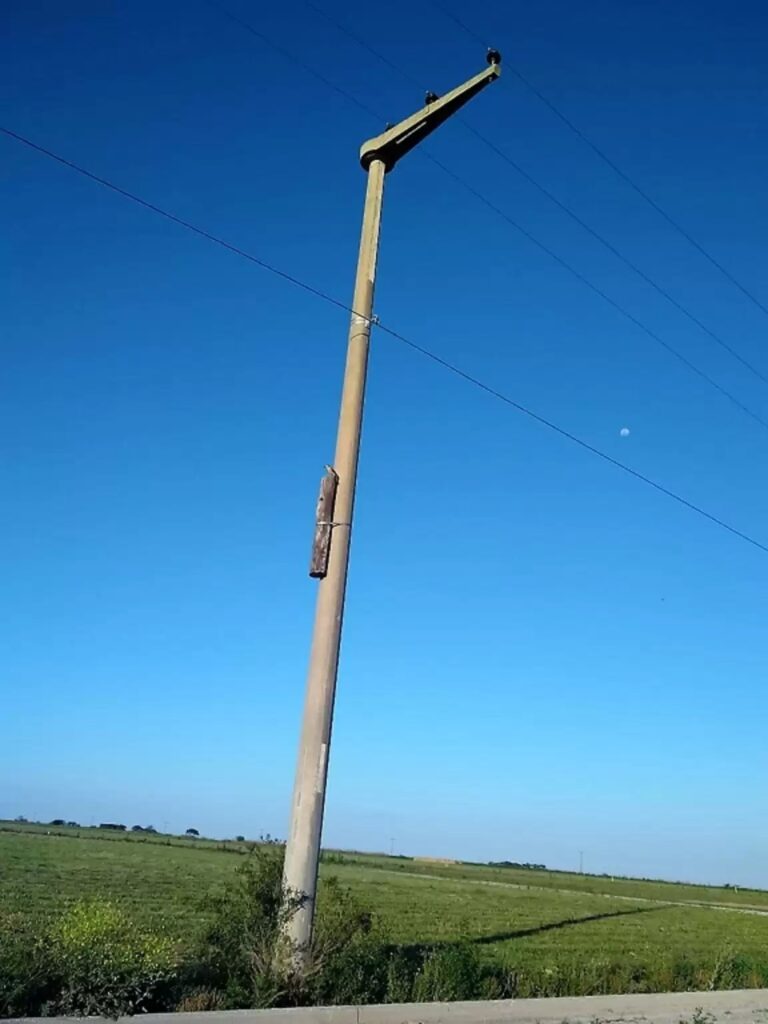
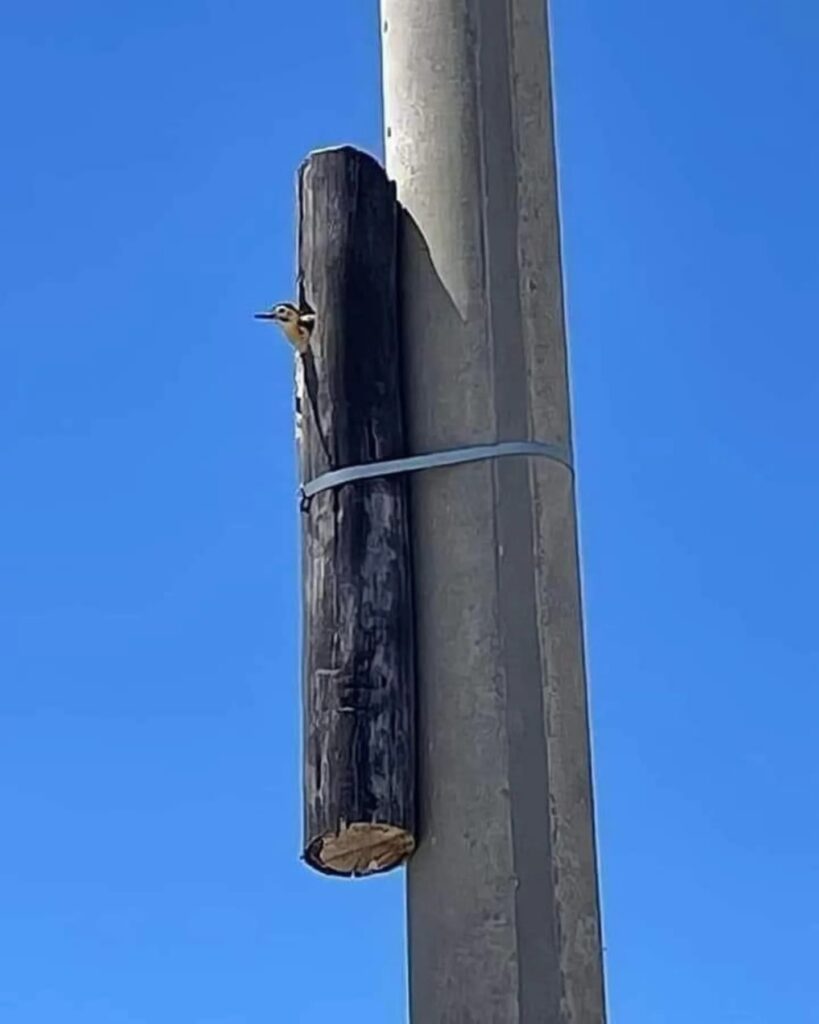
The two wooden poles originally slated for replacement stood right in the middle of these two birds’ territory. Project manager Gustavo Bernardi instructed his crew to cut the poles in a way that preserved the nests intact, carefully keeping the same height and orientation the birds were already used to — a detail that matters for birds that rely on a fixed, familiar nest site to defend their territory and recognize their home.
The crew wasn’t initially sure whether the birds would accept the change or abandon the relocated nests. It later turned out that both pairs kept using their “old-new” homes without any problems, and they continue to use them today.
The community effort was praised by conservation groups and local residents alike as an example of balancing urban development with wildlife protection — and a reminder that small adjustments during construction can make a real difference for species that depend on specific, established nest sites.
How you can help protect cavity-nesting woodpeckers near you
If you live in an area where Campo Flickers or similar cavity-nesting birds are present, a few simple steps can help protect them:
- Check before trimming or removing: before cutting down a dead tree or an old pole, inspect it for active nest openings, especially during breeding season.
- Leave dead trees standing where possible: dead trees or “snags” are among the most important natural nest sites for woodpeckers.
- Support local wildlife groups: donating to or volunteering with local bird conservation organizations helps fund projects similar to the one carried out in Ucacha.
- Log your sightings: birdwatching apps help researchers track species distribution and the impact of habitat loss over time.
FAQ
What is a Campo Flicker? It’s a species of woodpecker known for spending much of its time on the ground rather than on tree trunks, found across the open grasslands of South America.
Where is Ucacha located? Ucacha is a town in the Córdoba province of central Argentina.
Did the nest relocation actually work? Yes — according to the local source, both pairs of birds continued using their preserved nests without interruption after the project was completed.
Is the Campo Flicker an endangered species? No, it’s currently classified as “Least Concern,” though habitat loss remains a factor worth monitoring over the long term.
Primary source for on-the-ground details and images: fmvoxucacha.com.ar
Leave a Reply