• Skip to main content
  • Skip to primary sidebar
  • Skip to footer
  • Home
  • About Us
  • Copyright Report
  • Submit Content
  • Terms
  • Privacy Policy
  • Legal Disclaimer

Hasan Jasim

Hasan Jasim is a place where you may get entertainment, viral videos, trending material, and breaking news. For a social generation, we are the largest community on the planet.

Ad example

Stunning Color Photos of Life in Imperial Russia

by Stephen King Leave a Comment

Facebook11TweetPinLinkedInShares11

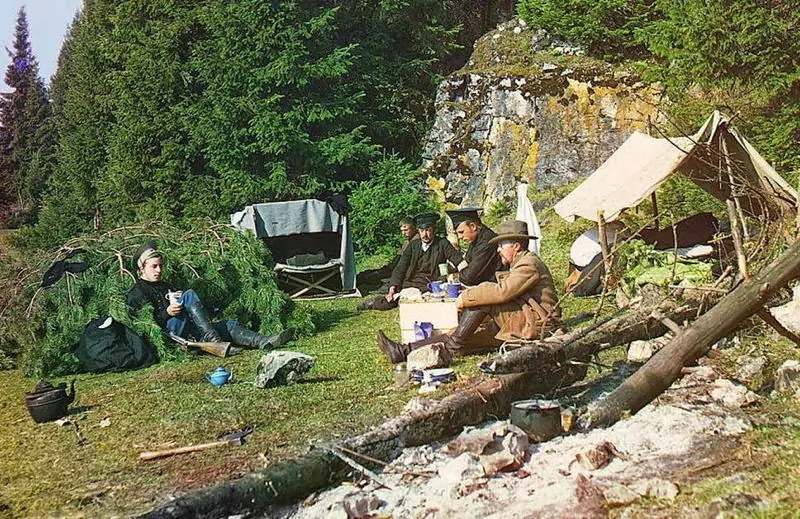
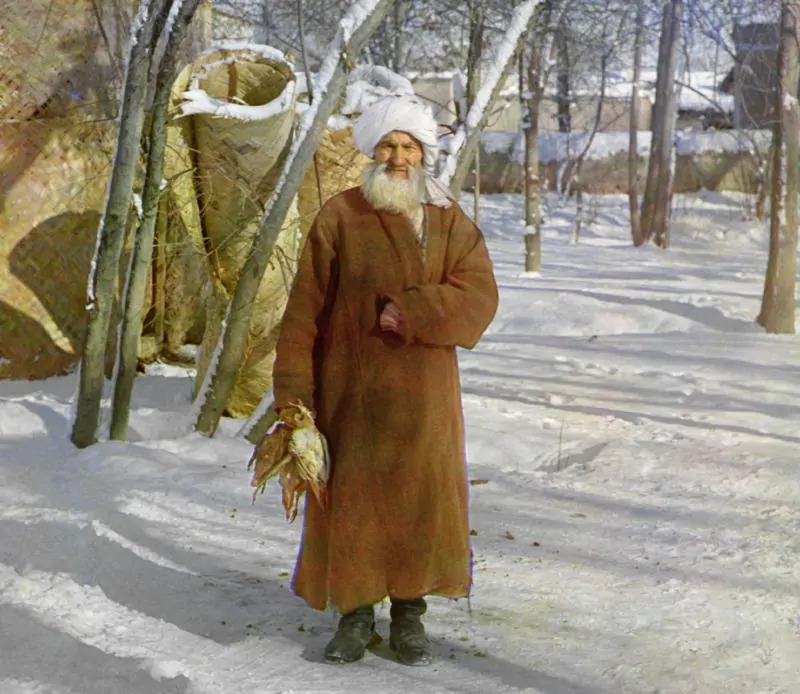
These fascinating color images by Sergey Prokudin-Gorsky and Piotr Vedenisov provide a glimpse of Imperial Russia on the brink of revolution – and about to change forever. Their images vividly portray the daily life of people in full color, a remarkable feat achieved long before the era of instant color photography.
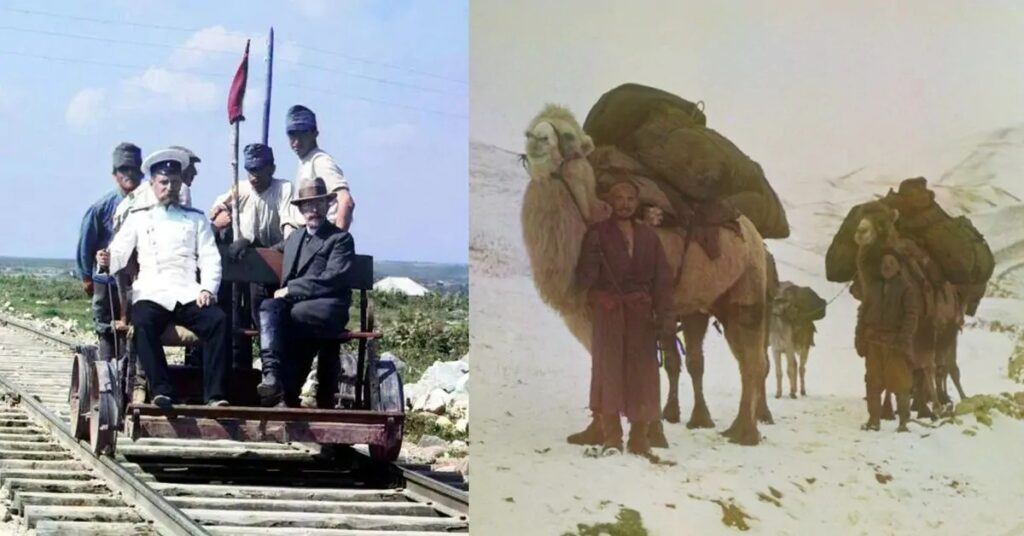
In the early 1900s, Prokudin-Gorskii devised a plan for a photographic survey of the Russian Empire, which garnered the support of Tsar Nicholas II. From 1909 to 1915, he traveled extensively across the empire using a railway-car darkroom provided by the tsar himself, capturing photographs in 11 distinct regions.

Vedenisov focused mainly on aristocratic families, notably the Kosakovs, and succeeded in depicting a contrasting lifestyle to that of the peasants in the Russian Empire.
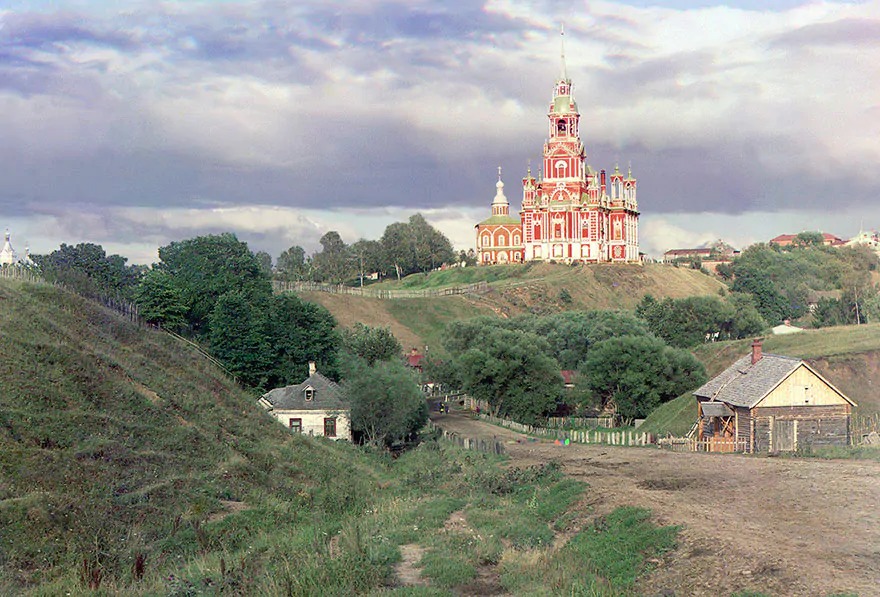
General view of the Nikolaevskii Cathedral from the southwest in Mozhaisk in 1911

Imperial Russia, one of the largest empires in history, flourished from 1720 until 1917, spanning three continents and hosting diverse populations. It famously repelled Napoleon’s army when he was reckless enough to attempt an invasion. However, the Russian Revolution of 1917 marked the end of Imperial rule, concluding a significant chapter in history.

Even though color photography, as we understand it today, was not possible at the time, creating a color image for the viewer by completing three separate photographs was indeed possible. The photographers had to capture three distinct images of the same subject: one through a red filter, one through a green filter, and one through a blue filter (referred to as RGB, the color channels commonly used in digital images). These monochromatic images were later projected onto a screen through corresponding colored filters and overlaid. When observed through a final filter, they would combine to create a lifelike color image.
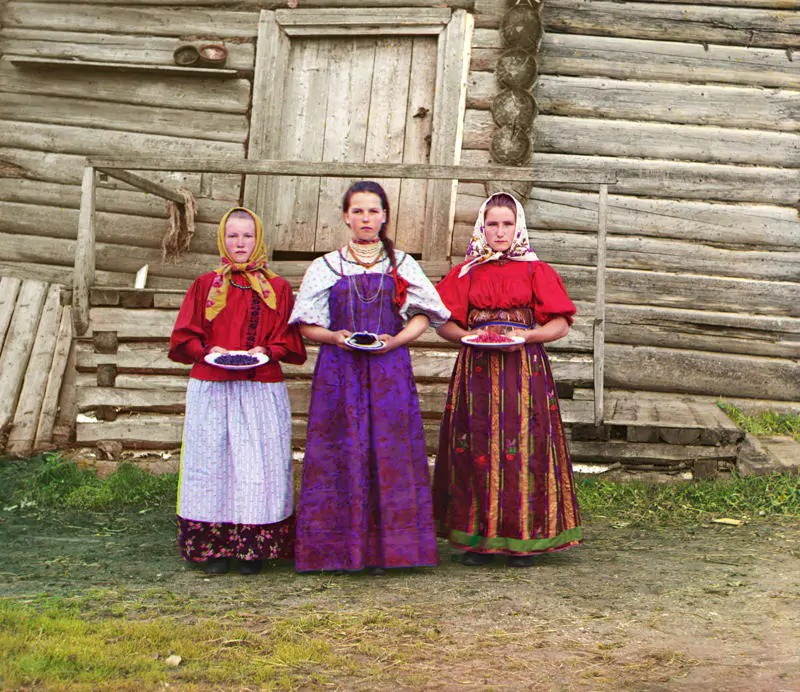
Russian peasant girls offer berries to visitors to their izba, a traditional wooden house

The three-color principle, upon which Prokudin-Gorsky’s method relied, was actually first theorized by James Clerk Maxwell in 1855. This concept mimicked human vision by dividing the light spectrum into three channels – red, green, and blue – and capturing them separately. However, limitations in photographic materials at the time prevented achieving good results.

Prokudin-Gorsky’s brilliance lay in perfecting this technique. He employed a specially designed camera to take three rapid-fire black and white photographs, each filtered for red, green, and blue light. Through meticulous darkroom work, he then combined these individual images to create a full-color representation.

This method, known as the Trichrome process, was complex and required precision. But the results were groundbreaking. Prokudin-Gorsky’s photographs offer a window into a bygone era, showcasing the diversity of the Russian landscape, its people, and cultural treasures in a way never seen before.
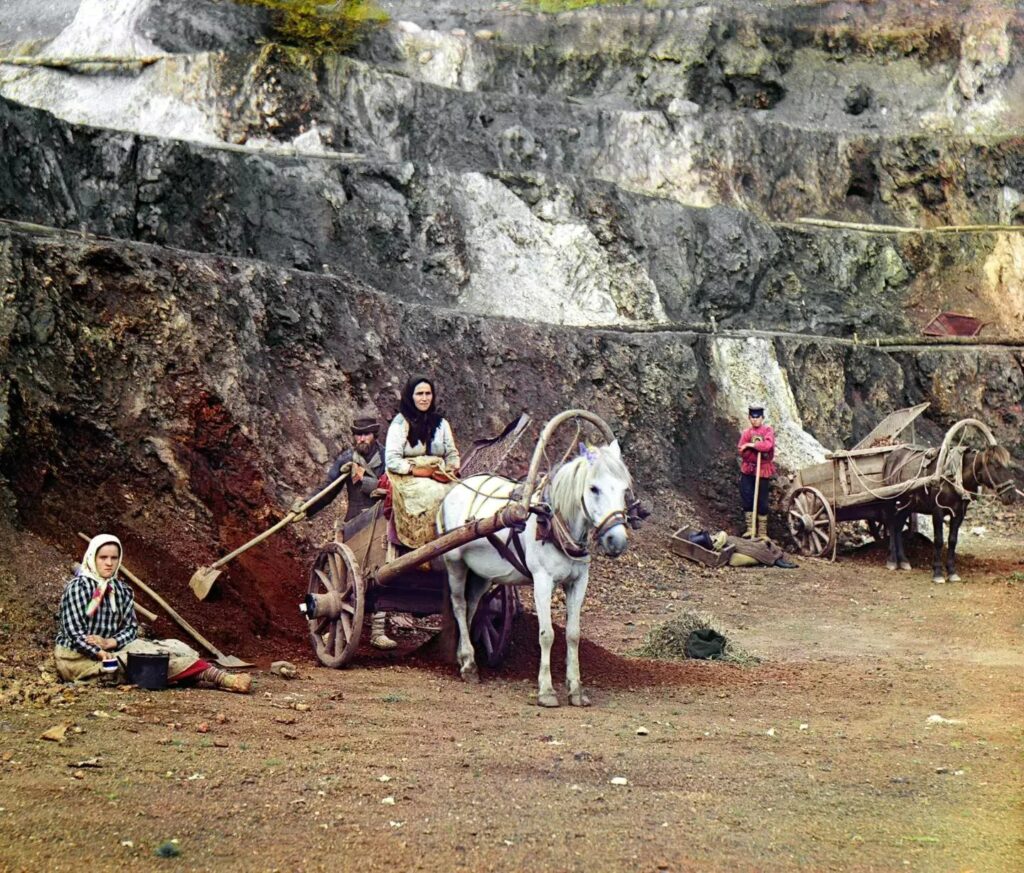
A family working in an iron-mine near Ekaterinburg in 1910
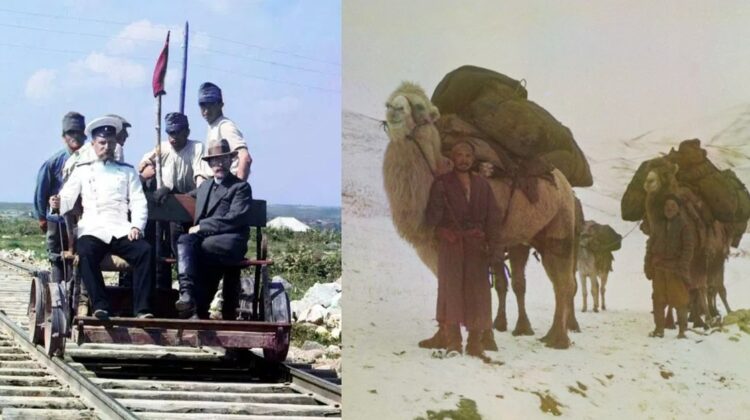
Prokudin-Gorskii rides along on a handcar outside Petrozavodsk on the Murmansk railway along Lake Onega near Petrozavodsk in 1910
A dog rests on the shore of Lake Lindozero in 1910. From the album “Views along the Murmansk Railway, Russian Empire”
Greek women harvesting the tea crop in a field in Georgia
Factory in Kyn, Russia, belonging to Count S.A. Stroganov, 1912
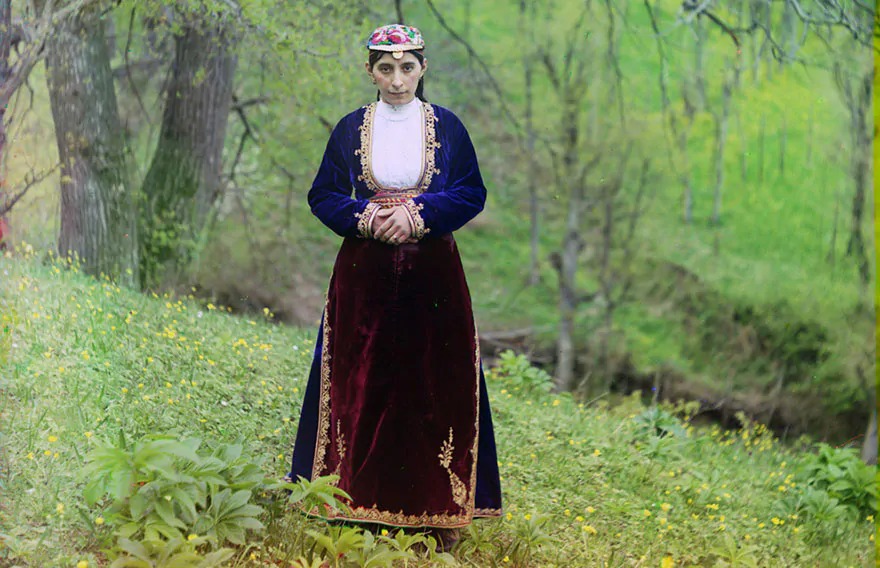
An Armenian woman in national costume poses for Prokudin-Gorskii on a hillside near Artvin (in present day Turkey)
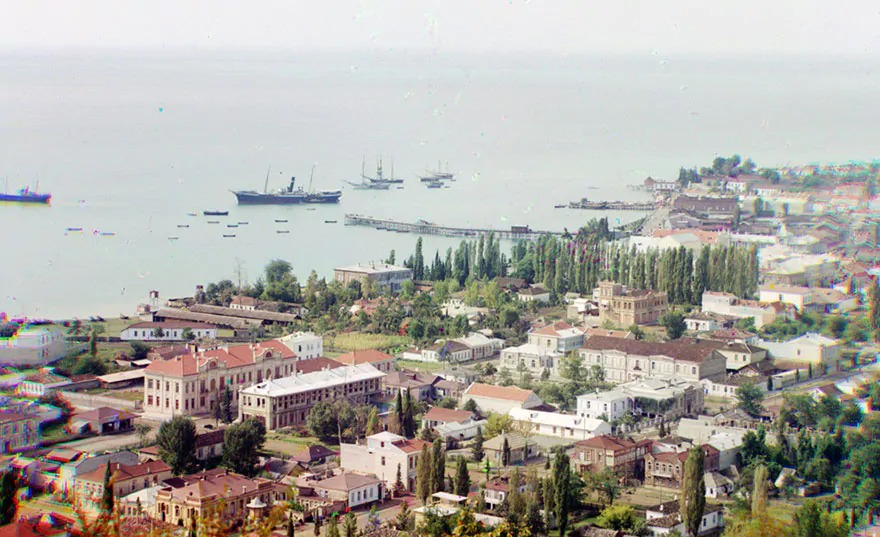
A general view of Sukhumi, Abkhazia and its bay, seen sometime around 1910 from Cherniavskii Mountain
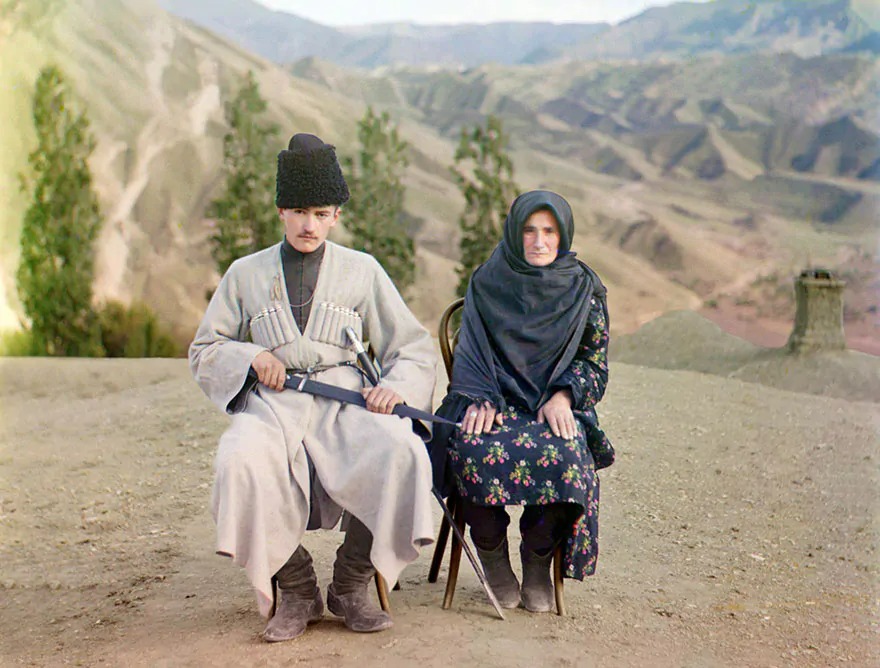
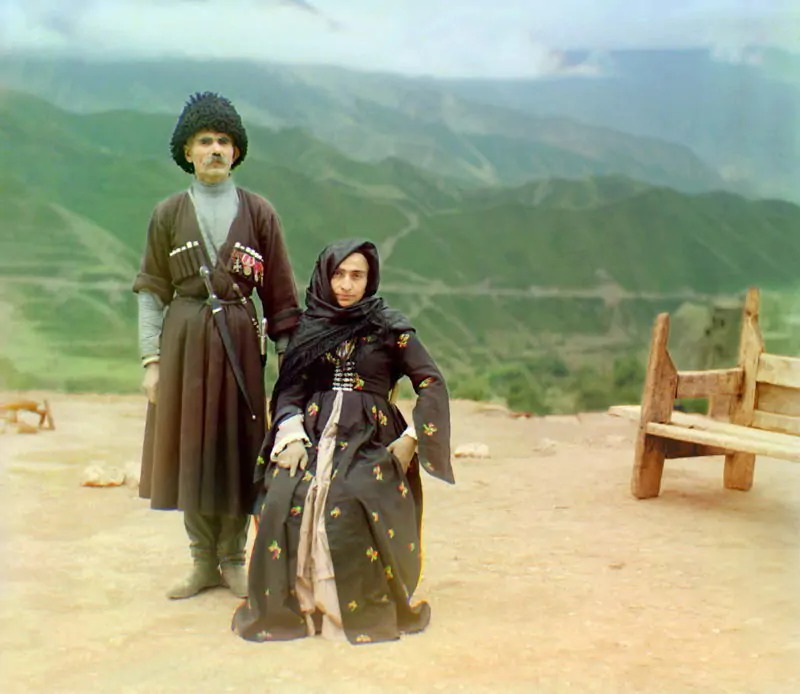
A man and woman pose in Dagestan, ca. 1910
On the Sim River, a shepherd boy. Photo taken in 1910, from the album “Views in the Ural Mountains, survey of industrial area, Russian Empire”
Peasants harvesting hay in 1909. From the album “Views along the Mariinskii Canal and river system, Russian Empire”
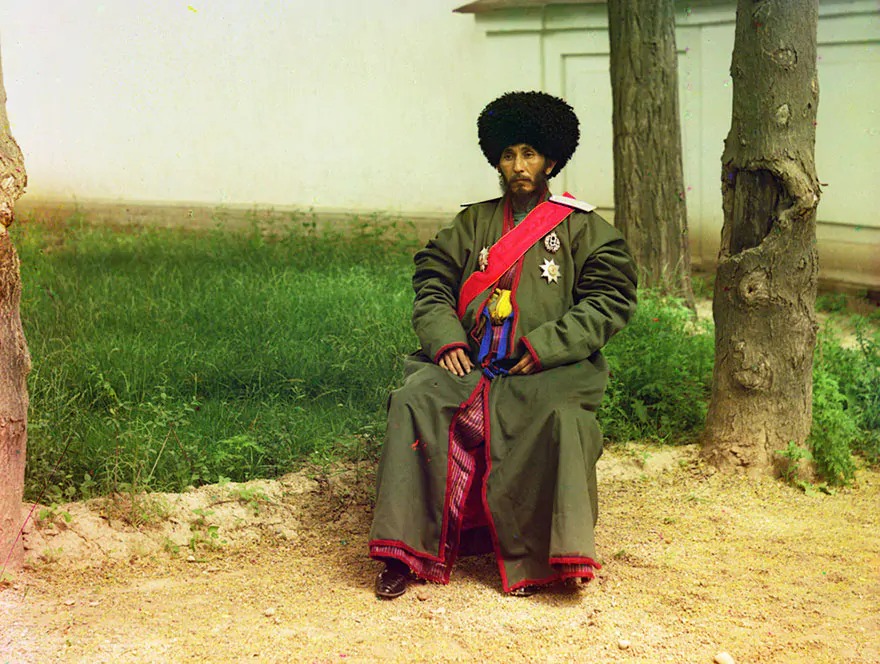
Isfandiyar Jurji Bahadur, Khan of the Russian protectorate of Khorezm (Khiva, now a part of modern Uzbekistan), full-length portrait, seated outdoors, ca. 1910
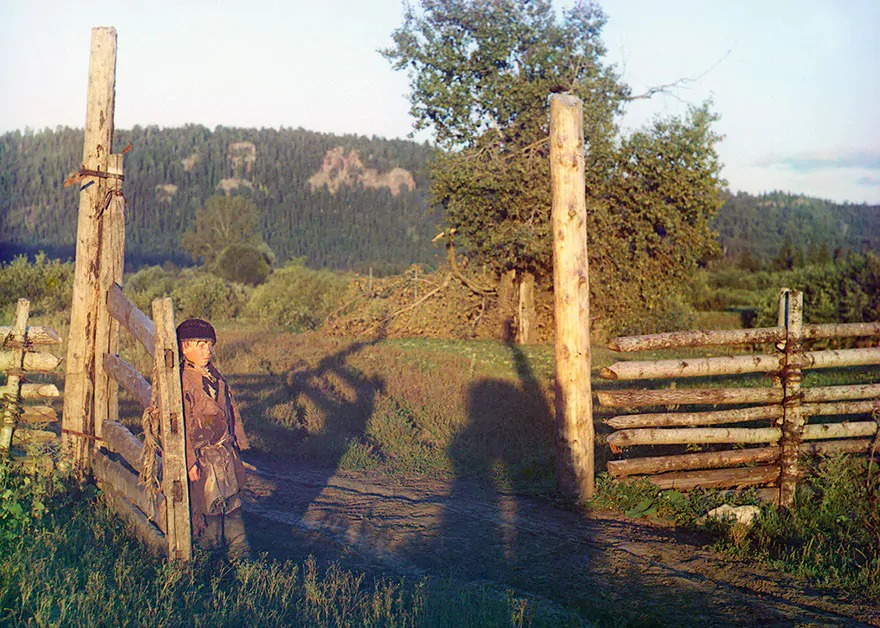
A boy leans on a wooden gatepost in 1910. From the album “Views in the Ural Mountains, survey of industrial area, Russian Empire”
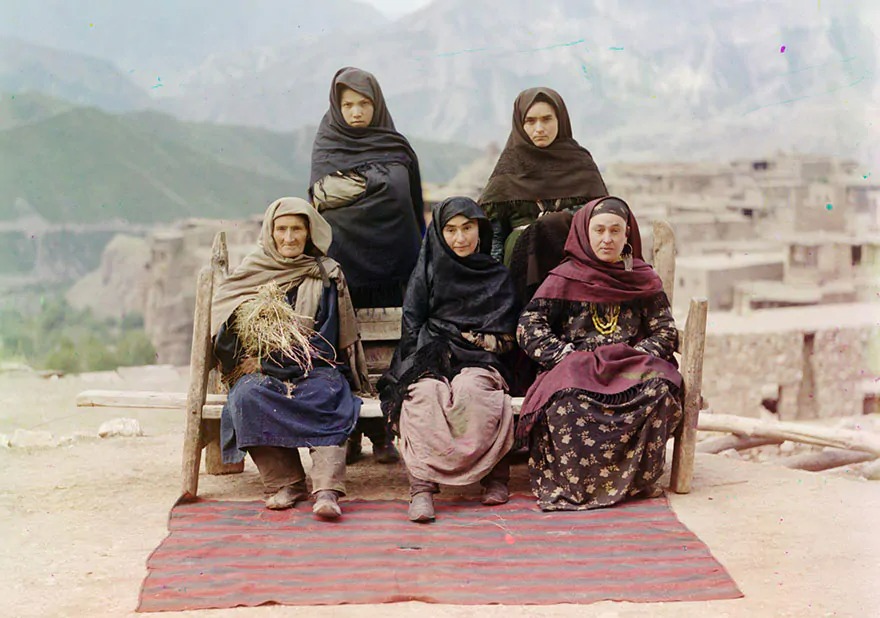
A group of women in Dagestan, ca. 1910
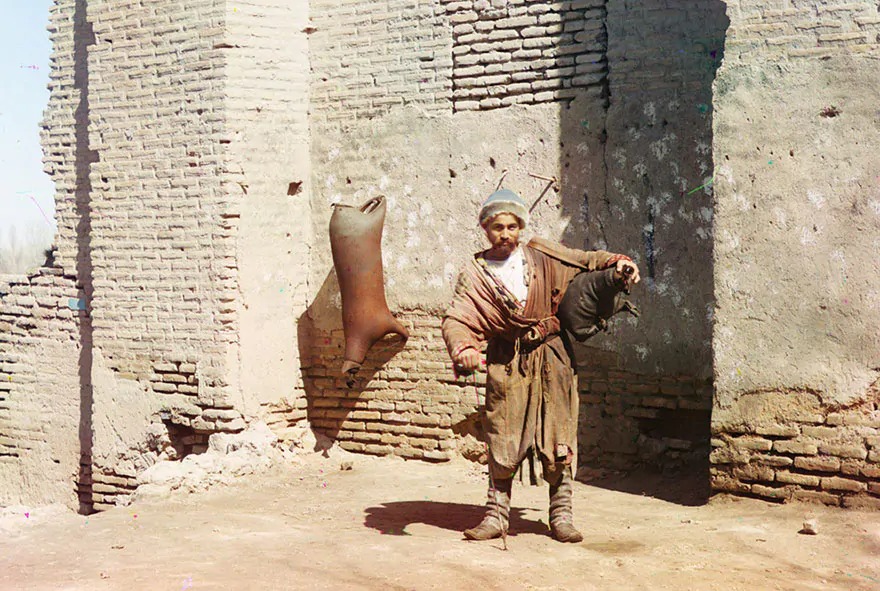
A water-carrier in Samarkand (present-day Uzbekistan), ca. 1910
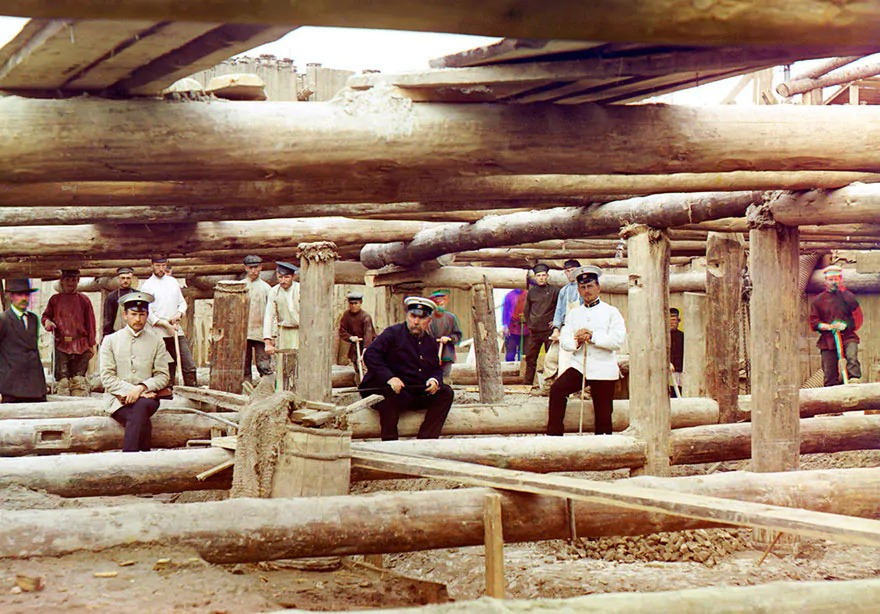
Laying concrete for the dam’s sluice, 1912. Workers and supervisors pose for a photograph amid preparations for pouring cement for sluice dam foundation across the Oka River near Beloomut
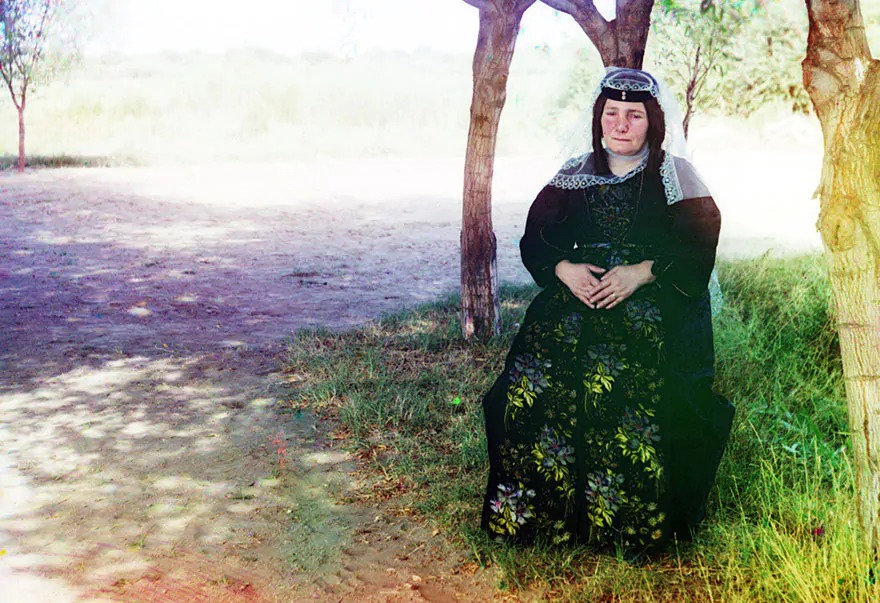
A Georgian woman poses for a photograph, ca. 1910
General view of the wharf at Mezhevaya Utka, 1912
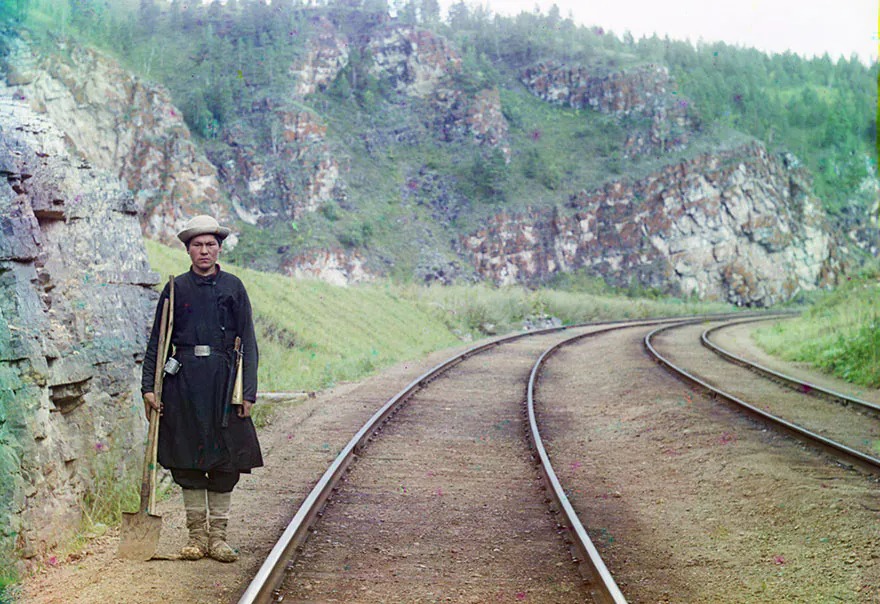
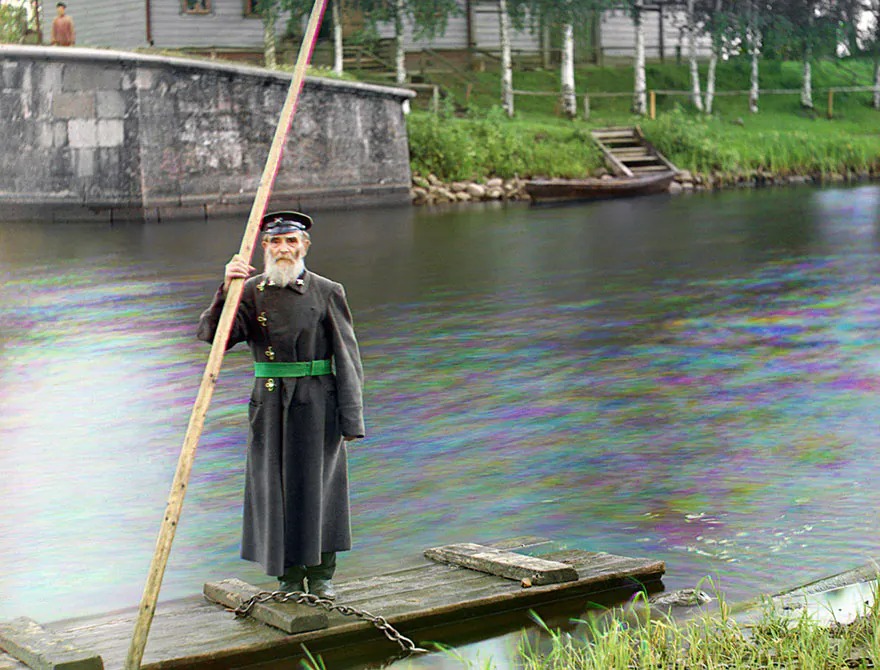
A switch operator poses on the Trans-Siberian Railroad, near the town of Ust Katav on the Yuryuzan River in 1910
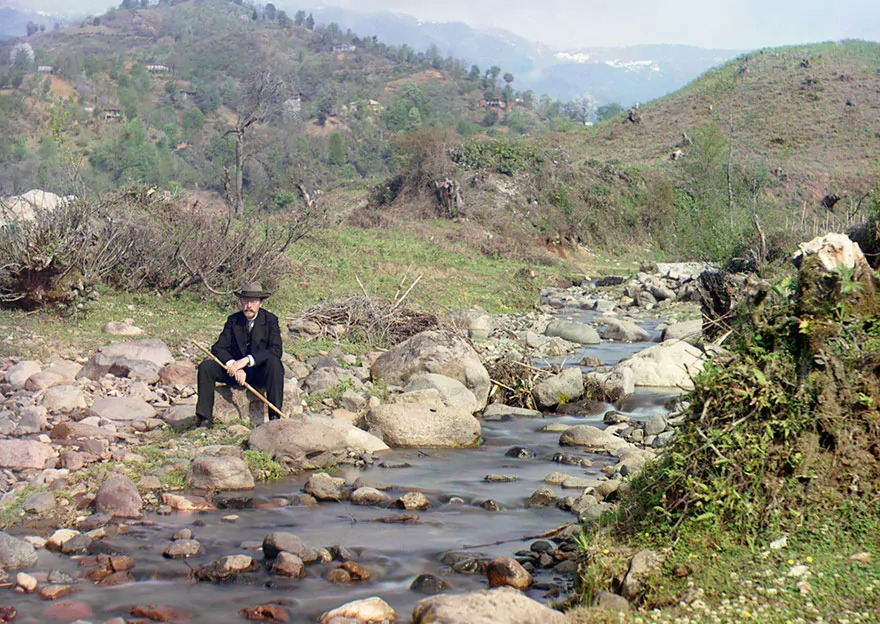
Self-portrait on the Karolitskhali River, ca. 1910. Prokudin-Gorskii in suit and hat, seated on rock beside the Karolitskhali River, in the Caucasus Mountains near the seaport of Batumi on the eastern coast of the Black Sea.
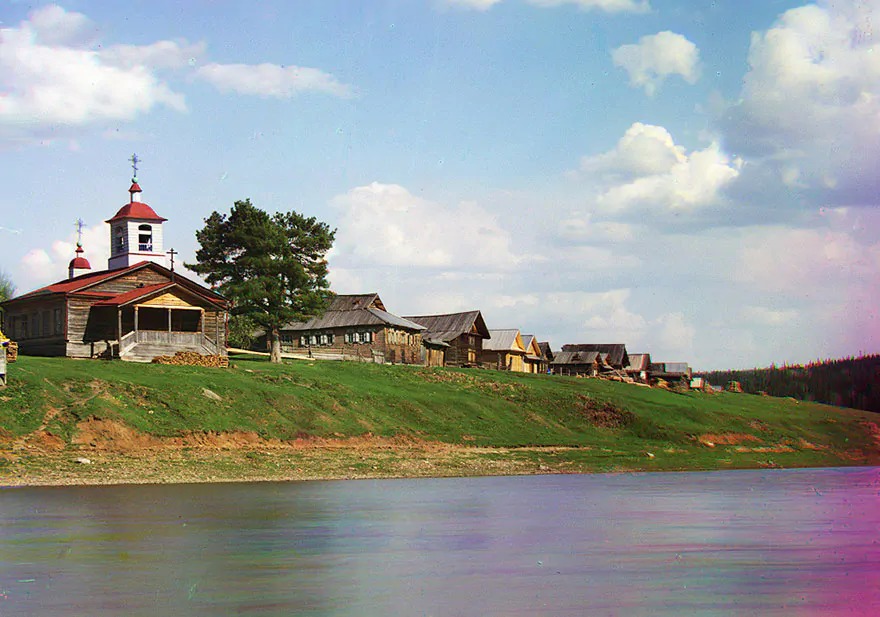
A chapel sits on the site where the city of Belozersk was founded in ancient times, photographed in 1909
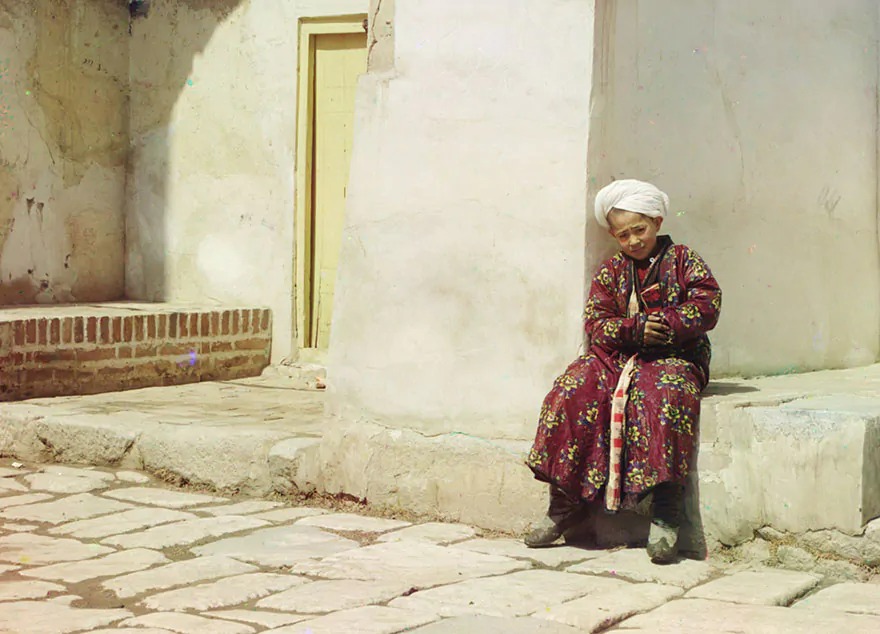
A boy sits in the court of Tillia-Kari mosque in Samarkand, present-day Uzbekistan, ca. 1910
Molding of an artistic casting (Kasli Iron Works), 1910. From the album “Views in the Ural Mountains, survey of industrial area, Russian Empire”
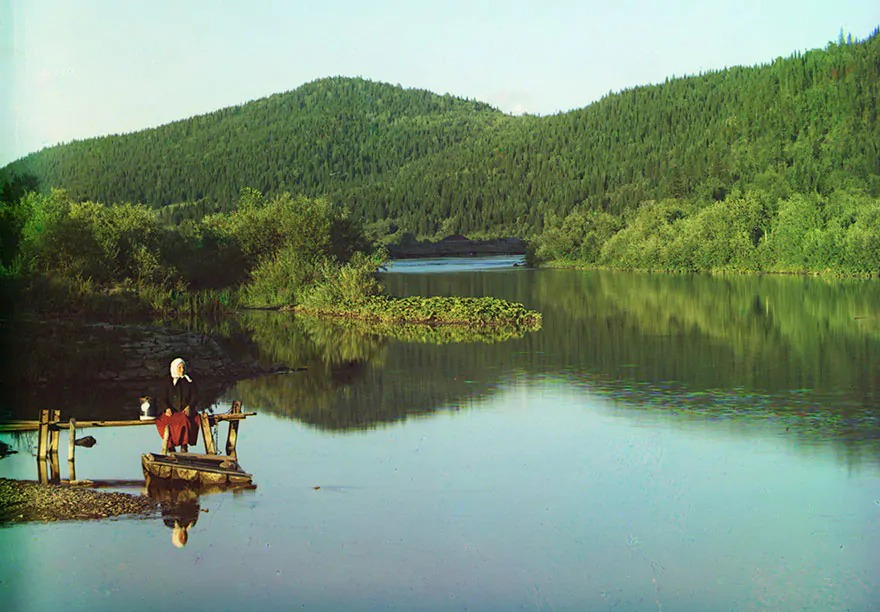
A woman is seated in a calm spot on the Sim River, part of the Volga watershed in 1910
General view of Artvin (now in Turkey) from the small town of Svet, ca. 1910
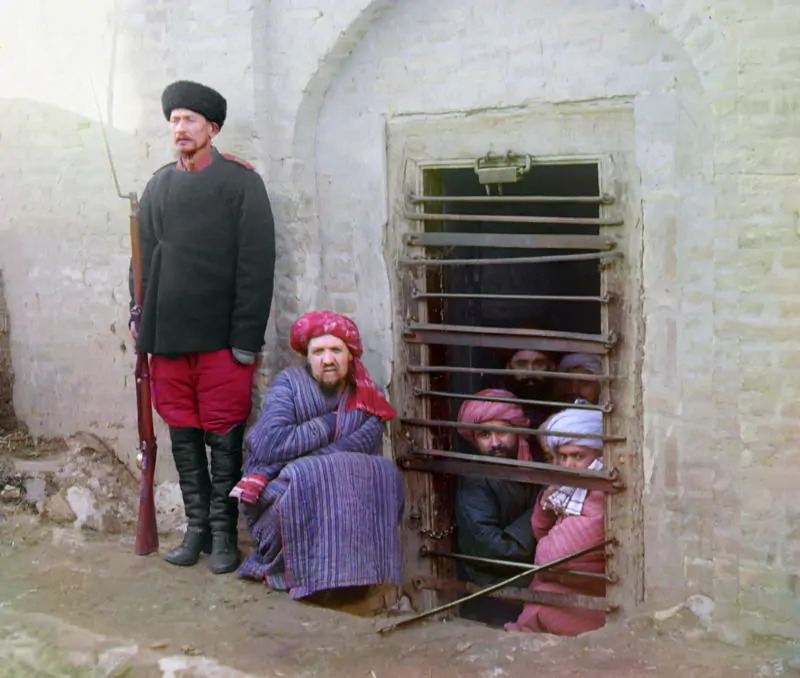
A zindan, or prison, in Bukhara, of modern day Uzbekistan. Zindans were typically built underground.
A couple wearing traditional clothing poses for Gorsky in Dagestan
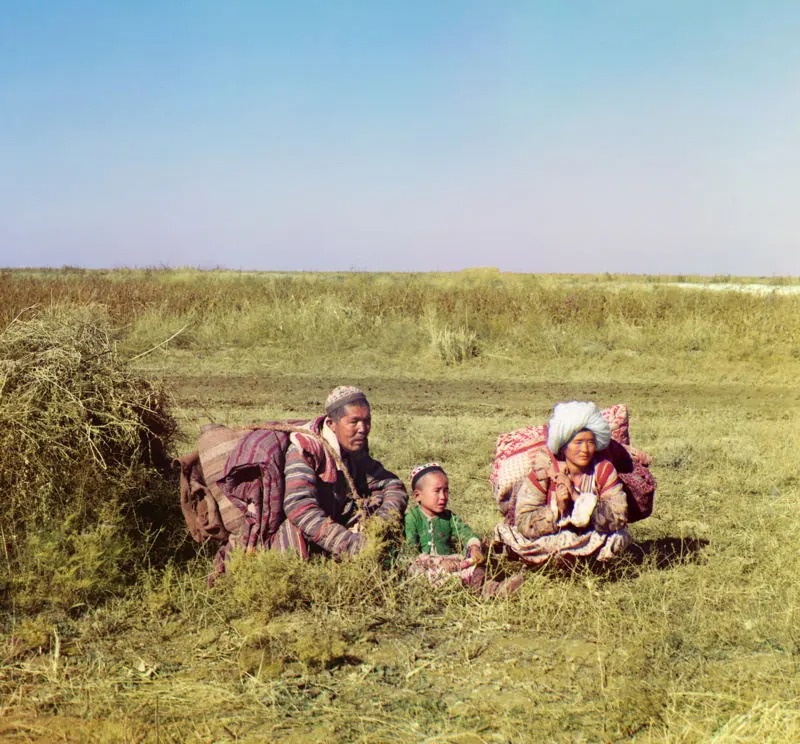
Nomadic Kirghiz on the Golodnaia Steppe in present-day Uzbekistan and Kazakhstan, ca. 1910
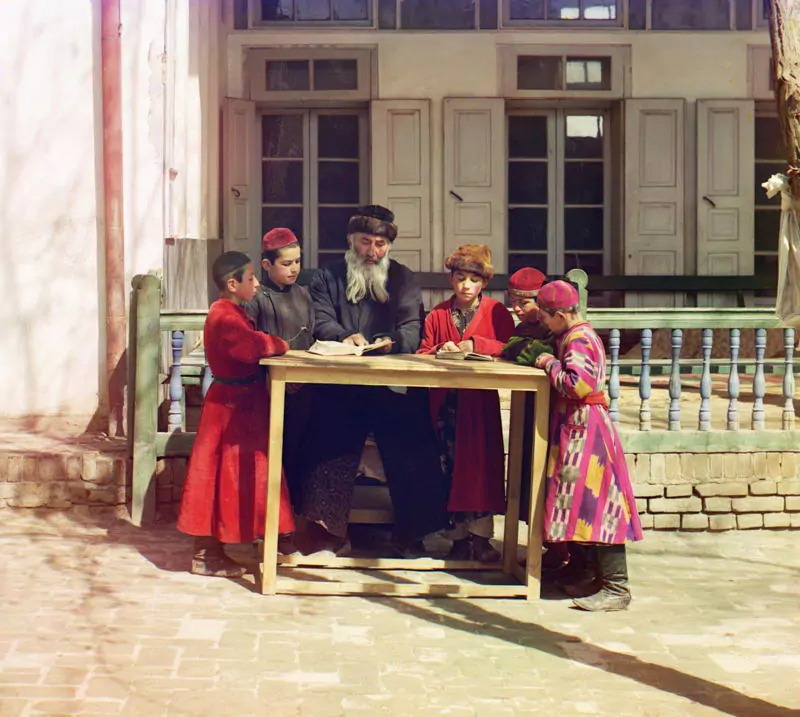
Jewish children with their teacher in Samarkand (in today’s Uzbekistan), ca. 1910
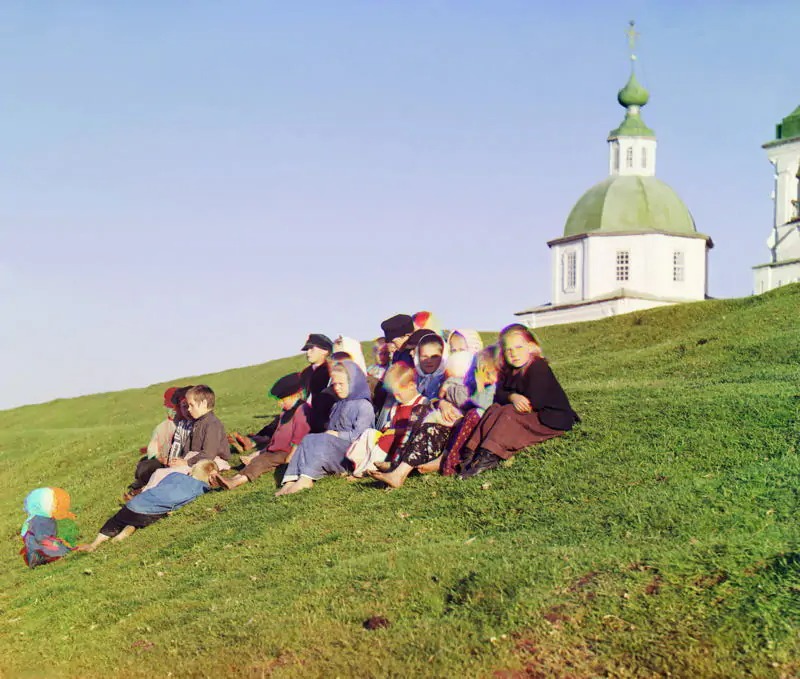
Russian children sit on the side of a hill near a church and bell tower near White Lake, in Russia, 1909
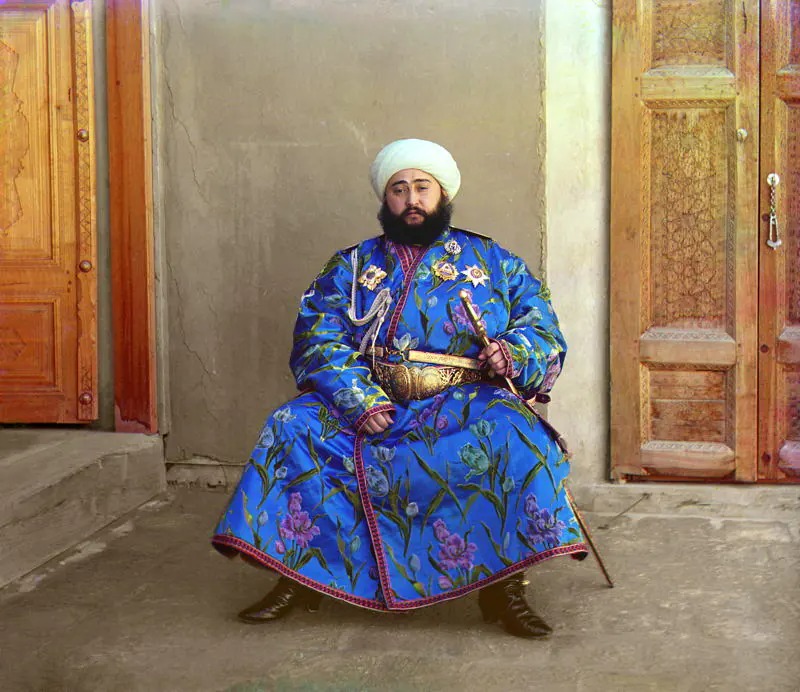
Emir Seyyid Mir Mohammed Alim Khan, the Emir of Bukhara, seated holding a sword in Bukhara, (present-day Uzbekistan), ca. 1910.
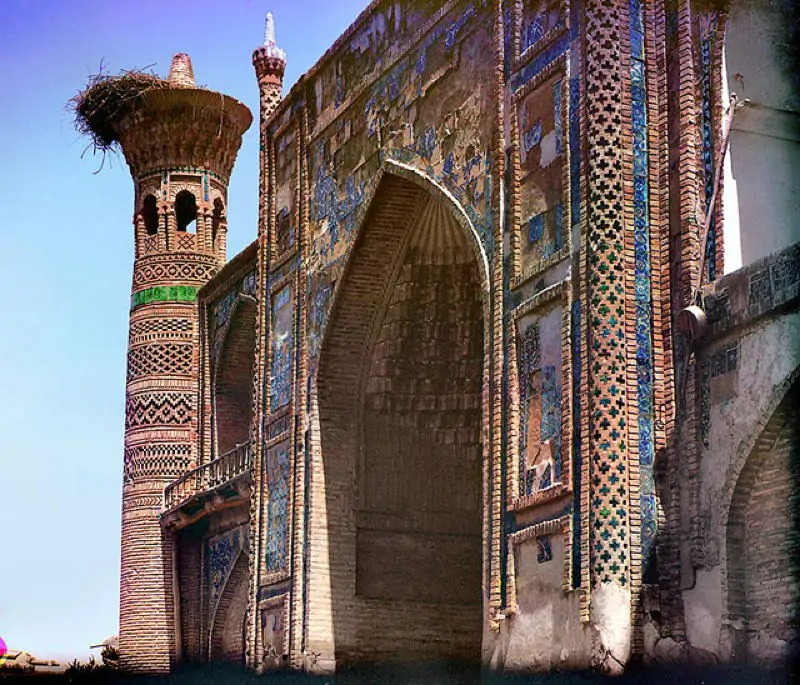
Gorsky captures storks building a nest on what is most likely a mosque in Bukhara.
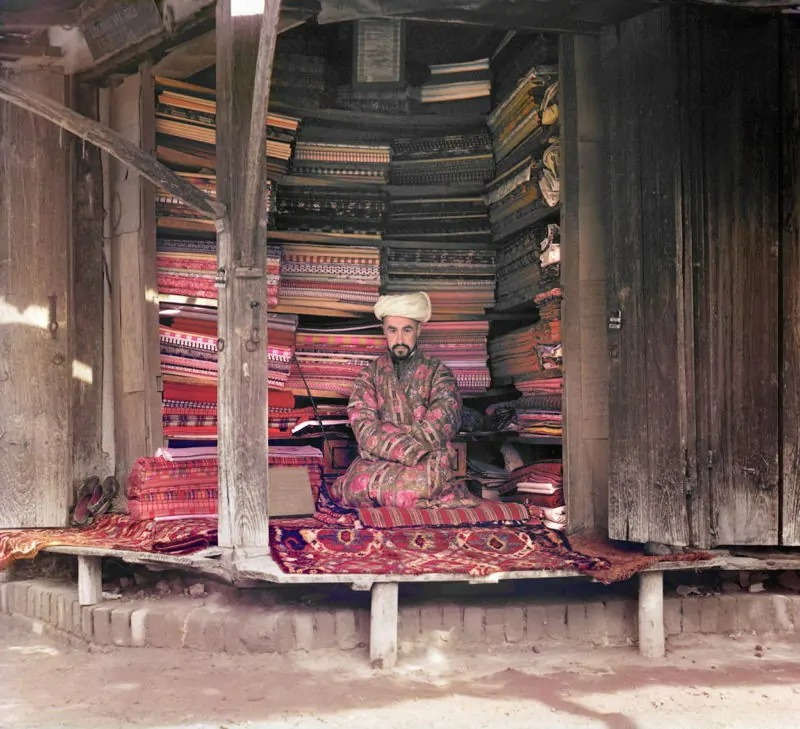
A fabric merchant poses among his wares on the Silk Road, which stretched from China and India to Central Asia, the Middle East and the Mediterranean
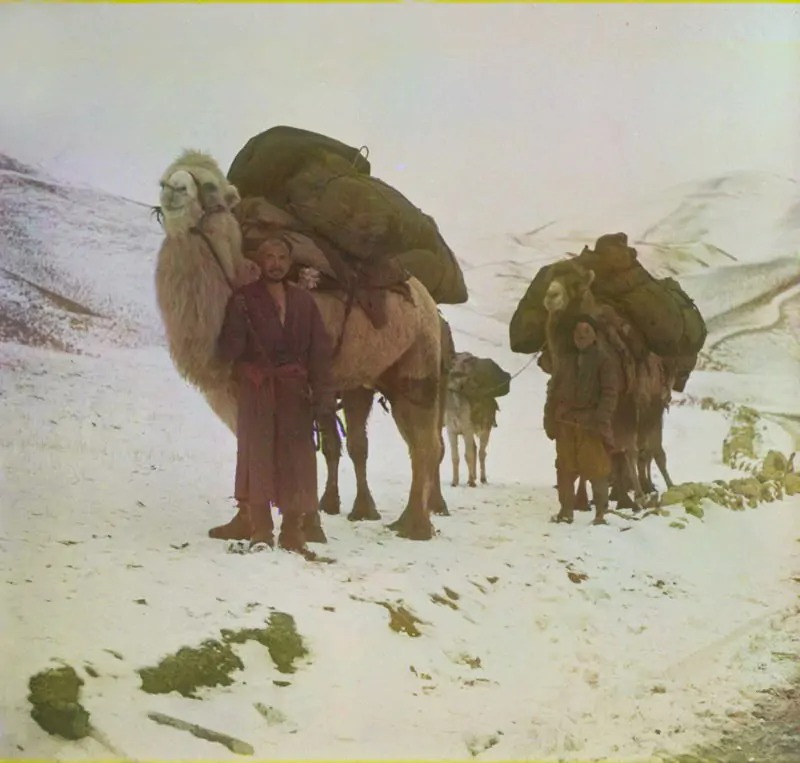
Gorsky documents travelers with their camels near Sulukta in modern day Kyrgyzstan
Gorsky catches himself in this photo on the right in 1912 at Chusovaya
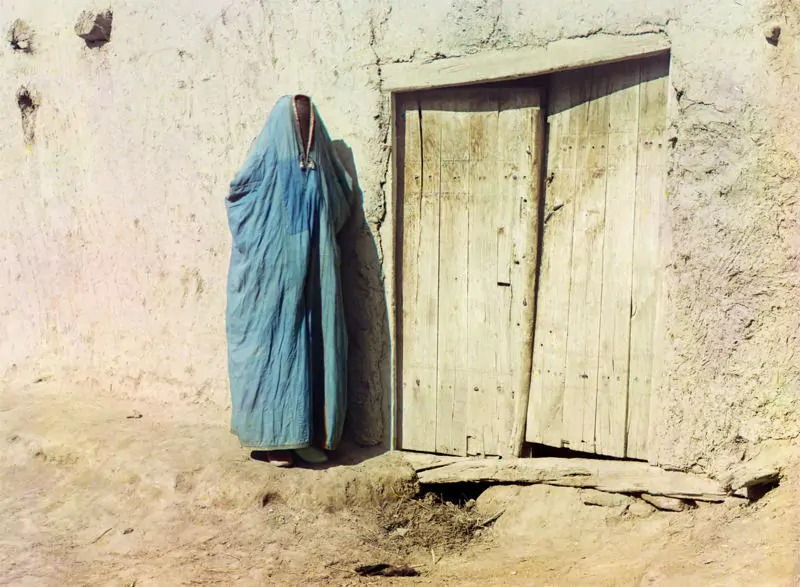
Sart woman in purdah in Samarkand, Uzbekistan, ca. 1910. Before the Russian revolution of 1917, “Sart” was the name for Uzbeks living in Kazakhstan
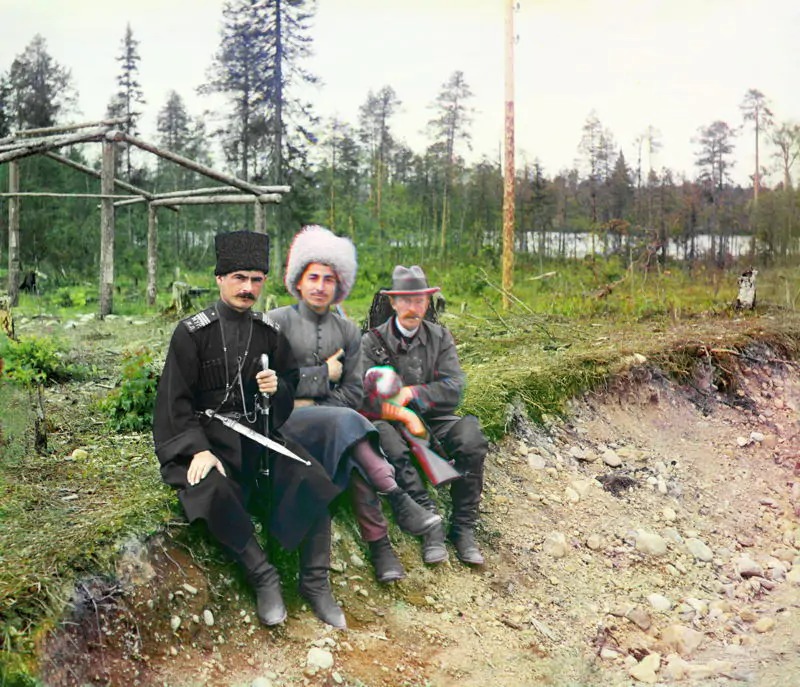
Gorsky sits to the right of two guards for the Murmansk railway
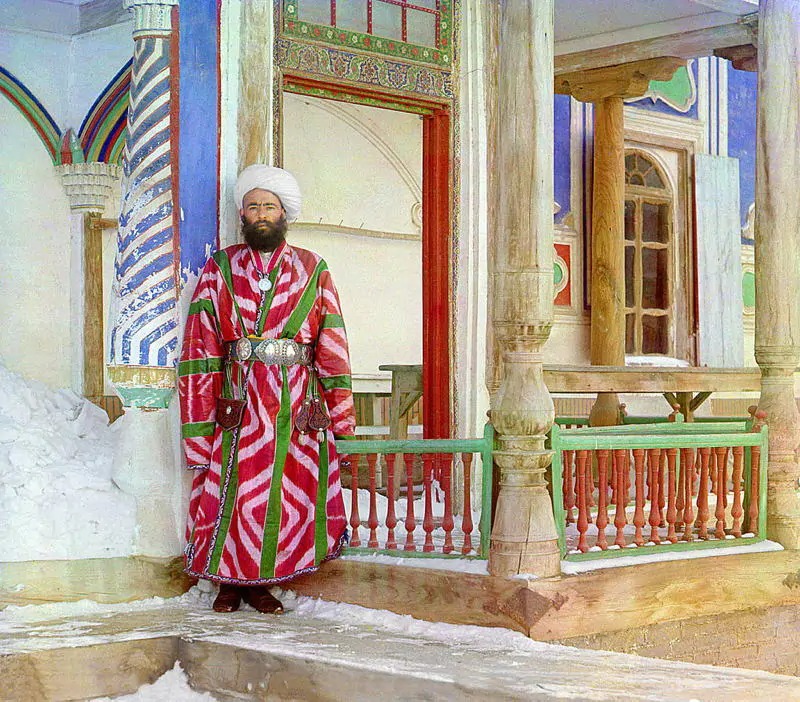
A bureaucrat in Bukhara poses in a brightly colored robe for Gorsky
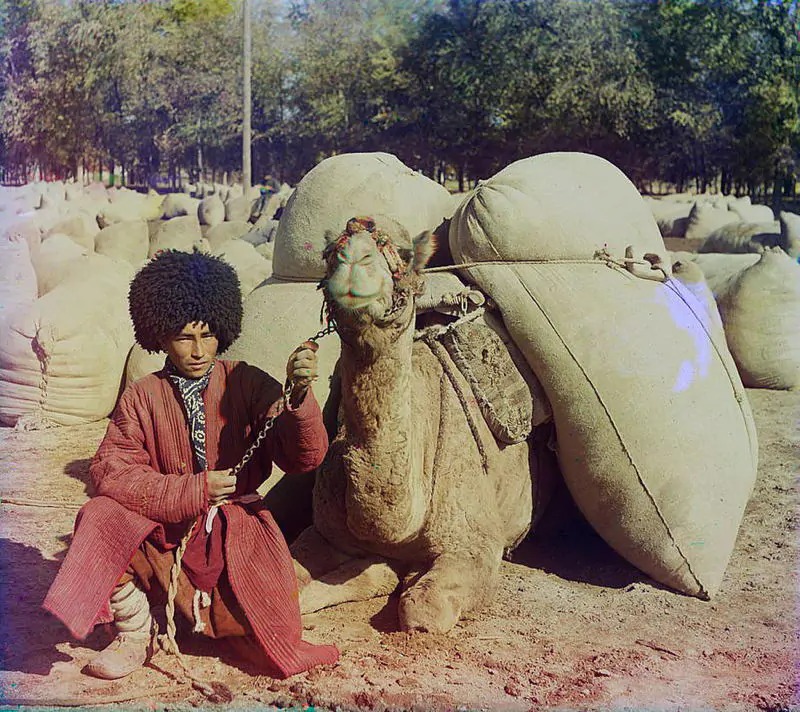
A Turkmen man crouches with camel laden with packs in Central Asia
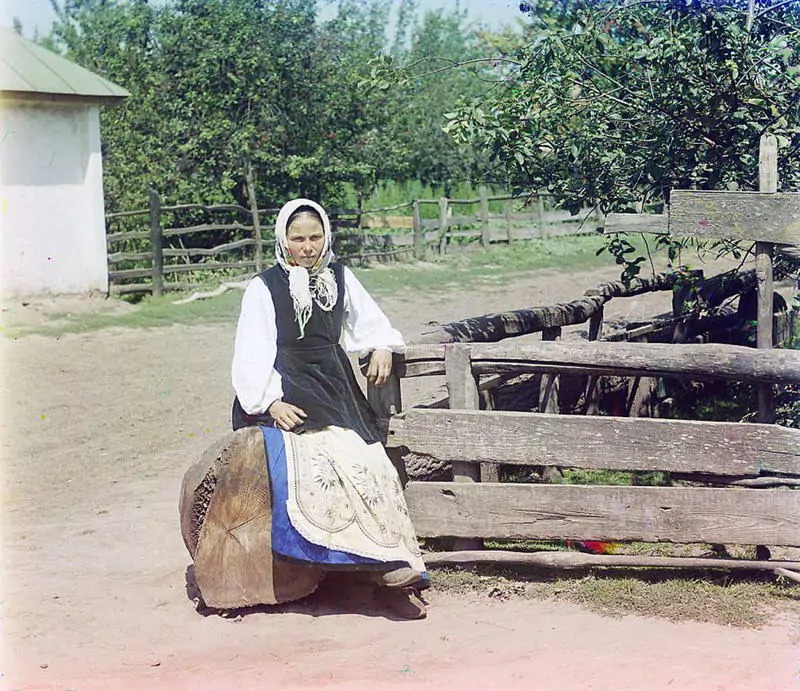
A young girl in traditional garb poses in what was referred to as Little Russia, now known as Ukraine
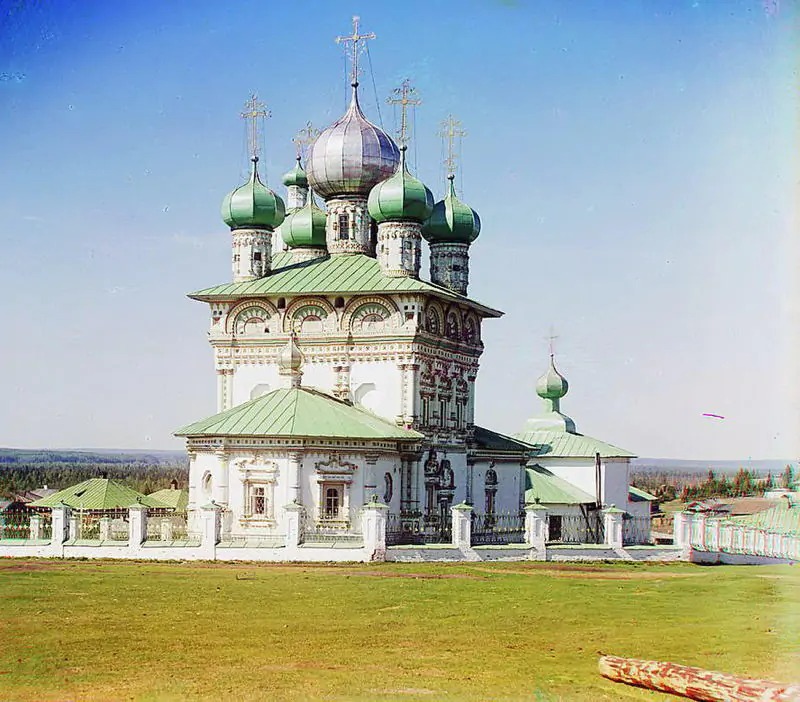
Gorsky also catalogued buildings, houses and nature for his project, including this church in Nyrob
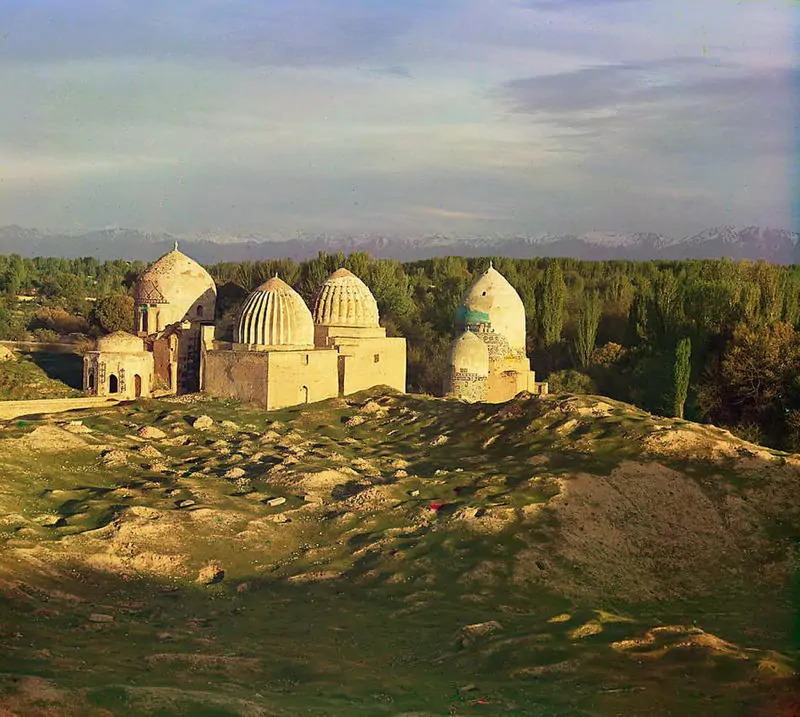
View of the Shakh-I Zindeh mosque in Samarkand as the sun sets Currently, just over 11% of Russians identify as Muslim. 
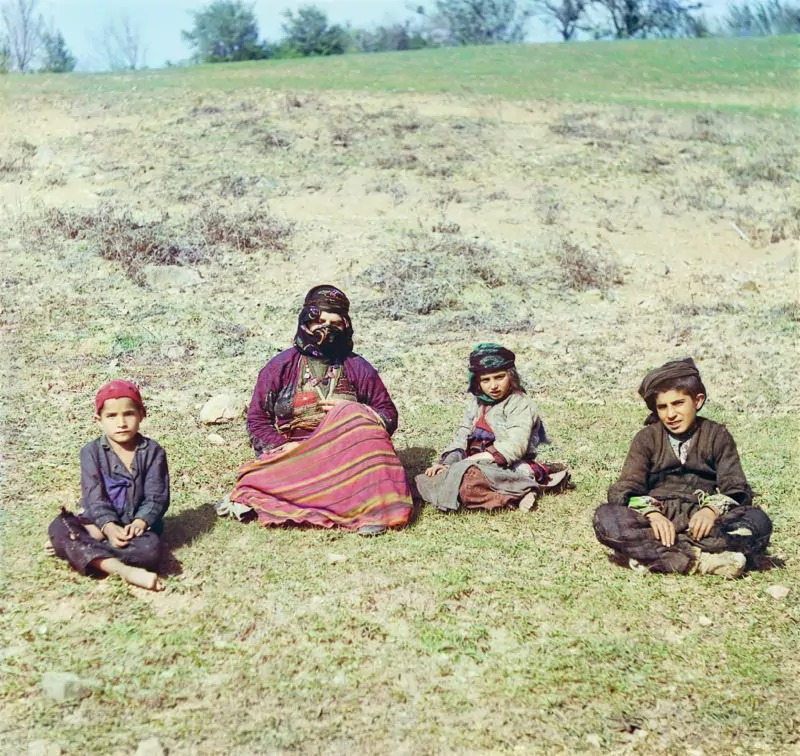
A Kurdish mother sits with her children in Artvin, now part of northeastern Turkey
Gorsky also photographed members of upper class
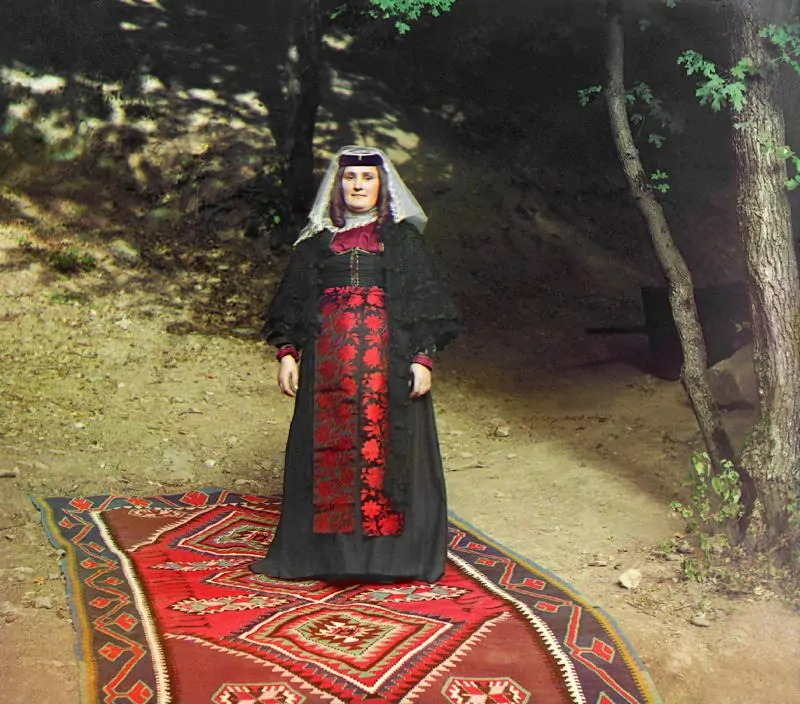
A Georgian woman dressed in regal attire poses on a rug in the forest
Gorsky had the ability to capture both the strength and vulnerability of the peasant class without being judgmental. His photos are an eye-opening glimpse into an empire on the verge of revolution and war
Peter Vedenisov was a pianist with an interest in color photography. He made color autochromes on glass that he could project onto a wall
Vedenisov worked primarily with aristocratic families, particularly the Kosakovs, and managed to capture a different style of life from the peasants of the Russian Empire
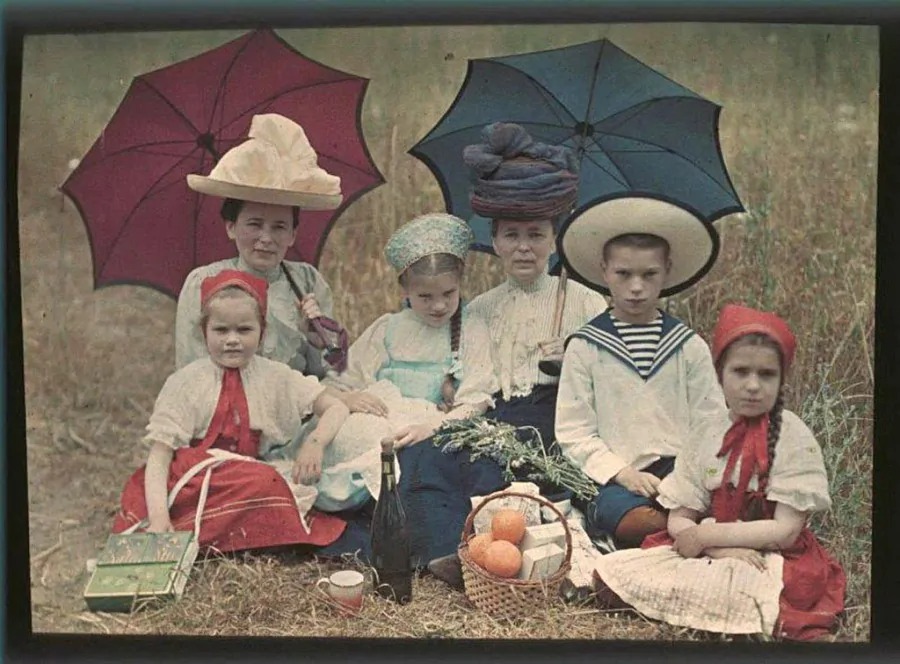
The Kosakovs were friends of the Vedenisovs. Here, the women and children of the family pose
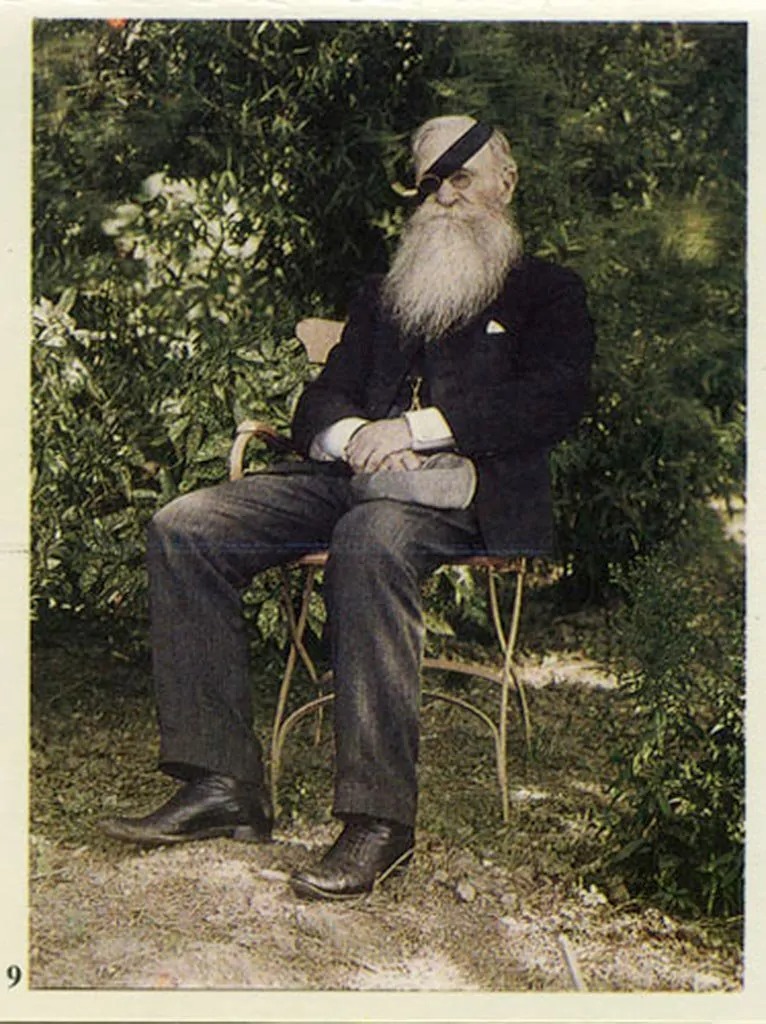
A Crimean patriarch sits for a photo, wearing an eye patch
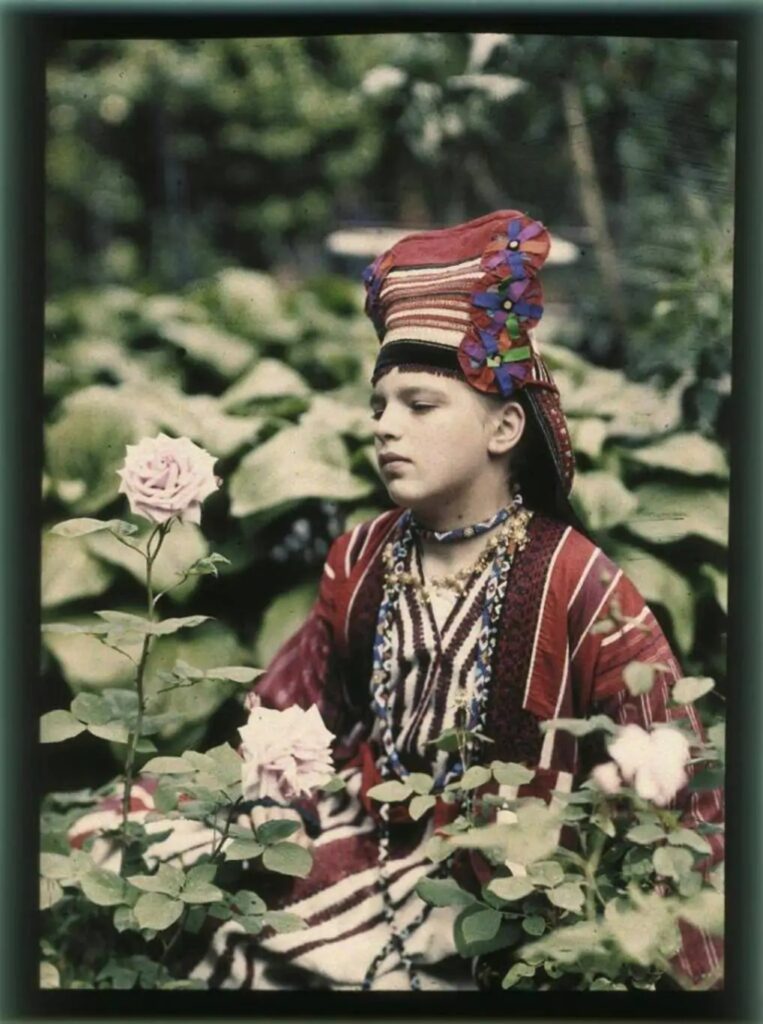
A Crimean woman of wealth poses in a garden, surrounded by opulent flowers
Vedenisov lived for years in Yalta and captured pictures of ships in the port. A resort town, Yalta sits in Crimea, a now disputed area of Ukraine
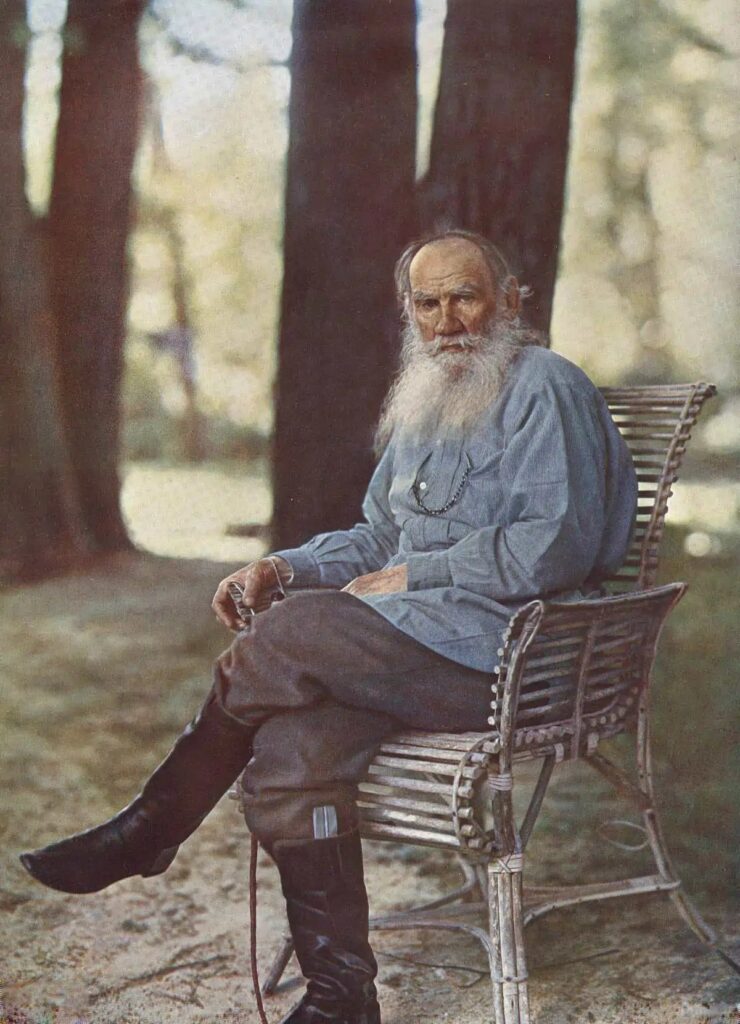
Perhaps Prokudin-Gorsky’s best-known work during his lifetime was this color portrait of Leo Tolstoy
Facebook Comments Box
Facebook11TweetPinLinkedInShares11

Filed Under: Trends Worldwide Tagged With: color, imperial, life, Photos, russia, stunning, trends, worldwide

Reader Interactions

Leave a Reply Cancel reply

Your email address will not be published. Required fields are marked *

Primary Sidebar

More to See

Researchers Document The First Time a Wild Chimpanzee Uses a Human-Made Object As a Se xual Toy

By Stephen King

A Luxurious Soak in the Past: Byzantine Bathtub Found in Tunisia

By Stephen King

Woman saves “unadoptable” cat and helps him flourish

By Stephen King

Donkeys Fleeing California Wildfires Get The Finest Treatment From Kind Firemen

By Stephen King

Foster Kitten Who is Timid is Fixated on Being Spooked By His New Dog Brother

By Stephen King

Heartless owners abandon dog — and glue her eyes shut so she can’t find her way home

By Stephen King

California’s Lake Oroville highlights reversal of severe-drought levels in stunning before and after images

By Stephen King

Footer

Home and Garden: Timeless Beauty and Smart Investment

Your home and garden reflect your personality and values, offering both emotional and financial worth. A well-maintained space enhances your life and withstands market changes.

Hasan Jasim emphasizes the lasting value of homes and gardens, from beautiful gardens that boost curb appeal to interiors that create sanctuary. These spaces are more than assets—they are legacies.

Incorporating health-boosting elements like dates, known for their energy, heart health, and gut benefits, supports your well-being. Whether for diabetes, weight loss, or skin health, dates are a smart, natural choice.
By prioritizing quality materials and timeless design, your home and garden remain valuable investments for years to come.
Recent

  • The University in Japan That Lets Students Graduate in Anything — Even Full Cosplay
  • The Cat Who Calls an Ancient Temple Home: Meet Cece of Dendera
  • Scientists Just Captured The Flash of Light That Sparks When a Sperm Meets an Egg
  • She Gave Up Her Crown So Her Friend Could Feel Like a Princess
  • Deaf and Blind Dog Reunites with Dad After a Year — Her Reaction Will Melt Your Heart
  • What Does It Mean to Encounter a Black Cat? Mysteries, Myths, and Ancient Symbolism
  • Mars Up Close: Stunning New Photos from 200 Million Miles Away

Search

Contact us

Hasan Jasim LLC is proudly based in the United States, delivering professional and reliable services. You can reach us by phone at +1 (914) 575-5957 or visit our office at 1234 Block Blvd., San Francisco, CA 94120. We are always here to assist you with any inquiries and provide the support you need promptly and efficiently.

Copyright © 2025 · Magazine Pro on Genesis Framework · WordPress · Log in