
• Skip to main content
  • Skip to primary sidebar
  • Skip to footer
  • Home
  • About Us
  • Copyright Report
  • Submit Content
  • Terms
  • Privacy Policy
  • Legal Disclaimer

Hasan Jasim

Hasan Jasim is a place where you may get entertainment, viral videos, trending material, and breaking news. For a social generation, we are the largest community on the planet.

Chernobyl’s Secret Weapon: The Fungus Feeding on Radiation

by Hasan Jasim Editorial Team Leave a Comment

ShareTweet

The Chernobyl disaster of 1986 left an enduring mark on the Earth, a stark reminder of the destructive power of nuclear energy.1 Yet, within this desolate landscape, a remarkable discovery has emerged: a fungus that thrives on radiation.

Cladosporium sphaerospermum is a remarkable species of radiotrophic fungus that is thriving in the Chernobyl Exclusion Zone and which scientists are studying to unlock applications in a wide range of fields. getty

The Radiation-Eating Fungus

Cladosporium sphaerospermum, a resilient black fungus, has adapted to the extreme conditions of the Chernobyl Exclusion Zone.2 Unlike most life forms, this fungus doesn’t fear radiation; it feeds on it. Through a process similar to photosynthesis, it absorbs radiation and converts it into energy.3 This unique ability, known as radiosynthesis, has captivated scientists worldwide.
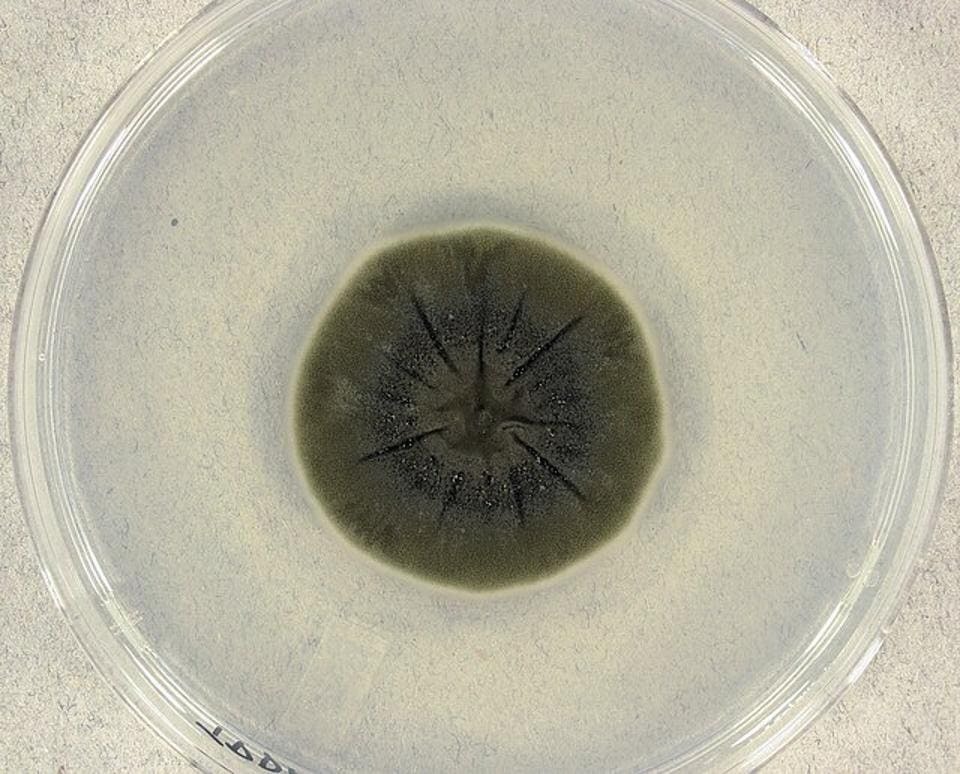
Cladosporium sphaerospermum grown on potato dextrose agar for 14 days at 25°C. This unique fungus, discovered in Chernobyl’s radioactive zones, has the rare ability to harness radiation for growth. Medmyco via Wikimedia

A Glimpse into the Future of Bioremediation and Space Exploration

The potential applications of this radiation-resistant fungus are vast. Scientists are exploring its use in bioremediation to clean up contaminated sites, including those affected by nuclear accidents.4 By harnessing the power of C. sphaerospermum, we may be able to accelerate the cleanup process and mitigate the long-term environmental impact of radiation.

Beyond Earth, this fungus could play a crucial role in future space exploration. Its ability to withstand the harsh conditions of space, including high levels of radiation, makes it a promising candidate for developing radiation-shielding materials and sustainable food sources for astronauts.

In the ruins of Chernobyl, scientists have discovered a black fungus feeding on deadly gamma radiation, slowly growing toward the reactor core. This mysterious organism, thriving in the abandoned wasteland, is not just surviving but actively absorbing nuclear radiation, as if healing the scar left by one of the world’s worst disasters.

Unraveling the Secrets of Life

The discovery of C. sphaerospermum challenges our understanding of the limits of life. It demonstrates the incredible adaptability of organisms and the potential for life to thrive in the most extreme environments. By studying this remarkable fungus, we may unlock new insights into the fundamental processes of life and inspire innovative solutions to some of our most pressing challenges.

As research continues, the radiation-eating fungus holds the promise of a cleaner, safer future, both on Earth and beyond.

Filed Under: Trends Worldwide Tagged With: Biology, bioremediation, Biotechnology innovations, chernobyl, Chernobyl bioremediation, Chernobyl disaster, Cladosporium sphaerospermum, Environment, Environmental bioremediation, Extreme environmental survival, extremophiles, Fungi survival mechanisms, fungus, Melanin radiation absorption, Nuclear waste cleanup, radiation, radiation protection, radiation-eating fungus, Radiosynthesis fungi, radiotrophic fungi, Science, Space, space exploration, Space exploration radiation shield, technology

Reader Interactions

Leave a Reply Cancel reply

Your email address will not be published. Required fields are marked *

Primary Sidebar

More to See

In a spectacular rescue, a lioness puts her life on the line to save a pup

By Hasan Jasim Editorial Team

Friendly Beluga Returns Phone Woman Accidentally Dropped Into Ocean

By Hasan Jasim Editorial Team

The Mighty Guardians: Elephants and Their Indispensable Role in the Natural World

By Hasan Jasim Editorial Team

This Rare Turtle Can Breathe Through Its Rear — And Scientists Say It’s One of Earth’s Most Extraordinary Reptiles

By Hasan Jasim Editorial Team

When The Missing Senior Dog Hugs His Mother Once More, He Finally Unwinds

By Hasan Jasim Editorial Team

A Week is Spent by Dogs on Train Tracks as They Wait For Their Owners To Return

By Hasan Jasim Editorial Team

Dog Acts Like She’s Going Outside To Potty So She Can Get A Treat

By Hasan Jasim Editorial Team

Footer

ABOUT HASANJASIM.ONLINE

Hasanjasim.online is a digital platform dedicated to publishing well-researched articles about the animal kingdom, nature, and the environment. Our editorial team works to source stories from credible outlets, scientific research, and verified reports, aiming to inform as much as we entertain. From wildlife conservation and animal behavior to natural wonders and environmental science, we cover the topics that help readers better understand and appreciate the natural world. Whether you're a lifelong nature lover or simply curious about the planet we share, Hasanjasim.online aims to be a trustworthy destination for stories worth reading — and worth citing.

Recent

  • The Viral Trend of Dogs Getting Their Own Maternity Photoshoots
  • The Seahorse Photo That Captured a Silent Farewell — And Won Photography’s Top Ocean Prize
  • Blood-Soaked California Poachers Arrested After Cops Make Horrifying Discovery
  • The Moment an Emu Wrestled a Man to the Ground — Then Turned the Tables
  • Why didn’t anyone tell me there’s an animal that smells exactly like hot, buttered popcorn?
  • I Never Liked the Caribbean—But This Island With Waterfalls, Hot Springs, and Rainforests Won Me Over
  • He Was a Magnificent 17-Point Buck — Now His Life Is Over

Search