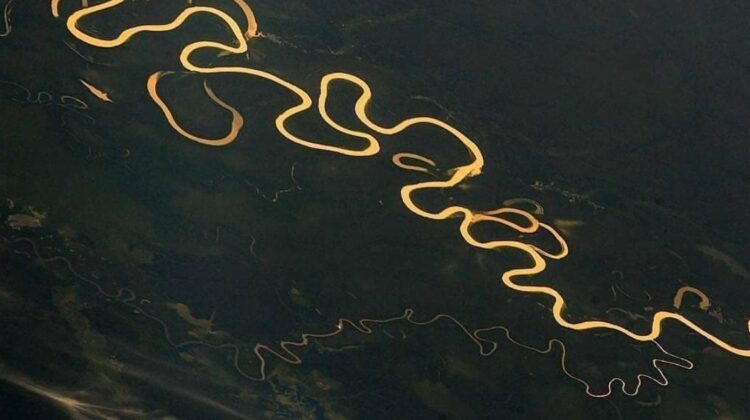
Astronauts on the International Space Station have photographed the Amazon River many times, and every picture shows something no map can: a winding brown giant, fed by countless tributaries, cutting through the rainforest like a living artery. Here’s what those images reveal about the world’s largest river.
What You’re Looking At
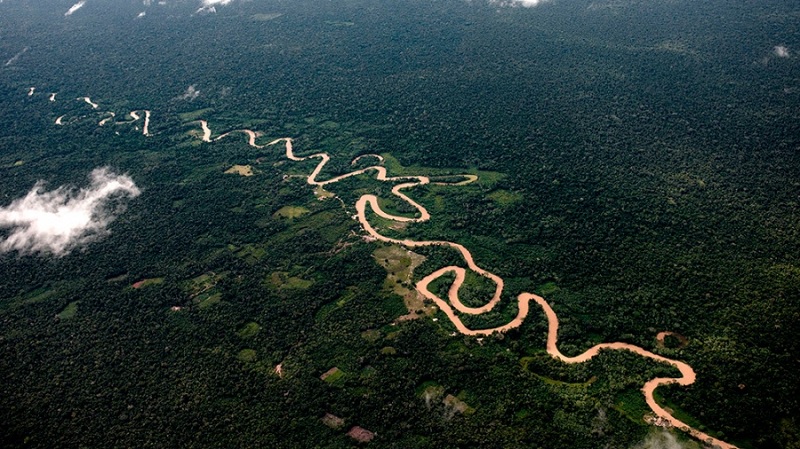
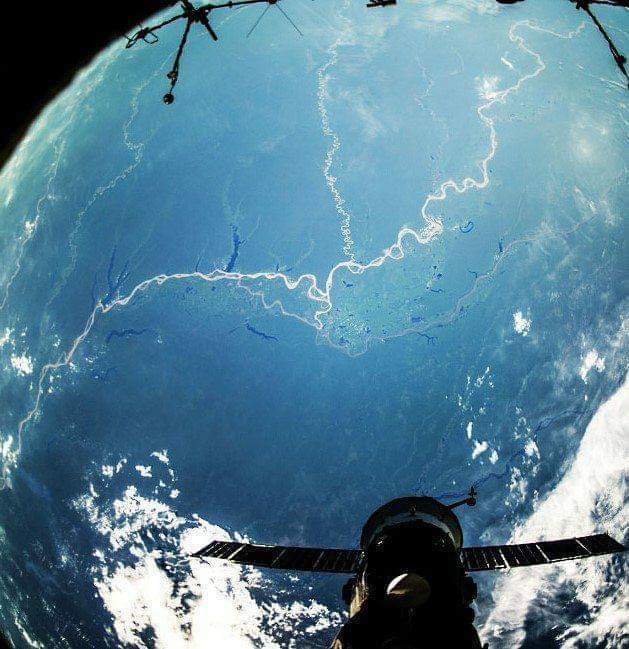
From orbit, the Amazon’s color stands out immediately. According to NASA’s Earth Observatory, the water is light brown because it carries vast quantities of fine sediment eroded from the high Andes, thousands of kilometers upstream. Where the clear, dark-blue Tapajós River joins it near the Brazilian city of Santarém, the two waters meet in a sharp line, and the muddy Amazon pushes back into the Tapajós to form a small delta.
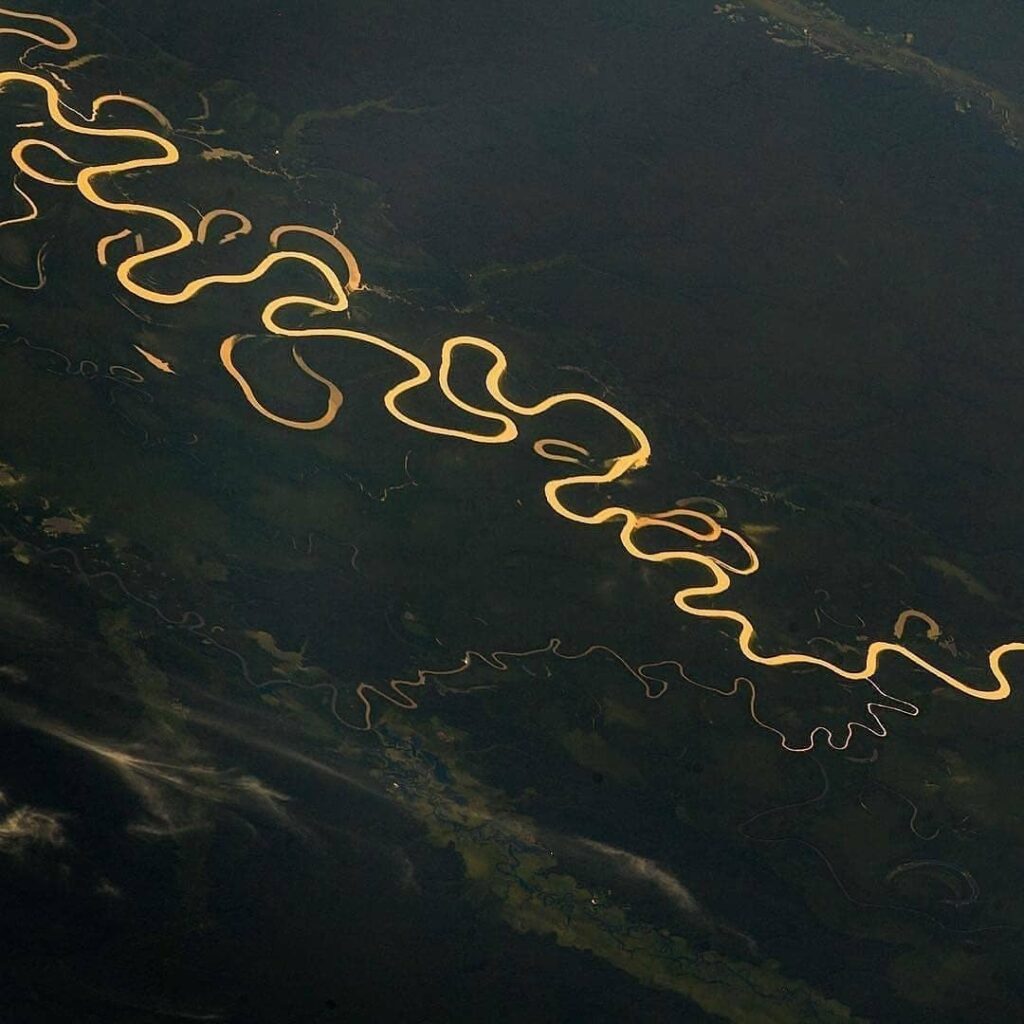
Sunglint, the bright reflection of the Sun off water, reveals even more. In one NASA image from the ISS, it highlights meanders with an amplitude of 18 kilometers, far larger than on other great rivers, along with old channels, lakes and side tributaries across a floodplain more than 32 kilometers wide. Photographs by astronauts, including ESA’s Alexander Gerst, show the same tangle of branches stretching to the horizon.
The Amazon by the Numbers
- Length: About 6,400 kilometers (4,000 miles), roughly the distance from New York to Rome, according to ESA.
- Width: Between 1.6 and 10 kilometers, expanding to around 50 kilometers in the wet season.
- Tributaries: More than 1,000.
- Flow: An average of about 209,000 cubic meters of water per second into the Atlantic.
- Reach: Ocean-going ships can dock at Santarém, about 600 kilometers from the Atlantic.
NASA calls it Earth’s largest river by water volume and sediment discharge, and ESA says its basin is the largest drainage system in the world.
Is It Longer Than the Nile?
It depends on who is measuring. Scientists have long debated whether the Nile or the Amazon is the longest river, because the answer depends on where you place the true source and how you measure the winding path. Many sources still list the Nile as longer, and some studies argue the Amazon is. What nobody disputes is that the Amazon carries far more water than any other river.
Is It “the Lungs of the Planet”?
The nickname is popular, but scientists say it is misleading. Oxford ecologist Yadvinder Malhi has calculated that the Amazon’s net effect on atmospheric oxygen is roughly zero, because the forest consumes nearly as much oxygen as it produces. Estimates of its production range from 6 to 9 percent of the world’s oxygen, far below the oft-quoted 20 percent, as FactCheck.org reports. The forest matters for other reasons: it stores huge amounts of carbon and, in one scientist’s words, works like a giant air conditioner that cools the planet.
Seeing the Amazon in Person
If the photographs have you dreaming of a trip, here is what to plan for:
- River cruises. Compare Amazon river cruises and rainforest lodge packages, which vary widely in price and comfort.
- Travel insurance. Travel insurance with medical and evacuation cover is wise for remote regions.
- Health and vaccinations. Check travel vaccinations and travel health insurance requirements well in advance.
- Photography gear. A telephoto lens, waterproof camera bag and binoculars help capture wildlife.
- Support the forest. A donation to a rainforest conservation group helps protect the basin.
Frequently Asked Questions
Is the Amazon the largest river in the world? By water volume and drainage basin, yes. By length, the Nile is often listed as longer, though scientists debate the measurement.
Why is the Amazon brown? It carries large amounts of fine sediment eroded from the Andes Mountains.
Does the Amazon produce 20 percent of the world’s oxygen? No. Scientists estimate its contribution is far lower, and that the forest uses up nearly all the oxygen it makes.
Can you see the Amazon from the ISS? Yes. Astronauts have photographed it many times, and the sunglint reveals its meanders and tributaries.
Sources: NASA Earth Observatory, ESA, National Geographic, and FactCheck.org, all covering ISS and satellite imagery of the Amazon River and the science behind its size, flow and role in the climate.
Leave a Reply