• Skip to main content
  • Skip to primary sidebar
  • Skip to footer
  • Home
  • About Us
  • Copyright Report
  • Submit Content
  • Terms
  • Privacy Policy
  • Legal Disclaimer

Hasan Jasim

Hasan Jasim is a place where you may get entertainment, viral videos, trending material, and breaking news. For a social generation, we are the largest community on the planet.

Tigers’ Bright Orange Color Is Actually Excellent Camouflage and Now We Know Why

by Hasan Jasim Editorial Team Leave a Comment

ShareTweet

Tigers, apex predators renowned for their power and beauty, possess a striking orange coat adorned with black stripes. While this coloration might seem conspicuous, it serves a crucial purpose: camouflage.

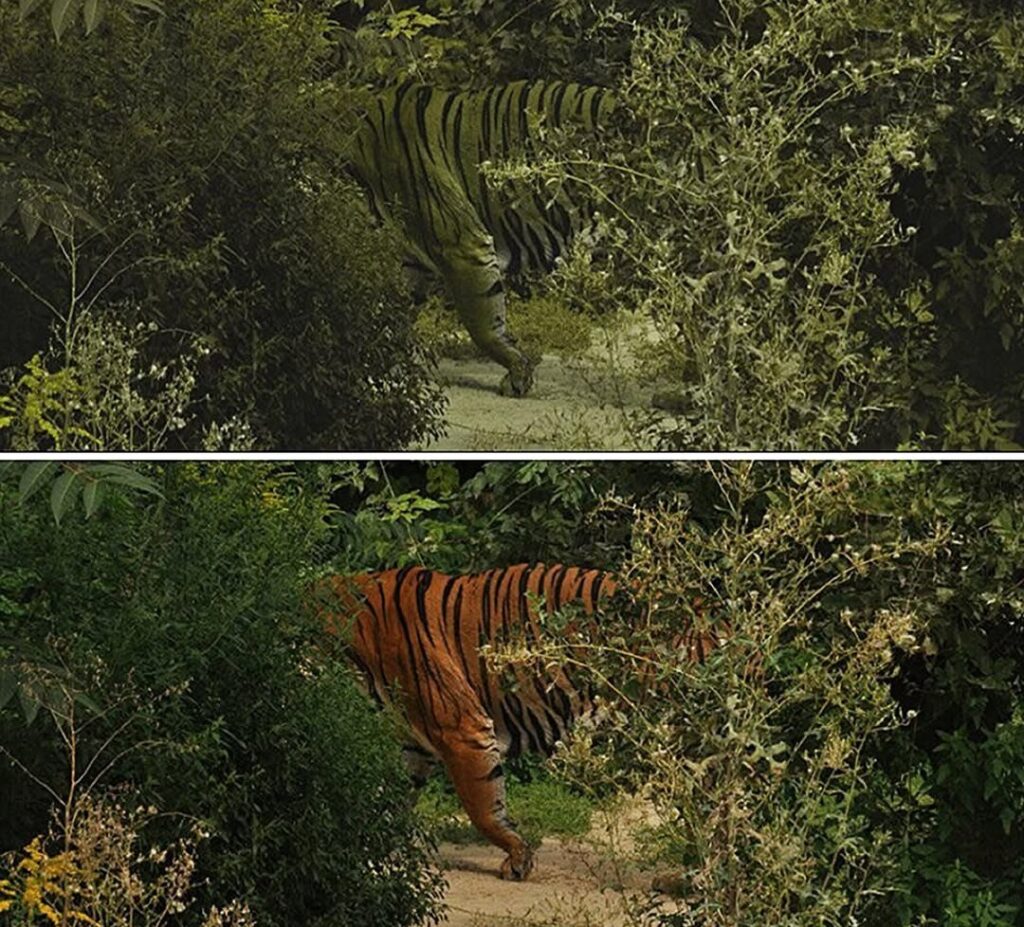
A groundbreaking study has revealed a fascinating secret: tigers’ orange fur, while appearing vibrant to humans, effectively conceals them from their primary prey – deer, boars, and other ungulates.
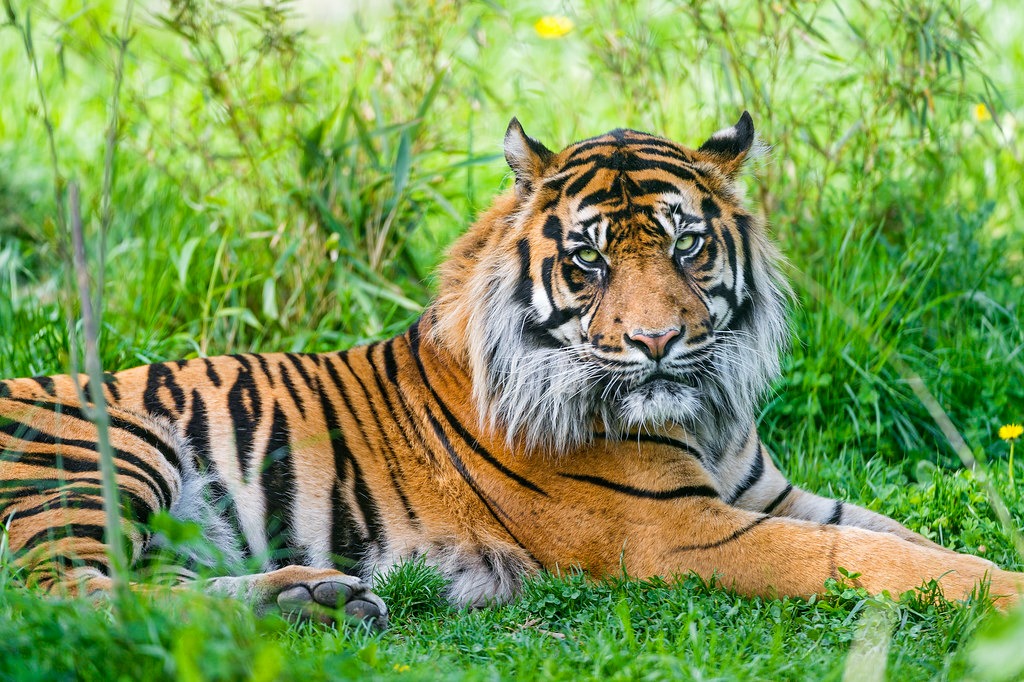
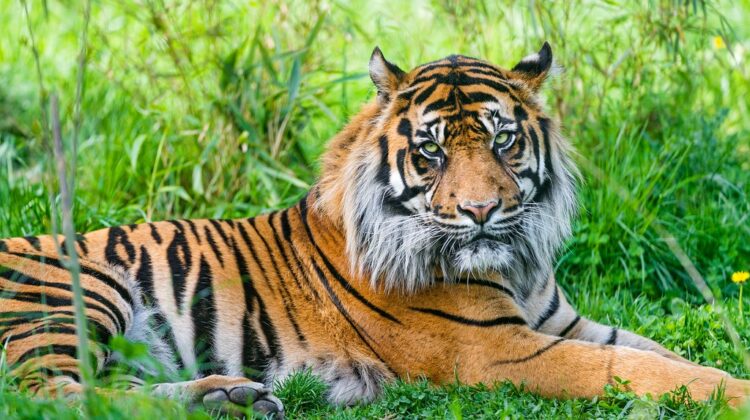
This tiger blends in perfectly with its surroundings – at least with the eyes of mammals other than humans. Image credit: Tambako The Jaguar

The Science of Color Perception

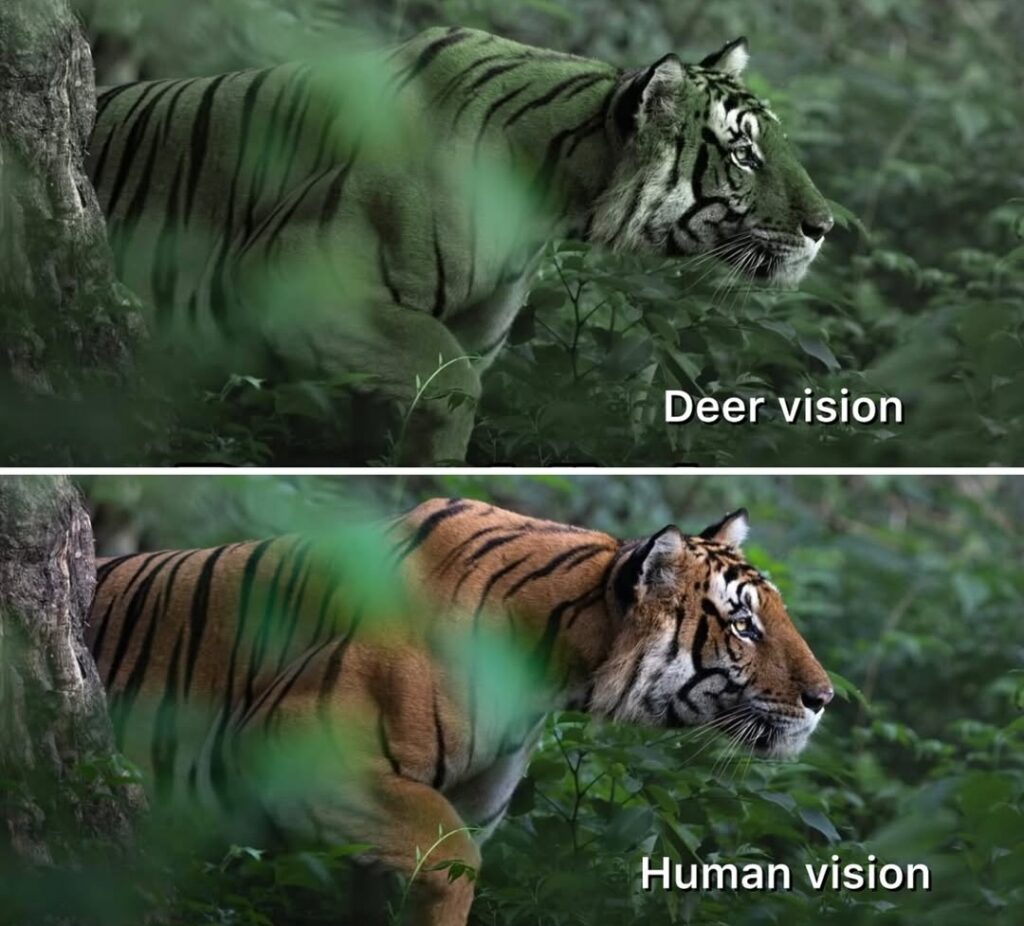
Most mammals, including tigers’ prey, possess dichromatic vision. This means they have only two types of color receptors in their eyes, rendering them essentially red-green colorblind. Consequently, they perceive shades of orange as similar to green, making an orange tiger virtually indistinguishable against the backdrop of a lush green forest.
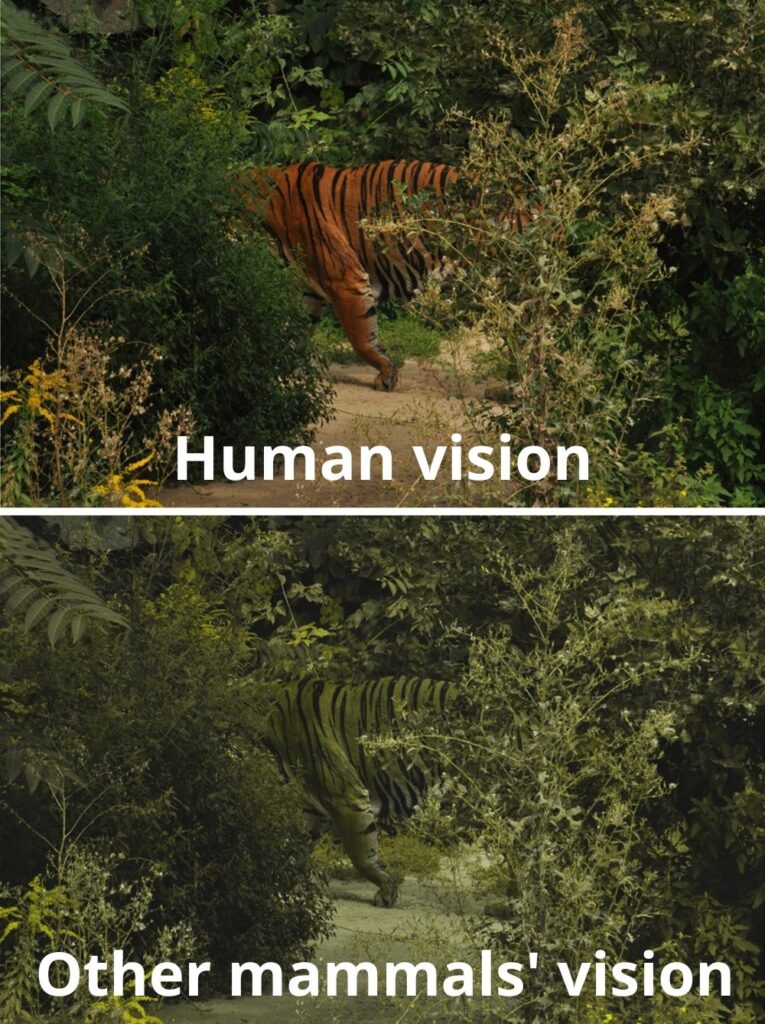
How different a tiger appears to trichromats and dichromats. Image credit: Fennell et al. 2019

Humans, on the other hand, are trichromats, with three types of color receptors. This allows us to perceive a wider spectrum of colors, including the distinct difference between orange and green.

Evolutionary Advantage

The study, conducted by researchers at the University of Bristol, utilized machine learning algorithms to simulate the visual world from a dichromatic perspective. The findings strongly suggest that there is minimal evolutionary pressure for tigers to develop green fur, as their prey cannot discern the difference between orange and green.
The Mystery of Trichromacy in Prey

While the study sheds light on tigers’ camouflage, it also raises intriguing questions. Why haven’t prey animals evolved trichromatic vision, which would provide a significant advantage in detecting camouflaged predators? This remains an area of active research, with scientists eager to unravel the evolutionary forces at play.
Conservation Implications

Understanding the intricate relationship between predator and prey coloration has vital implications for wildlife conservation. By gaining a deeper understanding of these ecological interactions, we can better protect endangered tiger populations and their habitats.

The discovery of tigers’ “invisible” orange fur highlights the remarkable adaptations found in the natural world. This research not only enhances our understanding of predator-prey dynamics but also underscores the importance of continued scientific investigation into the complexities of animal vision and behavior.

Filed Under: Trends Worldwide Tagged With: Animal camouflage, animal evolution, Big cat conservation, conservation efforts, Custom Kitchen Cabinets, Custom Outdoor Kitchens, Dichromatic vision, Eco-Friendly Lawn Care Products, endangered species, Energy-Efficient Windows, High-End Home Security Solutions, High-End Patio Furniture Sets, Indoor Water Fountains, Luxury Kitchen Remodeling, Luxury Outdoor Furniture, Modern Bathroom Renovation Ideas, Modern Fireplace Designs, Organic Gardening Supplies, Outdoor Fire Pit Installation, Predator-prey relationships, Premium Hardwood Flooring, Professional Home Staging, Professional Landscape Design, Saltwater Aquarium Setup, Smart Home Automation Systems, Tiger camouflage, Tiger color vision, Tiger habitat, Trichromatic vision, wildlife conservation, Wildlife documentaries, wildlife photography

Reader Interactions

Leave a Reply Cancel reply

Your email address will not be published. Required fields are marked *

Primary Sidebar

More to See

Puppies Saved From Storm Drain Turn Out To Be Foxes

By Hasan Jasim Editorial Team

The Beauty of California’s Colorful Pebbles: A Creative Composition by Emily Blincoe

By Hasan Jasim Editorial Team

The World’s Largest Plant Has Been Discovered In The Ocean Off The Coast Of Australia

By Hasan Jasim Editorial Team

A Man Recovering From Surgery Awakens to Find an Unidentified Cat Cuddling Him

By Hasan Jasim Editorial Team

Amsterdam Airport Introduced A Fly Target In Urinals To Reduce Spillage And It Actually Worked

By Hasan Jasim Editorial Team

How Vinyl Record Players Work: A Close-Up Look at Their Fascinating Mechanism

By Hasan Jasim Editorial Team

When A Woman Discovers A Giant Spider Had Babies In Her Home, She Has The Best Reaction

By Hasan Jasim Editorial Team

Footer

ABOUT HASANJASIM.ONLINE

Hasanjasim.online is a digital platform dedicated to publishing well-researched articles about the animal kingdom, nature, and the environment. Our editorial team works to source stories from credible outlets, scientific research, and verified reports, aiming to inform as much as we entertain. From wildlife conservation and animal behavior to natural wonders and environmental science, we cover the topics that help readers better understand and appreciate the natural world. Whether you're a lifelong nature lover or simply curious about the planet we share, Hasanjasim.online aims to be a trustworthy destination for stories worth reading — and worth citing.

Recent

  • A Suspected Rhino Poacher Was Trampled to Death by Elephants in Kruger National Park
  • Ten Lions Found Dead in Tanzania’s Ngorongoro Conservation Area, Poisoning Suspected
  • A Foster Puppy Shyly Asked Permission to Cuddle With a Much Bigger Dog — and Got It
  • The “World’s Worst” Bullfighter? Andrés Roca Rey Has Survived More Gorings Than Almost Anyone In The Sport
  • Scientists Heard A Knock At The Door — It Was A Pelican In Need Of Help
  • This Dolphin Terrifies Fish Until They Puke — Then Eats It
  • Florida camera trap captures bobcat attacking world’s largest rattlesnake species

Search