• Skip to main content
  • Skip to primary sidebar
  • Skip to footer
  • Home
  • About Us
  • Copyright Report
  • Submit Content
  • Terms
  • Privacy Policy
  • Legal Disclaimer

Hasan Jasim

Hasan Jasim is a place where you may get entertainment, viral videos, trending material, and breaking news. For a social generation, we are the largest community on the planet.

How Vinyl Record Players Work: A Close-Up Look at Their Fascinating Mechanism

by Stephen King Leave a Comment

ShareTweet

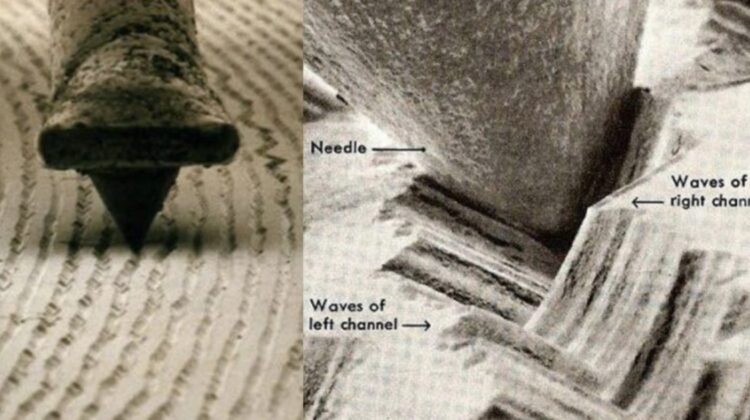
In case you weren’t around in the vinyl era or can’t remember anymore: vinyl record players are electromagnetic devices that change sound vibrations into electrical signals through the needle placed on the spinning record. The following microscopic images allow a close glimpse into how the process actually looks like.
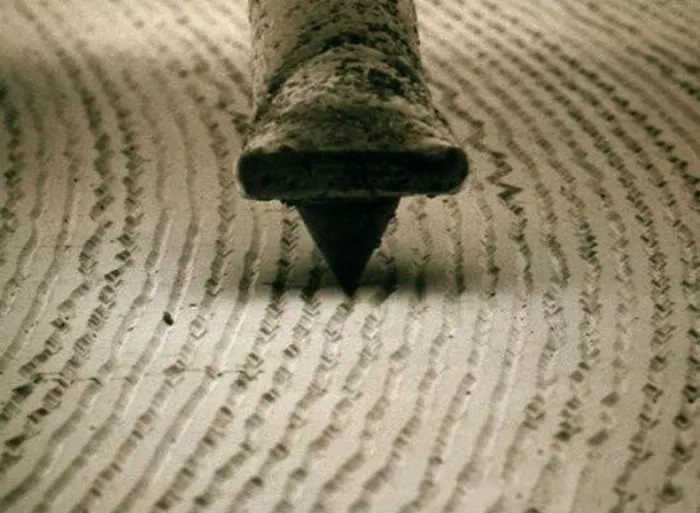
The needle, or stylus of a record player is one of several parts that make up a transducer, which converts the mechanical energy from the sound waves into electrical energy, which is then sent into the amplifier and out to the speakers.

The heart of the system also contains coils, magnets, cantilever, and a body within a cartridge.
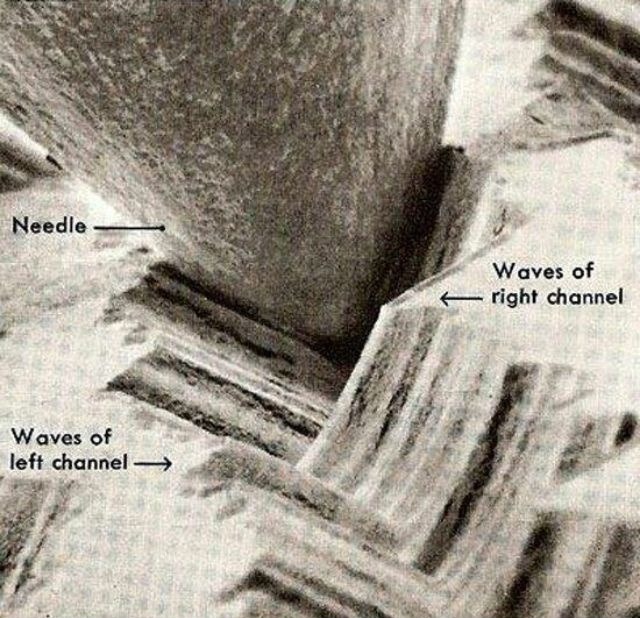
When a vinyl record spins on the record player, the stylus moves through the record’s grooves (oh wait, so that’s where ‘grooving’ comes from…). The stylus is made of an industrial gemstone (often diamond) and is attached to the record arm to actually ‘read’ the grooves on the record by generating an electric signal and transfering it via the cartridge to the amplifier.

The two sides of a groove represent the right- and left-channel audio information. The side closest to the outside edge of the record carries the right-channel signal.

The information that is converted into a signal by the stylus can be stored in an area as small as a micron (one-thousandth of a millimetre). So the scale of the task of retrieving the information on the entire record is immense, which also explains the sensitivity of record players to external vibrations and other disturbances.

Here’s how a stylus actually ‘ploughs’ the vinyl for the signal:
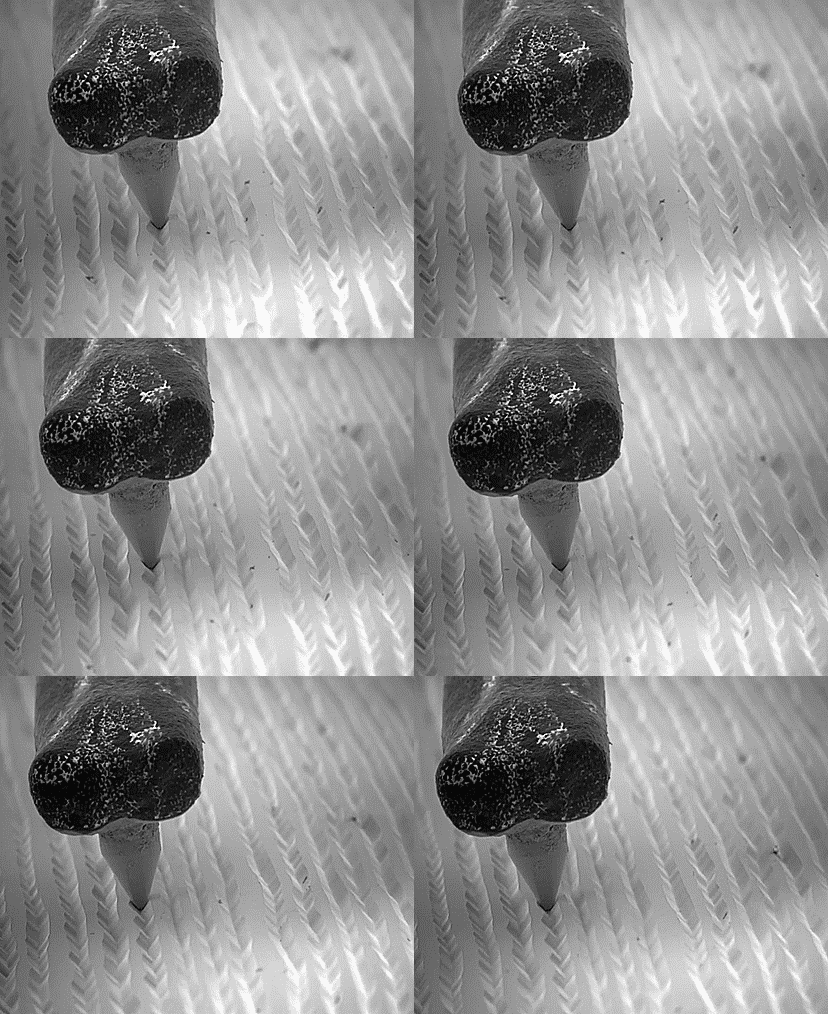
Fun fact: those little grooves you see on the record would be roughly 500 meters long given it was possible to unwind them into a straight line.

Filed Under: Trends Worldwide Tagged With: analog sound, audio engineering, audiophile, audiophile equipment, audiophile lifestyle, diamond stylus, high fidelity, how record players work, microscopic images, music technology, record grooves, record player cartridge, record player needle, record player repair, stylus, turntable, vintage audio, vinyl record player

Reader Interactions

Leave a Reply Cancel reply

Your email address will not be published. Required fields are marked *

Primary Sidebar

More to See

In the Heart of Tel Aviv: A Tale of Love and Compassion Among the Bats of the Night

By Stephen King

A Fawn Resting in a Field of Flowers

By Stephen King

Divers find mysterious dolphin – then a miracle happens

By Stephen King

Exploring Point Nemo – The Most Remote Place on Earth

By Stephen King

Japanese Bonsai Master Responds to Theft With Care Instructions to Save a 400-Year-Old Tree

By Stephen King

The Morning I Discovered a “Puppy” That Was Something Truly Unexpected

By Stephen King

Warning: Emergency Officials In Texas Warn Schools Should Close For The Eclipse

By Stephen King

Footer

About hasanjasim.online

Hasanjasim.online is a digital platform dedicated to publishing diverse articles and content, with a strong focus on topics related to the animal kingdom, nature, and the environment. The website offers engaging stories and visual content aimed at raising awareness about animal welfare and showcasing the wonders of the natural world, making it a great destination for nature lovers and curious readers alike.

Recent

  • Lamb’s Quarters: The Wild “Weed” That Outperforms Spinach in Nutrition
  • A Restaurant Put Up One Simple Sign for Its Teenage Staff — and It Says Everything We Forget to Say
  • Bees Can Smell 50 Times Better Than Dogs — Here’s How
  • Elderly Mushroom Picker Dies in Suspected Bear Attack in Japanese Forest
  • Don’t Throw Away Those Watermelon Rinds: Make Crunchy Homemade Pickles
  • Under an Active Volcano: The Ancient Art of Sun-Drying Tomatoes at Mount Etna
  • Silverback Gorilla Teaches Himself to Walk Upright on Two Legs – A Fascinating Feat of Intelligence

Search