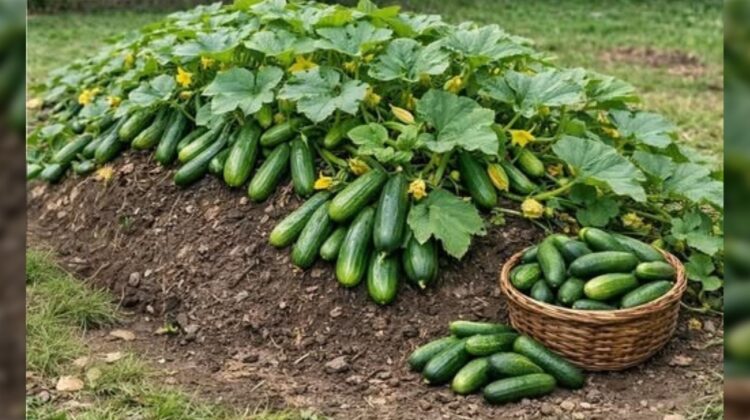
Hugelkultur — a German term meaning “hill culture” — is one of the most efficient and sustainable ways to turn yard waste into a long-lasting, highly productive garden bed. Instead of hauling away old logs, branches, and leaves, hugelkultur uses them as the foundation of a raised mound that feeds plants and stores water naturally.
When built correctly, a hugelkultur mound can retain moisture for weeks without irrigation, improve soil structure year after year, and deliver impressive harvests with very little ongoing maintenance.
Below is a complete, practical guide to building, planting, and maintaining your own hugelkultur garden.
Why Hugelkultur Works So Well
At the heart of hugelkultur is buried wood, which acts like a natural underground sponge.
As logs and branches slowly decompose, they:
- Absorb rainwater and store it deep inside the mound
- Release moisture gradually to plant roots during dry periods
- Create air pockets that improve soil oxygen levels
- Support beneficial fungi and soil microbes
- Build rich, dark, fertile soil over time
The result is a self-regulating growing system that becomes more productive with every season.
How to Build a Hugelkultur Mound (Step-by-Step)
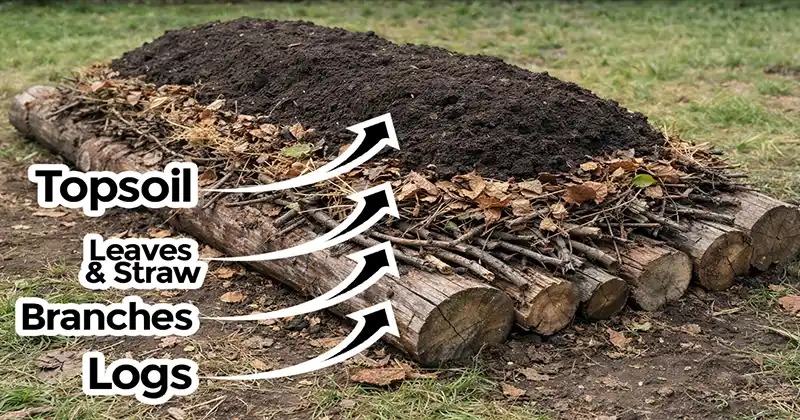
A hugelkultur bed is built in layers — from the largest materials at the bottom to the finest at the top.
1. Base Layer – Logs and Thick Branches
Use:
- Hardwood logs when possible (oak, beech, maple, fruit trees)
- Thick branches and untreated wood
Avoid:
- Painted or pressure-treated wood
- Black walnut (can inhibit plant growth)
Tip: Slightly rotting wood is even better than fresh wood, as it absorbs water more quickly.
Thickness: 20–40 cm (8–16 inches)
2. Second Layer – Smaller Wood Material
Add:
- Thin branches
- Twigs
- Wood chips
- Bark pieces
This layer fills gaps between large logs and helps stabilize the mound.
3. Third Layer – Soft Organic Matter
Use garden waste such as:
- Dry leaves
- Grass clippings
- Straw or hay
- Old plant stems
- Shredded cardboard (optional)
This layer provides quick nutrients while the wood below decomposes slowly.
4. Top Layer – Compost and Garden Soil
Finish with:
- A mix of compost and garden soil
Depth: 15–20 cm (6–8 inches)
Water the entire mound thoroughly to help settle the layers.
Ideal Shape and Dimensions
For best performance:
- Orientation: North–south for even sunlight
- Initial height: 90–120 cm (3–4 feet)
- Width: 1.2–1.5 m (4–5 feet)
- Side slope: About 45° for stability
- Length: As long as space allows
Expect the mound to settle by about 30% in the first year as materials compact and decompose.
How Hugelkultur Manages Water Naturally
- Fresh wood captures rainfall underground
- Moisture is stored inside logs like a reservoir
- Plant roots grow downward toward the water source
- The surface soil may dry out, but the core stays cool and damp
- Mature mounds often require little to no supplemental watering
In hot or dry climates, hugelkultur beds can reduce watering needs by 50–80%.
Best Crops by Year
Because the soil evolves over time, certain plants perform better in different stages.
Year 1 – Heavy Feeders
- Squash
- Pumpkins
- Zucchini
- Melons
- Large cucumbers
These crops thrive on the heat and nutrients released during early decomposition.
Year 2 – Balanced Crops
- Tomatoes
- Cucumbers
- Beans
- Peppers
- Corn
The soil becomes more stable and nutrient-rich.
Year 3 and Beyond – Almost Anything
- Leafy greens
- Herbs
- Root vegetables
- Strawberries
- Onions
- Garlic
At this stage, the mound behaves like premium garden soil.
Extra Tips for Best Results
Choose the Right Location
- Full sun (6–8 hours daily)
- Avoid low spots where water collects
- Keep at least 50 cm (20 inches) away from fences or structures
Plant Densely
Hugelkultur beds support dense planting because:
- Roots grow both vertically and horizontally
- Moisture is consistently available
- Nutrients are continuously released
Dense planting also shades the soil and reduces evaporation.
Mulch the Surface
Cover with:
- Straw
- Dry leaves
- Grass clippings
Mulch helps retain moisture and prevents erosion.
Expect Temporary Nitrogen Use
Fresh wood may absorb nitrogen during early decomposition.
To compensate:
- Add extra compost or aged manure
- Plant legumes (beans, peas) in year one
- Use organic fertilizer if needed
Longevity of a Hugelkultur Bed
- Softwood base: 5–10 years
- Hardwood base: 10–20+ years
Common Mistakes to Avoid
- Using treated or painted wood
- Making the sides too steep
- Skipping compost in the top layer
- Planting root crops in the first year
- Building mounds too small (larger mounds perform better)
Why Many Gardeners Switch to Hugelkultur
- Uses free, recycled materials
- Reduces watering needs
- Improves poor or compacted soil
- Raises planting area for better drainage
- Produces heavy, consistent harvests
- Requires minimal maintenance after setup
Hugelkultur transforms yard waste into a self-watering, soil-building garden system.
As interest in sustainable agriculture, water-efficient farming, and soil regeneration continues to rise, growers are increasingly exploring innovative systems that reduce operational costs while improving yields. Methods that integrate natural water retention, organic soil building, and low-input maintenance are becoming central to modern agricultural planning — especially in regions facing climate stress, irrigation limits, and rising production expenses.
Just one afternoon of stacking materials can create years of abundant, low-maintenance harvests
Leave a Reply