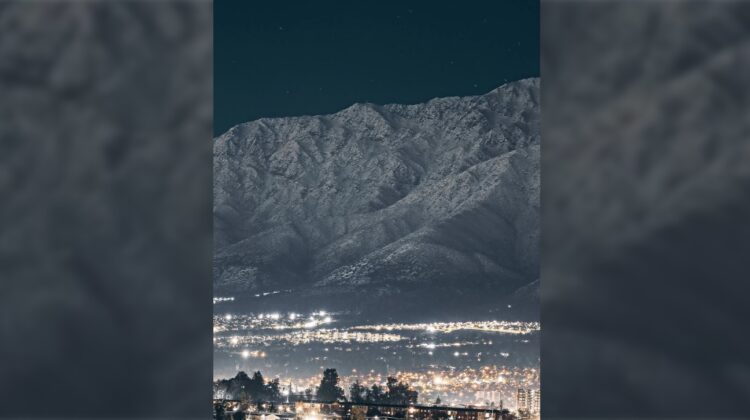
After a rare snowfall, Santiago looked as though it had been quietly rewritten overnight. The city’s skyline — normally framed by dry, rugged slopes — stood glowing beneath a dramatic crown of white as the towering Andes Mountains shimmered under fresh snow.
Santiago sits directly at the base of the Andes, a geographic placement that gives it one of the most breathtaking urban backdrops in the world. During winter, the highest elevations regularly receive snow. But for residents to see the peaks so clearly coated and luminous above the city lights — crisp, defined, and almost within reach — feels rare and deeply striking.
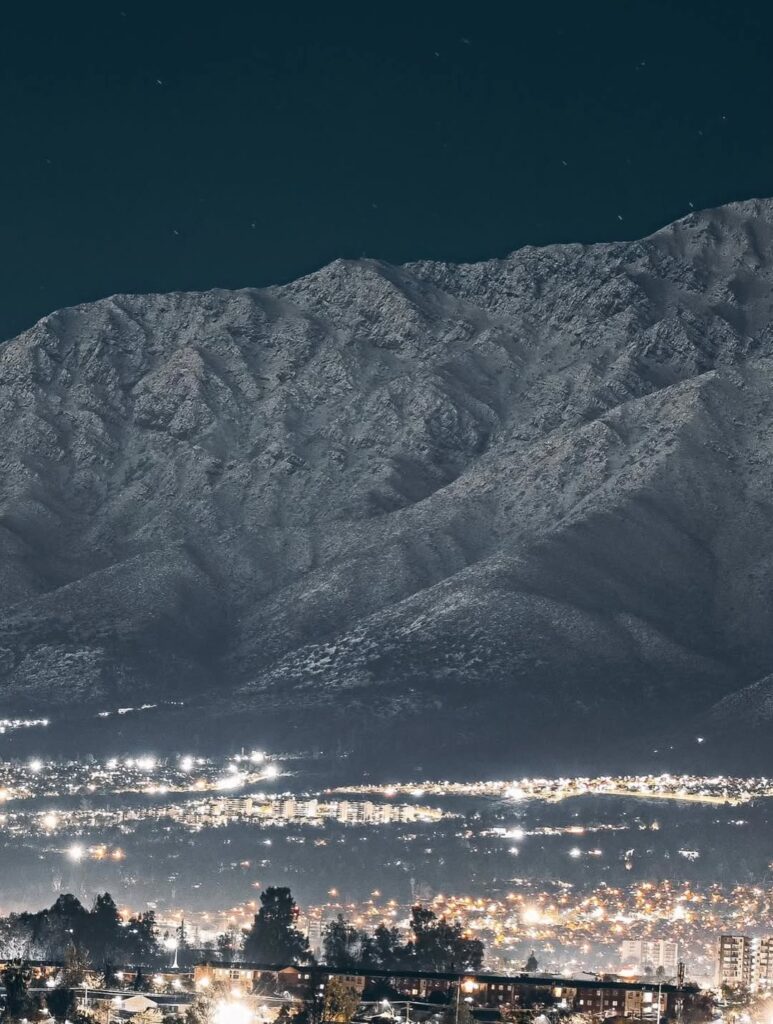
When powerful cold air systems push northward across southern South America, temperatures in the Andes can drop rapidly. Moisture collides with high-altitude air, and within hours the mountain range can transform into a continuous white wall. From the streets below, it appears as if winter has descended in a single breath.
The visual contrast is what makes the moment unforgettable. Warm amber city lights stretch across the valley floor, while above them rise vast, snow-covered slopes reflecting pale dawn light. It’s a reminder that Santiago’s rhythm — its water supply, air quality, seasonal temperatures, and even daily weather patterns — is inseparably tied to the mountains that guard it.
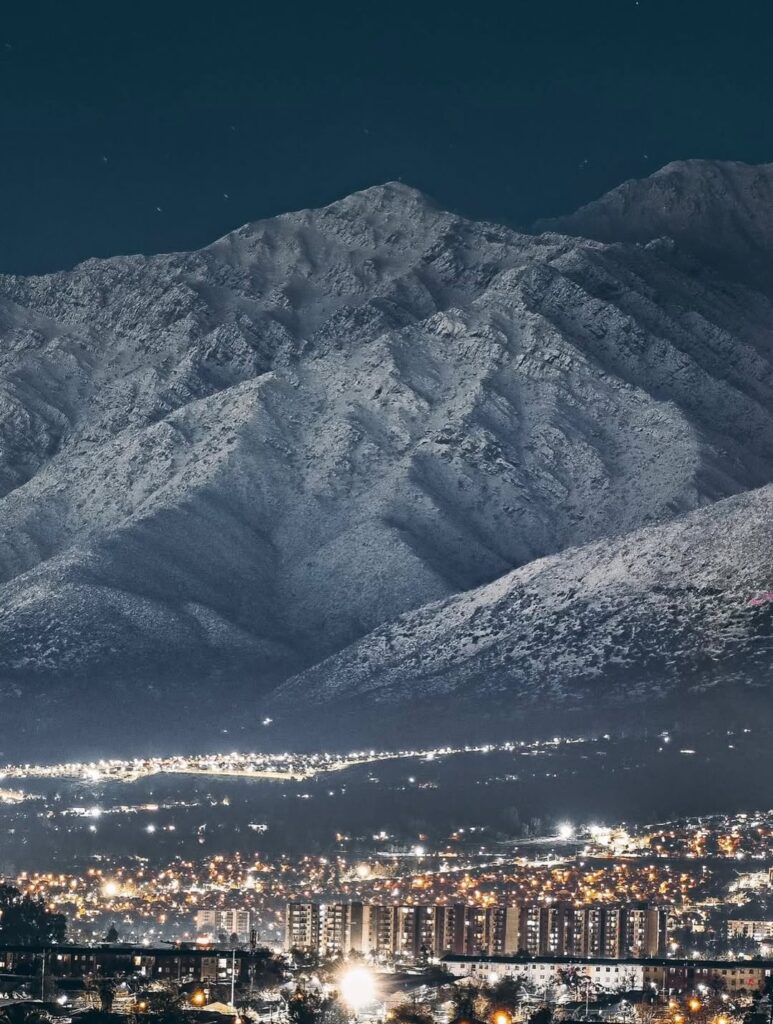
Snowpack in the Andes is more than scenery. It feeds rivers, sustains agriculture, and supports hydroelectric systems throughout central Chile. A strong winter snowfall often signals relief for drought-stricken regions, while lighter snow years can intensify long-term water concerns.
For a brief window after a storm passes, however, those larger climate realities fade into awe. Residents look up from highways, balconies, and city parks to see a skyline transformed — urban life held gently beneath ancient peaks dressed in white.
Seasonal snowfall in the Andes Mountains plays a critical role in water security for Santiago and surrounding agricultural regions. Mountain snowpack acts as a natural reservoir, slowly releasing meltwater into rivers during warmer months. Climate change has increased variability in Andean precipitation, making snow monitoring, water resource management, and sustainable infrastructure investment essential for long-term urban resilience in Chile.
Leave a Reply