
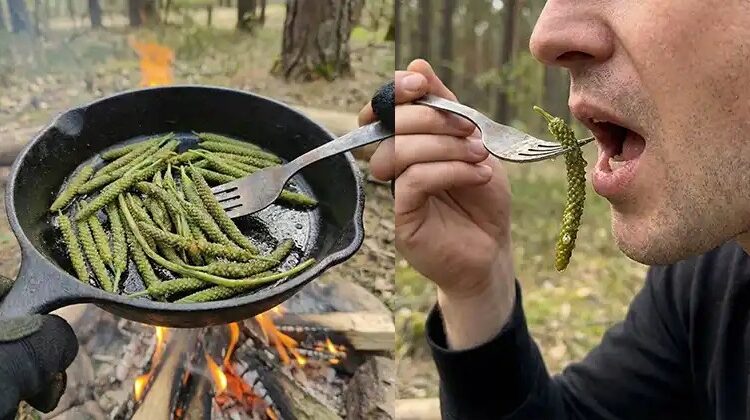
Many people recognize Plantago major as a common plant that grows in yards, sidewalks, and garden edges. It’s often known for its traditional use as a skin-soothing herb, but fewer people realize that parts of this plant are also edible.
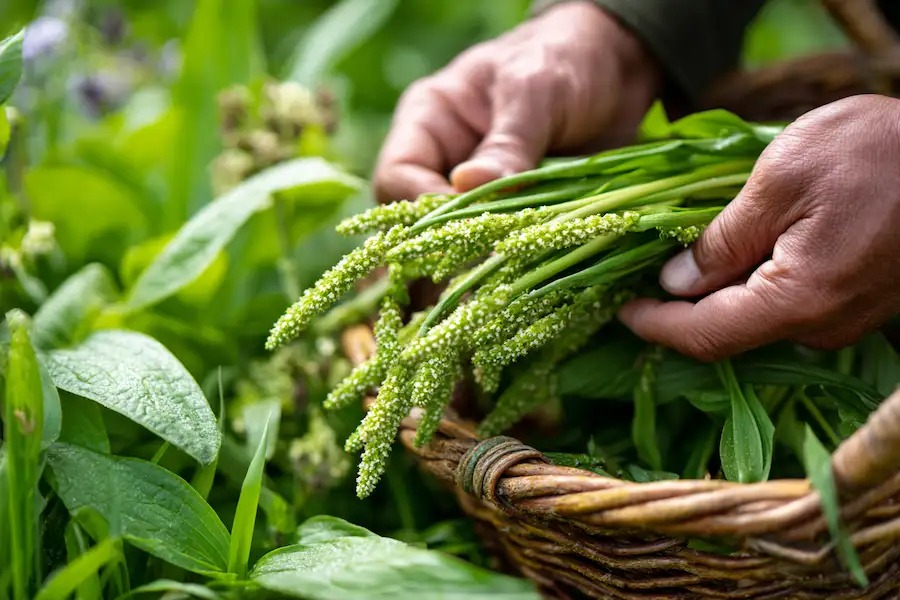
One particularly useful part is the flowering shoot — the slender stalk that rises from the center of the plant and carries a spike of tiny flowers that later produce seeds.
When harvested young, these shoots can be cooked and eaten much like other wild greens.
⚠️ This article is for informational purposes only. For medical advice or diagnosis, consult a qualified professional.
What the Flowering Shoots Are
Broadleaf plantain grows in a flat cluster of oval leaves close to the ground. From the center of this leaf rosette, it sends up thin stalks topped with a dense flower spike.
For eating, the best shoots are:
- Young and tender
- Flexible rather than woody
- Easy to snap off near the base
Older shoots tend to become fibrous and bitter as the seed head matures.
Nutritional Value
Like many edible wild plants, plantain contains several beneficial nutrients and plant compounds.
These may include:
- Dietary fiber
- Various vitamins and minerals found in leafy plants
- Antioxidant compounds such as polyphenols
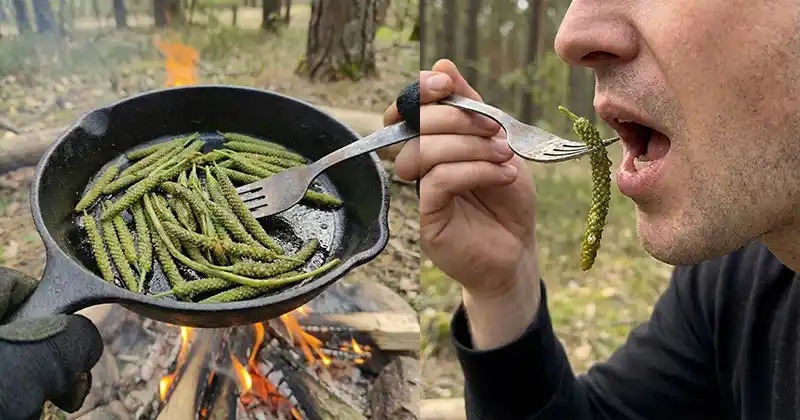
Although plantain is not considered a “superfood,” it can add nutritional diversity to meals, especially for people interested in foraging or eating wild greens.
Plant Compounds Behind Its Traditional Uses
Broadleaf plantain has a long history in traditional herbal practices. Scientists have identified several compounds that may explain its reputation:
- Mucilage: a gel-like soluble fiber known for its soothing qualities
- Tannins: plant compounds that create a mild astringent effect
- Iridoid glycosides: compounds often studied for anti-inflammatory potential
- Flavonoids: antioxidants found in many plants
While these compounds are interesting to researchers, eating plantain should be viewed as part of a balanced diet rather than a medical treatment.
Common Ways to Eat the Shoots
Young plantain shoots can be prepared in several simple ways.
1. Quick Sauté
This is one of the easiest cooking methods.
- Wash and chop the shoots
- Heat a pan with a small amount of oil or butter
- Cook for a few minutes until tender
- Season with salt, pepper, or garlic
Quick cooking softens the fibers and improves flavor.
2. Blanch and Freeze
If you harvest a large amount:
- Briefly blanch the shoots in boiling water
- Cool and drain them
- Freeze in small portions
They can later be added directly to soups or sautéed dishes.
3. Add to Everyday Meals
Because the shoots behave like mild vegetables, they can be added to:
- Scrambled eggs or omelets
- Grain dishes like rice or quinoa
- Vegetable soups or stews
Very young shoots can also be pickled for a tangy garnish.
Traditional Non-Food Uses
Plantain leaves have also been used traditionally for minor skin irritation.
A common folk method is a simple leaf poultice, where crushed leaves are placed on the skin to soothe minor bites or irritation.
However, this should never replace proper medical care for serious wounds, burns, infections, or allergic reactions.
Harvesting and Safety Tips
If you plan to forage plantain, keep these important points in mind:
- Correct identification is essential. Broadleaf plantain has oval leaves with strong parallel veins.
- Harvest from clean areas only. Avoid roadsides, treated lawns, or contaminated soil.
- Start with small amounts. Some people may experience digestive discomfort or allergic reactions.
People who are pregnant, taking certain medications, or dealing with health conditions should consult a professional before using wild plants regularly.
The Bottom Line
Young flowering shoots of Plantago major can be a practical and nutritious wild edible when harvested tender and cooked properly.
While the plant is known for traditional herbal uses, its most reliable value is as a simple wild vegetable that adds fiber, plant compounds, and variety to a healthy diet.
Nature is full of overlooked foods — and sometimes the most useful ones are growing right in our own backyards.
Leave a Reply