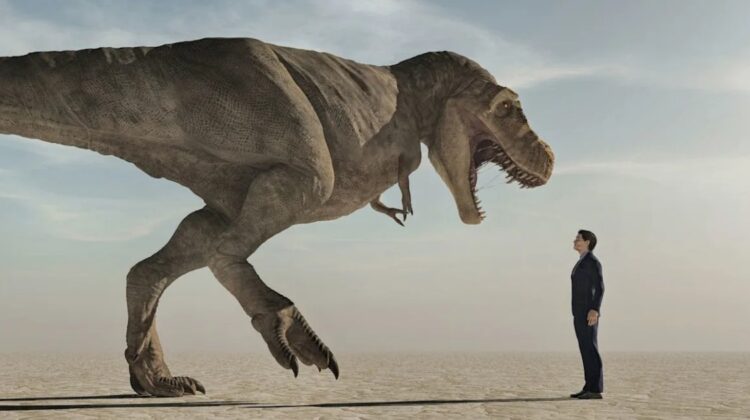
For millions of years, Earth belonged to the dinosaurs — and according to one scientist, their dominance may have done far more than shape the prehistoric food chain. It may also have fundamentally altered the biology of mammals, including humans, by pushing our ancestors away from long life and toward rapid reproduction.
This provocative theory comes from João Pedro de Magalhães, a microbiologist at the University of Birmingham, who argues that mammals may carry an evolutionary legacy from the age of dinosaurs that still affects how we age today.
His idea, outlined in a 2023 paper published in BioEssays, is known as the “longevity bottleneck hypothesis.”
At its core is a striking evolutionary argument: when early mammals lived under the constant threat of being eaten by dinosaurs, long life may simply have offered little survival advantage.
Instead, reproducing quickly — before becoming prey — was likely the more effective biological strategy.
For roughly 100 million years during the Mesozoic Era, dinosaurs dominated terrestrial ecosystems, while early mammals were generally small, nocturnal, and vulnerable. In such a world, natural selection may have favoured genes that supported faster maturation and reproduction over those linked to longevity, tissue regeneration, or extended survival.
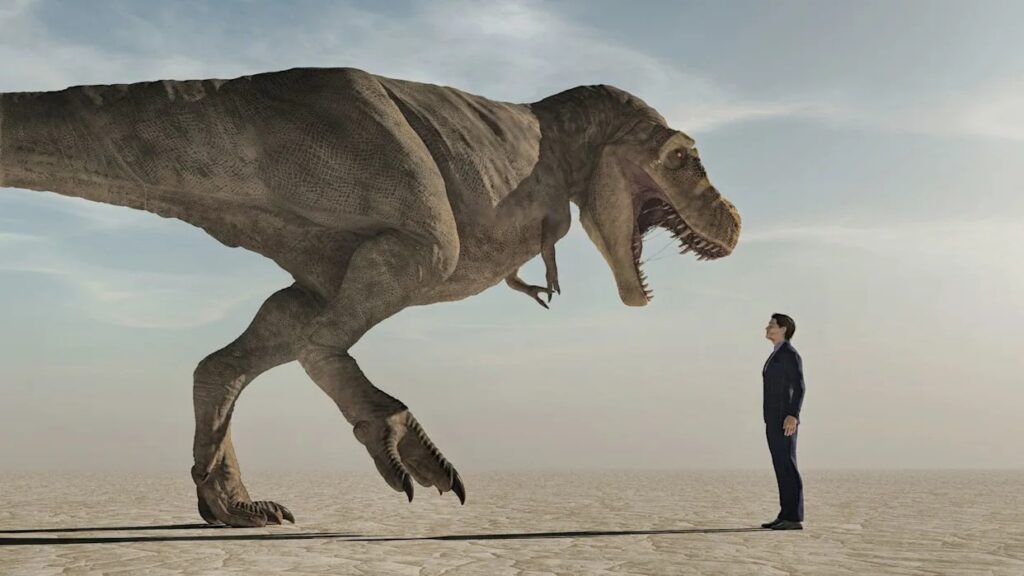
“My hypothesis is that such a long evolutionary pressure on early mammals for rapid reproduction led to the loss or inactivation of genes and pathways associated with long life,” de Magalhães wrote.
In other words, mammals may not simply age because of unavoidable biological decline — we may age the way we do partly because our distant ancestors evolved in an environment where surviving long enough to reproduce quickly mattered more than living for centuries.
The theory also suggests that mammals may have lost certain regenerative abilities still seen in other branches of the animal kingdom.
Reptiles, for example, often display slower biological aging and greater regenerative traits. Some species can continuously replace teeth or demonstrate stronger cellular repair systems. Mammals, by contrast, generally have more limited regenerative capacities. Human teeth do not regrow indefinitely, and our DNA repair systems differ in significant ways from some longer-lived or slower-aging species.
According to de Magalhães, this may not be accidental. Traits associated with long-term repair may simply have become less essential when early mammals were small prey animals under relentless predatory pressure.
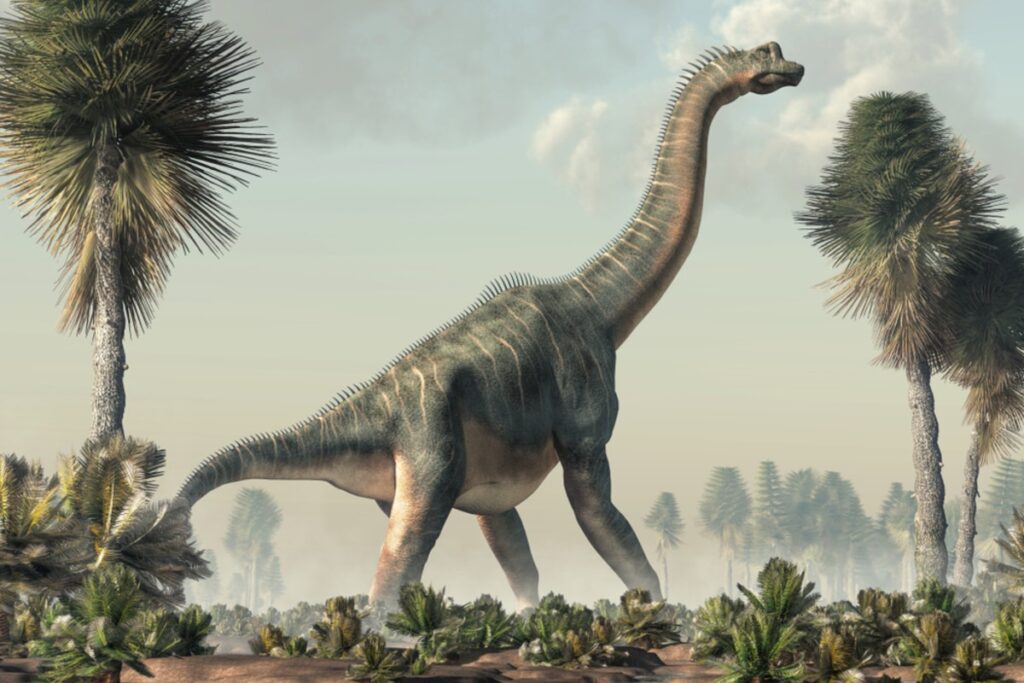
The hypothesis remains speculative, and de Magalhães himself acknowledges it is not definitive proof. Evolution is shaped by countless interacting pressures, and aging is an extraordinarily complex biological process influenced by genetics, environment, metabolism, and disease.
Still, the theory offers an intriguing perspective: modern human aging may not solely be a product of current biology, but also the result of ancient compromises made in a far more dangerous world.
It may also help explain why mammals, despite their intelligence and adaptability, often show higher vulnerability to certain age-related diseases, including cancer, compared with some other organisms.
If correct, the theory suggests that humans, whales, elephants, and other mammals may possess longer-life potential than we currently realize — but remain constrained by deep evolutionary programming written during the reign of dinosaurs.
Long before humans walked the Earth, survival may have demanded speed over longevity, reproduction over repair, and adaptation over endurance. If this hypothesis holds true, the shadow of the dinosaurs did not disappear with their extinction — it may still live on inside every mammalian cell, shaping how we age, how we heal, and perhaps why our lives are shorter than they might once have been.
Leave a Reply