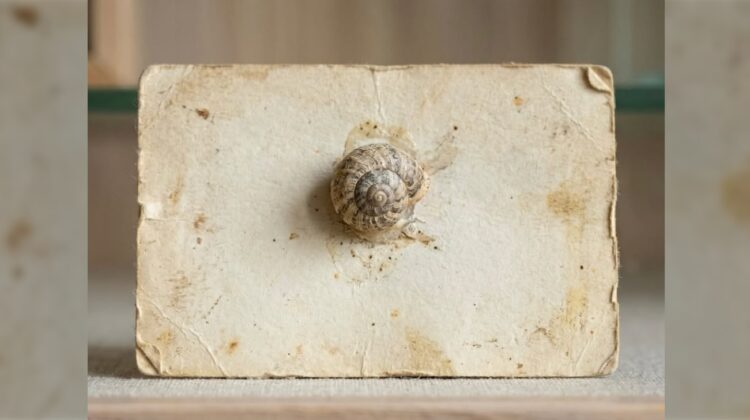
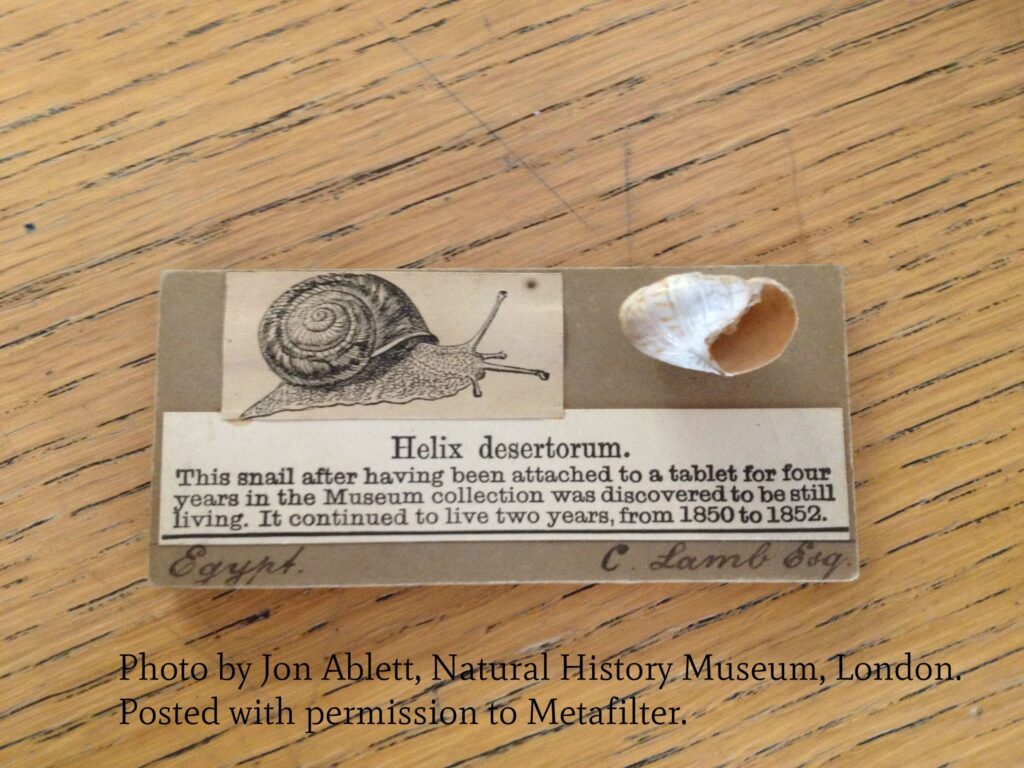
In the world of animals and nature, scientific discoveries never cease to amaze us. But can you imagine a living creature surviving for four whole years glued to a display card inside a museum without a single drop of water? This isn’t a science fiction story; it is an astonishing true event that took place at the British Museum in London in the mid-19th century, starring an Egyptian “desert snail.”
In this article, we will explore one of the greatest miracles of survival in nature, and how this tiny creature managed to fool scientists for years.
A Journey from the Egyptian Desert to the Halls of the British Museum
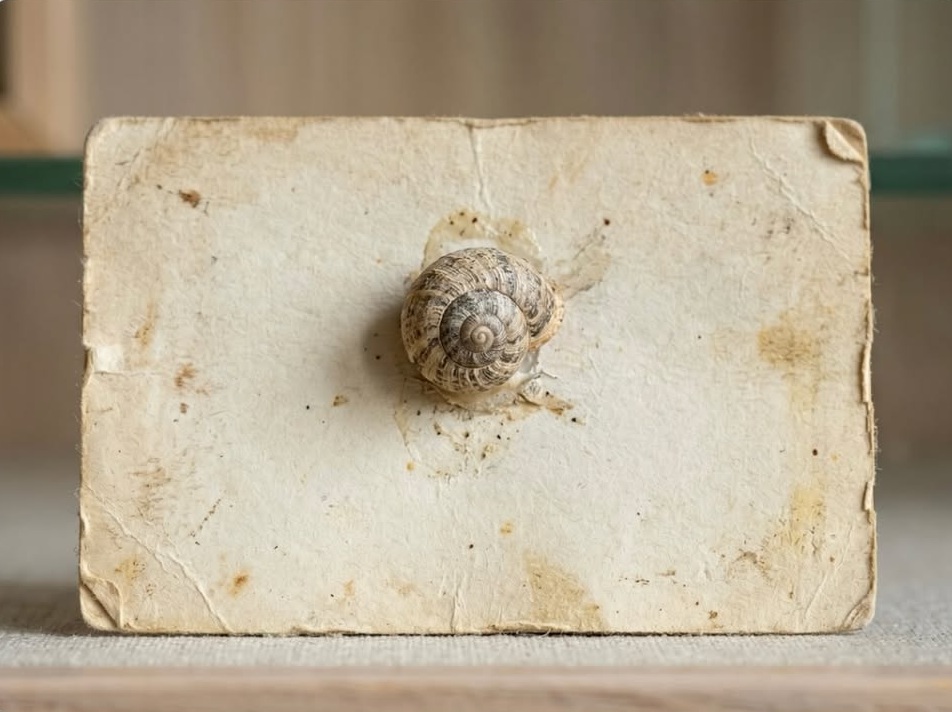
This bizarre story begins in the mid-1800s when researchers were collecting wildlife specimens in the Egyptian desert. Among these samples was a small desert snail. As was customary in archiving biological specimens at the time, this snail was glued to a “specimen card” to be displayed at the British Museum in London, under the assumption that it was merely an empty shell or a dead creature.
The snail remained in this state for years, fixed in place among thousands of other specimens, without any visitors or even taxidermy experts realizing that it harbored a great secret: it was still alive!
How Did the Snail Survive for 4 Years Without Water?
You might wonder: how can a living creature endure such a long period? The answer lies in a remarkable biological defense mechanism known as aestivation.
- The Superpowers of the Desert Snail: Many desert snails and slugs possess a unique ability to enter a state of deep dormancy when facing harsh conditions like severe drought and lack of water.
- Sealing the Shell: The snail secretes a thin layer of dried mucus called an “epiphragm,” which completely seals the opening of the shell. This prevents internal moisture from evaporating and protects its soft body from dehydration.
- Slowing Metabolism: The snail’s metabolic rates, heart rate, and respiration drop to the absolute bare minimum required to keep it alive, making it appear completely dead.
The Moment of Discovery: Coming Back to Life
After about four years of this “specimen” being on display in the museum, a scientist noticed something unusual about the shell and began to suspect that the creature inside might actually be alive.
To test this hypothesis, the scientists took a very simple step: they moistened the specimen card with a little warm water.
What happened next was a scientific shock. The dried epiphragm began to dissolve, and the snail gradually started to show signs of movement. The tiny creature woke up from its long slumber, extended its tentacles, and resumed its normal activity as if the past four years had been nothing but a short nap! Ultimately, it was freed from the card it had been glued to.
What Does This Discovery Teach Us About the Secrets of Nature?
This historical incident remains one of the most important examples taught in biology today, for several reasons:
- Biological Resilience: This event proves how some living creatures have developed complex mechanisms to face the harshest climatic conditions on Earth.
- The Importance of Continuous Research: The story shows that museums aren’t just places to store dead things; they can be the stage for amazing, living discoveries if we look at them with a keen and scrutinizing eye.
- Modern Climate Change Studies: Today, scientists draw inspiration from the capabilities of these creatures to understand how life can endure and adapt to extreme heat and water scarcity associated with global warming.
Bottom Line: The story of the Egyptian desert snail at the British Museum is not just a historical anecdote; it is a living testament to the power and stubbornness of life. It constantly reminds us that nature hides secrets that exceed our imagination and defy the limits of human logic.
Leave a Reply