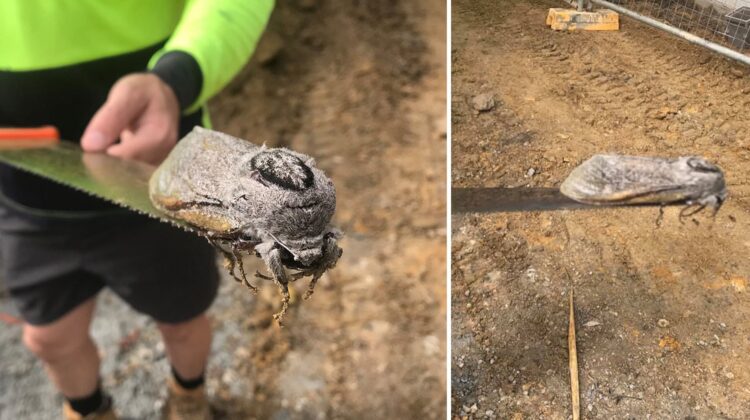
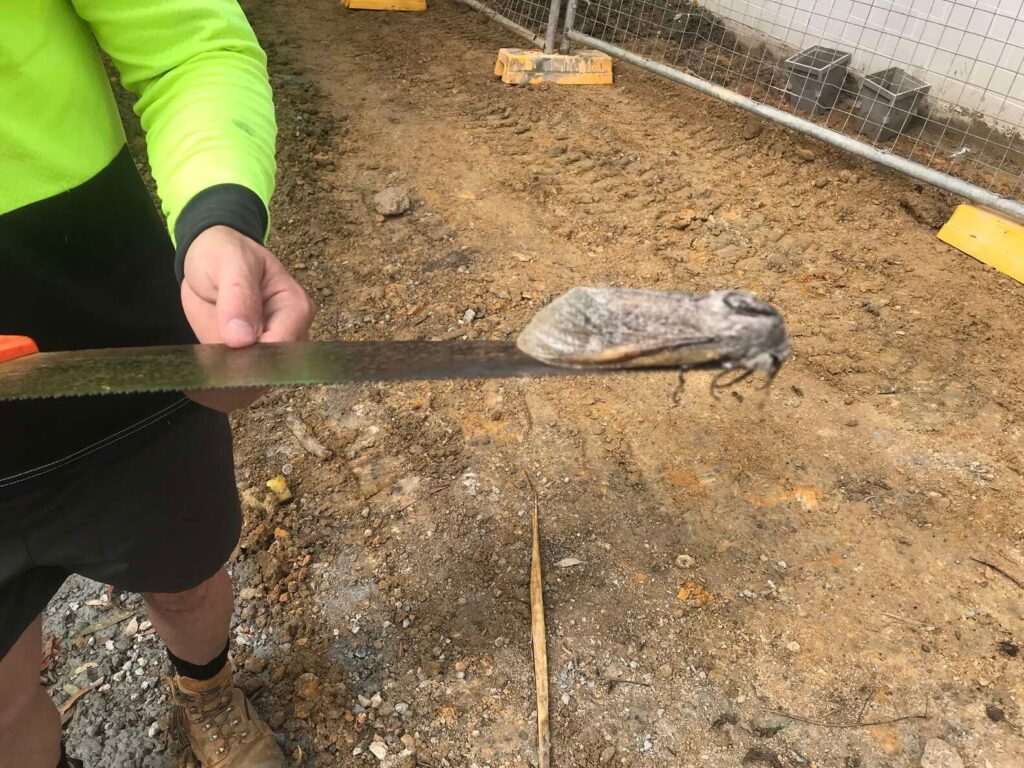
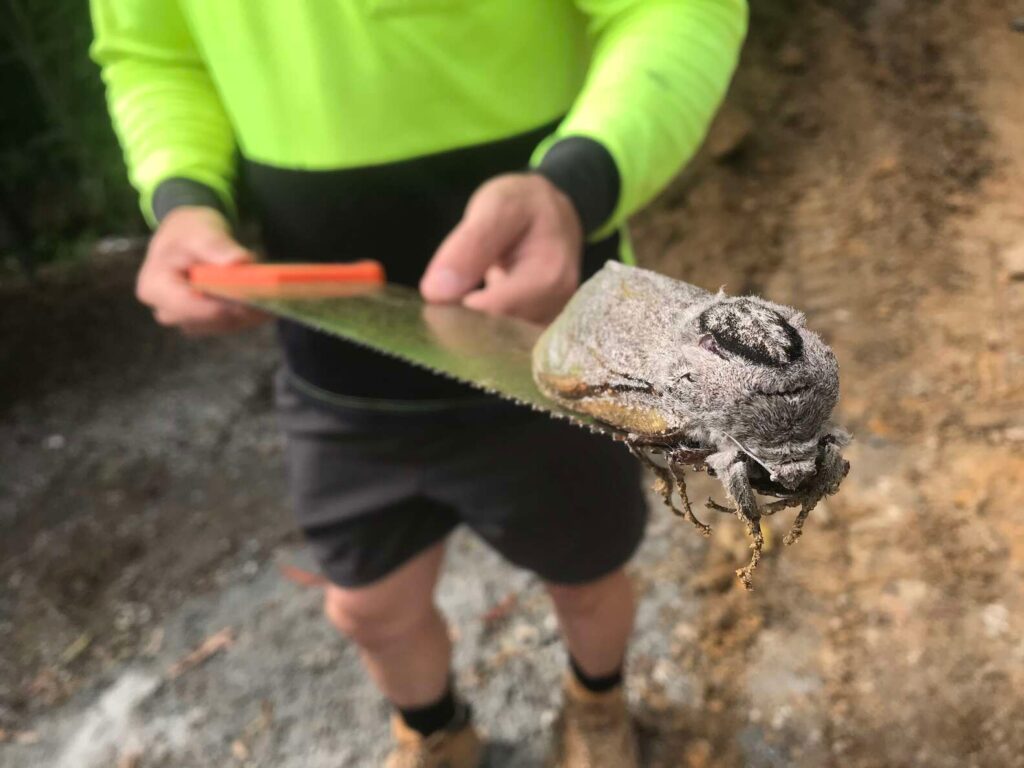
Construction workers at a school in Queensland, Australia, were left stunned after discovering an enormous insect clinging to a building site near rainforest — a giant wood moth so unusually large it drew comparisons to a small animal.
The remarkable creature, found at Mount Cotton State School, was identified as a female giant wood moth (Endoxyla cinereus), considered the heaviest moth species in the world.
With a wingspan that can reach up to 10 inches, the species is among the largest known moths on Earth, and its sheer size can make it appear almost unreal to those unfamiliar with Australia’s extraordinary wildlife.
A rare visitor at the school grounds
School principal Meagan Steward said the campus is no stranger to wildlife, with koalas, wallabies, bush turkeys, snakes, and other native animals regularly appearing near the surrounding rainforest.
But even in such biodiverse surroundings, this was something different.
The moth was discovered by builders working on a classroom extension at the edge of the forest, where its impressive size immediately caught attention.
Though giant wood moths are native to coastal Queensland and parts of eastern Australia, they are rarely seen due to their excellent camouflage, which allows them to blend almost perfectly with tree bark.
Why the moth is so enormous
Female giant wood moths are significantly larger than males and can weigh enough to make flight difficult.
Much of that weight comes from reproduction: females can carry tens of thousands of eggs, which are later laid in tree bark.
Because of this heavy biological burden, females often rely less on sustained flight and instead crawl up trees, where they remain largely still while waiting for smaller males to find them.
Entomologists say their size and reproductive strategy make them one of nature’s more extraordinary examples of evolutionary specialisation.
More spectacle than threat
Despite their intimidating appearance, giant wood moths pose no danger to humans.
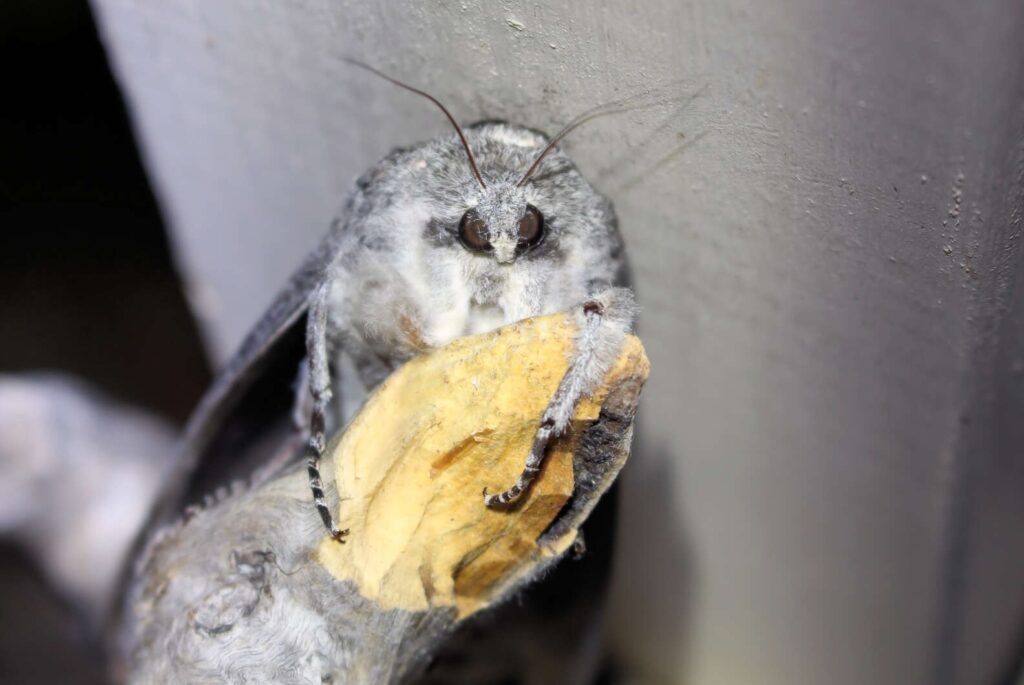
Their brief adult lives are focused almost entirely on reproduction, and after photographs were taken, the moth found at the school was safely relocated to a nearby tree in the rainforest.
There, it was returned to its natural environment to continue its life cycle.
Australia’s reputation for outsized wildlife
Australia is famous for producing some of the world’s most unusual and oversized creatures, from massive insects to formidable reptiles.
Yet even by Australian standards, the giant wood moth remains a striking reminder of how extraordinary — and often overlooked — insect life can be.
For many, it looked less like a moth and more like something from prehistoric fiction. But the giant wood moth’s appearance at a Queensland school offered a rare glimpse into one of nature’s lesser-known marvels — proving that even in a world increasingly shaped by humans, astonishing wild encounters can still be found clinging quietly to the edges of the forest.
Leave a Reply