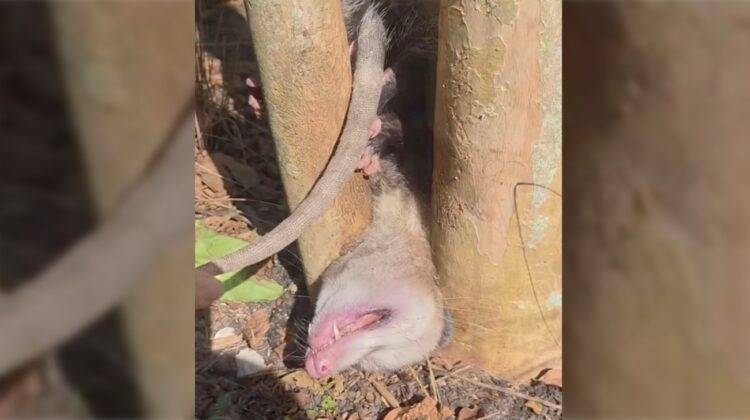
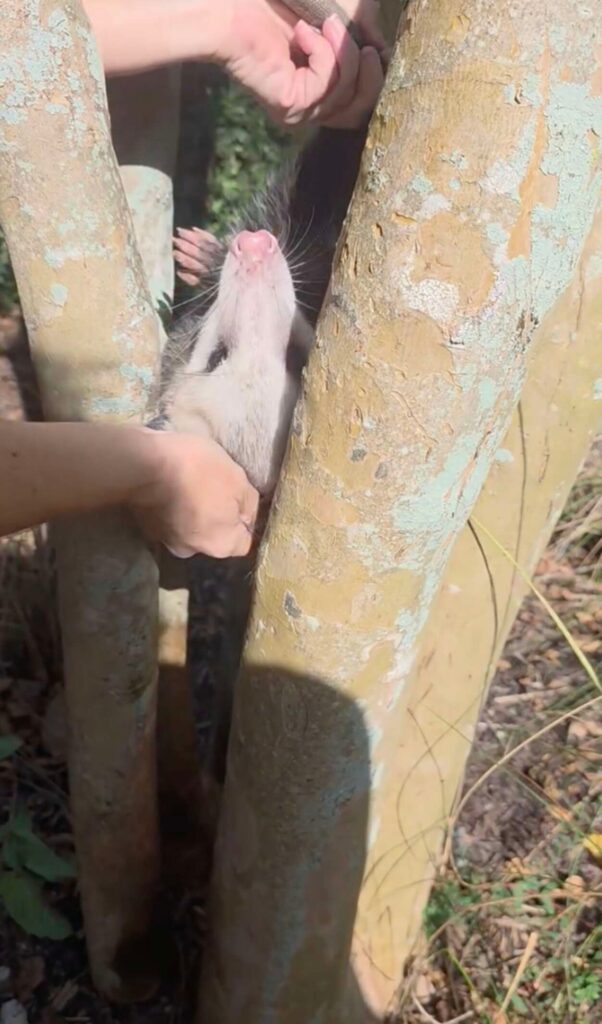
A wildlife rescuer in Florida helped save an exhausted possum after discovering him trapped upside down between two trees for more than 24 hours.
Kim Titterington, founder of Swamp Girl Adventures Reptile Rehabilitation (SGARR), received an urgent call from a concerned resident who had spotted the animal wedged tightly between two tree trunks during a walk. Unable to free him herself, the woman returned the following day only to find the possum still trapped in the same position.
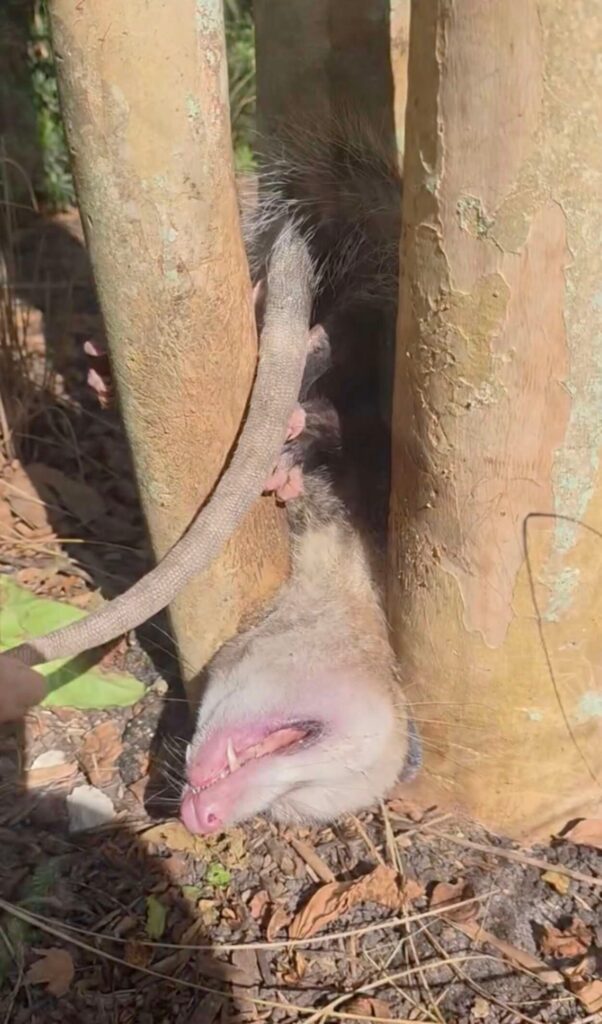
By the time rescuers arrived, the animal appeared severely weakened after spending more than a day hanging upside down in direct sunlight.
“There was a pile of fur from where he was struggling for some time,” Titterington said.
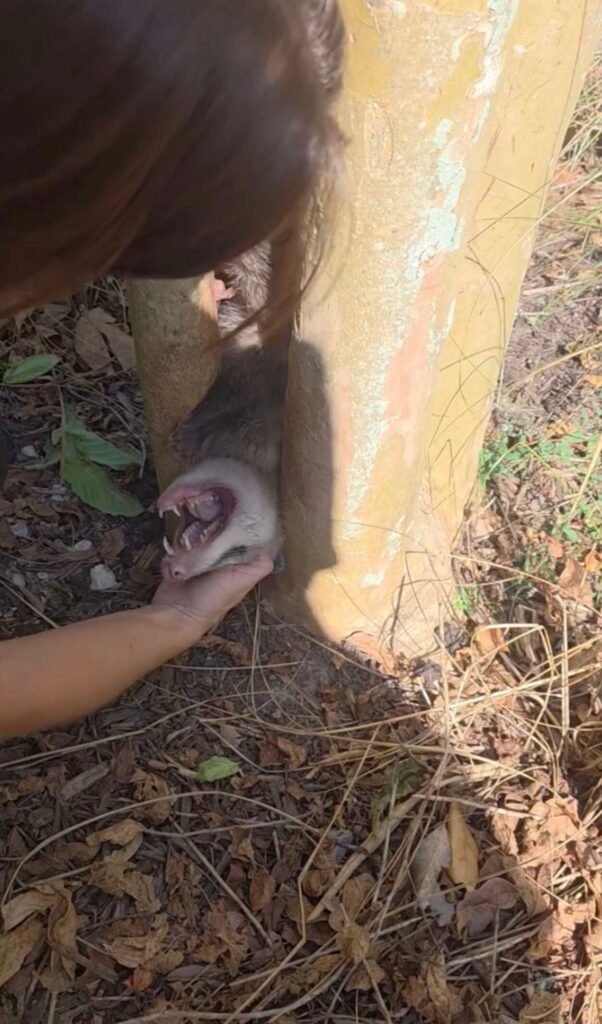
The rescuer quickly assessed the situation and realized time was running out. Prolonged exposure to heat, dehydration and restricted circulation had left the possum exhausted and disoriented.
Working carefully to avoid causing additional injuries, Titterington slowly maneuvered the animal from the narrow gap between the trees. After a delicate rescue effort, she successfully freed the frightened possum, later named Gilbert.
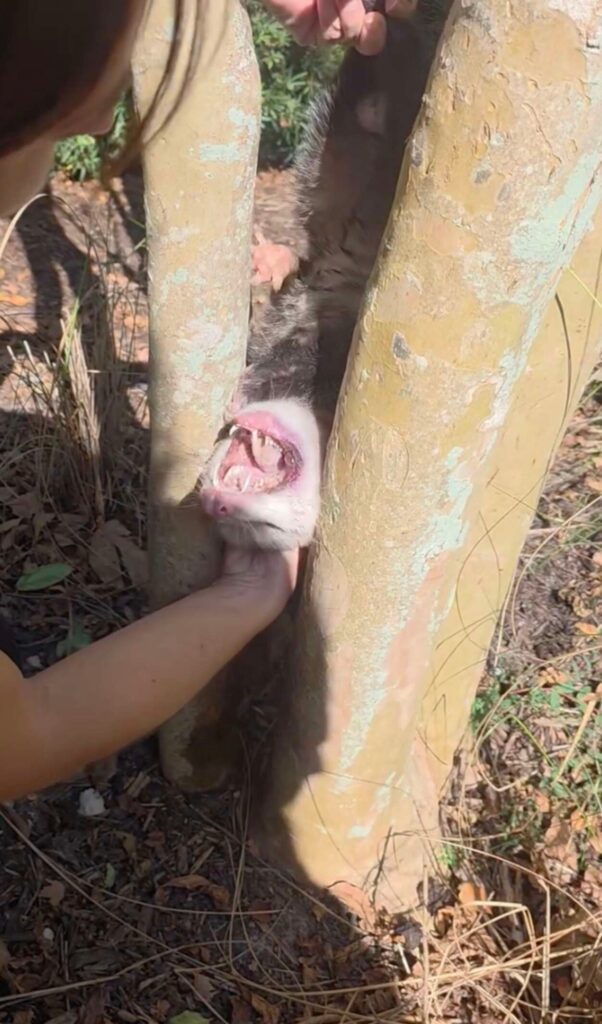
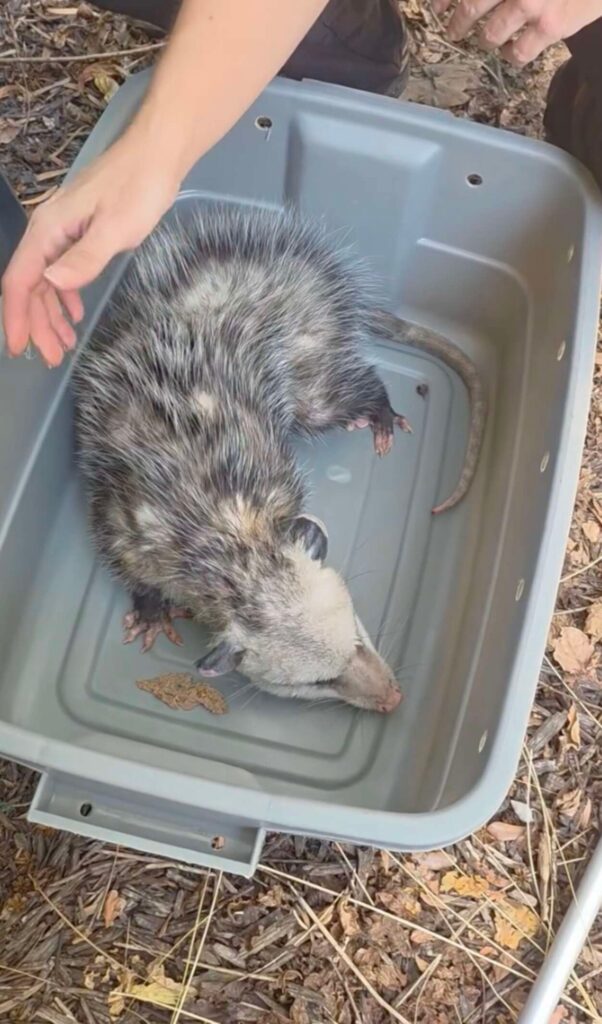
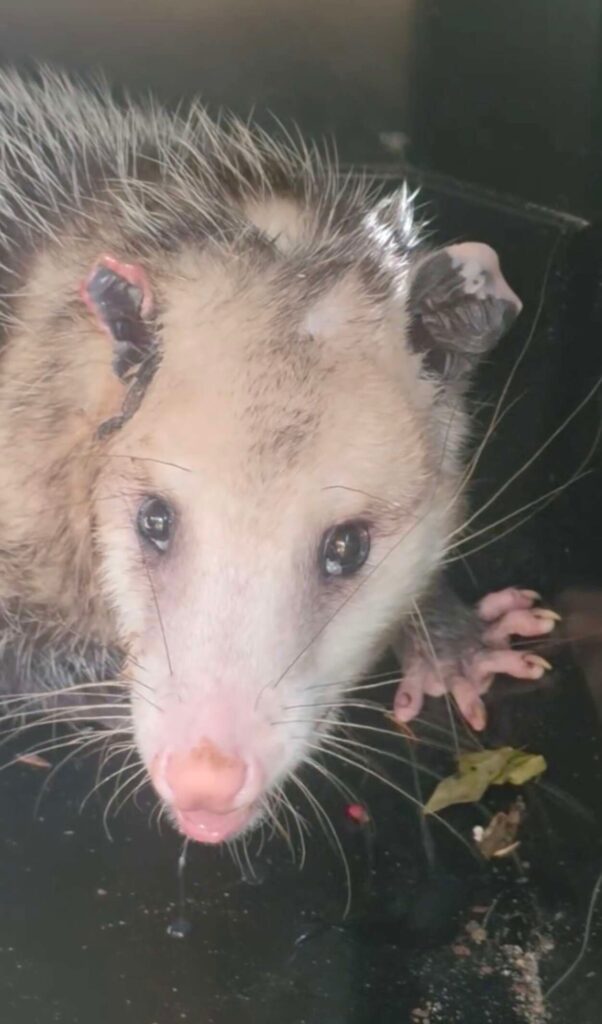
Although safe, Gilbert was in poor condition. He was lethargic, dehydrated and suffering from circulation issues caused by being trapped for such an extended period.
Titterington transported him to SGARR’s rehabilitation facility, where he received fluids, medication and around-the-clock care. For several days, Gilbert remained weak and inactive, but gradually began eating, moving and regaining strength.
Over the following weeks, his recovery continued. A limp caused by reduced circulation in one shoulder slowly disappeared, and his mobility steadily improved.
By the third week of rehabilitation, Gilbert was climbing, exploring and behaving like a healthy wild possum once again.
Confident that he was ready to return to the wild, Titterington released Gilbert in a suitable habitat near where he had originally been found.
The moment the cage door opened, Gilbert wasted no time. He immediately dashed into the surrounding vegetation and disappeared from sight, marking the end of an extraordinary rescue and recovery journey.
For Titterington, the successful release was a rewarding reminder of how even the most unlikely wildlife emergencies can have a happy ending when help arrives in time.
Wildlife rehabilitation plays a vital role in protecting injured, orphaned and distressed animals affected by habitat loss, extreme weather and human activity. Licensed wildlife rescue centers provide emergency animal care, veterinary treatment, rehabilitation services and safe release programs that help native species recover and return to their natural environments. Conservation experts say public awareness and rapid reporting of animals in distress can significantly improve survival rates and support long-term wildlife protection efforts.
Leave a Reply