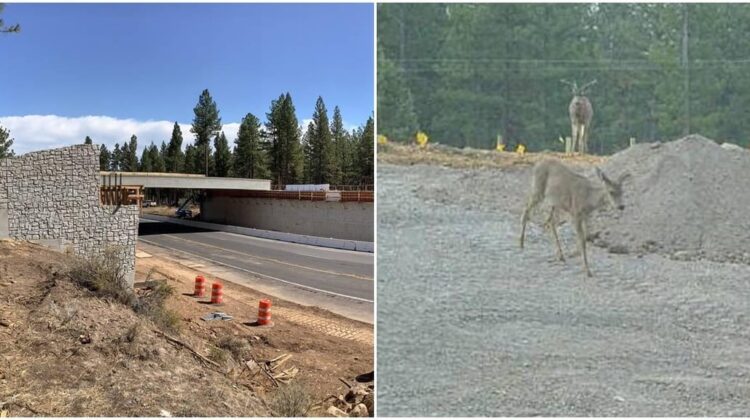
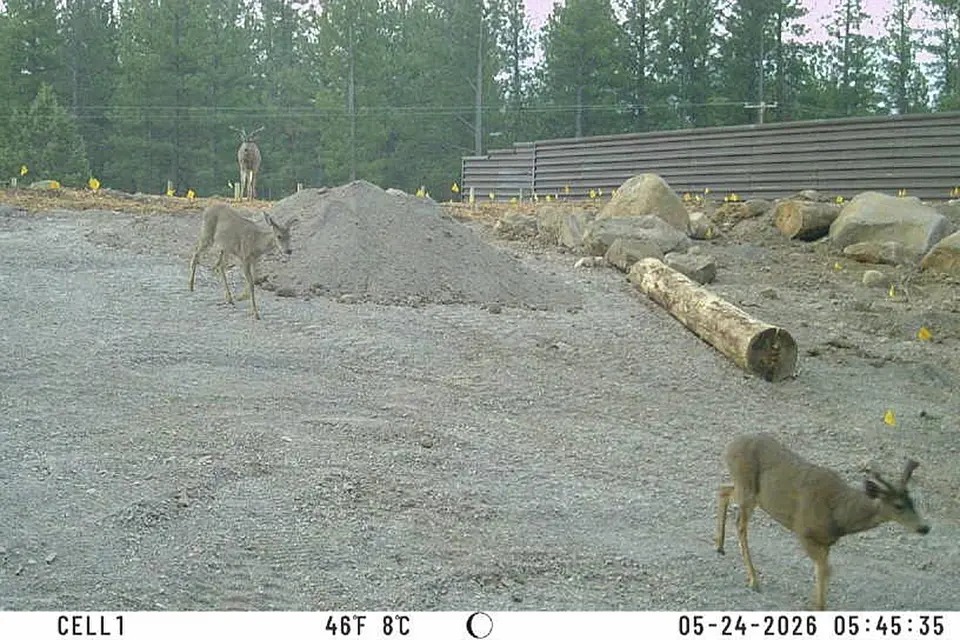
Three mule deer have become the first confirmed animals to use California’s newly constructed wildlife overpass, marking a major milestone in one of the state’s most ambitious wildlife conservation projects.
The animals were captured on a trail camera in late May as they crossed the dedicated wildlife bridge spanning Route 97 in Siskiyou County. The crossing is part of a $20 million initiative designed to reduce collisions between vehicles and wildlife while improving habitat connectivity for migrating animals.
Transportation officials and conservation groups have spent years planning the project, which includes a wildlife overpass measuring approximately 100 feet long and 140 feet wide. The bridge was specifically designed to provide a safe passage for deer, elk and other species whose migration routes have long been disrupted by traffic.
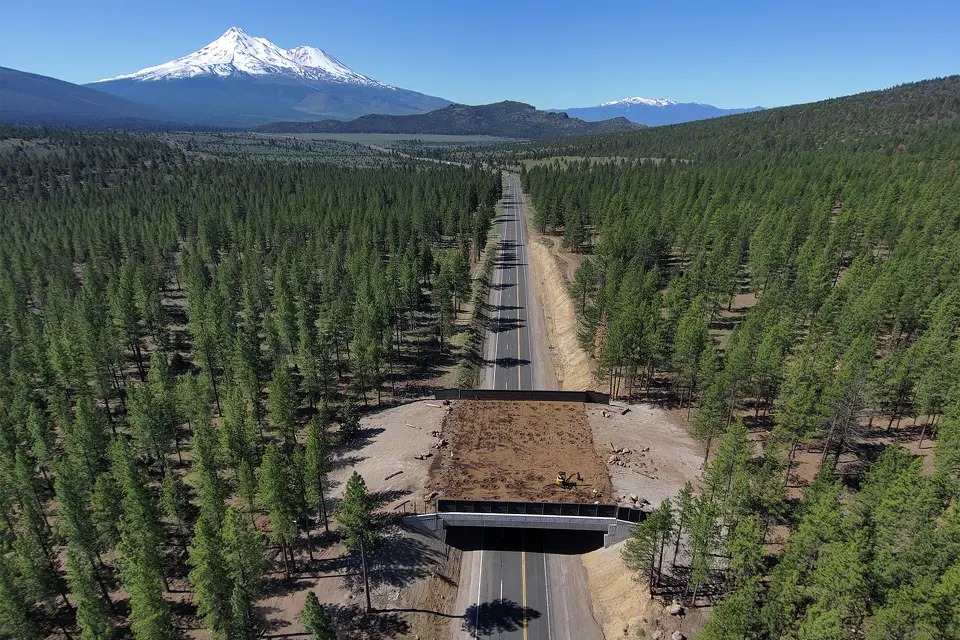
According to project leaders, Route 97 has historically been a dangerous barrier for wildlife. Over several years, dozens of deer and elk were killed while attempting to cross the highway, creating risks for both animals and motorists.
To address the problem, engineers combined the wildlife bridge with several miles of specially designed fencing intended to guide animals toward safe crossing points. Additional wildlife underpasses have also been incorporated into the project to provide alternative routes.
Conservation experts say the first successful crossing demonstrates that wildlife is already beginning to adapt to the new infrastructure, even before construction is fully complete.
Officials hope the overpass will benefit a wide range of species that inhabit the region, including black bears, mountain lions, elk, gray wolves and other native wildlife.
Researchers will continue monitoring activity on the bridge through cameras and tracking systems to better understand how animals use the crossing and to measure its long-term impact on reducing wildlife-vehicle collisions.
For many involved in the project, the sight of the three mule deer safely crossing the highway represents years of planning finally paying off and offers an encouraging sign for future wildlife conservation efforts across California.
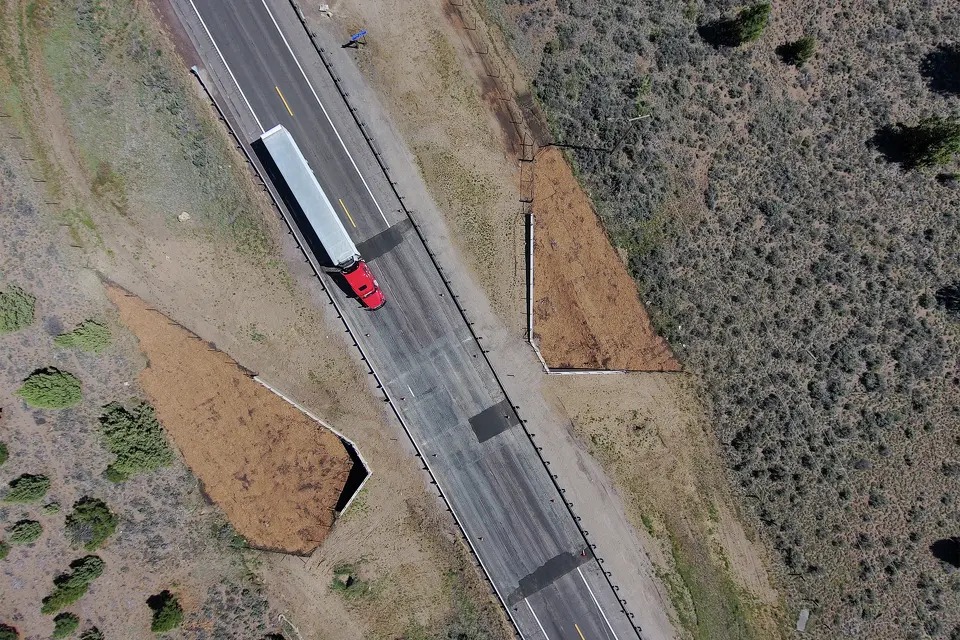
Wildlife crossing structures are increasingly being recognized as a cost-effective solution for reducing vehicle collisions, protecting endangered species and improving ecosystem connectivity. Transportation agencies and environmental organizations across North America are investing in wildlife bridges, habitat restoration projects and biodiversity conservation programs that help safeguard animal migration routes while reducing economic losses associated with road accidents, infrastructure damage and wildlife mortality.
Leave a Reply