• Skip to main content
  • Skip to primary sidebar
  • Skip to footer
  • Home
  • About Us
  • Copyright Report
  • Submit Content
  • Terms
  • Privacy Policy
  • Legal Disclaimer

Hasan Jasim

Hasan Jasim is a place where you may get entertainment, viral videos, trending material, and breaking news. For a social generation, we are the largest community on the planet.

Three mule deer are the first animals confirmed to use California’s new $20M wildlife bridge

by Hasan Jasim Editorial Team Leave a Comment

ShareTweet

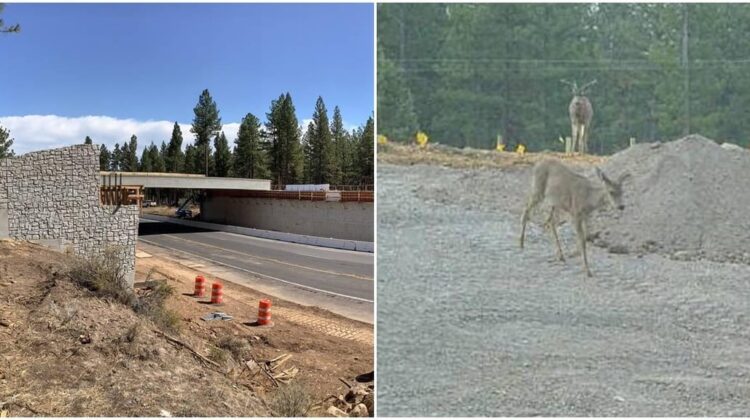
Three mule deer have become the first confirmed animals to use California’s newly constructed wildlife overpass, marking a major milestone in one of the state’s most ambitious wildlife conservation projects.

The animals were captured on a trail camera in late May as they crossed the dedicated wildlife bridge spanning Route 97 in Siskiyou County. The crossing is part of a $20 million initiative designed to reduce collisions between vehicles and wildlife while improving habitat connectivity for migrating animals.

Transportation officials and conservation groups have spent years planning the project, which includes a wildlife overpass measuring approximately 100 feet long and 140 feet wide. The bridge was specifically designed to provide a safe passage for deer, elk and other species whose migration routes have long been disrupted by traffic.
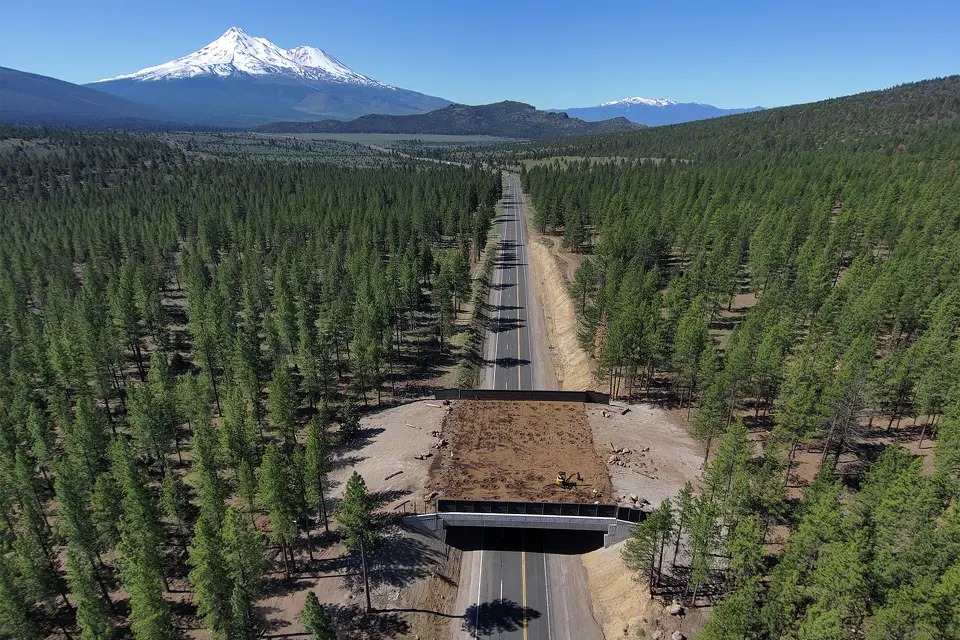
A view of the soon-to-be-completed wildlife overcrossing in Siskiyou County. 

According to project leaders, Route 97 has historically been a dangerous barrier for wildlife. Over several years, dozens of deer and elk were killed while attempting to cross the highway, creating risks for both animals and motorists.

To address the problem, engineers combined the wildlife bridge with several miles of specially designed fencing intended to guide animals toward safe crossing points. Additional wildlife underpasses have also been incorporated into the project to provide alternative routes.

Conservation experts say the first successful crossing demonstrates that wildlife is already beginning to adapt to the new infrastructure, even before construction is fully complete.
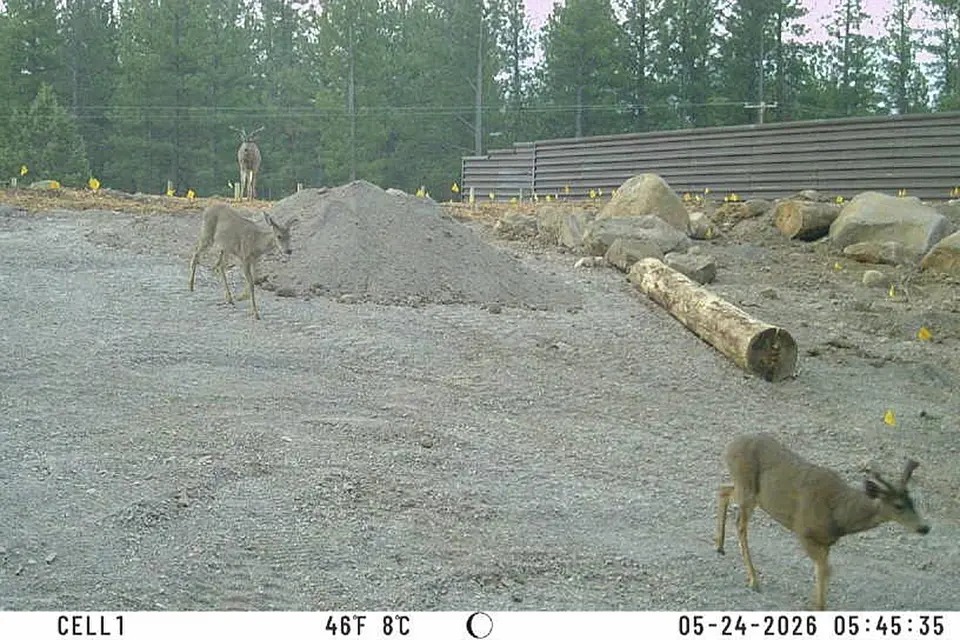
One of nearly 100 cameras involved in the project captured the first three mule deer to cross in late May. 

Officials hope the overpass will benefit a wide range of species that inhabit the region, including black bears, mountain lions, elk, gray wolves and other native wildlife.

Researchers will continue monitoring activity on the bridge through cameras and tracking systems to better understand how animals use the crossing and to measure its long-term impact on reducing wildlife-vehicle collisions.

For many involved in the project, the sight of the three mule deer safely crossing the highway represents years of planning finally paying off and offers an encouraging sign for future wildlife conservation efforts across California.
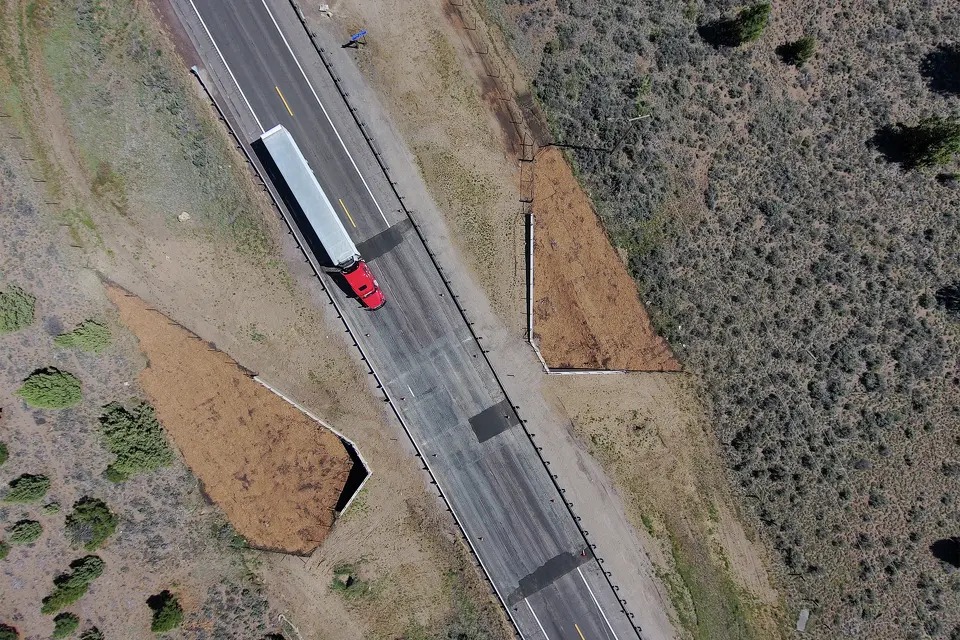
A truck moves through the project area.

Wildlife crossing structures are increasingly being recognized as a cost-effective solution for reducing vehicle collisions, protecting endangered species and improving ecosystem connectivity. Transportation agencies and environmental organizations across North America are investing in wildlife bridges, habitat restoration projects and biodiversity conservation programs that help safeguard animal migration routes while reducing economic losses associated with road accidents, infrastructure damage and wildlife mortality.

Filed Under: Trends Worldwide Tagged With: animal conservation, Animal Migration, animal news, biodiversity, California wildlife, conservation success, Ecosystem Protection, endangered species, environmental news, environmental protection, green infrastructure, Mule Deer, nature conservation, Road Ecology, sustainable development, Wildlife Bridge, Wildlife Corridor, Wildlife Crossing, wildlife protection, wildlife safety

Reader Interactions

Leave a Reply Cancel reply

Your email address will not be published. Required fields are marked *

Primary Sidebar

More to See

The Number Of Monkeys You See Determines If You’re A Narcissist

By Hasan Jasim Editorial Team

People Who’ve Had COVID Could Be Almost 8 Times As Likely To Develop ME/CFS

By Hasan Jasim Editorial Team

Dog Dumped Outside Dollar Tree Wouldn’t Stop Waiting For His People To Come Back

By Hasan Jasim Editorial Team

Scientists looked deep beneath the Doomsday Glacier. What they found spells potential disaster for the planet

By Hasan Jasim Editorial Team

Smiling Faces of Survival: A Microscopic Look at the Leaf Structure of Xerophytic Grass

By Hasan Jasim Editorial Team

Woman Is Delighted To Find A Wild Fox Sleeping Peacefully On Her Outdoor Sofa

By Hasan Jasim Editorial Team

Be Careful Of What you Whisper in the Forest, for Trees have Ears

By Hasan Jasim Editorial Team

Footer

ABOUT HASANJASIM.ONLINE

Hasanjasim.online is a digital platform dedicated to publishing well-researched articles about the animal kingdom, nature, and the environment. Our editorial team works to source stories from credible outlets, scientific research, and verified reports, aiming to inform as much as we entertain. From wildlife conservation and animal behavior to natural wonders and environmental science, we cover the topics that help readers better understand and appreciate the natural world. Whether you're a lifelong nature lover or simply curious about the planet we share, Hasanjasim.online aims to be a trustworthy destination for stories worth reading — and worth citing.

Recent

  • A Man Died After Entering the Tiger Enclosure at Yorkshire Wildlife Park — Here’s What Police and the Park Have Confirmed
  • A Bumblebee, a Barn Owl, a Hedgehog and a Puffin Are Replacing Churchill and Austen on Britain’s Banknotes — Here’s How They Won
  • A Kitten Named Tigro Was Attacked in Sardinia — His Death Led to a Reward, an Investigation and a Public Appeal
  • Heartless owner dumps dog on street, coldly says ‘bye-bye’ before driving off
  • A Bus Driver Stopped So a 10-Year-Old Could Save a Kitten — Now She Has Lost Her Route and Parents Are Fighting Back
  • What Are Those “Portholes” on Cows, and Why Do They Exist?
  • The World’s Largest Penguin Colony Has Lost Nearly Two-Thirds Of Its Chinstraps — And Scientists Say It’s A Warning Sign

Search