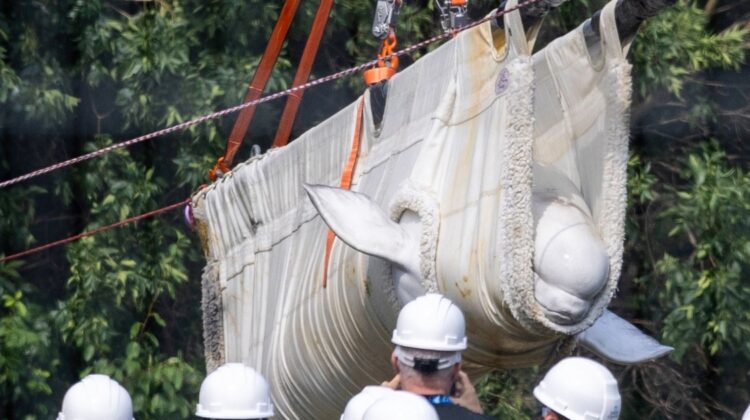
A major wildlife relocation effort is underway in Canada as dozens of beluga whales are being transferred from the closed Marineland theme park in Niagara Falls, Ontario, to accredited marine facilities in the United States.
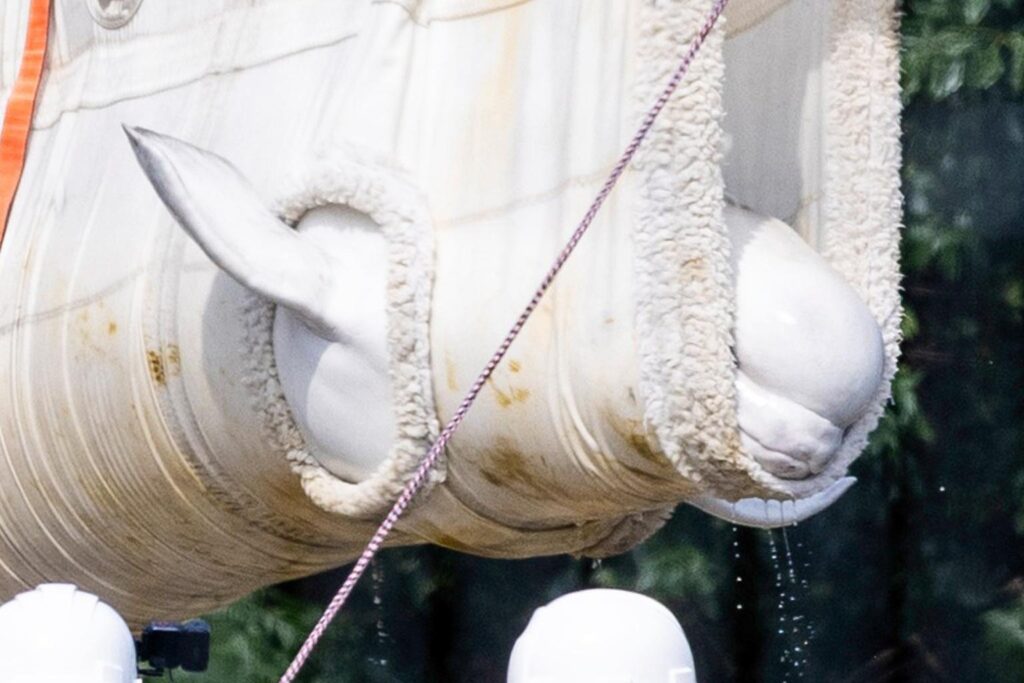
The operation began on Monday with the first group of whales carefully lifted from their pools using specially designed transport slings attached to heavy-duty cranes before being moved by truck to the next stage of their journey.

Among the first whales relocated was Sierra, who is expected to be joined by Acadia, Osiris, and Lilooet at Shedd Aquarium in Chicago. Two other belugas, Bertie Botts and Frankie, are scheduled to be transported to SeaWorld San Antonio in Texas.
Canadian officials confirmed that the relocation marks the beginning of a broader mission involving approximately 30 beluga whales, with additional transfers planned in the coming weeks.
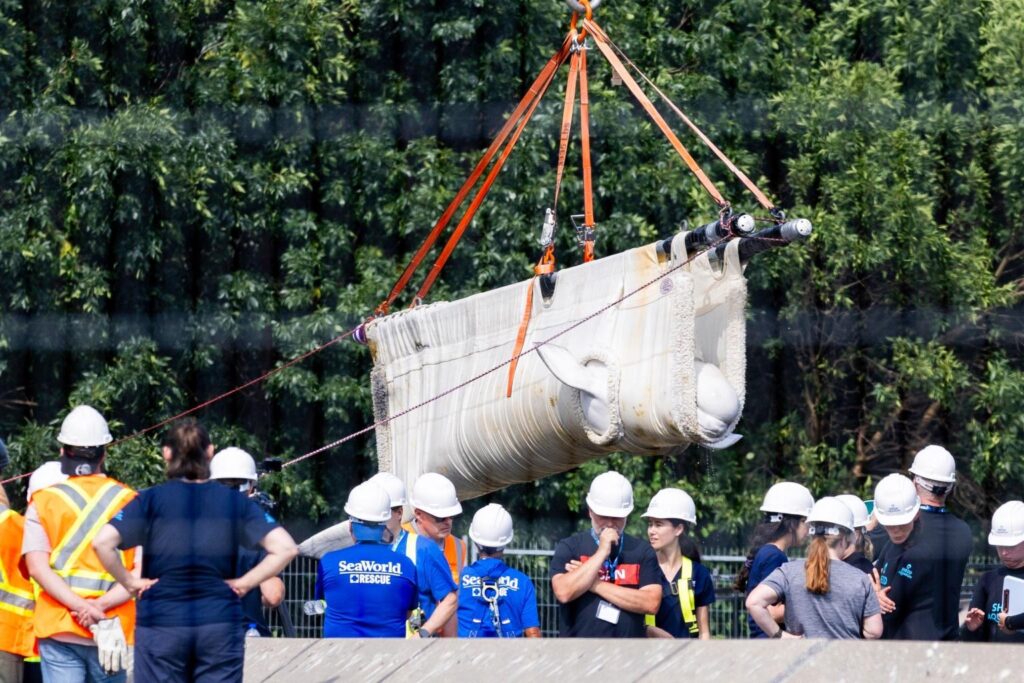
Canadian Fisheries Minister Joanne Thompson described the operation as the first phase of an extensive rescue mission aimed at securing long-term care for the animals.
The whales had remained at Marineland after the marine park ceased operations following the deaths of its owners, John Holer and Marie Holer, in 2024. Although staff continued caring for the animals, uncertainty surrounded their future while authorities searched for suitable facilities capable of housing them.
According to reports, concerns had grown that some of the whales could face euthanasia if no appropriate homes became available. However, agreements reached earlier between Canadian authorities and partners in the United States and Spain opened the way for the large-scale relocation effort.
Beluga whales, often called the “canaries of the sea” because of their wide range of vocalizations, can weigh up to 3,500 pounds (around 1,600 kilograms) and require specialized veterinary care and carefully managed habitats throughout transport.
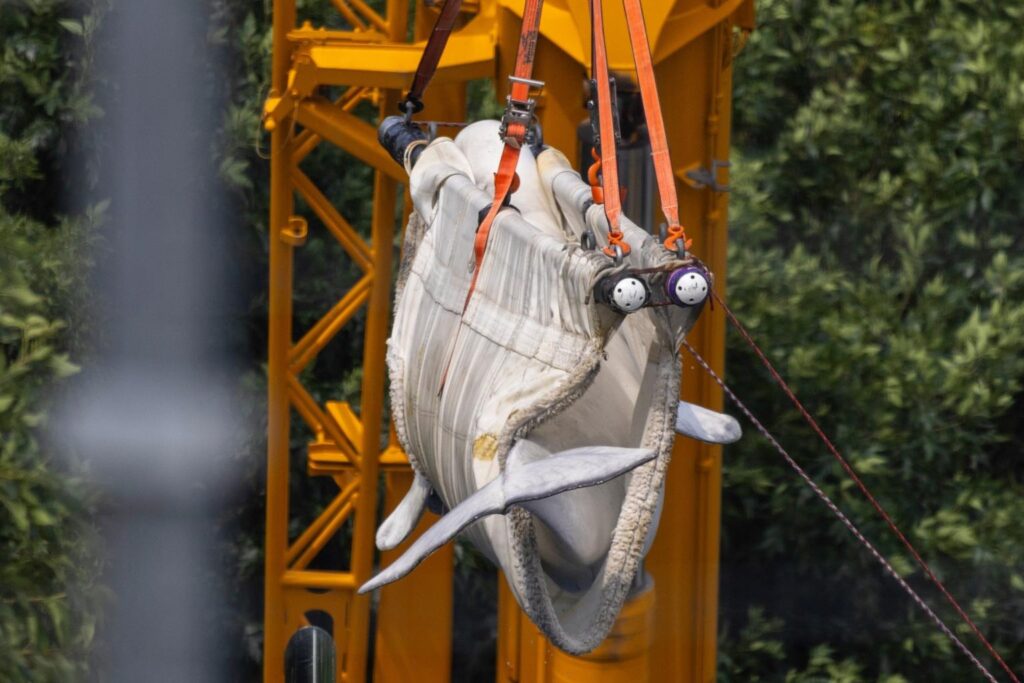
Wildlife experts say each transfer is being carried out under strict veterinary supervision to minimize stress and ensure the animals’ safety during every stage of the relocation process.
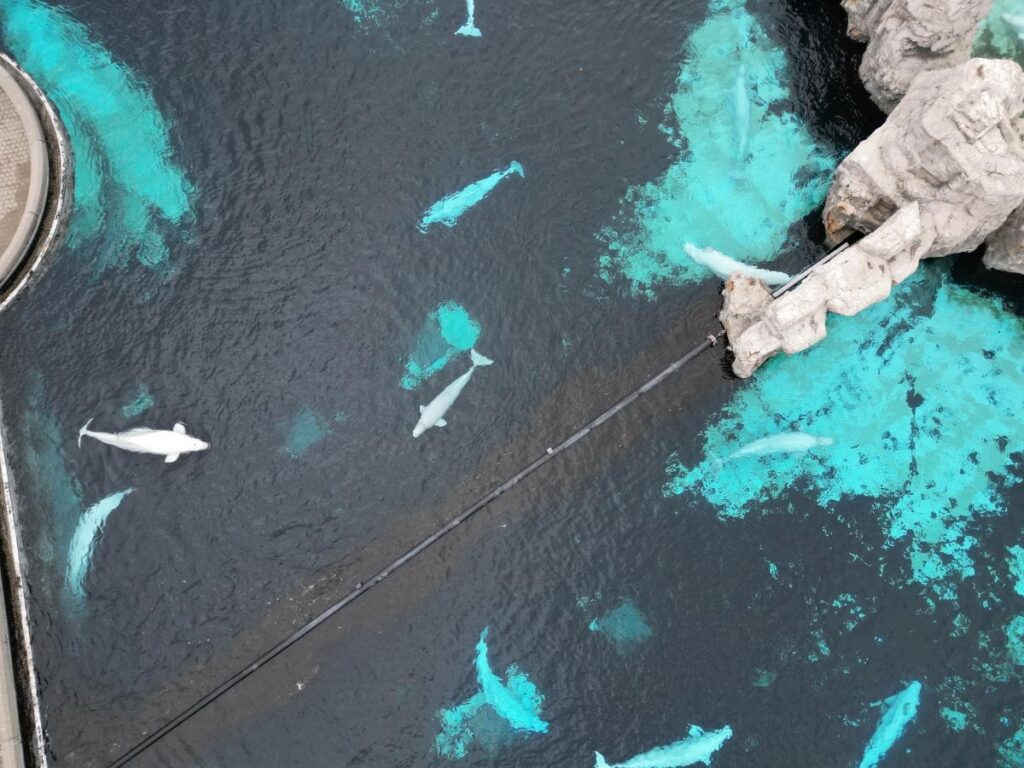
A New Chapter for Beluga Conservation
The relocation highlights the growing international cooperation involved in marine mammal conservation and animal welfare. As aquariums and rehabilitation centers adopt increasingly rigorous care standards, experts say carefully planned transfers can improve the long-term well-being of rescued animals while supporting education, scientific research, and conservation programs. The mission also demonstrates how cross-border collaboration can help secure safe futures for animals affected by the closure of captive wildlife facilities.
Leave a Reply