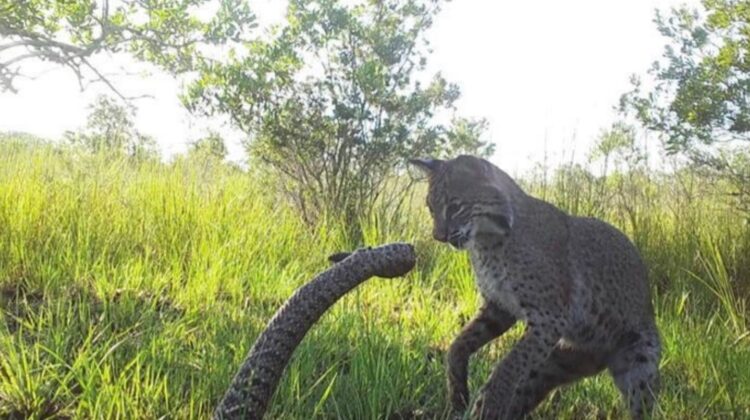
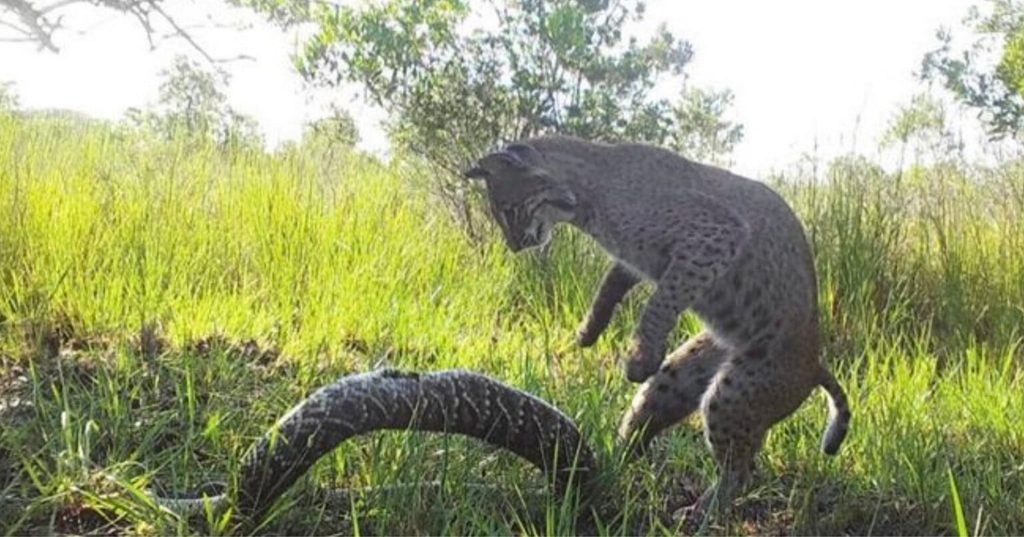
A remote camera in Florida has captured something scientists rarely get to document firsthand: a bobcat attacking a fully grown eastern diamondback rattlesnake, widely regarded as the largest rattlesnake species on Earth.
A Rare Sequence, Frame By Frame
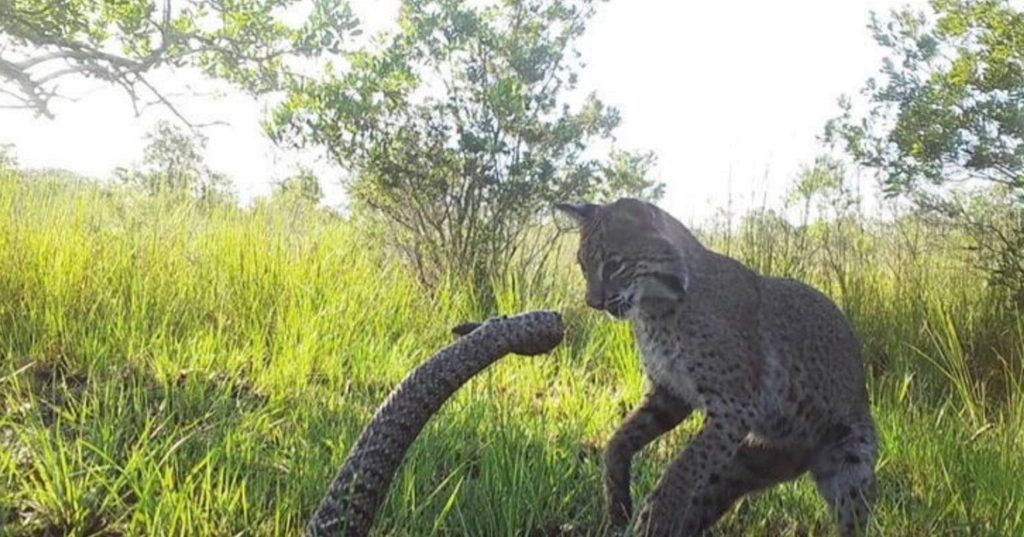
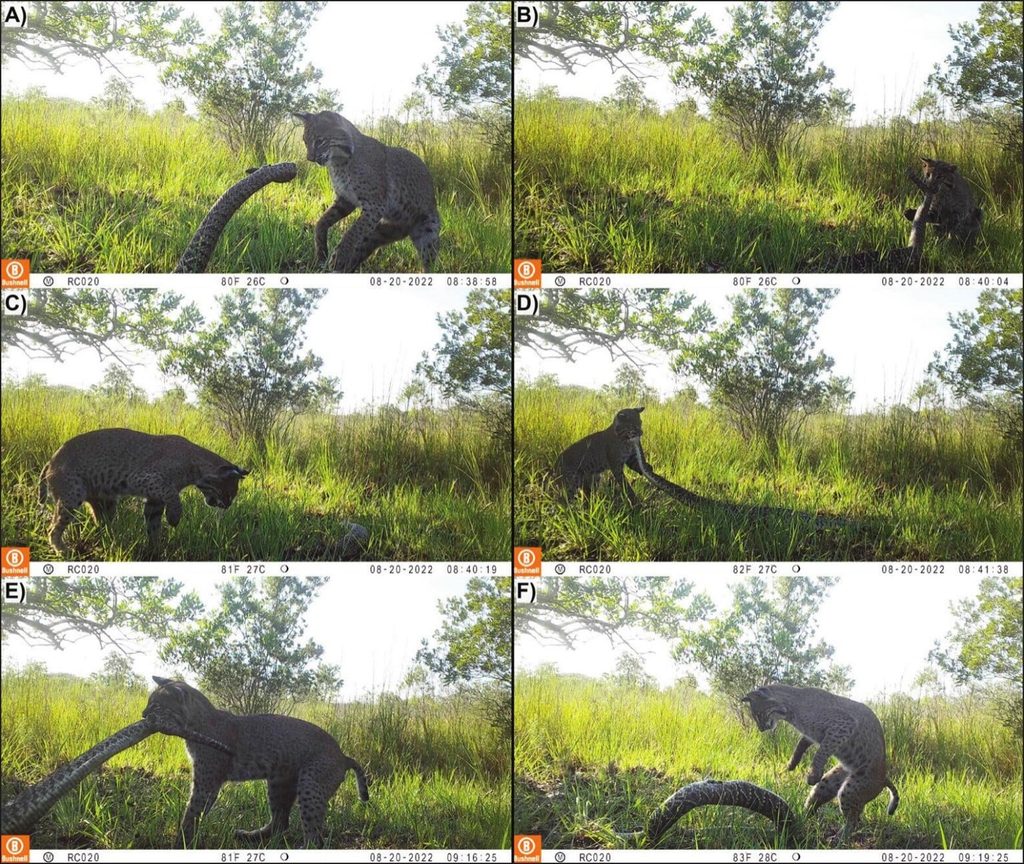
The images were published as part of a study in the journal Southeastern Naturalist, led by wildlife biologist Mohamed Khalil Meliane. A Bushnell Core trail camera recorded 38 frames over roughly an hour and a half on August 20, 2022, at the University of Florida’s Range Cattle Research and Education Center in Hardee County.
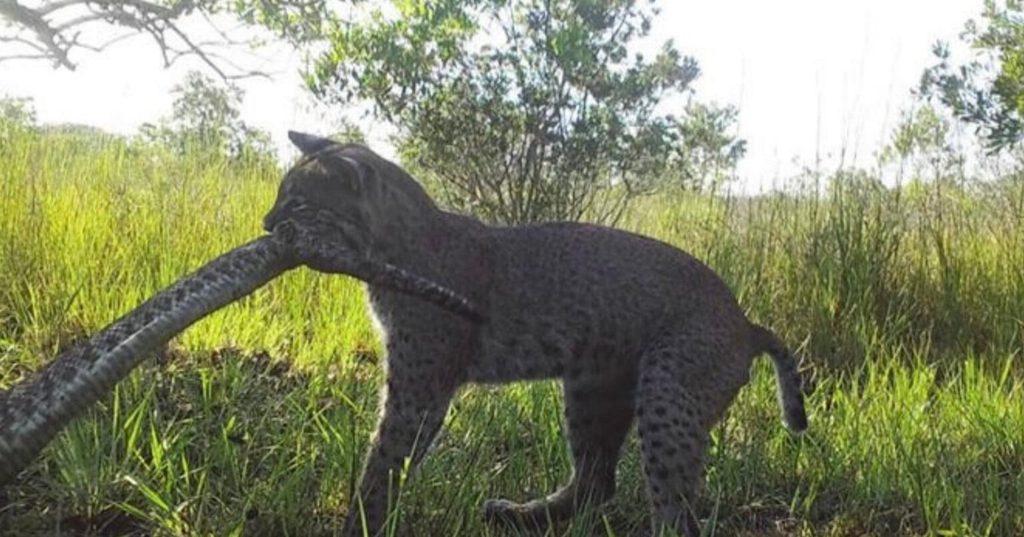
The early frames show the bobcat cautiously approaching the coiled, rattling snake, carefully avoiding its tail before closing in. From there, the cat targets the snake’s tail and body with claws and bites, eventually moving to the head. By the later frames, the rattlesnake has been flipped onto its back, visibly wounded across its head, midbody, and tail — though it continues trying, unsuccessfully, to fight back.
Why This Encounter Matters To Scientists
Large adult reptiles like the eastern diamondback rattlesnake typically sit near the top of their local food web, and predation on fully grown adults is considered rare — in part because many large reptiles are long-lived, meaning the loss of a single reproductive adult can carry outsized consequences for local population numbers over time.
“Adult rattlesnakes are infrequently documented as prey, and direct evidence of mammalian attacks on large venomous snakes is limited,” the study’s authors wrote, underscoring just how unusual it is to have a full photographic record of an event like this rather than secondhand evidence.
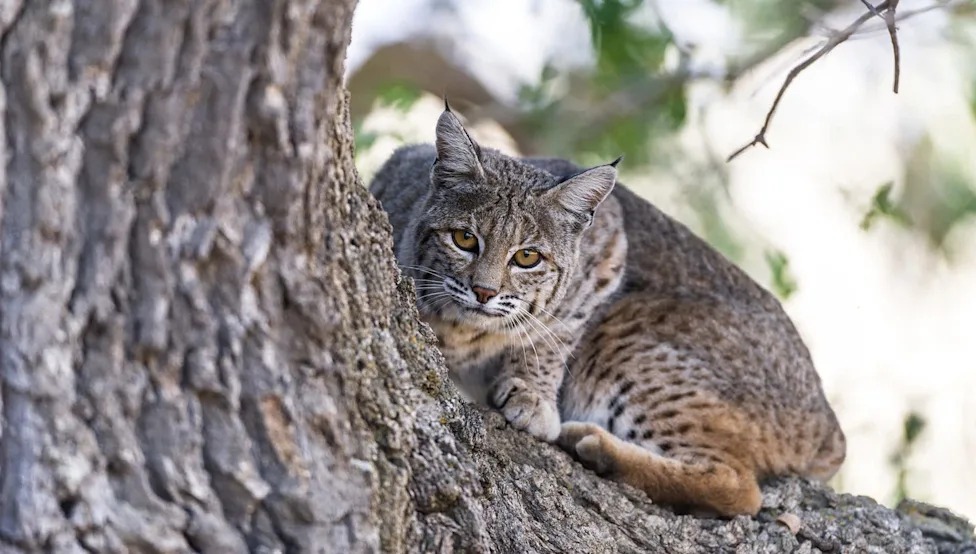
The danger in this kind of confrontation runs both directions. Rattlesnakes pose a serious threat to bobcats, which have no natural immunity to their venom, while bobcats bring their own advantages to the fight — quick reflexes, precise paw strikes, and targeted biting that can overwhelm a snake before it’s able to land a defensive strike.
Part Of A Growing Pattern
This isn’t the first time bobcats have been documented taking on large, potentially dangerous reptiles in Florida. A 2021 study, also published in Southeastern Naturalist, examined a dead adult Burmese python and found claw marks and cache-site evidence consistent with a bobcat attack. A 2022 study in Ecology and Evolution documented bobcats preying on Burmese python eggs in the Everglades — currently the only known nest predator of the invasive species in the United States. More recently, a 2025 study in Southeastern Naturalist detailed bobcat predation on juvenile American alligators.
Taken together, the new rattlesnake photos add direct visual evidence to what had largely been indirect or circumstantial findings. “Our observation provides primary photographic evidence that Bobcats can attack and severely wound adult vipers,” the study authors wrote. “It also supports previous indirect evidence of predation on Burmese Pythons by confirming the species’ capacity to kill large reptiles, even venomous ones. Together, these observations form a growing body of evidence that Bobcats can attack or consume relatively large reptiles.”
Why It Happened Where It Did
The encounter took place at a human-managed cattle research center already equipped with remote monitoring cameras — not because people caused the interaction, but because research stations, ranchland, and other human-altered landscapes are exactly the kinds of places where predator and prey are more likely to cross paths where cameras happen to be watching.
Researchers say camera traps and wildlife-monitoring grids like this one are steadily building a clearer picture of how animals behave when people aren’t directly present, capturing rare behaviors that might otherwise go completely undocumented. As development continues to reshape natural habitats across Florida, scientists say that understanding how native predators like bobcats respond — including which species they’re capable of taking down — could help communities better balance biodiversity protection with practical safety considerations.
Frequently Asked Questions
Why is this bobcat-rattlesnake encounter considered scientifically significant? Direct photographic evidence of a mammal attacking a fully grown, venomous adult rattlesnake is extremely rare. Most prior evidence of bobcats preying on large reptiles has been indirect, based on carcasses or cache sites rather than a documented sequence of the attack itself.
Is the eastern diamondback rattlesnake really the largest rattlesnake in the world? Yes, it’s generally considered the largest rattlesnake species by both length and weight, making a successful bobcat attack on an adult especially notable.
Did the rattlesnake survive the attack? The study doesn’t confirm the snake’s ultimate fate, but the final camera-trap frames show it severely wounded, flipped onto its back, with visible injuries to its head, midbody, and tail.
Have bobcats been documented attacking other large reptiles before? Yes. Prior research has documented bobcats killing adult Burmese pythons, preying on Burmese python eggs in the Everglades, and attacking juvenile American alligators, suggesting bobcats are more capable of handling large reptilian prey than previously assumed.
Where exactly did this encounter take place? At the University of Florida’s Range Cattle Research and Education Center in Hardee County, Florida, a research and cattle-ranching site equipped with remote wildlife-monitoring cameras.
Sources: PetaPixel, Discover Wildlife, and Digital Camera World, cited above.
Leave a Reply