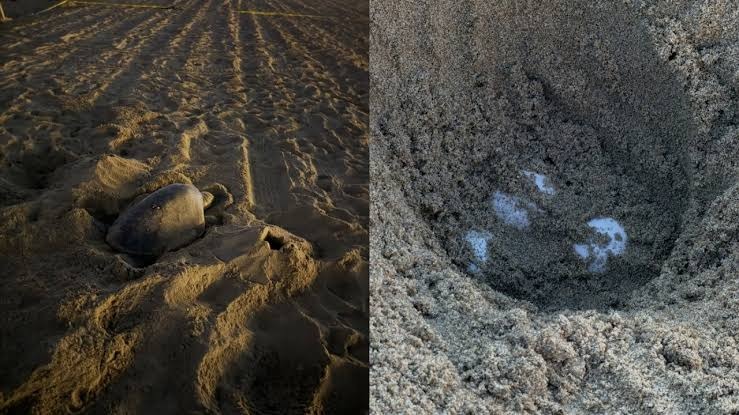
A sea turtle nesting on a beach in Orange County has just made wildlife history — the first documented natural sea turtle nest ever recorded anywhere on the West Coast of the United States, according to NOAA Fisheries.
A First For The West Coast
An olive ridley sea turtle was spotted digging a nest and laying eggs near Seal Beach on September 16. Three days later, a sea turtle was seen again a few miles south, near the Huntington Beach Pier. Wildlife officials haven’t yet confirmed whether the two sightings involved the same turtle or two different individuals.
Sea turtles are federally protected under the Endangered Species Act, and both nesting sites have been fenced off with protective signage. NOAA Fisheries said a coordinated team of local, state, and federal partners will monitor the nests throughout the incubation period, which typically lasts between 45 and 60 days. Beachgoers are being asked to keep their distance and avoid disturbing the fencing, signage, or the turtles themselves.
A Species Rarely Seen This Far North
Olive ridley sea turtles are the smallest sea turtle species found in the Pacific Ocean. Adults typically weigh up to 100 pounds and grow to roughly 2.5 to 3 feet in length, with a lifespan in the wild estimated between 30 and 50 years.
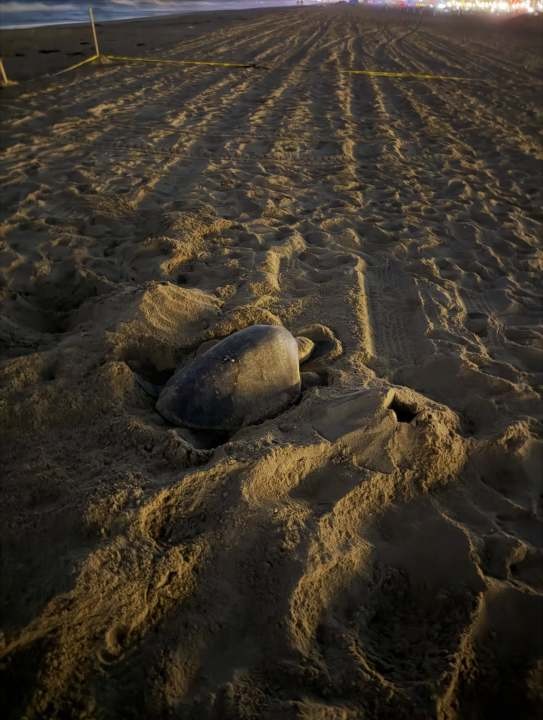
According to NOAA Fisheries, the species is found worldwide, primarily in the tropical waters of the Pacific, Indian, and Atlantic oceans, with major Pacific nesting populations concentrated in Mexico, Nicaragua, Costa Rica, and Panama. While olive ridleys have occasionally been spotted off Southern California after following warm ocean currents north, the species had never before been documented nesting anywhere in the United States — making this month’s sightings a genuinely unprecedented event.
An El Niño Effect
Unusually warm waters driven by a strong El Niño pattern are believed to be drawing a number of rarely seen marine species into Southern California waters this year. In recent weeks alone, both a hammerhead shark and a whale shark have also been spotted off the Southern California coast — sightings that, like the nesting turtle, are considered highly unusual for the region and are being linked to the same warm-water conditions.
How To Report A Sighting
NOAA Fisheries is asking anyone who spots a sea turtle along the coast to report it to the agency’s West Coast Stranding Hotline at (562) 506-4315, helping researchers continue tracking this unusual pattern of warm-water species appearing farther north than normal.
Frequently Asked Questions
Why is this sea turtle nesting event considered historic? According to NOAA Fisheries, no sea turtle had ever previously been documented nesting naturally anywhere on the West Coast of the United States, making this the first confirmed case on record.
Why is an olive ridley sea turtle nesting so far from its usual range? Unusually warm ocean waters brought on by a strong El Niño year are believed to be drawing typically tropical marine species, including this sea turtle, farther north than usual along the Southern California coast.
How long will it take for the eggs to hatch? Sea turtle incubation typically lasts between 45 and 60 days, during which wildlife officials will actively monitor both protected nesting sites.
What should beachgoers do if they encounter the nesting sites? People are asked to keep a safe distance and avoid disturbing the protective fencing, signage, or the turtles themselves, to give the nests the best chance of successfully hatching.
What should someone do if they spot a sea turtle on a Southern California beach? Sightings can be reported directly to the NOAA Fisheries West Coast Stranding Hotline at (562) 506-4315.
Sources: NOAA Fisheries, cited above.
Leave a Reply