Long before a lion ever roared inside a Roman amphitheater, an entire military and legal apparatus had already spent weeks moving it across the empire — and a new study of Roman law is the first to map out how that system actually worked.
A Legal Trail Historians Had Overlooked
Rosa María Carreño Sánchez, a researcher at the Lucio Anneo Séneca Institute of Classical Studies at Carlos III University of Madrid (UC3M), built the study around two imperial constitutions preserved in the Theodosian Code, issued in AD 414 and 417, and later folded into the Justinian Code under the heading De venatione ferarum (“On the hunting of wild beasts”). The research was published in the Revista General de Derecho Romano.
Where most accounts of Roman spectacle — ancient and modern, including film — focus on what happened inside the arena, Carreño Sánchez went looking for what happened before it: the permits, penalties and logistics behind getting a wild animal from the empire’s frontier to the center of a city.
Staged Animal Hunts, Not Just Gladiators
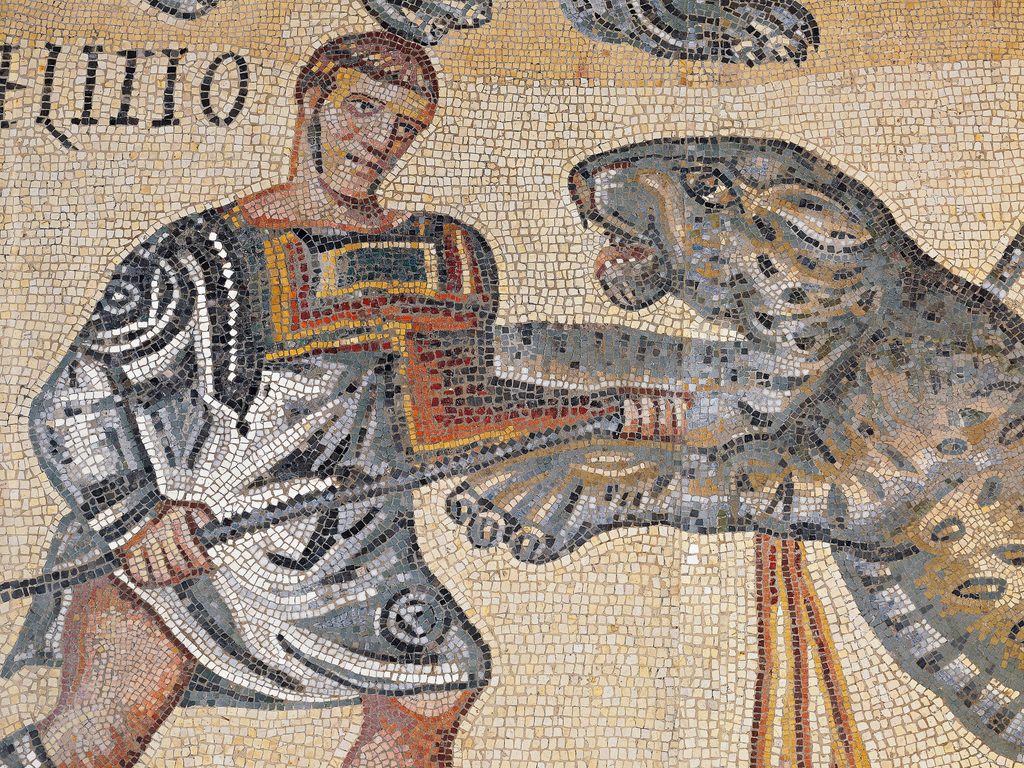
The events at the center of the study are venationes — staged hunts and exhibitions involving exotic animals, sometimes pitting animals against each other or against specialized human fighters known as bestiarii or venatores. Despite gladiatorial combat’s outsized reputation today, contemporary sources suggest venationes were, if anything, the more popular draw, and they outlasted gladiatorial games by centuries. While Christian moral pressure and mounting costs steadily eroded support for gladiatorial combat, the animal spectacles kept expanding, spreading well beyond Italy into provinces like Hispania — Italica, near modern Seville, built one of the empire’s largest amphitheaters despite the town itself having barely 8,000 residents.
“All Lions Belonged to the Emperor”
The study’s most striking finding concerns lions specifically. As big cats grew harder to source — likely from over-hunting near the empire’s frontiers — Carreño Sánchez argues the law effectively created a state monopoly.
“In late antiquity, faced with the growing scarcity of big cats, a state monopoly on lions was established to guarantee the supply of animals for the emperor’s spectacles and to prevent competition from private individuals,” she said in a statement. “In other words, all lions belonged to the emperor.”
Who Actually Caught the Animals
The capturing and transporting of animals fell to specialized military roles along the empire’s borders — units the Roman sources identify by name, including soldiers designated ad leones (assigned to lions), ursuarii (bear-handlers), and vestigiatores (trackers). Provinces were required to fund the personnel needed to move captured animals toward the amphitheaters out of their own local budgets.
That funding requirement created friction. Any delay in transport could signal that local officials or private individuals had diverted the animals for their own unauthorized shows — a lucrative but illegal shortcut. To deter it, imperial administrators imposed steep fines, payable in gold, on military commanders who failed to meet delivery timelines.
Why This Kind of Evidence Matters
“Unlike literary sources or films, which only show us the final outcome in the arena, an analysis of Roman law allows us to understand what went on behind the scenes,” Carreño Sánchez said, “the management of resources, territorial conflicts, and the enormous logistical effort required by one of the most popular spectacles of antiquity.”
The picture that emerges looks less like spontaneous spectacle and more like a regulated, empire-spanning supply chain — one built to project the emperor’s wealth and reach to provinces thousands of kilometers from Rome, using animals trapped weeks earlier on the empire’s furthest frontiers.
Frequently Asked Questions
What were venationes, exactly? Staged animal hunts and exhibitions held in Roman amphitheaters, sometimes involving combat between animals or between animals and specialized human fighters. They were a distinct spectacle from gladiatorial combat and, by some measures, more popular.
Did Roman soldiers actually fight the lions in the arena? Not based on this study. The documented military role was capturing, transporting and guarding the animals before the show — the people who fought or handled animals in the arena itself were specialized performers, a separate role from the army units described in these laws.
Why did the emperor claim a monopoly on lions specifically? As big cats became scarcer during late antiquity, likely from overhunting near the frontiers, the law appears to have restricted lion capture to imperial control, both to guarantee a supply for official spectacles and to shut out private competitors.
Sources: Universidad Carlos III de Madrid (UC3M); Revista General de Derecho Romano; EurekAlert; Ancient Origins.
Leave a Reply