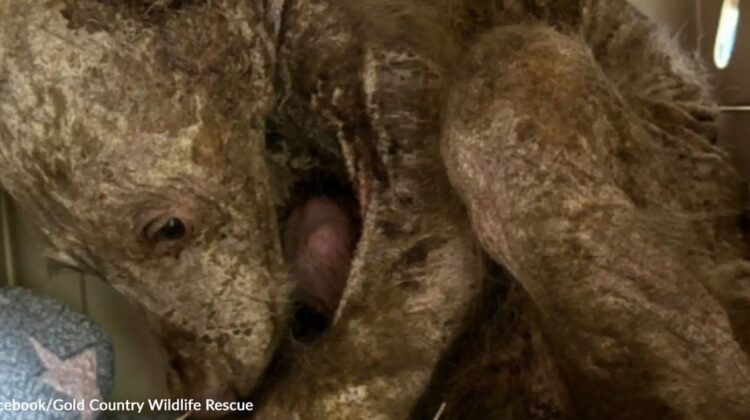
A nearby resident first spotted the cub wandering alone near Pilot Hill in El Dorado County, California, surviving in rough terrain with no sign of his mother. By the time rescuers reached him in December 2024, he was in far worse condition than anyone expected.
A Discovery That Shook Even Experienced Rescuers
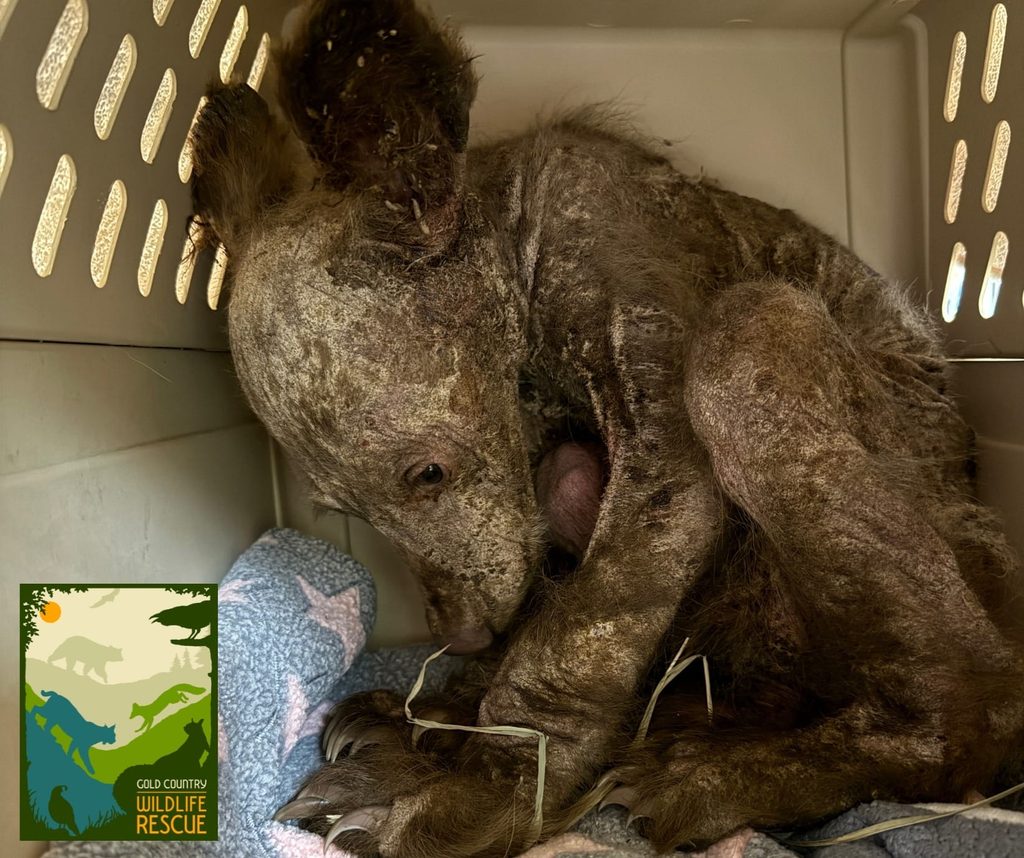
The young male black bear was found severely dehydrated, anemic, and suffering from a serious skin infection as well as infections in both ears. He weighed only around 10 to 20 pounds and had lost nearly all of his fur, leaving him barely recognizable as a bear.
“It was heartbreaking to see a bear cub in such terrible condition,” Chelsea Engberg, marketing and outreach manager for Gold Country Wildlife Rescue (GCWR) in Auburn, California, told The Dodo.
Staff believed the combination of being orphaned and severely malnourished had triggered a rapid health decline before the cub was ever found. The rescue ran a full exam with bloodwork and cultures, and was candid from the outset that recovery wasn’t guaranteed. “We are grateful for the opportunity to help this cub but want to be transparent: a successful outcome is not guaranteed,” GCWR wrote at the time, while coordinating closely with the California Department of Fish and Wildlife (CDFW) on his care.
Slow, Steady Progress
Recovery took weeks of careful treatment. The first real sign of hope came when staff noticed new fuzz beginning to grow across the cub’s bare face. “While it might not seem like a big change, the fact that we are starting to see fur fuzz grow on his face is an exciting next step in his healing journey,” the rescue shared in a Facebook update.
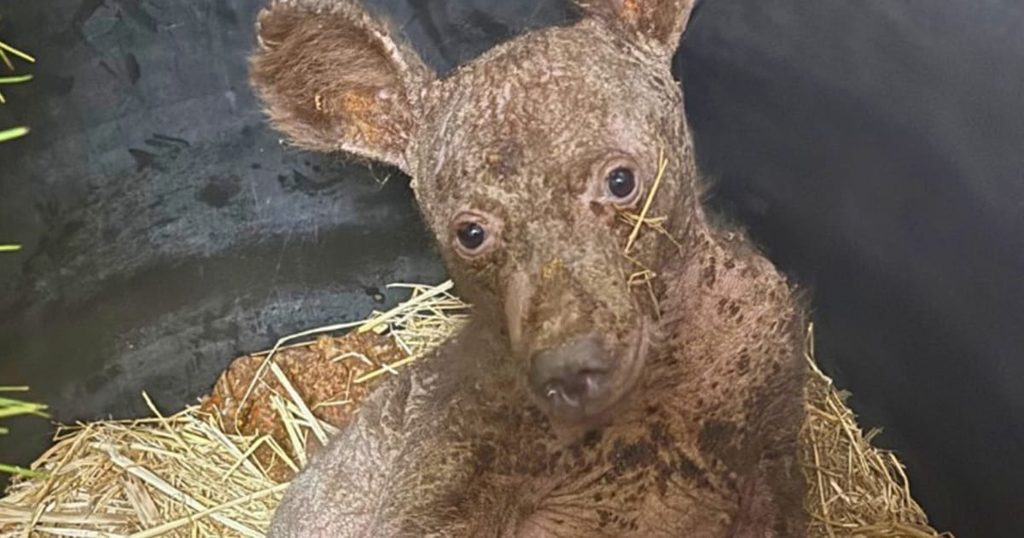
As his strength returned, so did his personality. Staff gave him enrichment items, including a kiddie pool and a firehose hammock, and deliberately kept their distance to preserve his wariness of humans, a critical factor for any wild animal with a chance of returning to the wild.
A Transformation Nobody Expected
By February 2025, the change was dramatic. The once-hairless, struggling cub looked like an entirely different animal. “We are always amazed by the wild animals in our care, and this bear cub is one of the most amazing recoveries we have seen,” Engberg said.
At that point, his long-term future was still undecided. Under California law, CDFW has final authority over whether a rehabilitated bear is released back into the wild or placed in a permanent sanctuary.
The Final Decision
On May 13, 2025, GCWR shared an update along with a new photo showing the cub almost unrecognizable from the animal that had arrived five months earlier. CDFW had made its decision: he would not return to the wild, but would instead be transferred to a sanctuary once cleared.
“If you’ve not seen this cub before, he came to us late last year sick, and almost completely without fur,” the rescue wrote. “He’ll be receiving his final exam and vaccination regimen soon, so he’ll be all ready to head off to his forever sanctuary home when they are ready for him.”
Dana Fasolette, GCWR’s Director of Animal Care, pointed to the broader lesson in the cub’s recovery: “His journey highlights the value of collaborative care in wildlife rehabilitation.”
What It Costs to Save an Animal Like This
Cases this severe are expensive to treat. Wildlife rehabilitation centers like GCWR rely almost entirely on donations and grants to cover veterinary exams, bloodwork, medication, specialized enclosures, and the months of ongoing care a case like this requires, costs that can run into the thousands of dollars for a single animal. Centers also continually invest in enrichment equipment and secure, injury-proof enclosures designed to keep rescued wildlife both safe and as wild as possible, which is a major part of their ongoing operating costs. For anyone inspired by stories like this one, most rescues accept direct donations, and many also maintain wishlists for recurring supplies such as veterinary equipment and enrichment tools.
Frequently Asked Questions
Why was the bear cub’s fur gone when he was found?
Severe malnutrition, dehydration, and skin infection likely combined to cause extensive hair loss, a common consequence of prolonged illness and lack of proper nutrition in young wildlife.
Who decides whether a rescued bear returns to the wild?
In California, the Department of Fish and Wildlife makes the final call based on the animal’s health, behavior, and readiness, weighing the risks of release against the option of lifelong sanctuary care.
Why did rescuers keep their distance from the cub during recovery?
Limiting human contact helps preserve a wild animal’s natural wariness of people, which is essential if release back into the wild remains a possibility.
How can the public support wildlife rescues like Gold Country Wildlife Rescue?
Most rescues operate primarily on donations and volunteer support; monetary gifts, supply donations, and sponsorships for specific animals are common ways people contribute to ongoing rehabilitation costs.
Sources: Gray News (KXII/WVLT), KCRA, and KTVZ/CNN Regional, all citing Gold Country Wildlife Rescue and the California Department of Fish and Wildlife.
Leave a Reply