
A new study combines behavioral, neuroscientific, and genetic evidence to support the claim that insects, like vertebrates, experience pain.
Several lines of evidence show that insects’ central nervous systems perceive pain in ways that are significantly more similar to ours than we are willing to recognize.
Out of curiosity, scientists used to execute what we now consider horrible experiments on animals. Studies on vertebrates must now go before ethics committees to demonstrate that the usefulness of the research surpasses any potential harm to the subjects, even if not everyone agrees on where to draw the line. Cephalopods such as octopus and squid are beginning to receive the same protection.
Insects, on the other hand, are normally considered safe. Fruit fly researchers are not held to the same standards as mice or monkey researchers. A recent analysis in the journal Proceedings of the Royal Society B challenges the premise that insects do not experience pain in the same way that “higher” creatures do.
The authors point out that the subject hasn’t gotten much attention, probably because people are afraid of the probable answer.
Nociception, as defined by neuroscientists, is the nervous system’s encoding of damaging or unpleasant stimuli such as excessive temperatures, pressure, or a strong chemical attack. Animals (including insects) respond to these signals in order to limit bodily damage that could jeopardize their existence. The question is whether insects experience pain across the central nervous system or if the response is localized, such as in an injured limb.
After all, insects have significantly less sophisticated central nervous systems than humans, with only a small proportion of brain cells dedicated to processing such inputs. They lack opioid receptors, which are essential for pain management in our own brains. However, Queen Mary University PhD student Matilida Gibbons and co-authors believe that this does not imply that simpler versions of the same capability do not exist.
Nociception and pain are related, but they are not the same thing. Our bodies may sometimes control pain without modifying nociceptive reflexes, which is especially useful in crises where excessive pain may distract us from what we need to perform. The pain arrives later, preventing us from using an injured limb, for example. Surprisingly, the opposite has also been reported, with nociception being increased without increasing pain levels.
However, we do not understand how nociception and pain are associated in insects, thus the authors investigate insects’ ability to modulate nociception, which they regard as indicative, if not proof.
“Behavioral research indicates that insects can modify nocifensive behavior.” According to the paper, “such modulation is at least in part controlled by the central nervous system because the information mediating such priority is processed by the brain.”
The authors find neuropeptides released in insects during stressful experiences that may operate as pain suppressors, similar to how opiates work in humans.
Insects, like other creatures, can grow sensitized to certain threats, which adds to the evidence. Fruit flies that have been repeatedly exposed to high temperatures begin to respond more quickly when heat is administered. Some of the chemicals implicated in this sensitization are found in humans. Pathways for transmitting nociceptive signals to the brain have also been discovered.
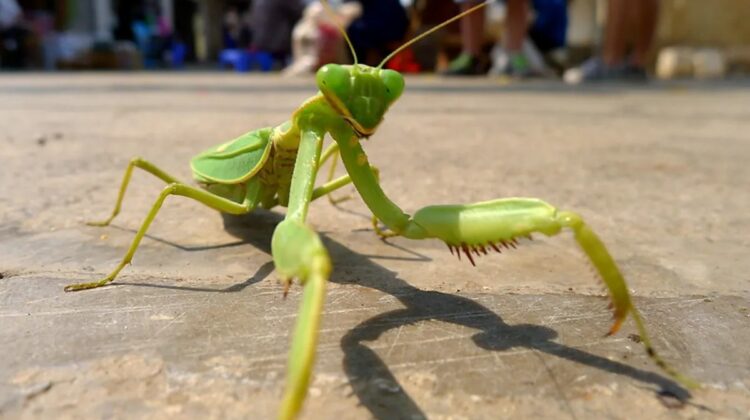
Even one of the most well-known insect behaviors, sexual cannibalism in female praying mantises, may give light on the topic. Male mantises famously respond to having their heads eaten off by mating more aggressively. To accomplish this, the male must suppress his natural assault response.
“This data has been proposed to imply the absence of pain in insects,” according to the report. “However, it is more plausible that it shows that insects can prioritize other behavioral demands and minimize nocifensive behavior in specific settings.” This suggests a concentrated response, which makes pain perceptions more believable, not less.
We still don’t know how pain is processed in the insect brain, if it exists at all, but that’s less crucial than figuring out how to respond if it does. Can we continue to treat insects as we do if we discover they experience pain?
Leave a Reply