A 2021 photo of three “snakes” curled in a tree went viral for good reason — most people who saw it assumed the same thing. Look closer, though, and there isn’t a scale in sight.
The Photo That Fooled Twitter
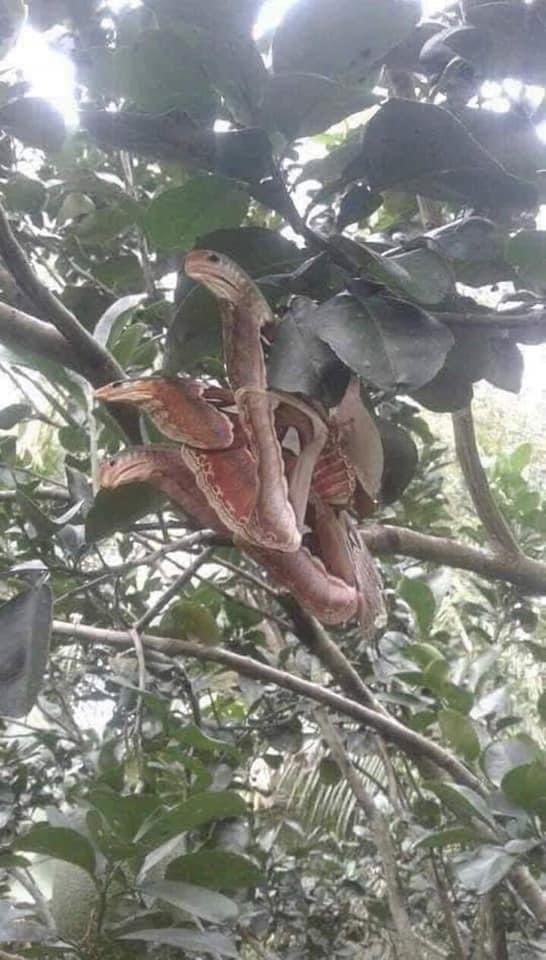
The image, shared by a Twitter user posting as Rob (@thegallowboob), showed three dark, hooked shapes tucked into tree branches, each one looking uncannily like a snake’s head rearing back. It spread fast, and plenty of people took it at face value.
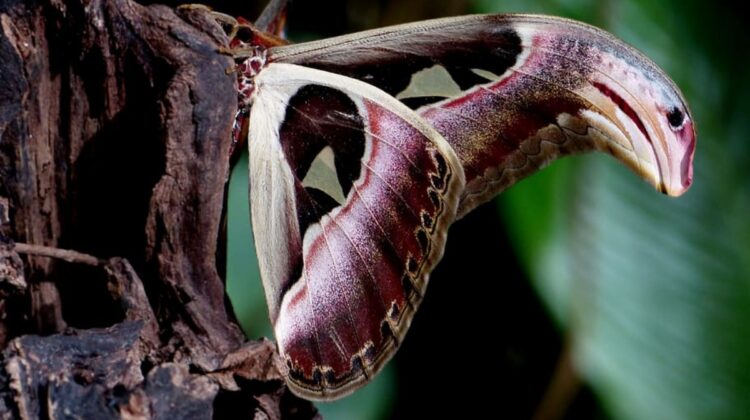
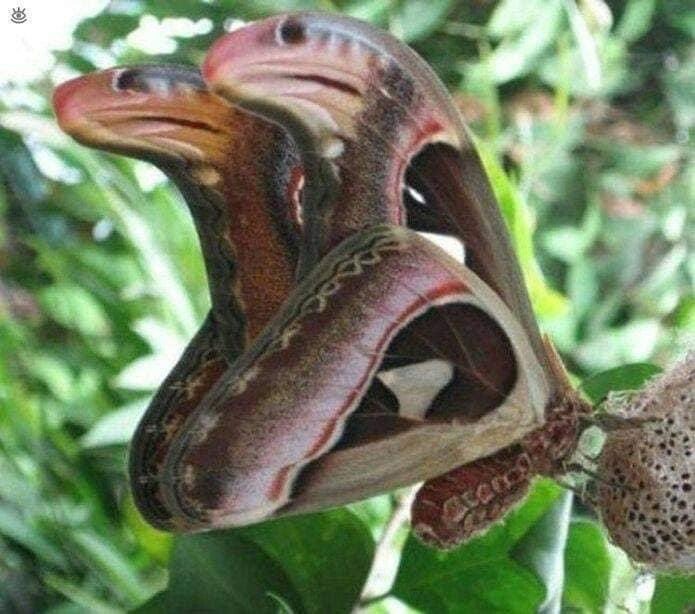
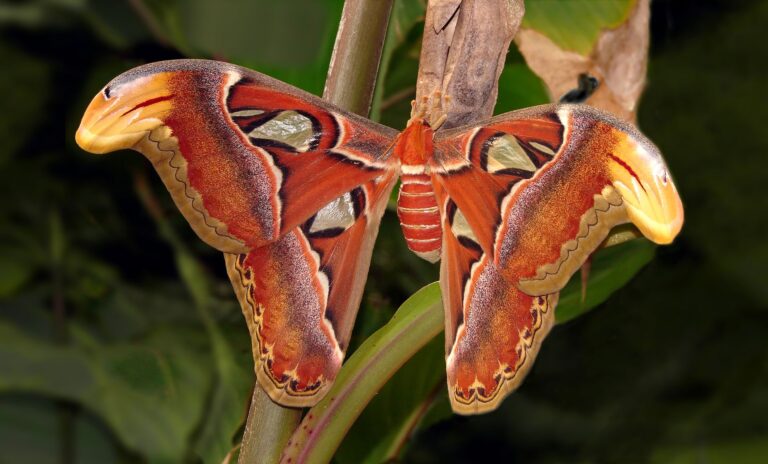
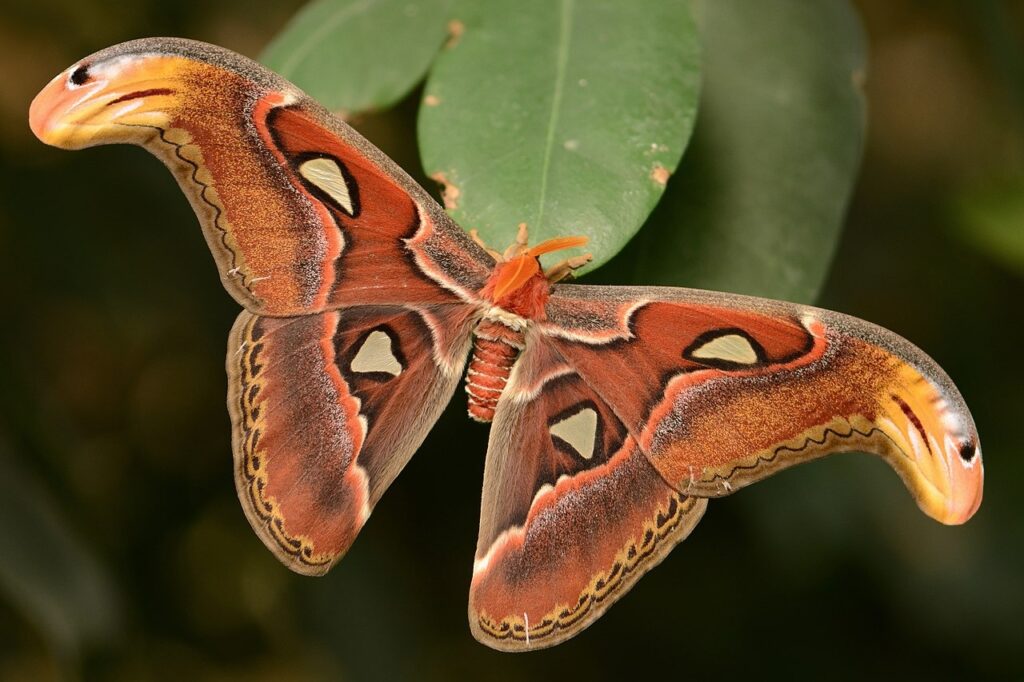
What’s actually in the photo are the forewing tips of Atlas moths (Attacus atlas), one of the largest moths in the world. It isn’t the whole moth that looks like a snake — just the curved, patterned point at the top of each forewing, which happens to resemble a snake’s head in profile, complete with what looks like an eye.
A Genuinely Enormous Moth
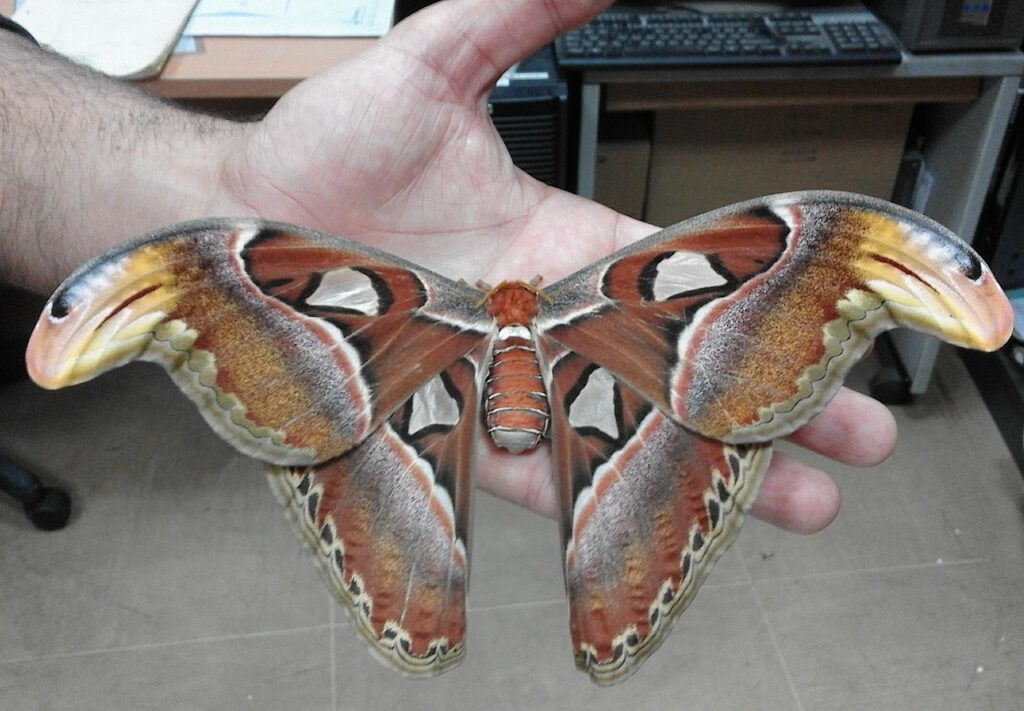
Atlas moths are native to the forests of South and Southeast Asia and are among the largest insects on Earth by wing surface area, with wingspans commonly cited between about 24 and 27 centimeters (9 to nearly 11 inches). Carl Linnaeus first described the species in 1758, and its name is thought to come from Atlas, the Titan of Greek mythology, a nod to its size. In Cantonese, it’s known as the “snake’s head moth,” a name that points directly at the same wingtip pattern.
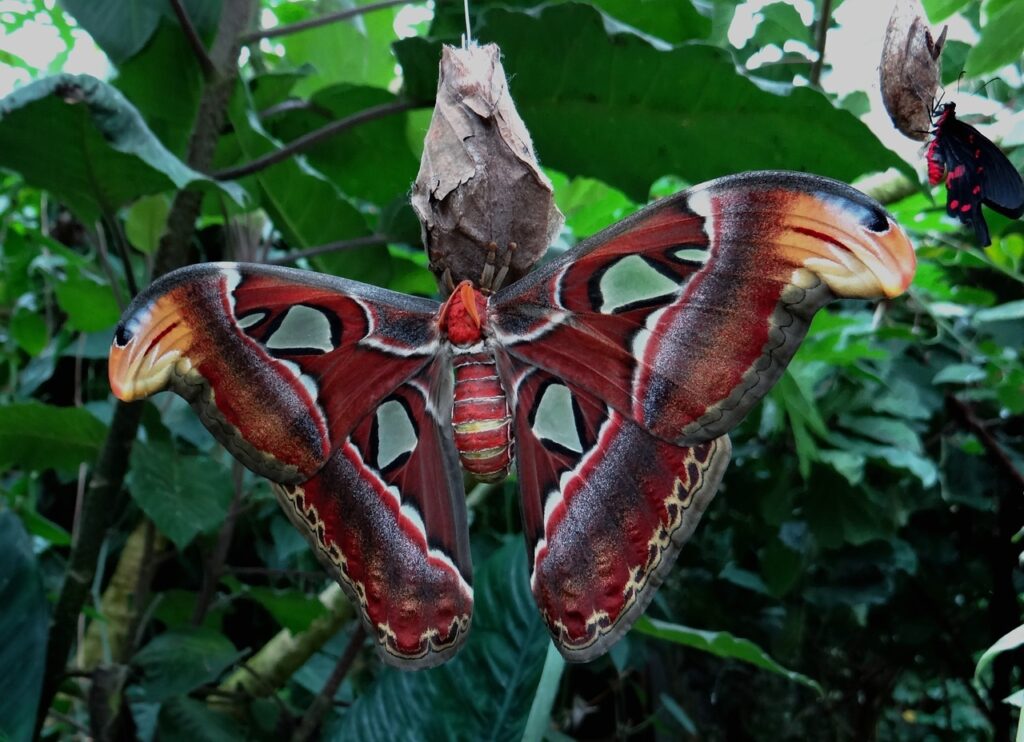
Not every entomologist is convinced the resemblance is a deliberate evolved mimicry rather than a happy coincidence, but there’s decent evidence for it: when an Atlas moth is disturbed, it drops toward the ground and shakes its wings in a way that exaggerates the “snake head” movement, apparently enough to startle predators like birds.
Built for Just a Couple of Weeks
Adult Atlas moths don’t have functioning mouthparts and don’t eat. They live off fat reserves built up as caterpillars, and adults survive only one to two weeks, just long enough to mate and, for females, lay eggs. That short runway may explain why looking dangerous is worth the energy: a moth with no time to waste can’t afford many close calls with predators.
They’re also weak, reluctant fliers, most active at dusk and through the night, and inclined to rest during the day rather than burn through their limited reserves.
Showing Up Far From Home
Atlas moths turn up outside Asia occasionally, almost always as escapees from private collections rather than established populations. In 2012, the BBC reported one found on a windowsill in Ramsbottom, Greater Manchester, large enough that the family who found it first mistook it for a bat; it died shortly afterward. A specimen found in Bellevue, Washington, in July 2022 was described by state officials as the first confirmed Atlas moth sighting in the United States, prompting comment from Washington’s state entomologist about just how striking the species is in person. Another turned up the same year in Stockholm’s old town.
Frequently Asked Questions
Are Atlas moths dangerous? No. They have no functioning mouthparts as adults and pose no threat to people. The “snake” display is a bluff aimed at predators.
Why do their wingtips look like snakes? The forewing tips are shaped and patterned to resemble a snake’s head, and the moth reinforces the illusion with wing movements when threatened — though some entomologists remain cautious about calling it confirmed, deliberate mimicry.
Where do Atlas moths live? Native to South and Southeast Asian forests. Sightings elsewhere are rare and usually trace back to escaped captive specimens.
Sources: Rob Allam (@thegallowboob) on X/Twitter; California Academy of Sciences; Natural History Museum, London; Wikipedia (Attacus atlas); BBC News; NBC News; Aftonbladet.
Leave a Reply