• Skip to main content
  • Skip to primary sidebar
  • Skip to footer
  • Home
  • About Us
  • Copyright Report
  • Submit Content
  • Terms
  • Privacy Policy
  • Legal Disclaimer

Hasan Jasim

Hasan Jasim is a place where you may get entertainment, viral videos, trending material, and breaking news. For a social generation, we are the largest community on the planet.

How Impressive Were Ancient Engineering Methods

by Hasan Jasim Editorial Team Leave a Comment

ShareTweet

The most impressive feats of modern engineering tend to happen at the subatomic level, but ancient architects and builders were working in an era before theories of quantum mechanics and special relativity came to prominence. Ancient engineering had so few of today’s technologies but created many impressive results, especially in architecture. Here are some of the most impressive examples of ancient engineering in architecture.

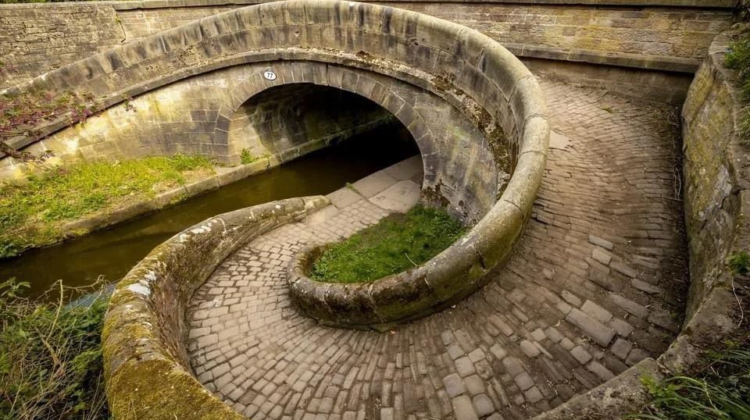
Bridge 77 on Macclesfield Canal (Lambert’s Lane)

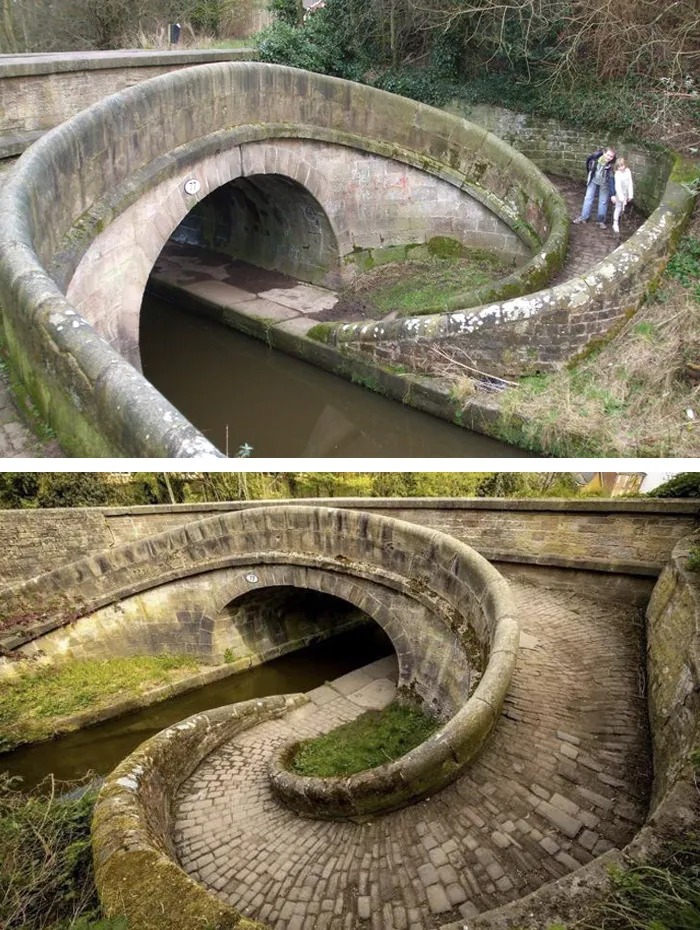
Snake bridge over the Macclesfield canal allowed the towpath to cross the canal without the horse being unhitched from the narrowboat it was pulling. This often involved unhitching the tow line, but on some canals, they were constructed so that there was no need to do this by placing the two ramps on the same side of the bridge, which turned the horse through 360 degrees. On the Macclesfield Canal, this was achieved by building spiral ramps and on the Stratford-upon-Avon Canal and others by constructing roving bridges of iron in two cantilevered halves, leaving a slot in the middle for the tow rope. This was also called a split bridge. For cost reasons many ordinary Stratford bridges were also built in this way as they had no towpath.
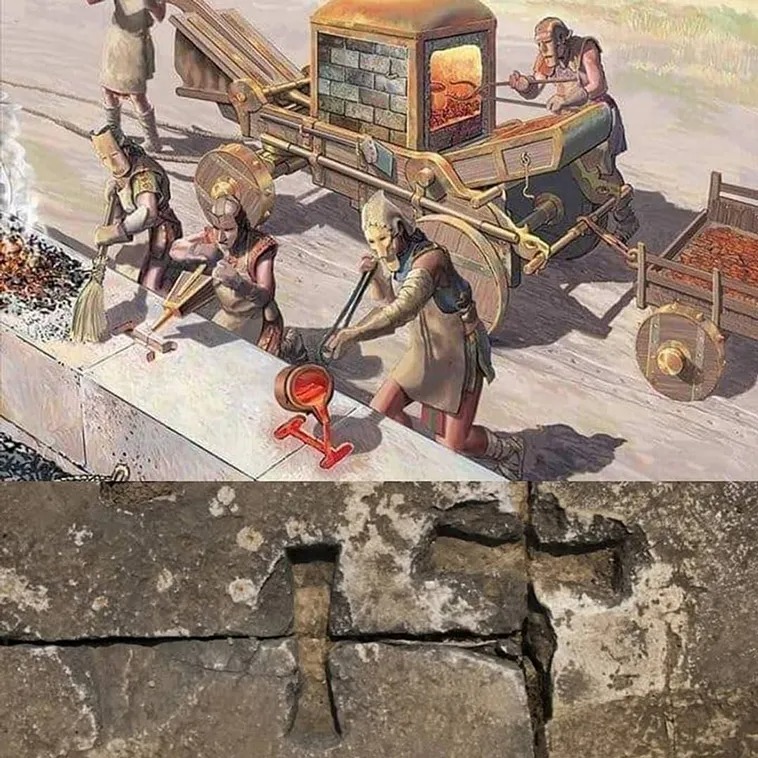
The construction of metal clamps that hold giant stone blocks together. There are structures that have stood for thousands of years are still standing.
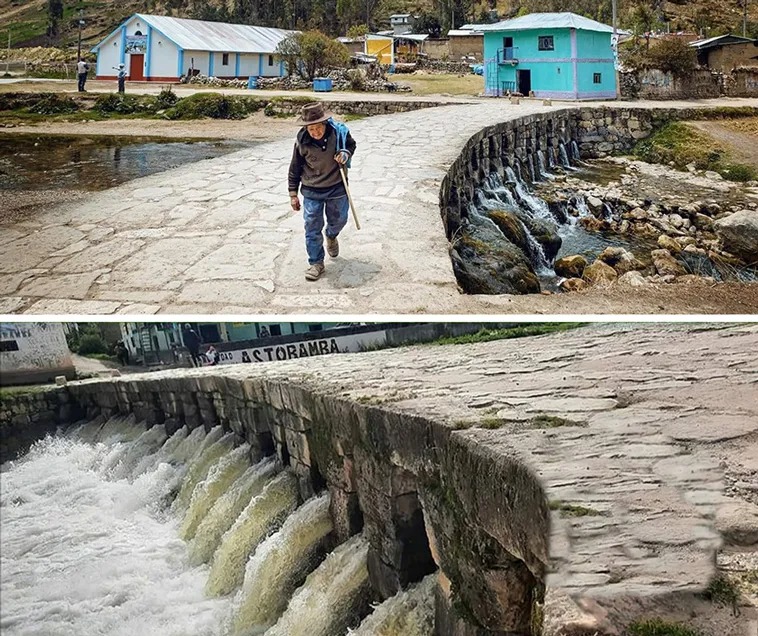
An Inca stone bridge at the archaeological complex of Huarautambo in Peru. The complex was built during the government of Pachakutiq Inka Yupanki
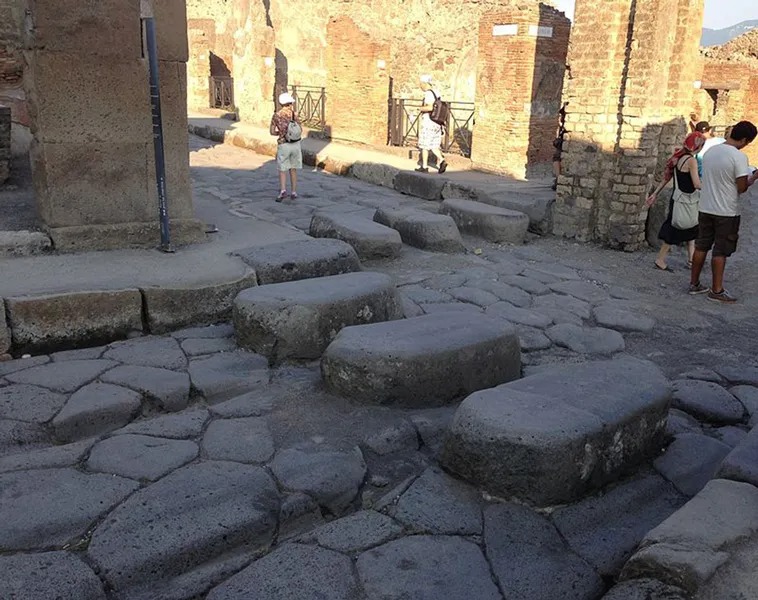
The photo shows Roman pedestrian crossings in Pompeii – stone blocks arranged across the street. These are the prototypes of today’s “zebra crossing”.
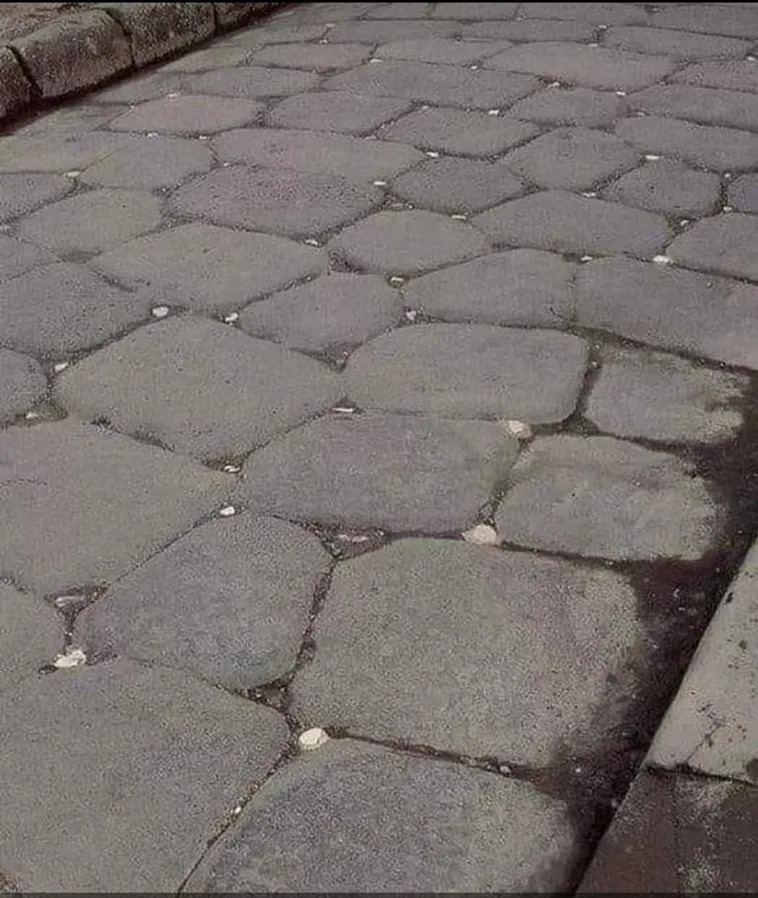
In Roman times, the so-called ′Tiger Eyes′ small white stones were placed among the stones on the road so that they could be seen at night.
The main layers of a Roman road

Roman engineers built 29 major highways which emanated from Rome; these were fed by smaller localized roads. The Roman highways were paved with stones, with a central high point to facilitate drainage, and with culverts and footpaths running alongside them. By the 2nd century CE over 250,000 miles of paved roads stretched throughout the Roman Empire, an enormous engineering achievement. Thousands of miles of roads today follow the routes built by the Romans, often built directly above their ancient counterparts. In many cases, the pavement set by the Romans is still used by 21st-century travelers.

Ottoman architect Mimar Sinan integrated this rotating piece into the mosque he designed. The building had serious structural damage if it couldn’t be turned after an earthquake.

Filed Under: Trends Worldwide Tagged With: ancient, engineering, impressive, methods, trends, were, worldwide

Reader Interactions

Leave a Reply Cancel reply

Your email address will not be published. Required fields are marked *

Primary Sidebar

More to See

The German Shepherd Family Refuses To Leave Dumpsters Where Their Humans Were Last Seen

By Hasan Jasim Editorial Team

The World’s Smallest Penguins are protected by these guard dogs (Successfully)

By Hasan Jasim Editorial Team

Goldfish are being taught to drive a robotic automobile on land by Israeli scientists

By Hasan Jasim Editorial Team

Japanese Pika: A Tiny Ice-Age Survivor with Endless Charm

By Hasan Jasim Editorial Team

Meteorite Burns Up Over Philippines: A Rare Celestial Event Captured on Camera

By Hasan Jasim Editorial Team

Meet Barry The Canary, The Bird With A Bowl Feathercut That Won The Hearts Of The Internet With His Looks

By Hasan Jasim Editorial Team

The Hidden Power of Mullein Roots: Benefits and Uses

By Hasan Jasim Editorial Team

Footer

ABOUT HASANJASIM.ONLINE

Hasanjasim.online is a digital platform dedicated to publishing well-researched articles about the animal kingdom, nature, and the environment. Our editorial team works to source stories from credible outlets, scientific research, and verified reports, aiming to inform as much as we entertain. From wildlife conservation and animal behavior to natural wonders and environmental science, we cover the topics that help readers better understand and appreciate the natural world. Whether you're a lifelong nature lover or simply curious about the planet we share, Hasanjasim.online aims to be a trustworthy destination for stories worth reading — and worth citing.

Recent

  • Why didn’t anyone tell me there’s an animal that smells exactly like hot, buttered popcorn?
  • I Never Liked the Caribbean—But This Island With Waterfalls, Hot Springs, and Rainforests Won Me Over
  • He Was a Magnificent 17-Point Buck — Now His Life Is Over
  • Man Rescues Lone Wolf Caught In A Trap — And What He Did Next Left The Internet In Awe
  • Why Lotus Seed Pods End Up Looking Like They’re Pulling Faces
  • Drilling Has Begun at Turkey’s ‘Noah’s Ark’ Formation. Here’s What’s Actually Been Found
  • A Family Reeled In a Shark by Accident. One Woman Pinned It Down to Set It Free

Search