• Skip to main content
  • Skip to primary sidebar
  • Skip to footer
  • Home
  • About Us
  • Copyright Report
  • Submit Content
  • Terms
  • Privacy Policy
  • Legal Disclaimer

Hasan Jasim

Hasan Jasim is a place where you may get entertainment, viral videos, trending material, and breaking news. For a social generation, we are the largest community on the planet.

Antarctica Is Hiding a Terrifying Secret. It Could Put the World at Risk

by Hasan Jasim Editorial Team Leave a Comment

ShareTweet

Antarctica’s vast ice sheets have long been central to global climate concerns, but new research suggests that some of the continent’s most serious risks may lie beneath the surface — in hidden channels under ice shelves that could significantly speed up melting.

Scientists studying East Antarctica’s Fimbulisen Ice Shelf have identified small under-ice channels capable of trapping warmer ocean water in critical areas, potentially increasing melting far more rapidly than traditional models had assumed.

While East Antarctica has often been viewed as less immediately vulnerable than West Antarctica’s Thwaites Glacier, sometimes referred to as the “Doomsday Glacier,” researchers say these newly examined processes reveal that even colder regions may face underestimated threats.

According to the study, the underside shape of an ice shelf is not merely a passive structure. Instead, its channels can create circulation systems that hold warm water against the ice, intensifying melt rates and gradually weakening the shelf from below.

This matters because ice shelves act as natural barriers, slowing the movement of massive land-based glaciers into the ocean.

If those shelves thin, destabilize or collapse, the land ice behind them may flow more quickly into surrounding seas — directly contributing to rising global sea levels.

Researchers say even relatively small amounts of warmer water may substantially accelerate channel growth and localized melting, creating a potentially dangerous feedback loop.
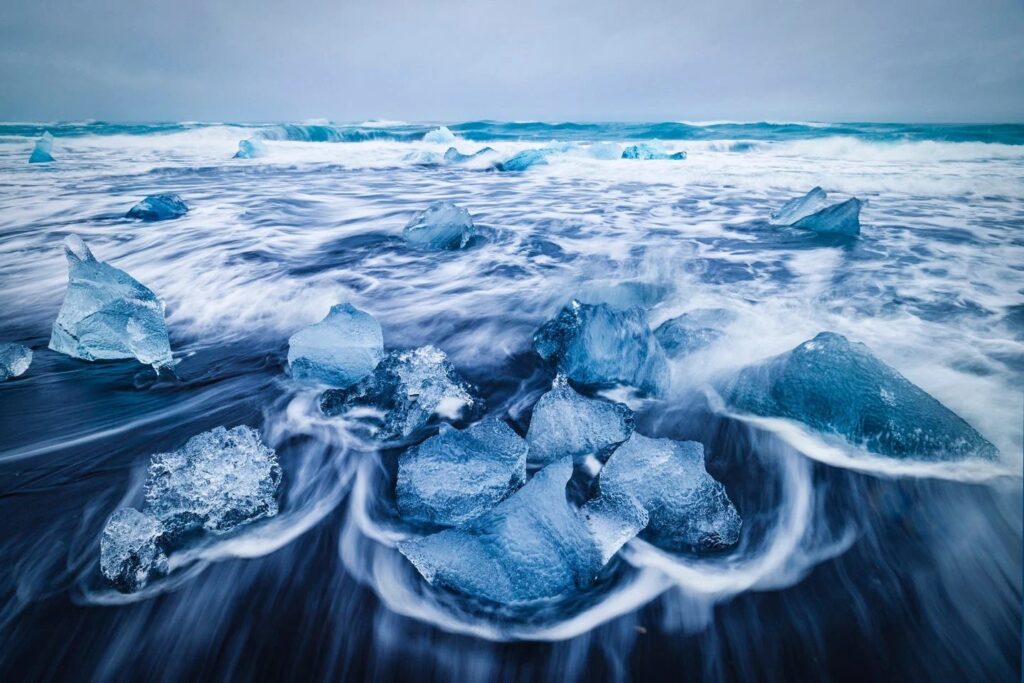
Warming Ice Sheets Spell Doom For Sea Level Risecarlo alberto conti – Getty Images

The findings suggest that current climate projections may need more detailed inclusion of what scientists describe as “small-scale melting processes,” which could have outsized long-term consequences.

Sea level rise is already one of the most pressing global climate risks, threatening coastal cities, infrastructure, insurance systems, agriculture and millions of people living in vulnerable shoreline regions.

As climate models continue to evolve, scientists emphasize that understanding these hidden ice-ocean interactions is essential for improving future projections.

The challenge is particularly significant because Antarctica’s subsurface environments are extraordinarily difficult to study directly, often requiring advanced mapping, remote sensing and underwater technology.

For policymakers and environmental planners, the research underscores a growing reality: some of the most important climate threats may not come only from visible surface melting, but from less obvious processes unfolding beneath the ice.

Why Antarctic ice stability matters to the global economy

Accelerated sea level rise has implications far beyond polar science. Coastal real estate, disaster insurance, urban infrastructure, migration policy and global financial planning may all be shaped by how quickly Antarctic ice systems change. Improved climate forecasting is increasingly important not just for environmental protection, but for economic resilience and long-term risk management worldwide.

Filed Under: Trends Worldwide Tagged With: Antarctic glaciers, antarctica, CLIMATE CHANGE, climate models, climate science, coastal flooding, environmental risk, Fimbulisen Ice Shelf, global warming, ice sheet instability, ice shelf melting, Polar Research, rising oceans, sea level rise, Thwaites Glacier

Reader Interactions

Leave a Reply Cancel reply

Your email address will not be published. Required fields are marked *

Primary Sidebar

More to See

Invasion of Giant Rice Straw Creatures in a Japanese Park

By Hasan Jasim Editorial Team

Are 2 regular hexagons always similar?

By Hasan Jasim Editorial Team

Man has tearful reunion with lost dog who was missing for four years

By Hasan Jasim Editorial Team

Australian Photographer Captures Breathtaking ‘Tree of Life’ Formation on Cakora Lake After Heavy Rains and Storms

By Hasan Jasim Editorial Team

Are 1965 quarters worth anything?

By Hasan Jasim Editorial Team

28 retired police and military dogs were found living in filth and neglect — now looking for homes

By Hasan Jasim Editorial Team

Surreal Situation In Alaska, a Polar Bear Appears to Wave to a Photographer

By Hasan Jasim Editorial Team

Footer

ABOUT HASANJASIM.ONLINE

Hasanjasim.online is a digital platform dedicated to publishing well-researched articles about the animal kingdom, nature, and the environment. Our editorial team works to source stories from credible outlets, scientific research, and verified reports, aiming to inform as much as we entertain. From wildlife conservation and animal behavior to natural wonders and environmental science, we cover the topics that help readers better understand and appreciate the natural world. Whether you're a lifelong nature lover or simply curious about the planet we share, Hasanjasim.online aims to be a trustworthy destination for stories worth reading — and worth citing.

Recent

  • Scientists Heard A Knock At The Door — It Was A Pelican In Need Of Help
  • This Dolphin Terrifies Fish Until They Puke — Then Eats It
  • Florida camera trap captures bobcat attacking world’s largest rattlesnake species
  • Scientists say warming destabilized Nepal glacier before collapse that killed 1,300
  • The Ocean Current That Feeds The World Is Weakening — And The Consequences Could Be Severe
  • Man Discovers A Nest Of Baby Bunnies While Mowing — And Builds Them The Cutest Tiny Shelter
  • This U.S. Beach Has the Whitest Sand in the Nation—and No, It’s Not in Hawaii or Florida

Search