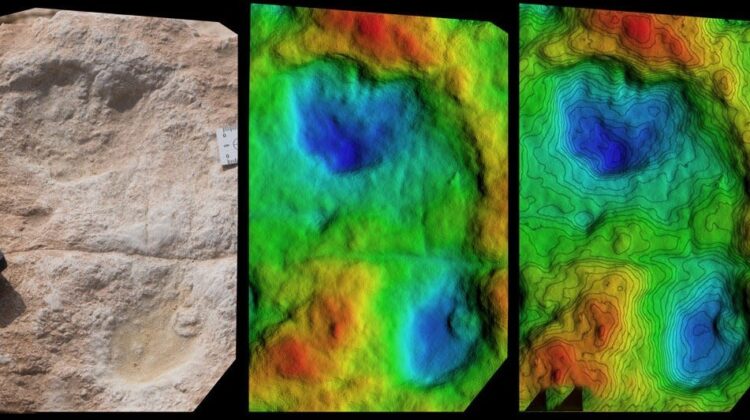
In a groundbreaking discovery, archaeologists have identified 115,000-year-old human footprints in Saudi Arabia’s Nefud Desert, offering an unprecedented glimpse into the migration and behavior of early Homo sapiens. This remarkable find not only redefines our understanding of human history but also highlights the Arabian Peninsula’s role as a crucial migration corridor during prehistoric times.
The Discovery of Prehistoric Footprints
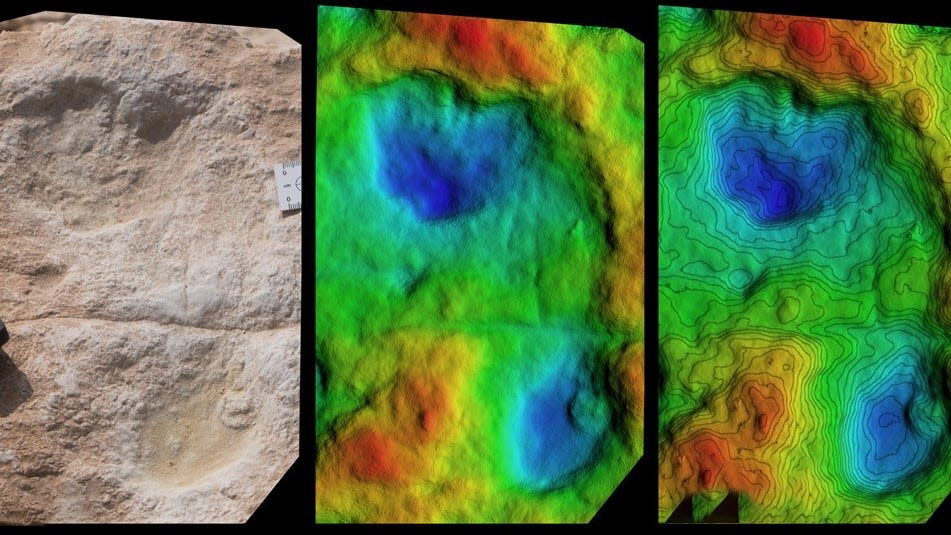
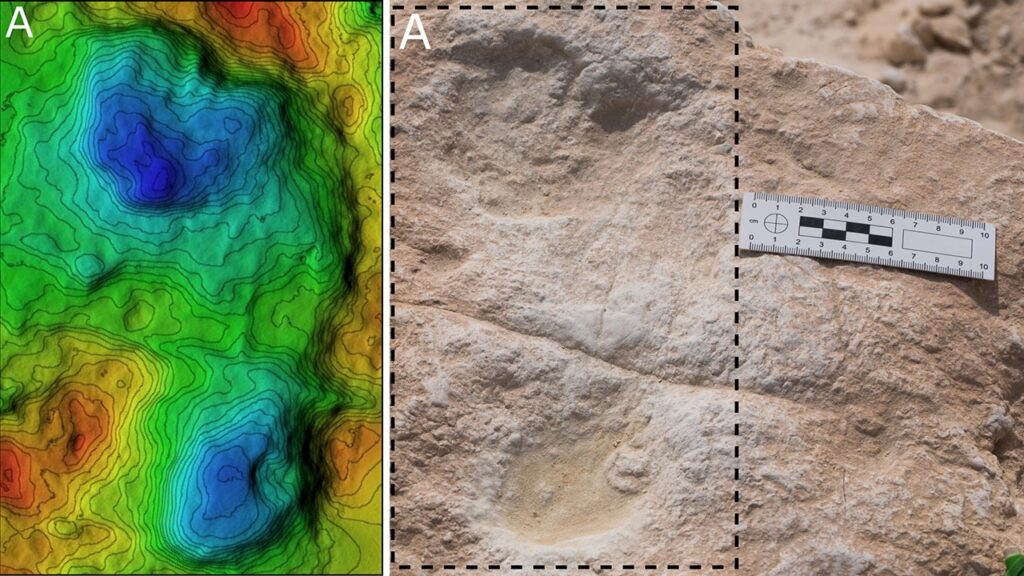
The fossilized footprints, found in 2017 at a site known as “Alathar” (Arabic for “the trace”), were preserved in a prehistoric mudflat, now part of a dried lakebed. Amidst hundreds of animal prints, seven human footprints stood out, dating back to a critical period between 130,000 and 80,000 years ago.
Using advanced isotopic analysis and stratigraphic dating, scientists have confirmed that these footprints were likely left by Homo sapiens, rather than Neanderthals, due to their size and the absence of Neanderthals in the region during this era.
Why the Mud Matters
The preservation of these ancient tracks is a testament to the unique environmental conditions of the time. In their research, scientists noted:
“An experimental study of modern human footprints in mud flats found that fine details were lost within 2 days and prints were rendered unrecognizable within four.”
Such rapid degradation highlights how extraordinary it is for these prints to have survived for over 100,000 years. The lakebed’s composition and rapid burial under sediment created the perfect “time capsule,” safeguarding these delicate impressions.
A Prehistoric Migration Highway
The Alathar lake was likely part of a network of freshwater resources that acted as a migratory highway for both humans and animals. This natural corridor provided essential potable water during a period marked by climatic shifts and impending glaciation.
Interestingly, archaeologists found no evidence of hunting or tool use at the site, suggesting the humans who left these footprints were not there for long. Instead, they likely stopped briefly to drink water before continuing their journey:
“The lack of archaeological evidence suggests that the Alathar lake was only briefly visited by people,” the researchers concluded.
Implications for Human Migration Studies
This discovery offers profound insights into human migration during the last interglacial period. The Arabian Peninsula, often overlooked in discussions about early human dispersal, now emerges as a critical crossroads in humanity’s journey out of Africa.
The findings also provide context for how early humans adapted to changing climates and utilized natural resources in their survival strategies.
Preserving Humanity’s Footsteps
The Alathar footprints join a growing list of extraordinary fossil discoveries preserved in mud, including the Burgess Shale and a well-preserved armored nodosaur. These findings underscore the importance of mud as nature’s archival medium, preserving the stories of life from epochs past.
As research continues, this discovery not only enriches our understanding of early human history but also serves as a reminder of the fragile conditions that make such preservation possible.
This extraordinary find reaffirms the significance of archaeology in uncovering the mysteries of our ancestors. The Alathar footprints, preserved against all odds, offer a window into a world long gone but not forgotten.
Leave a Reply