• Skip to main content
  • Skip to primary sidebar
  • Skip to footer
  • Home
  • About Us
  • Copyright Report
  • Submit Content
  • Terms
  • Privacy Policy
  • Legal Disclaimer

Hasan Jasim

Hasan Jasim is a place where you may get entertainment, viral videos, trending material, and breaking news. For a social generation, we are the largest community on the planet.

Can We Detect Life on Mars? Insights from New Study Reveal Challenges and Breakthroughs in Mars Exploration

by Stephen King Leave a Comment

ShareTweet

The Red Planet has long captivated our imaginations, sparking countless questions about the possibility of life beyond Earth. As we continue to explore Mars, one of the most pressing questions remains: Can we detect signs of life, past or present, on this distant world?

The Challenge of Detection

Detecting life on Mars is a complex task, made even more difficult by the harsh Martian environment. Current Mars mission instruments, while advanced, may not be sensitive enough to identify subtle traces of life, especially in ancient rock formations.
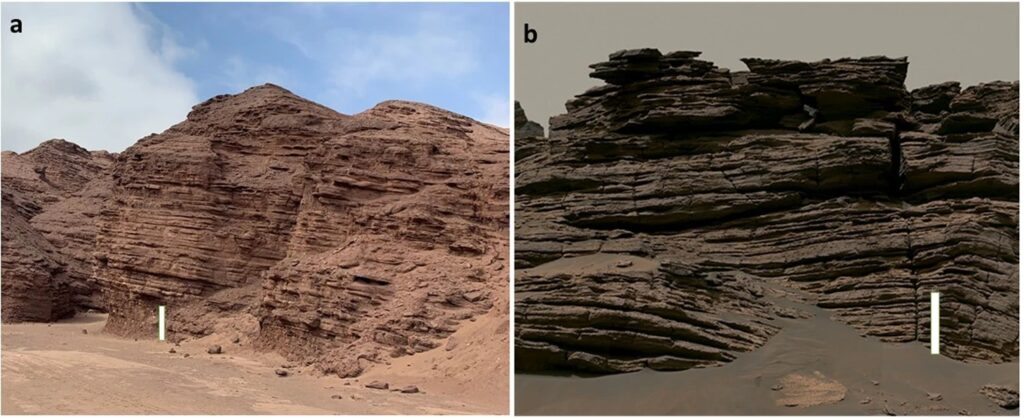
a Red Stone deposit from panorama image courtesy of Armando Azua-Bustos. b A section of the panoramic composite image [image PIA24921_MAIN-20k.jpg] of the Jezero delta captured by the MastCam-Z camera on the Perseverance Rover in June 202215 (Courtesy NASA/JPL-Caltech/ASU/MSSS). The height of both white scale bars are ~2 m

A recent study published in Nature Communications highlights this challenge. Researchers analyzed samples from the Red Stone region of the Atacama Desert, a terrestrial analog for Mars, and found that even with sophisticated instruments, detecting organic biosignatures was difficult. This suggests that current Mars rovers, such as Perseverance, may not have the necessary sensitivity to identify similar signs of life on the Red Planet.

The Search for Water and Organic Molecules

Water is essential for life as we know it, and the presence of liquid water on Mars in the past is a strong indicator that the planet may have once been habitable. Missions like Curiosity and Perseverance have detected organic molecules, the building blocks of life, in Martian rocks. However, these molecules could have been delivered to Mars by meteorites or comets, making it difficult to determine if they have a biological origin.
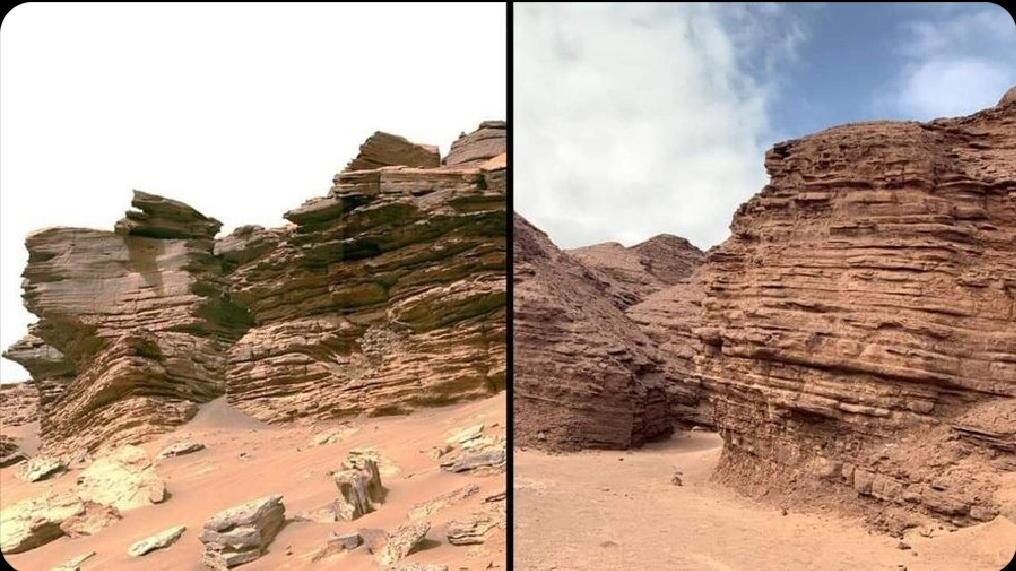
Mars on the left, Earth on the right.

The Role of Future Missions

Future missions to Mars, such as the European Space Agency’s ExoMars rover, will carry more advanced instruments capable of detecting even smaller traces of life. The MOMA instrument, for example, is designed to analyze Martian soil samples for organic molecules, while the SOLID-LDChip can detect specific biosignatures.

While the challenges are significant, the potential rewards are immense. Discovering evidence of past or present life on Mars would revolutionize our understanding of the origins of life and the possibility of life elsewhere in the universe. As we continue to explore the Red Planet, the quest for life on Mars remains one of the most exciting and ambitious endeavors in human history.

Filed Under: Trends Worldwide Tagged With: astrobiology, Atacama desert, Atacama Desert life, Detecting life on Mars, extraterrestrial life, life on Mars, Mars exploration, Mars life detection, Mars microbial life, Mars missions, Mars organic compounds, Mars organic molecules, Mars rover, Mars water, NASA Perseverance Rover, Organic molecules Mars, Organic molecules on Mars, Perseverance rover, Red Stone, Search for life, Search for life on Mars, Viking mission

Reader Interactions

Leave a Reply Cancel reply

Your email address will not be published. Required fields are marked *

Primary Sidebar

More to See

The Enduring Angel: A Look at South Carolina’s Legendary Live Oak

By Stephen King

Why Some People Put Mullein Leaves in Their Socks

By Stephen King

A 90-year-old Tortoise Whose Legs Were Eaten by Rats Receives Prosthetic Wheels and Travels Twice as Fast

By Stephen King

These Guys Placed Robot-Dog Inside Zoo, The Animals Did Not Like It

By Stephen King

Journey to the Past: Exploration of 280-Million-Year-Old Crinoid Fossils in Western Australia

By Stephen King

Farmer checks his pasture — then discovers all 32 of his cows dead in a single horrifying scene

By Stephen King

It’s surprising that the connection between chicken color and quality is still unclear to some

By Stephen King

Footer

About hasanjasim.online

Hasanjasim.online is a digital platform dedicated to publishing diverse articles and content, with a strong focus on topics related to the animal kingdom, nature, and the environment. The website offers engaging stories and visual content aimed at raising awareness about animal welfare and showcasing the wonders of the natural world, making it a great destination for nature lovers and curious readers alike.

Recent

  • Scientists Discover Orcas Deliberately Smashing Giant Sunfish Until They Explode
  • This Rare Turtle Can Breathe Through Its Rear — And Scientists Say It’s One of Earth’s Most Extraordinary Reptiles
  • Do Whales Have Hair? The Surprising Truth About These Giant Ocean Mammals
  • Scientists Think They’ve Finally Worked Out Why This Image Freaks You Out
  • Tragic update on story of bear stuck on top of telephone pole
  • Royal Mail Worker Accused of Kicking Blind Dog Sparks Outrage as Fellow Postal Staff Defend His Actions
  • Photographer Travels 900 Miles to Capture One of the World’s Rarest Snowy Owls

Search