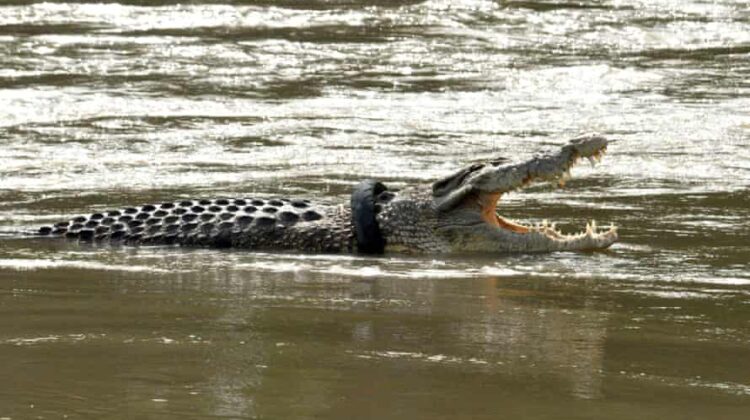
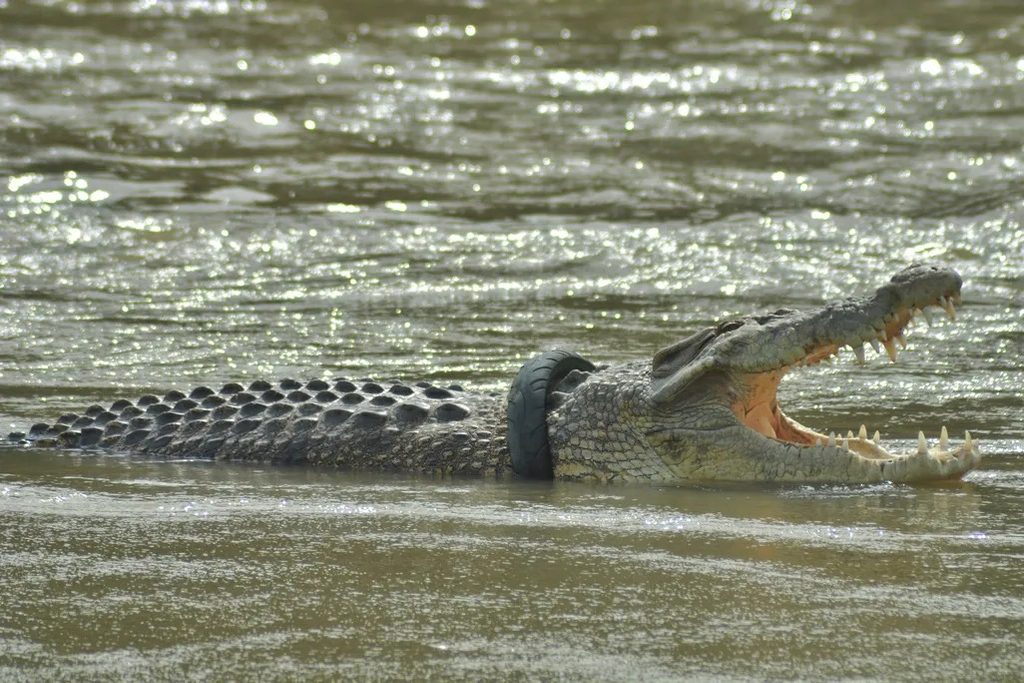
For years, residents of Palu, a city on Indonesia’s Sulawesi island, watched a huge saltwater crocodile sunning itself in the river with a motorbike tire wrapped around its neck. Conservationists tried repeatedly to help it, and failed. Then a local man with a plan, a few chickens and some nylon ropes finally did what the authorities couldn’t. Here is the story of the crocodile that lived in a rubber collar.
A Crocodile With a Tire Around Its Neck
The crocodile was a saltwater crocodile about 5.2 meters (17 feet) long, a size that makes it one of the most formidable predators in the region. Residents first noticed the tire around its neck years earlier, and the animal was routinely seen basking on the banks of the Palu River, which is home to more than 30 crocodiles.
Conservationists believe the tire was placed on the animal deliberately, in an unsuccessful attempt to capture it as a pet, though that is a suspicion and not a confirmed fact. As the crocodile grew, the tire became a permanent and dangerous burden. For more than five years, conservation groups and officials tried and failed to remove it, in part because they lacked the equipment needed for a rescue in the river.
A Local Man Steps In
The rescue was finally carried out by Tili, a 34-year-old bird trader who goes by one name, as many Indonesians do. He told AFP he took on the challenge because he despises seeing animals caged and suffering.
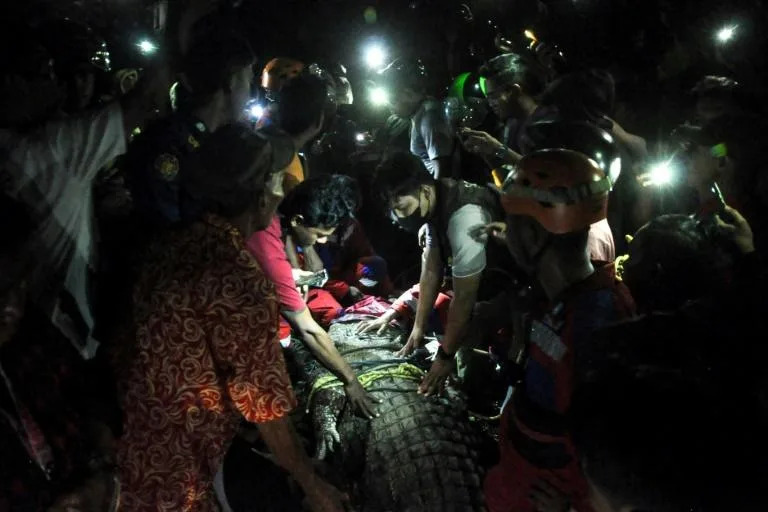
His effort lasted three weeks. He used chicken as bait and ropes to catch the animal, but his first two attempts failed because the ropes weren’t strong enough for the crocodile’s weight. He switched to heavy nylon ropes of the kind used to haul boats. When the crocodile was finally caught, scores of people helped drag it to the bank, where the tire was cut off. Tili said he was exhausted by then and let others finish the job.
Back Into the River
The crocodile was returned to the river straight away, and the crowd cheered. The chairman of the local conservation group called it a momentous day and praised the villagers for showing care for animals. The group said it plans to honor Tili for his efforts.
An Earlier Attempt That Was Cancelled
The crocodile had made headlines earlier, when the local government announced a reward for anyone who could catch it and remove the tire. That contest was eventually canceled over fears that it could put the animal at risk.
What the Reports Don’t Tell Us
Some details are unknown. The report doesn’t describe the condition of the crocodile’s neck after the tire was removed, whether it was examined by a veterinarian or what follow-up monitoring is planned. The account comes from AFP interviews with Tili and a local conservation official.
Please Don’t Try This Yourself
This story ended well, but it was very risky. Saltwater crocodiles are the largest living reptiles, and large ones can kill people. Wildlife experts strongly advise against attempting to catch or handle a crocodile without proper training and equipment. If you see an injured or entangled wild animal, contact local wildlife authorities or a conservation group and keep a safe distance.
Why Entanglement Matters
Discarded tires, rope, fishing line and plastic can trap wildlife, from sea turtles to birds and large reptiles, and can cause serious injury as animals grow. Reducing waste, disposing of trash properly and reporting entangled animals can make a difference. Saltwater crocodiles (Crocodylus porosus) are protected in many places, but they still face threats from habitat loss, pollution and conflict with people.
Seeing Wildlife Responsibly
Travelers who want to see crocodiles and other wildlife in the region often compare Indonesia wildlife tours and eco-friendly travel packages led by trained guides, invest in binoculars and a wildlife photography camera with a zoom lens, and buy travel insurance for remote trips. Those who want to support animals can also look into wildlife conservation donations and reptile conservation organizations.
Frequently Asked Questions
How long was the crocodile stuck? For more than five years, according to officials and villagers.
Who rescued it? A local man named Tili, with help from villagers who dragged the animal to shore.
How did the tire get there? Conservationists suspect someone put it on the crocodile on purpose to catch it as a pet, but that isn’t confirmed.
Was the crocodile released? Yes, it was put straight back into the river.
Sources: AFP