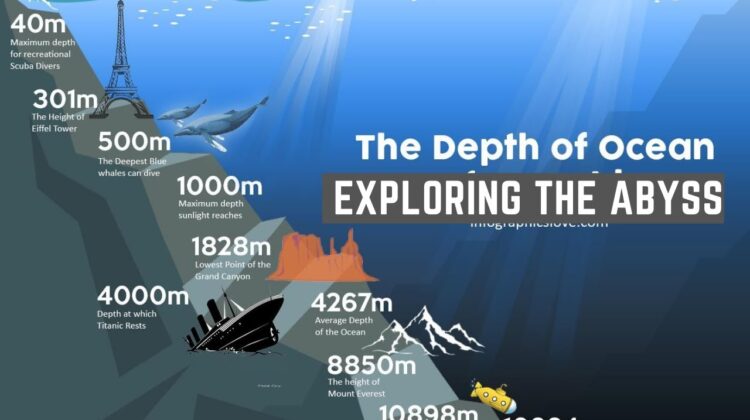
In the vast expanse of our blue planet, a significant portion remains an enigmatic frontier, barely touched by human presence. As we descend beyond the first 200 meters (656 feet) of the ocean’s surface, we enter a realm not just of profound mystery, but also of untold scientific potential—the deep seabed. This article takes you on a journey into the depths of our Earth’s oceans, exploring from the twilight zone to the abyssal plains and the ultimate depths of the Mariana Trench.
The Twilight Zone and Beyond: A Deep Dive into Earth’s Hidden Frontier
Between 200 and 1,000 meters below the ocean’s surface lies the mesopelagic zone, often referred to as the twilight zone. Here, light begins to fade, and life thrives in forms most bizarre and beautiful. Bioluminescent creatures, such as jellyfish and certain species of squid, illuminate this dark environment, creating a spectacular underwater light show.
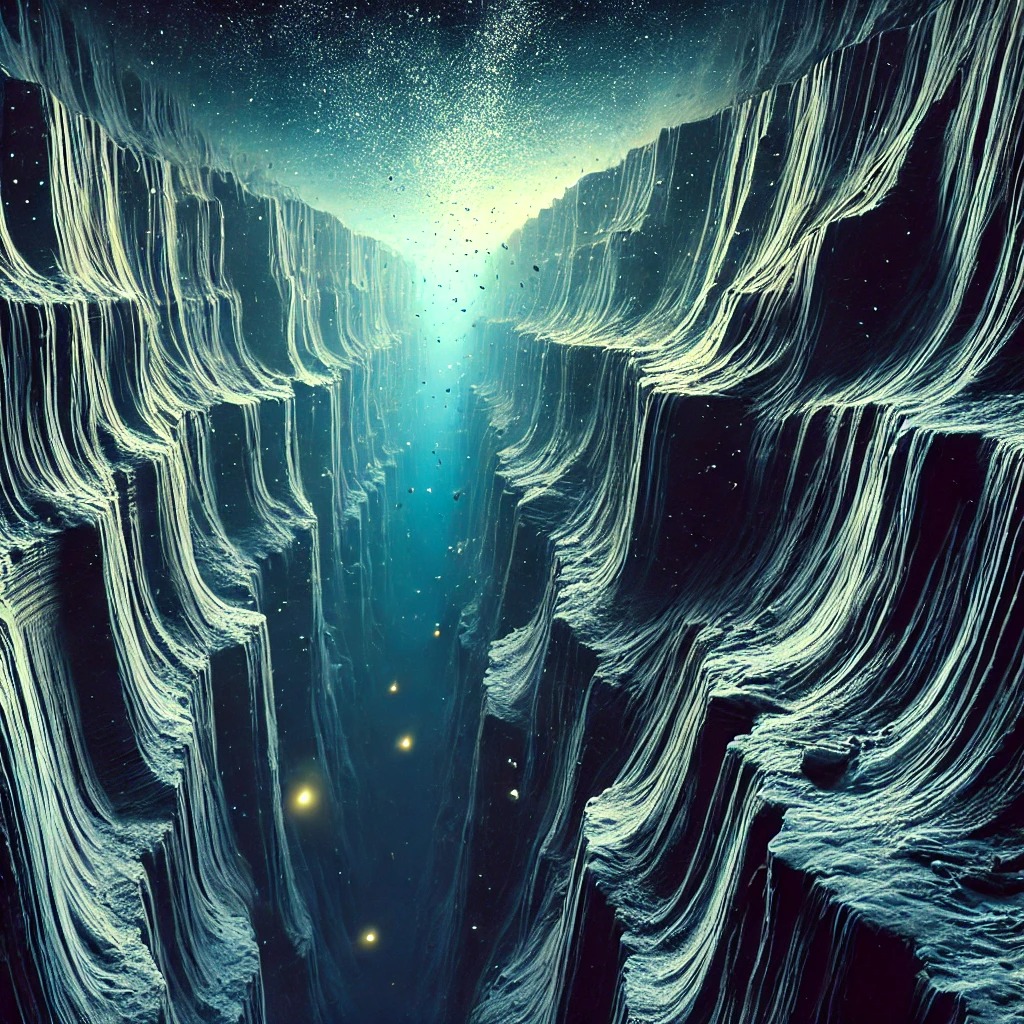
As we venture deeper into the bathypelagic zone, ranging from 1,000 to 4,000 meters, the water column becomes pitch black, subjected to immense pressures that would crush most human-made objects. The creatures here are adapted to such extreme conditions, with features like enhanced pressure resistance and slow metabolism.
Abyssal Plains: Unveiling the Secrets of the Deep
The journey continues to the abyssal plains, vast flat areas that lie between 3,000 and 6,000 meters (up to 19,685 feet) deep. These regions are among the most remote on Earth and are covered in fine sediment. Life here is sparse but extraordinarily adapted to low temperatures, high pressure, and minimal nutrients. Unique organisms such as giant tubeworms and deep-sea urchins cover the seabed, relying on chemosynthesis rather than photosynthesis for survival.
The Mariana Trench: Descending to Earth’s Deepest Depths
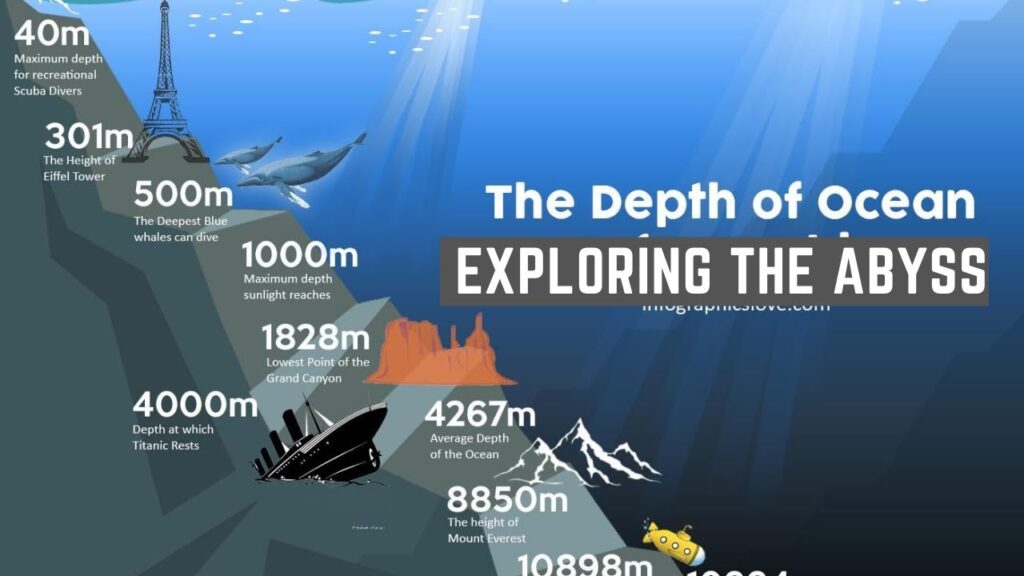
Our exploration reaches its zenith at the Mariana Trench, the deepest part of the world’s oceans, plunging to an astonishing depth of approximately 11,000 meters (36,089 feet). This trench is not just a point of curiosity; it’s a critical site for scientific research. Studying the trench helps scientists understand seismic activity and tectonic movements, offering clues about Earth’s geological processes.
Researchers have also discovered unique microbial life forms that can withstand extreme conditions, providing insights into life’s adaptability and the origins of life on Earth. These findings might even offer clues about life on other celestial bodies, such as Jupiter’s moon Europa.
Why the Deep Sea Matters: Implications for Science and Technology
Understanding these deep-sea environments is crucial not only for expanding our biological knowledge but also for advancing technology. The extreme conditions of the deep sea inspire innovations in materials science and engineering, which are applicable in other high-pressure environments, including space exploration.
Moreover, the deep seabed is a reservoir of untapped resources, potentially offering vast quantities of precious minerals and metals. However, this brings forth ethical and environmental challenges regarding deep-sea mining, balancing economic benefits against potentially catastrophic impacts on these pristine ecosystems.
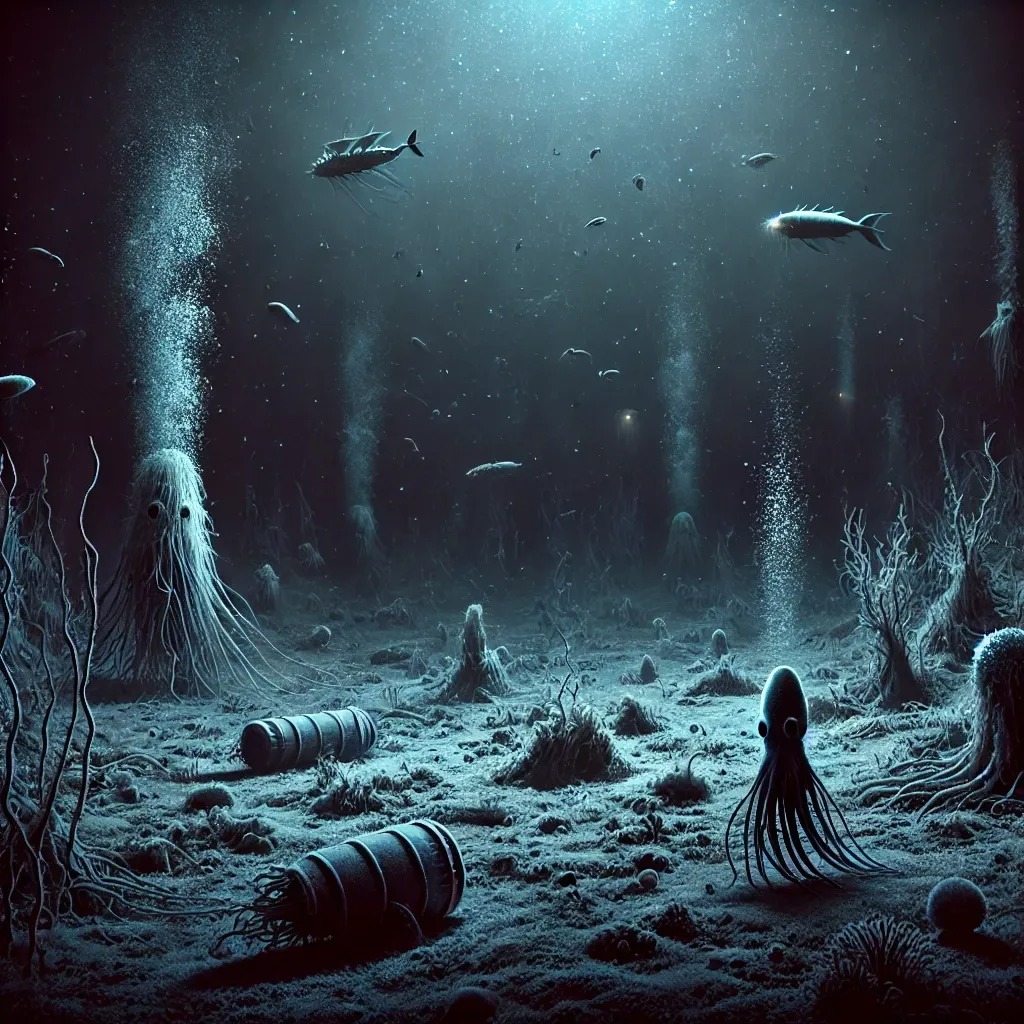
The Final Frontier Below Waves
The deep seabed is not just another scientific frontier; it is a critical part of our natural world, holding secrets to our planet’s past and keys to future technological breakthroughs. As we continue to explore these profound depths, we must tread lightly, respecting the delicate balance of life and the unknowns that govern these dark waters.
Leave a Reply