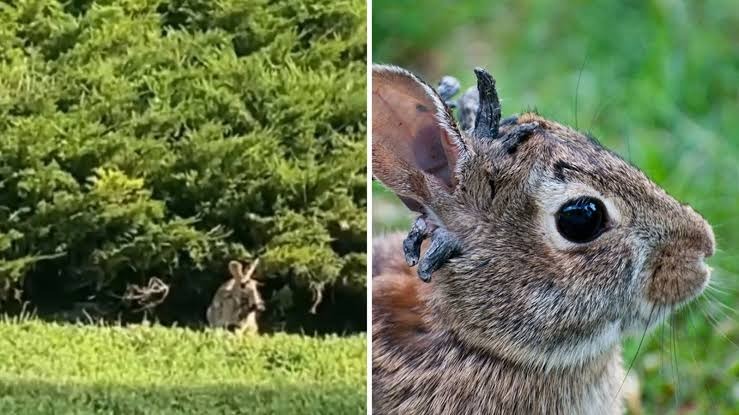
Bizarre sightings of rabbits with grotesque, horn-like growths sprouting from their heads are leaving residents across several U.S. states both fascinated and horrified.
Photos shared online from Wisconsin, Minnesota and New York show wild rabbits covered in dark, tentacle-like masses, prompting comparisons to creatures from horror films and earning them the nickname “Frankenstein rabbits.”
One of the most widely shared sightings came from New York, where cattle seller Ze Peitica Gado encountered one of the unusual animals and reported it to wildlife authorities.

“Made eye contact with this rabbit and immediately regretted it,” he joked on social media. “All jokes aside, I reported it to the proper wildlife authorities, but this thing was gnarly.”
While the animals may look like something supernatural, experts say there is a scientific explanation behind their disturbing appearance.
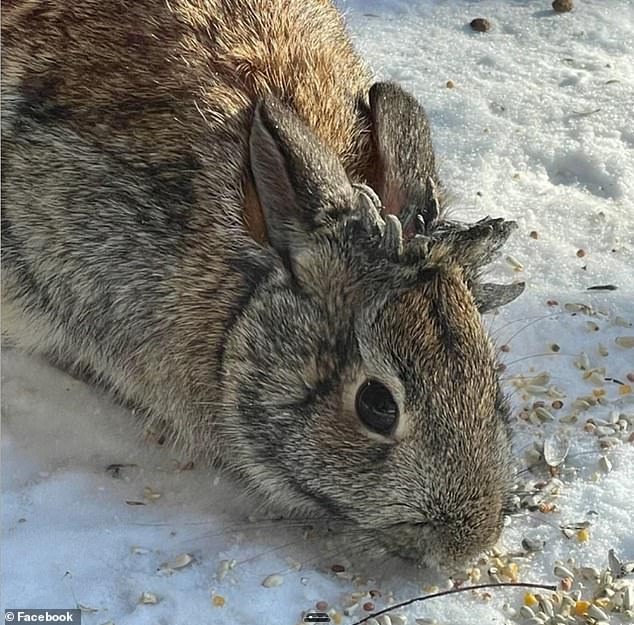
The rabbits are infected with Cottontail Rabbit Papillomavirus (CRPV), commonly known as Shope papilloma virus. The disease causes wart-like growths and tumors that often develop around the head, ears, eyes and mouth. As the tumors enlarge and harden, they can resemble horns, antlers or twisted tentacles.
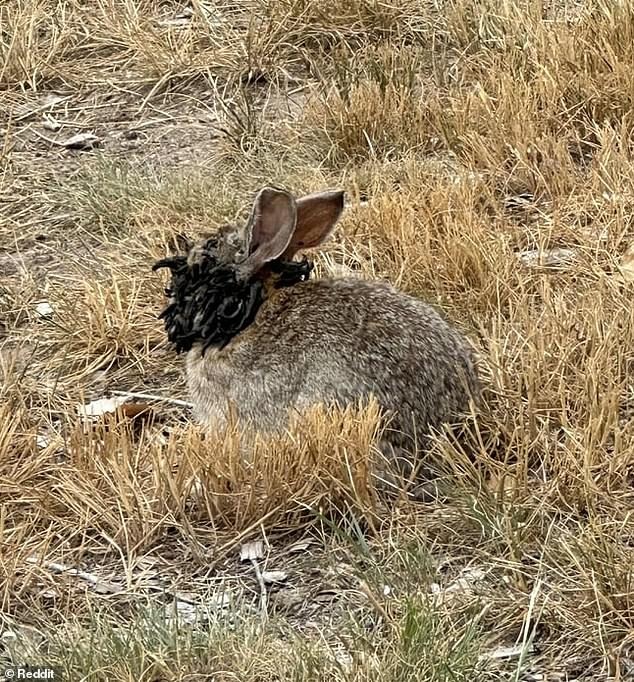
The virus is primarily spread through biting insects such as mosquitoes and ticks. Once infected, rabbits can develop red skin lesions that gradually transform into large papillomas. In some cases, these growths become cancerous and may eventually threaten the animal’s survival.
Wildlife experts note that the disease poses no known risk to humans, dogs or cats. However, infected rabbits can suffer greatly as tumors continue to grow. Some growths become so large that they interfere with eating, seeing or hearing, leaving animals vulnerable to starvation and predators.
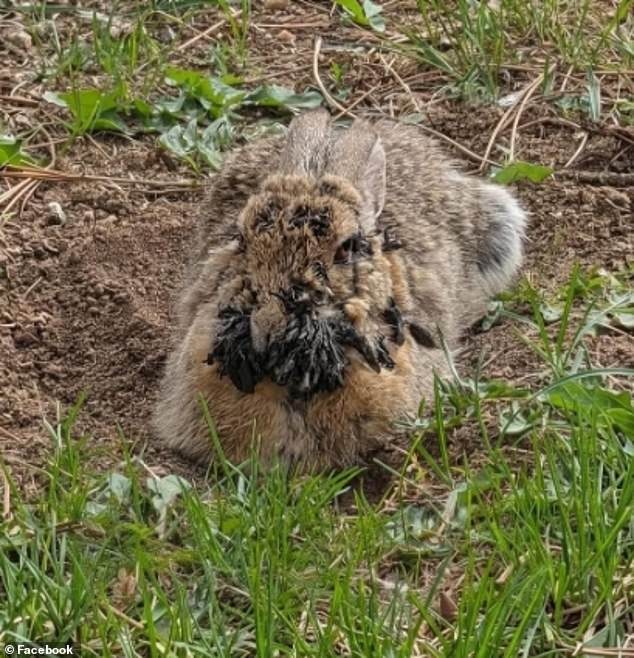
Reports of infected rabbits have increased in recent years, particularly throughout parts of the American Midwest and Rocky Mountain regions. Colorado wildlife officials previously issued guidance urging residents not to handle affected rabbits and to leave them undisturbed.
The condition has also helped fuel one of North America’s most enduring wildlife legends: the jackalope. For centuries, stories have circulated about rabbits with antelope-like horns, inspiring folklore, artwork and local myths. Scientists now believe many of these tales may have originated from rabbits suffering from papillomavirus infections that produced horn-like tumors.

Although some people have questioned whether infected rabbits should be euthanized to prevent suffering or slow transmission, wildlife authorities have not recommended such action. Instead, officials advise observing the animals from a distance and allowing nature to take its course.
For pet rabbit owners, veterinarians recommend minimizing exposure to mosquitoes and other biting insects, as early treatment can often prevent severe complications if infection occurs.

To many observers, these rabbits look like creatures from a nightmare, but their appearance tells a far more tragic story. Behind the frightening tumors is a naturally occurring disease that can leave wild animals struggling to survive. The viral images may spark curiosity and fear, yet they also serve as a powerful reminder of the hidden challenges wildlife faces every day—often far beyond what most people ever see.
Leave a Reply