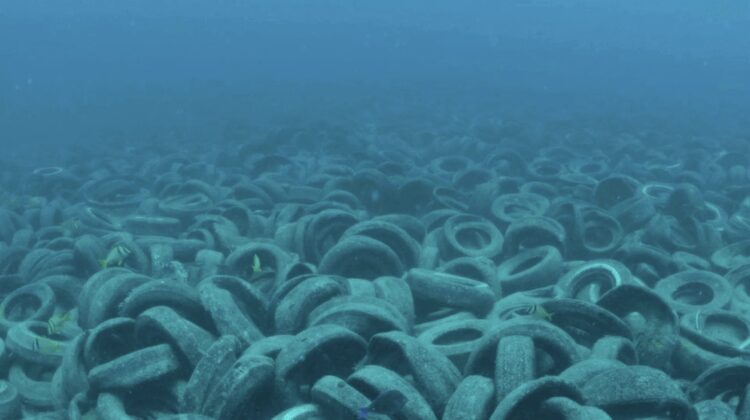
Off the coast of Fort Lauderdale, Florida, lies one of the most notorious examples of human intervention gone wrong in the marine environment. The Osborne Reef, once promoted as an innovative artificial reef project, is now widely recognized as an environmental failure—and a lesson the ocean is still paying for decades later.
The Origin of the Osborne Reef
In the 1970s, a local nonprofit launched an ambitious project aimed at recreating the ecological benefits of natural coral reefs. The solution, at the time, seemed simple and cost-effective: old car tires.
More than two million tires were deliberately dropped into Florida’s coastal waters to create what was supposed to be a thriving habitat for marine life. The project received official approval from the U.S. Army Corps of Engineers, and the dumping operation was even supervised by a U.S. Navy minesweeper.
The initiative attracted national attention. Goodyear, one of the tire suppliers, symbolically “christened” the reef by releasing a gold-plated tire into the ocean from the Goodyear Blimp—an act meant to celebrate environmental innovation.
Why the Project Failed
What followed was the opposite of what planners had hoped for.
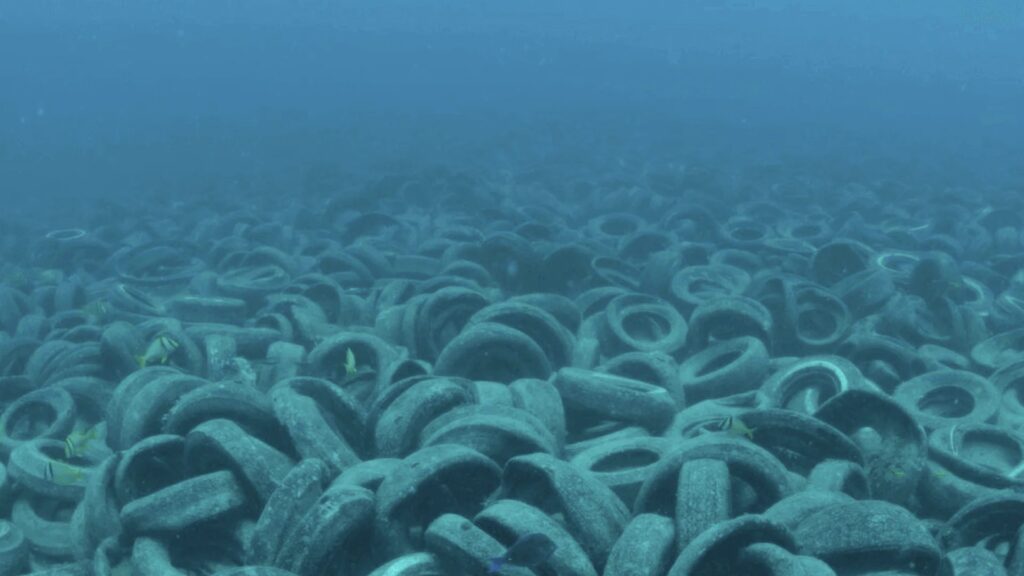
The tires were loosely fastened together using nylon rope and steel clips, materials that quickly degraded in the harsh marine environment. As storms and currents took their toll, the tires broke free and scattered across the seafloor.
Instead of creating shelter for marine organisms, the tires:
- Failed to support coral growth
- Shifted constantly with waves and storms
- Crushed and damaged nearby natural coral reefs
- Created unstable and hazardous underwater debris fields
Rather than mimicking nature, the artificial reef actively harmed it.
Cleanup Efforts: Progress, but at a Cost
Over the past two decades, multiple cleanup initiatives—both public and private—have attempted to address the damage. Even the U.S. military has been involved in tire removal operations.
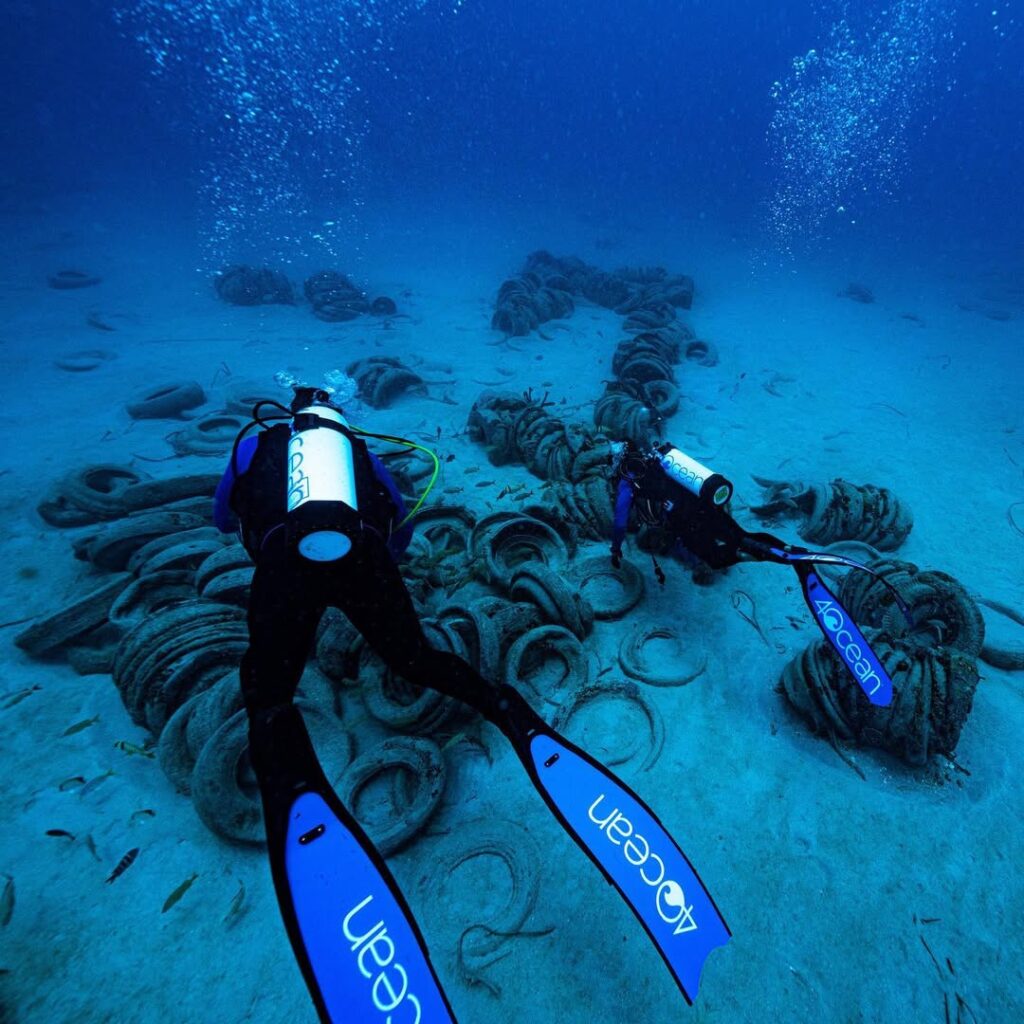
In recent years, the environmental organization 4ocean has made the Osborne Reef cleanup a central focus of its work. In an Instagram post sharing haunting underwater images, the group acknowledged the scale of the challenge:
“Ultimately, the well-intentioned project failed… and now 4ocean is stepping in to clean it up.”
Despite years of effort, the task remains enormous. While Florida officials estimated 650,000 tires remained on the seafloor in 2016, 4ocean reported that over 500,000 tires were still present as of 2022.
“This operation is an uphill battle,” the organization noted. “We definitely have a lot of work to do.”
How the Cleanup Is Being Funded
To sustain its efforts, 4ocean uses a circular funding model, selling bracelets and jewelry made from materials recovered during ocean cleanups—including tires removed from the Osborne Reef.
Tires that are too degraded for reuse are transported to Florida’s Solid Waste Authority, considered one of the most advanced and low-pollution waste management facilities in the United States.
Meanwhile, the Florida Department of Environmental Protection continues to oversee the situation through its Osborne Reef Waste Tire Removal Project. In 2023, Governor Ron DeSantis approved a new environmental assessment to evaluate the reef’s condition and establish a clearer cleanup timeline. That report is expected to outline next steps and long-term strategies.
A Global Lesson in Environmental Engineering
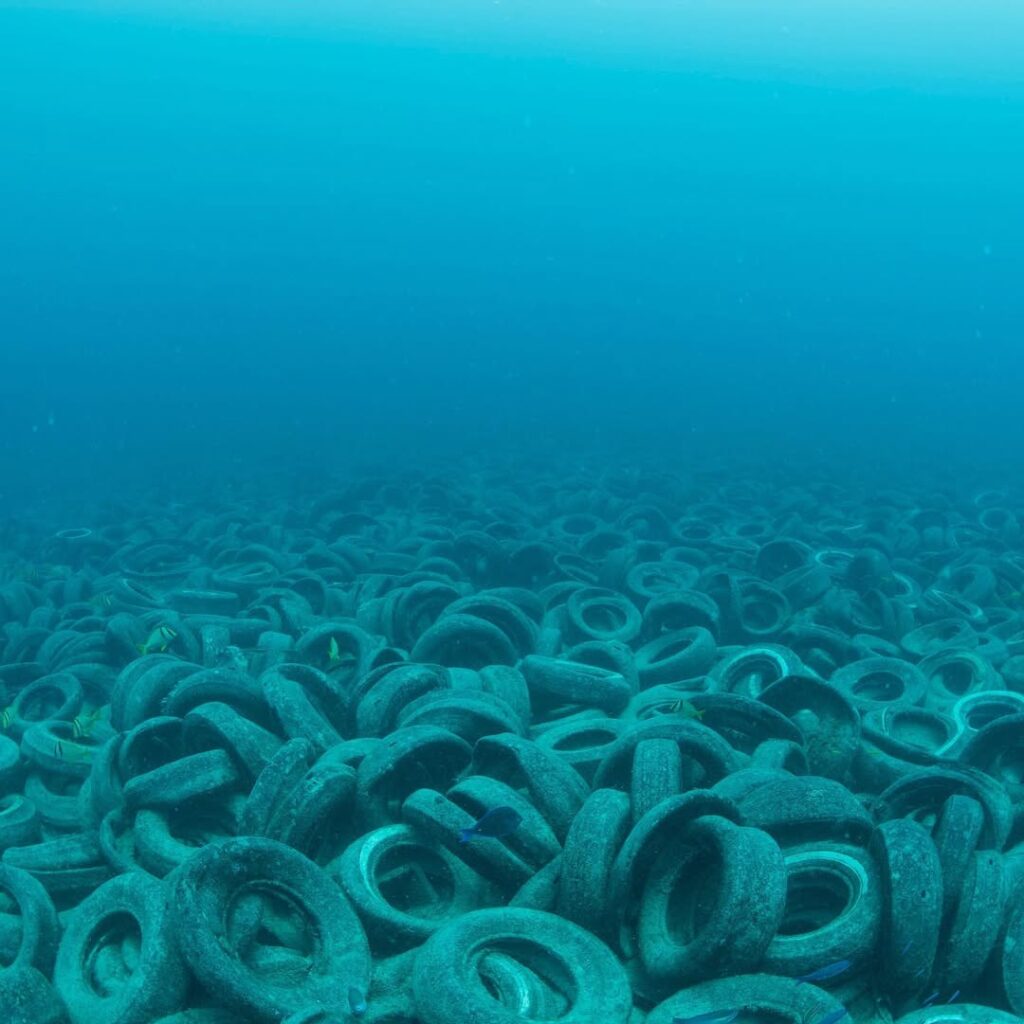
The Osborne Reef is no longer just a local issue—it has become a global case study in what happens when environmental solutions are rushed without long-term ecological understanding.
Around the world, failed artificial reef projects—from Southeast Asia to Europe—face similar challenges. The ongoing cleanup in Florida may offer a blueprint for addressing these mistakes, particularly through sustainable funding and responsible waste management.
Bottom Line: Innovation Without Foresight Has Consequences
The story of the Osborne Reef is a stark reminder that good intentions are not enough. Environmental interventions must be guided by science, long-term planning, and respect for natural systems. What was once celebrated as a creative solution is now a cautionary tale—one that continues to demand time, resources, and accountability to undo.
Leave a Reply