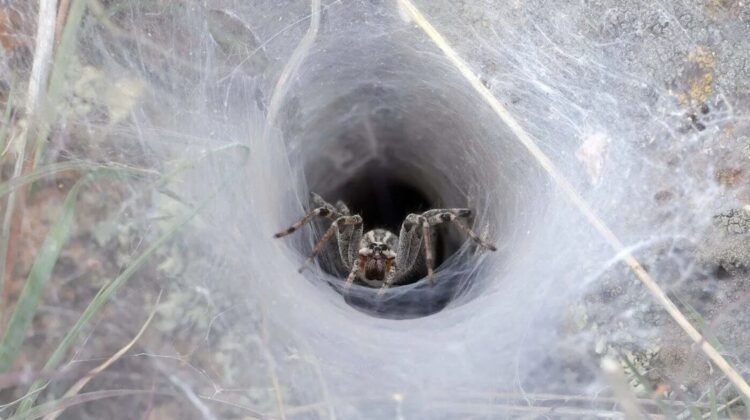
Walk through a damp garden or cellar and you may spot a silk sheet funneling into a dark tube. Spiders from distant branches of the family tree build this exact trap, and a new genome study now shows how they got there.
What a Funnel Web Actually Is
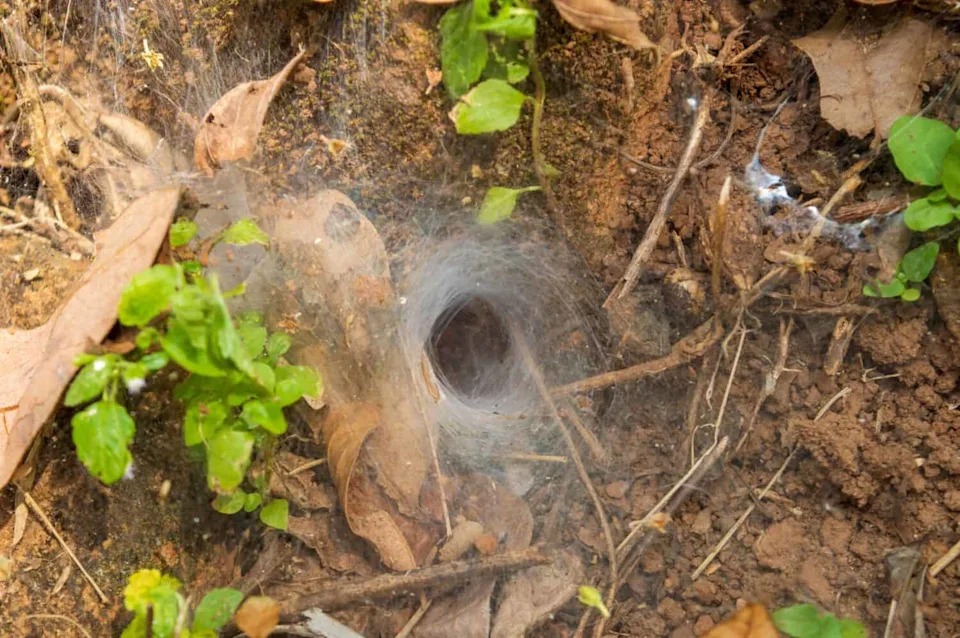
A funnel web has two parts: a flat sheet of tangled, non-sticky silk and a tube-shaped retreat at one end. The spider waits inside. When an insect steps on the sheet, the threads vibrate, and the spider sprints out, grabs its prey, and drags it back into the tube.
These spiders typically live in cool, moist, sheltered spots, which is why funnel webs turn up in woodpiles, stone walls and outbuildings.
Three Spiders, Two Families
A research team led by Zheng Fan compared the genomes of 15 spider species in the Journal of Systematics and Evolution. Three of them build funnel webs: Tamgrinia laticeps and Eratigena atrica (the giant house spider), both in the family Agelenidae, and Orientothele yani, a Chinese species in the distantly related family Macrothelidae.
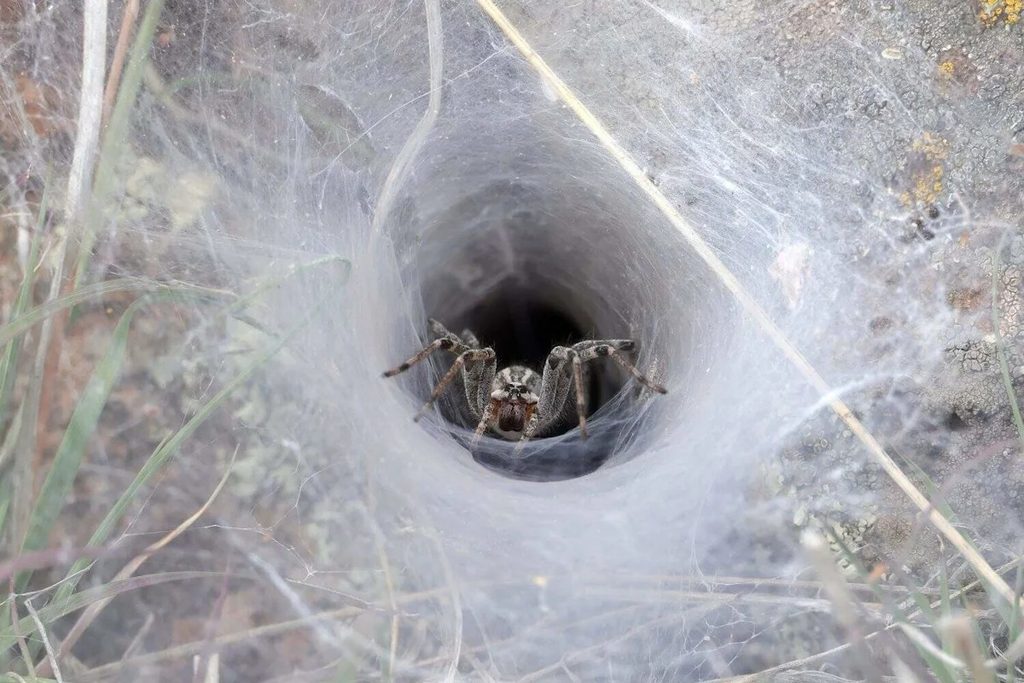
The sample includes at least three independent origins of funnel-web building. In other words, the same trap design was invented more than once, a pattern known as convergent evolution.
No “Funnel Web Gene”
If these spiders share a web design, you might expect them to share the genes behind it. They don’t. According to the study, similar webs do not require a similar genomic background. Instead, the team found repeated shifts in genes tied to the nervous system.
Some genes linked to nerve signaling evolved faster in the funnel builders, which suggests natural selection was shaping them, while other, slowly evolving genes kept basic cell functions stable. The team ties this to what the job demands: sensing vibrations, processing signals, and coordinating a fast strike.
What the Study Can’t Tell Us
©NNphotos/Shutterstock.com
The findings point to several neural pathways rather than one route, and they rest on a comparison of 15 species. They show which genes changed alongside funnel-web building, not that any single change causes the behavior.
Funnel Webs Around the Home
Because these spiders favor damp, sheltered spots, you can discourage them without much fuss:
- Seal gaps and cracks. Caulk and weatherstripping keep spiders out of basements and garages.
- Cut the damp. A dehumidifier or better ventilation makes cellars less inviting.
- Compare pest control services. For heavy infestations, get quotes from licensed pest control companies and ask whether recurring treatment plans are included.
- Check your home insurance. Policies often exclude pest damage, so review your home insurance terms.
©Ken Griffiths/Shutterstock.com
Frequently Asked Questions
What is convergent evolution? It is when unrelated groups independently evolve the same trait, such as spiders from different families that each build funnel-shaped webs.
Is there one gene responsible for funnel webs? No. The study found no single funnel-web gene, only repeated changes in genes involved in neural regulation, sensory processing and motor control.
Why aren’t funnel webs sticky? They work like a trip-wire: the tangled threads carry vibrations to the waiting spider, which rushes out to seize prey, rather than gluing prey in place.
Where do funnel-web spiders live? They usually settle in cool, moist, protected places such as woodpiles, rock crevices, cellars and sheds.
Sources: Journal of Systematics and Evolution and bioRxiv, both covering the 2026 genomic study of convergent funnel-web building in 15 spider species, including Tamgrinia laticeps, Eratigena atrica and Orientothele yani.
Leave a Reply