They say what separates humans from animals is our innate sense of consciousness.
But we also know animals can indeed exhibit signs of compassion and sympathy towards other animals — and not to mention towards us humans.
But never have I seen anything quite like this before.
Some animals are predators, others prey, some both. Lions are the King of the Jungle and truly at the top of the food chain.
They are powerful creatures known to be fierce hunters — which might lead one to assume this also means they are heartless creatures with no consciousness whatsoever.
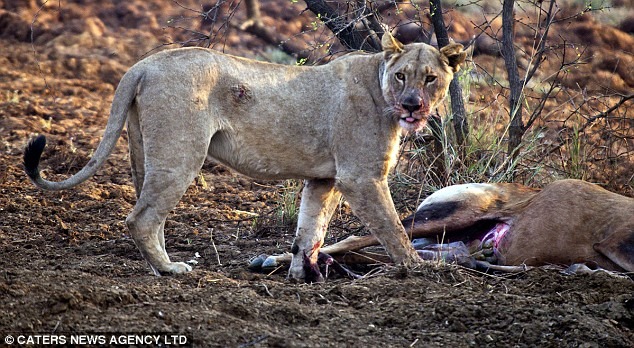
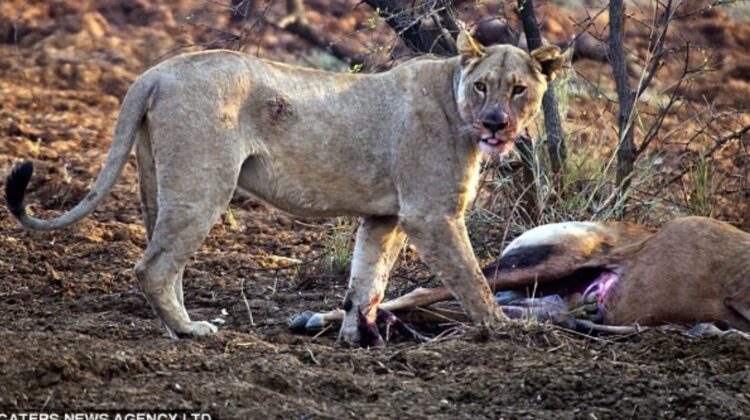
Incredible events witnessed by a party of safari explorers in the Madikwe Game Reserve, South Africa, are now stunning the world. While out exploring the reserve, the party discovered a lioness who had recently hunted and captured her prey — a large antelope.
But within moments of the capture and devouring her catch, she suddenly paused: She’d discovered the antelope’s unborn fetus in its belly.
What happens next is absolutely stunning — and only gets increasingly so. She immediately takes a step back and ceases eating. She removes the fetus and gently places is down, pacing around it, as if trying to see if it was still alive.
“I have seen a lion kill where the prey was pregnant but normally they would just carry on feeding as if nothing was wrong,” said Gerry Van Der Walt, who was leading the safari.
“But this time the scenes that followed had us all dumbstruck,” he added. “Once out of the mother the lioness very gently placed the fetus on the floor and spent quite a bit of time smelling and investigating the unborn antelope.”
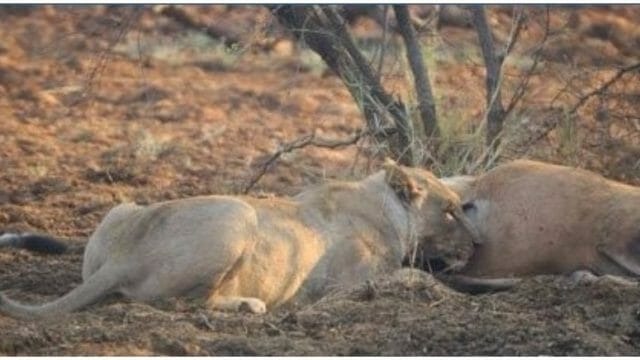
“She very gently put the fetus on the floor, all the time looking around and looking quite tense and nervous. She proceeded to nudge the fetus with her nose, gently rolling it over, before she picked it up on the back of the neck as if it was one of her own cubs,” Gerry said.
When the lioness appeared to at last realize that the fetus was dead, she gently lifted it and hit it behind a bush, as if to give it a respectable burial place. Then, she remained nearby, as if mourning.
“We watched as she carefully walked towards the thicket where she placed the fetus very carefully at the bottom of the long grass. She nudged it a few times again with her nose, still looking around all the time as if she was expecting either help or danger,” Gerry adds.
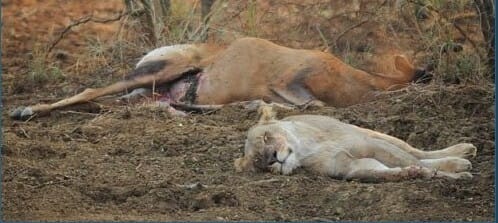
As if not already stunning enough, the lioness’ next moves further amazed the group of witnesses. She ceased her feeding entirely and then simply layed down next to her prey, as if in guilt and regret. And there she remained for some time.
“This was definitely one of the most extraordinary moments of lion behavior I have ever witnessed. What was she thinking? Why did she react the way she did?” Gerry ponders.
To me, it couldn’t be more clear. This amazing event proves animals can feel compassion and even remorse for their behavior. Who could blame a lioness for hunting down her prey? It is just the natural course of things. And yet despite it being a most natural behavior, she felt guilt after the fact and displayed incredible behavior even us humans can be envious of!
Animals are simply amazing. Share this story if you agree.
Leave a Reply