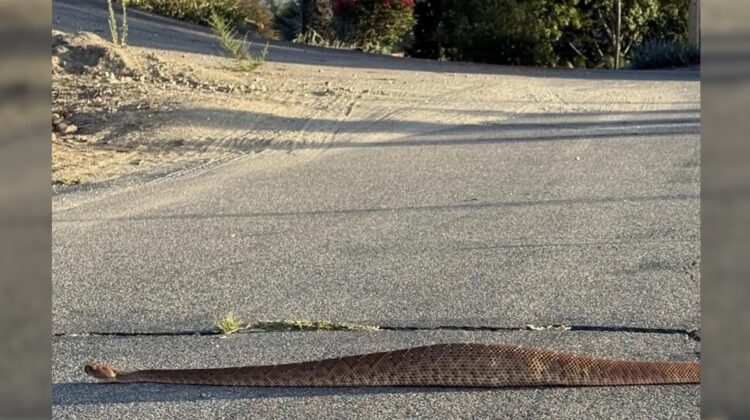
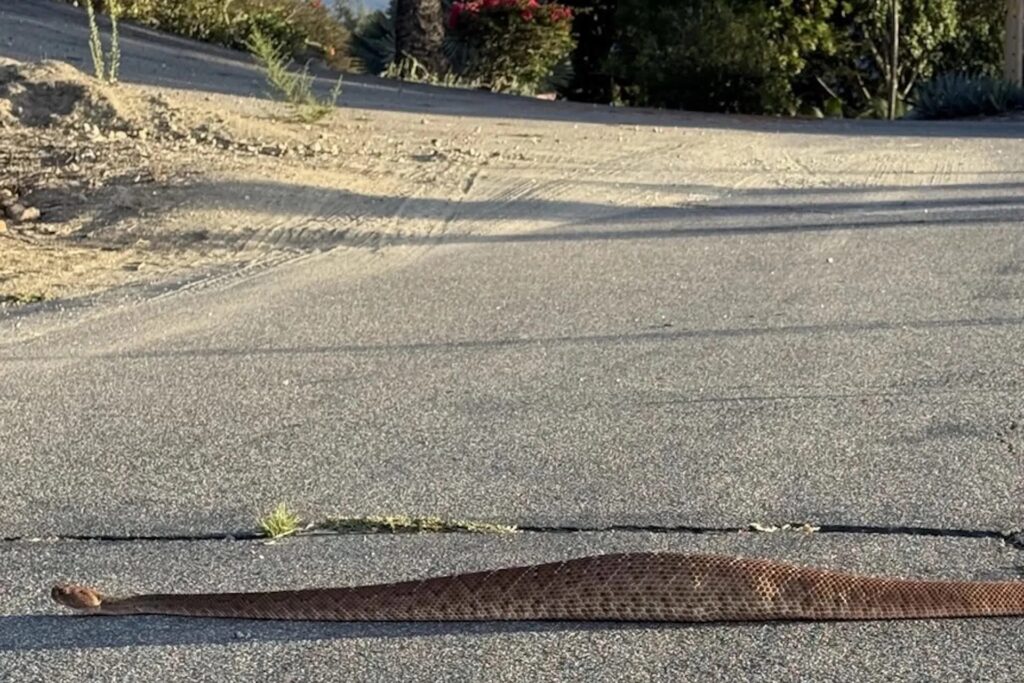
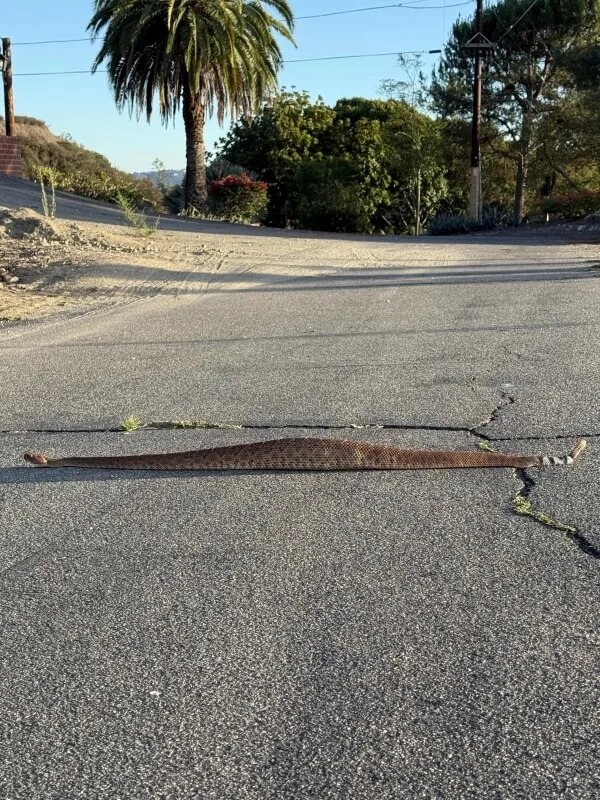
A photograph of a dramatically swollen rattlesnake stretched across a road in Southern California has captured widespread attention online, with viewers stunned by the reptile’s unusually large midsection.
The image, reportedly taken in the San Diego area and shared on Reddit, appears to show a red diamond rattlesnake shortly after consuming a large meal.
According to the person who posted the image, the snake was found resting in the roadway and later moved out of danger.
Wildlife experts explain that snakes commonly swallow prey whole, which can leave a highly visible bulge in the body while digestion takes place. During this period, snakes are often slower-moving and more vulnerable because digestion requires substantial energy.
The unusual appearance of the rattlesnake quickly prompted reactions online, with many commenters joking about the reptile’s enormous “food coma” and comparing the shape of its body to oversized objects.
Beyond the humor, however, the sighting also highlights broader concerns surrounding wildlife encounters in expanding urban and suburban environments.
Roadways can pose serious risks for snakes, both from vehicle traffic and from frightened human reactions during unexpected encounters.
Red diamond rattlesnakes are venomous and native to parts of Southern California and Baja California. While bites are relatively uncommon, experts consistently advise people not to approach or handle wild snakes, even if they appear sluggish or inactive.
Biologists note that habitat fragmentation, expanding development and environmental pressures increasingly force wildlife into closer contact with humans.
Changes in temperature patterns and shifting ecosystems may also influence when and where reptiles move, hunt or seek shelter.
At the same time, snakes play an important ecological role by helping control rodent populations and maintaining balance within local ecosystems.
Conservation groups and wildlife agencies continue promoting strategies such as habitat preservation, wildlife corridors and public education campaigns aimed at reducing dangerous human-animal encounters.
Experts generally recommend that if a venomous snake is found in an unsafe location, people should maintain a safe distance and contact trained wildlife professionals rather than attempting relocation themselves.
For many online viewers, the image was both amusing and unsettling — a reminder of how extraordinary wildlife can appear when encountered unexpectedly in everyday places.
Why wildlife encounters are increasing near human development
As cities expand into natural habitats, encounters with animals such as snakes, coyotes and bears are becoming more common. Wildlife management, conservation planning and safer urban development strategies are increasingly important for reducing conflict while protecting biodiversity and public safety.
Leave a Reply